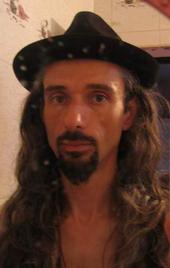
Olivier Milchberg

 olivier-milchberg.jpg

English/Français/Español

Olivier Milchberg born in Paris, November 7th, 1963. He studied piano and guitar, both classical and jazz for 10 years. At 19, he joined the group Los Incas, founded by his father Jorge Milchberg. He began as guitarist, then continued as flute solo.

The international tours and multiple recordings with Los Incas gave him a much experience as a poly-instrumentalist. He founded Muance Productions in 1988, both as a recording studio and for production of traditional music.

He shares his time between concerts, composition, artistic direction and as producer.
From 1998 on, he developed a passion for oriental music. In 1999 he joins the group Pêcheurs de Perles founded by the Irakien singer Mohamed Alnuma. Olivier Milchberg approaches music with a global conception.

This approach brought him to play numerous instruments traditional or ethnic, like bouzouki (Greek and Irish) and cumbus (Turkish banjo). He’s had a passion since a very young age for reed and bamboo flutes like the “Kena”, “bansouri flute” from India, the ney.

Finally, his ear and mastery of rythm enable him to play the different percussion instruments with ease. His musical research is more than all based on music with soul and roots, in which his inspiration comes for the development of his personal expression.

—————————-

Né à Paris le 7 novembre 1963, il y étudie le piano et la guitare, classique et jazz, pendant dix ans. Il rejoint à 19 ans le groupe Los Incas fondé par son père Jorge Milchberg, en tant que guitariste, puis devient flûtiste soliste.
Les tournées internationales et les enregistrements avec Los Incas lui donnent une grande expérience poly-instrumentale.
Il fonde en 1988 Muance Productions, structure de production de musiques traditionnelles et studio d’enregistrement. Il partage son temps entre les concerts, la composition, la direction artistique et la production discographique.
Il collabore avec de nombreux musiciens de traditions musicales diverses, tels que Sergei Starostin (Russie), Christian Zagaria (médiéval-Oriental), accompagne Delphine Aguilera et Hombeline (chants Occitans), intègre les groupe Bandzydeco (Cajun), Kapela (musiques de l’est), Passe Montagne (bals folks), Balkanic Trio (de l’Europe à l’Orient).
Il rencontre et rejoint en 1999 l’ensemble Pêcheurs de Perles fondé par le chanteur iraquien Mohamed Alnuma, collabore avec le chanteur palestinien Moneim Adwan.
Olivier Milchberg aborde la musique avec une conception globale d’arrangeur. Cette approche l’a amené à pratiquer de nombreux instruments, traditionnels ou ethniques, comme le bouzouki (grec et irlandais), le cumbus (banjo turc). Il s’est passionné depuis très jeune pour les flûtes de roseau et de bambou comme les kenas, les flûtes bansouri d’Inde, le ney. Enfin, son oreille et sa maîtrise du rythme lui permettent de jouer des percussions avec aisance. Sa recherche porte avant tout sur les musiques qui ont une âme et des racines, dont il s’inspire pour développer son expression propre.

———————————————-

Olivier Milchberg nació en París el 7 de Noviembre de 1963,
Estudió piano y guitarra, clásica y jazz, durante diez años.
A los 19 años se unió como guitarrista al grupo Los Incas fundado por su padre Jorge Milchberg, para convertirse luego en flautista.
Las giras internacionales y las grabaciones con Los Incas le han han permitido acumular una gran experiencia poli-instrumental.
En 1998 funda “Muance Productions”, estructura de producción de músicas tradicionales y estudio de grabación.
Reparte su tiempo entre los conciertos, la dirección artística y la producción discográfica.
A partir de 1998 se apasiona particularmente por las músicas orientales.
En 1999 integra el conjunto Pêcheurs de Perles fundado por el cantante iraquí Mohamed Alnuma.
Olivier Milchberg aborda la música con una concepción global.
Este enfoque le permite practicar numerosos instrumentos, tradicionales o étnicos, como el bouzouki ( griego e irlandés) o el cumbus (banjo turco); desde muy jóven siente pasión por las flautas de caña y de bambú como las kenas, las flautas bansouri de India o el ney. Su oído y su conocimiento del ritmo le permiten tocar percusiones con facilidad.
Su investigación se ocupa sobre todo de las músicas que poseen un alma y unas raíces, en las cuales se inspira para desarrollar su propia expresión.
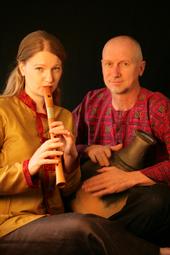
Rachael Cogan

 racheal-cogan.jpg

Racheal Cogan’s recorder sounds as pure as a new-born babe’s conscience. But all it takes is for her to bend a note and that purity is suddenly rent by a flash of the ancient lusts that afflict us all. (John Shand, Sydney Morning Herald Sun, February 17-18, 2007)

Tony Lewis [is] one of Sydney’s most versatile and accomplished exponents of non-Western percussion (Sydney Morning Herald, Metro, April 23, 1999)

Racheal Cogan (recorders) & Tony Lewis (percussion) perform captivating melodies and rhythms informed and inspired by the music of many cultures. Their unique repertoire includes traditional pieces from Greece, Turkey and Iran, as well as compositions by Racheal Cogan and Ross Daly. Racheal and Tony’s work is drawn from an impressive amount of first hand experience in the study and performance of musical forms across the world, spanning Asia, Africa, Europe and the Middle East, and the indigenous musics of Australia. Their new CD Transience: Contemporary Modal Music, released by Orpheus Music in January 2007 (OM 602). “is spiritual, the musicians have artistry, creativity, vision and sheer mastery of their instruments. These two cultural beatniks have come up with something very special, the synergy between them has created music that will long graze on your CD player and consciousness.” (Jaslyn Hall, Limelight: March 2007)

Racheal and Tony first performed together in Armidale NSW, in January 2005, and have since been performing Australia wide at the Brisbane Multicultural Arts Centre, Townsville Community Music Centre in Qld, the Boite in Melbourne, Eastside Arts in NSW, and the Art Gallery of New South Wales. They have also conducted workshops together for the Music Education Unit of the Sydney Conservatorium of Music (NSW) and for the Music Centre North Queensland.

Racheal Cogan has worked extensively in modal music forms around the world. In Melbourne in 1993 she co-founded the Greek music group the haBiBis, whose CD Intoxication won an ARIA award in 1999. In 2000 she travelled to Athens to study, perform and record with Ross Daly and his ensemble Labyrinth throughout Greece, Turkey, and Macedonia. Since then she has studied Persian classical music with Hossein Omoumi in France, Karnatic Music with Karaikudi R. Mani in India, and performed with Kurdish musician Fardin Karamkhani in the USA. Racheal recorded her CD Sojourn in Greece, with Ross Daly, Kelly Thomas and Angeliki Xekalaki. Sojourn was released in Australia in 2006 by Orpheus Music. In 2008 and 2009, Racheal is based in Macau, China, working with Cirque du Soleil.

Tony Lewis has performed, studied, and conducted cultural exchange project in various parts of Africa, Asia and the Pacific, and in indigenous communities around Australia. He has worked with many of Australia’s leading music groups, including Waratah (with Sandy Evans & Satsuki Odamura), The Renaissance Players, Riley Lee, and many others. Tony appeared as a soloist at the Commonwealth Drum Festival (Auckland 1990), and was a segment Musical Director for the Opening Ceremony of the Sydney 2000 Paralympic Games. He has composed major works for the Perth Festival, the Festival of the Dreaming, the Aboriginal Islander Dance Theatre, and Sadari Theatre Company (Seoul). In duo with Racheal, Tony performs on hand drums such as tabla, zarb and udu.

Rachel Cogan & Tony Lewis have many more concerts and projects planned. More information about Racheal Cogan & Tony Lewis can be found at:www.rachealcogan.com

Maria Andersson

 maria-andersson.jpg

Maria Andersson was born in a small town in Sweden called Västervik. She lives in Stockholm where she writes music, plays some guitar and sings. She works with acoustic bands and is also a vocalist with Cirque Du Soleil.

In Sweden, Maria Andersson works with musicians including Linnea Ohlsson – Cello, Cecilia Persson – Piano, Lisa Eriksson -Accordeon, Mattias Fjellström – guitars, Clas Lassbo – bass and Povel Ohlsson – Percussion.

Greetings from Montreal

cirque-du-soleil-headquarters.jpg

My first week of rehearsal in Montreal, Canada with Cirque Du Soleil has almost passed. We are working on their new show to debut in Macao, China in Summer 2008.

The photo of Cirque headquarters above is off the web, there’s actually quite a bit of snow here now. I found out very quickly why everyone wears a warm hat.

And about the show? All I can say it’s absolutely fantastic, just the way Cirque always is. All the artists are working hard, but that’s why we’re here. You’ll just have to wait until the show opens to find out all the cool details…

hq0.jpg

Wisdom and Folly

 cirque-du-soleil-card.jpg

 “My wish to you is not for wisdom, but for folly.”

Cirque Du Soleil’s website has a feature to send friends greeting cards. I received this card today from a very good friend. Actually the one friend who has seen more of my gigs than anyone else. I thought it was just so cool they sent it, and very cool Cirque has this feature. Thanks for making my day!

For more info visit http://www.cirquedusoleil.com .

Lamont Cranston


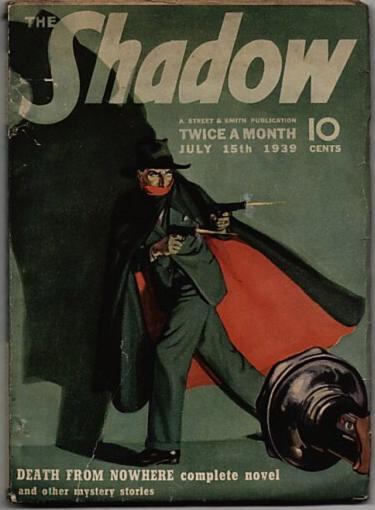
In the musical Bye Bye Birdie there is a line where the father character Harry McAfee says “Call the Shadow. Look him up under Lamont Cranston.” An orchestra member asked me who Lamont Cranston was and I didn’t know – so here’s everything you wanted to know about Lamont Cranston.

Lamont Cranston was one of the alter-egos of THE SHADOW. Just like Superman had a real world identity of Clark Kent.

ABOUT ALTER EGO LAMONT CRANSTON

In print, The Shadow was born Kent Allard, a famed aviator. During World War I, Allard was both a flying ace and a spy who fought for the French, and known by the alias of The Black Eagle (“The Shadow’s Shadow”), although later stories claim his alias was The Dark Eagle (“The Shadow Unmasks”). After the war, Allard sought a new challenge, and decided to wage war on criminals, rather that simply remain a pilot or return to the military (also revealed in “The Shadow Unmasks”). He faked a plane crash and Allard’s death in the South American tropical jungles. He then returned to the United States, arriving in New York City and adopting numerous identities to cloak his return.

One of these was Lamont Cranston, “wealthy young man about town.” In fact, Cranston was a separate character; Allard frequently disguised himself as Cranston and adopted his identity (see the stories “The Shadow Laughs” and “The Shadow Unmasks”). While Cranston traveled the world, Allard assumed his identity in New York. In their first meeting, with Allard/The Shadow in bed recovering from wounds, he threatens Cranston, saying that he has arranged to switch signatures on various documents and other means that will allow him to take over the Lamont Cranston identity entirely unless Cranston agrees to allow Allard to impersonate him when he is abroad. Cranston agrees. The two men sometimes meet in order to impersonate each other (see Crime over Miami). Apparently, the disguise worked well because Allard and Cranston bore something of a resemblance to each other (see “Dictator of Crime.”)

ABOUT THE SHADOW

The Shadow is a fictional character created by Walter B. Gibson in 1931 in a semimonthly series of pulp magazines. The first story was titled “The Living Shadow”. The character is one of the most famous of the pulp heroes of the 1930s and 1940s — made most famous through a popular radio series in which The Shadow was originally played by Orson Welles. The Shadow has also been featured in comic books, comic strips, television, and at least seven motion pictures. Still, The Shadow is most highly regarded for its radio years, in which pulp crime fiction received perhaps its most compelling broadcast interpretation.

Even after decades, the unmistakable introduction from The Shadow, intoned by announcer Frank Readick, has earned a place in the American idiom: “Who knows what evil lurks in the hearts of men? The Shadow knows!”

The haunting theme song, played on an organ, was “Le Rouet d’Omphale” (Omphale’s Spinning Wheel) by Saint-Saens.

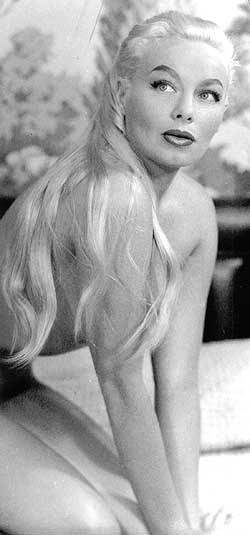
Lily St. Cyr

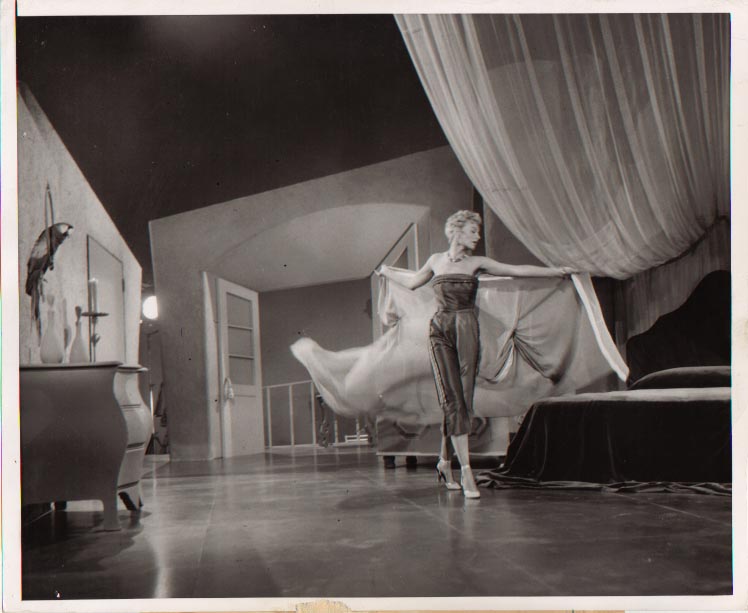
In the Rocky Horror Show musical during the “Floor Show” segment there’s a line Janet sings: “God Bless Lily St. Cyr”. I was curious what the reference was about, so here’s info about Lily St. Cyr. (In the show it is spelled Lily St. Cyre, other incorrect spellings include Lilly Saint Sear, Lilly Saint Cear and Lily St. Seer). Cyr is pronounced like “seer”.

Lili St. Cyr (June 3, 1917 or 1918 – January 29, 1999), was a prominent American burlesque stripper.

Birth name Willis Marie Van Schaack
Born June 3, 1917
Minneapolis, Minnesota
Died January 29, 1999
Los Angeles, California
Spouse Ted Jordan

Early years

She was born as Willis Marie Van Schaack in Minneapolis, Minnesota in 1917 or 1918. She had a sister, Rosemary Van Schaack Minsky. Her grandparents, the Klarquists, reared her and her two show business sisters, Dardy Orlando and Barbara Moffett.

Having taken ballet lessons throughout her youth, she began to dance professionally as a chorus line girl in Hollywood. Unlike other women who have stroke-of-luck stories about being plucked from the chorus line and selected for a feature role, St. Cyr had to beg her manager at the club to let her do a solo act. From her self-choreographed act she eventually landed a bit part at a club called the Music Box in San Francisco, with an act called the Duncan Sisters. It was here that she came to a revelation: A dancer’s salary was only a small fraction of what the featured star’s salary was. The difference? The featured star was nude.

From the 1940s and most of the 1950s, St. Cyr with Gypsy Rose Lee and Ann Corio were the recognized acts in striptease. St. Cyr’s stage name is a patronymic of the French aristocracy, which she first used when booked as a nude performer in Las Vegas. Though she is rather obscure today, her name popped up regularly in 1950s tabloids: stories of her many husbands, brawls over her, and her attempted suicides.

St. Cyr was married six times. Her best-known husbands were the musical-comedy actor Paul Valentine, restaurateur Armando Orsini, and actor Ted Jordan in 1955.

Career

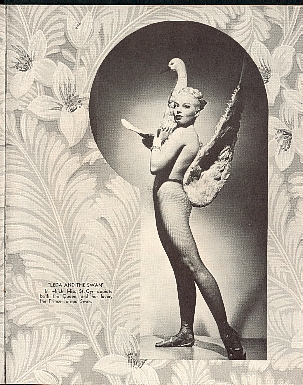
St. Cyr’s professional career started as a chorus line dancer at the Florentine Gardens, in Hollywood. Over the ensuing years and in a variety of different venues, many of St. Cyr’s acts were memorable, with names like “The Wolf Woman”, “Afternoon of a Faun”, “The Ballet Dancer”, “In a Persian Harem”, “The Chinese Virgin”, However, Quebec’s Catholic clergy condemned her act, declaring that whenever she dances “the theater is made to stink with the foul odor of sexual frenzy.” The clergy’s outcry was echoed by the Public Morality Committee. St. Cyr was arrested and charged with behavior that was “immoral, obscene and indecent.” She was acquitted but the public authorities eventually closed down the Gayety Theatre where she performed. In the 1980s, St. Cyr wrote a French autobiography, “Ma Vie De Stripteaseuse.” In the book, she declared her appreciation for the Gayety Theatre and her love for the city of Montreal.

While performing at Ciro’s in Hollywood, (billed as the “Anatomic Bomb”), St. Cyr was taken to court by a customer who considered her act lewd and lascivious. In court, St. Cyr insisted to the jury that her act was refined and elegant. As St. Cyr pointed out, what she did was slip off her dress, try on a hat, slip off her brassiere (there was another underneath), slip into a negligee. Then, undressing discreetly behind her maid, she stepped into a bubble bath, splashed around, and emerged, more or less dressed. After her appearance as a witness, as a newspaper account of the time put it, “The defense rested, as did everyone else.” St. Cyr was acquitted.

While St. Cyr starred in several movies, an acting career never really materialized. In 1955, with the help of Howard Hughes, St. Cyr landed her first acting job in a major motion picture in the Son of Sinbad. The film, described by one critic as “a voyeur’s delight”, has St. Cyr as a principal member of a Baghdad harem populated with dozens of nubile starlets. The film was condemned by the Catholic Legion of Decency. St. Cyr also had a role in the movie version of Norman Mailer’s The Naked and the Dead in 1958. In this film, St. Cyr plays ‘Jersey Lili’, a stripper in a Honolulu night-club and girlfriend of a soldier who boasts to his pals that he has her picture painted inside his groundsheet. Regrettably, heavy edits of St. Cyr’s night-club routine by censors result in some choppy editing in an otherwise finely crafted film. But St. Cyr’s movie career was short lived, and typically she settled for playing a secondary role as a stripper, or playing herself. Her dancing is featured prominently in two Irving Klaw films, “Varietease” and “Teaserama.”

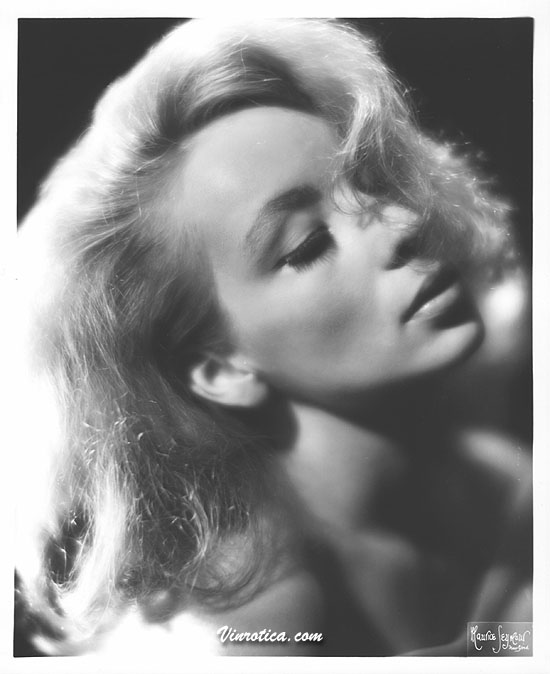
St. Cyr was also known for her pin-up photography, especially for photos taken by Bruno Bernard, known professionally as ‘Bernard of Hollywood’, a premier glamor photographer of Hollywood’s Golden Era. Bernard said that Cyr was his favorite model and referred to her as his muse.

Retirement

When St. Cyr retired from the stage she began a lingerie business in which she would retain an interest until her death. Similar to Frederick’s of Hollywood, the “Undie World of Lili St. Cyr” designs offered costuming for strippers, and excitement for ordinary women. Her catalogs featured photos or drawings of her modeling each article, lavishly detailed descriptions, and hand-selected fabrics. Her marketing for “Scanti-Panties” advertised them as “perfect for street wear, stage or photography.” St. Cyr spent her final years in obscurity and in seclusion, tending to her cats.

Death

She died in 1999 under her maiden name “Willis Marie VanSchaack” in Los Angeles.

Legacy

After St. Cyr’s death, with a renewed interest in burlesque, and especially in Bettie Page, legions of new fans began rediscovering some of the dancers in Irving Klaw’s photos and movies. During this time A&E devoted a special to burlesque in 2001 which included a piece on St. Cyr.

Influences and cultural references

In 1989, one of St. Cyr’s husbands, Ted Jordan, wrote a biography of Marilyn Monroe entitled “Norma Jean: My Secret Life With Marilyn Monroe”, in which Jordan claims that St. Cyr and Monroe had a lesbian affair. The claim is widely disparaged by Monroe biographers. The publisher of Jordan’s book, Liza Dawson, editor for William Morrow and Company, makes a more credible claim in an interview with Newsday in 1989, stating that “Marilyn very much patterned herself on Lili St. Cyr – her way of dressing, of talking, her whole persona. Norma Jean was a mousy, brown-haired girl with a high squeaky voice, and it was from Lili St. Cyr that she learned how to become a sex goddess.” Lili St. Cyr is mentioned in the musical “The Rocky Horror Show”. The final line of the song “Don’t Dream It”, (sung by the character Janet Weiss, as played in the film version by Susan Sarandon) is “God bless Lili St. Cyr!”

Filmography

* Love Moods (1952)
* Bedroom Fantasy (1953)
* Striporama (1953)
* Varietease (1954)
* Teaserama (1955)
* Son of Sinbad (1955)
* Buxom Beautease (1956)
* The Naked and the Dead (1958)
* I, Mobster (1958)
* Runaway Girl (1962)

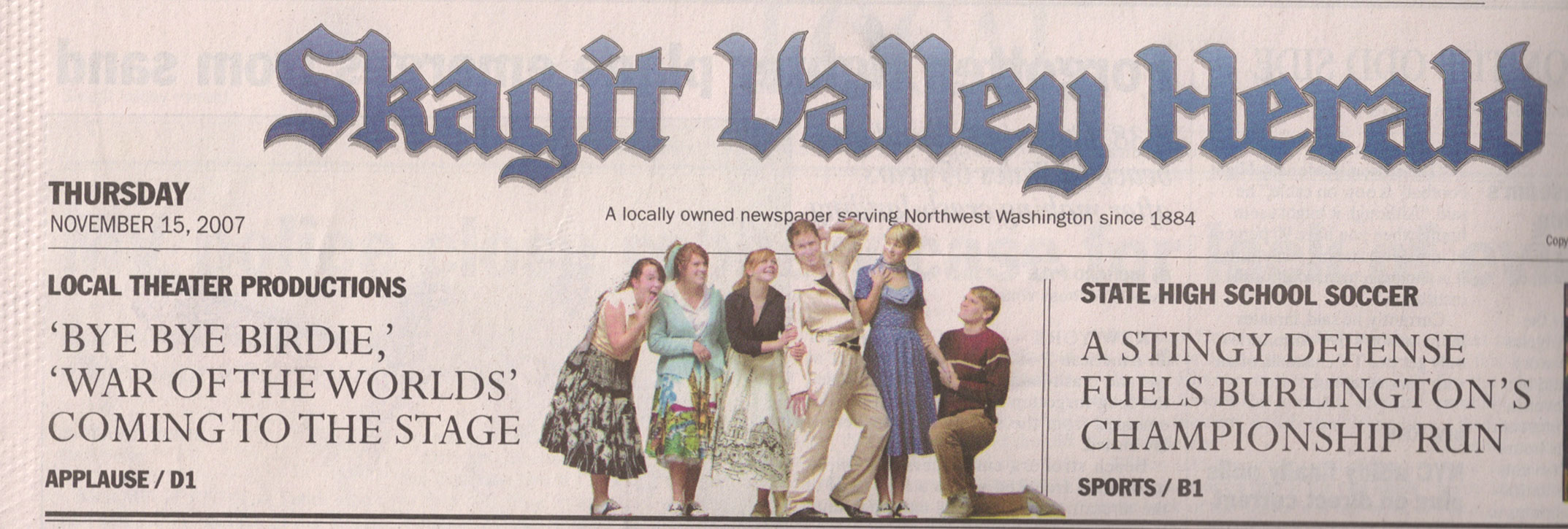
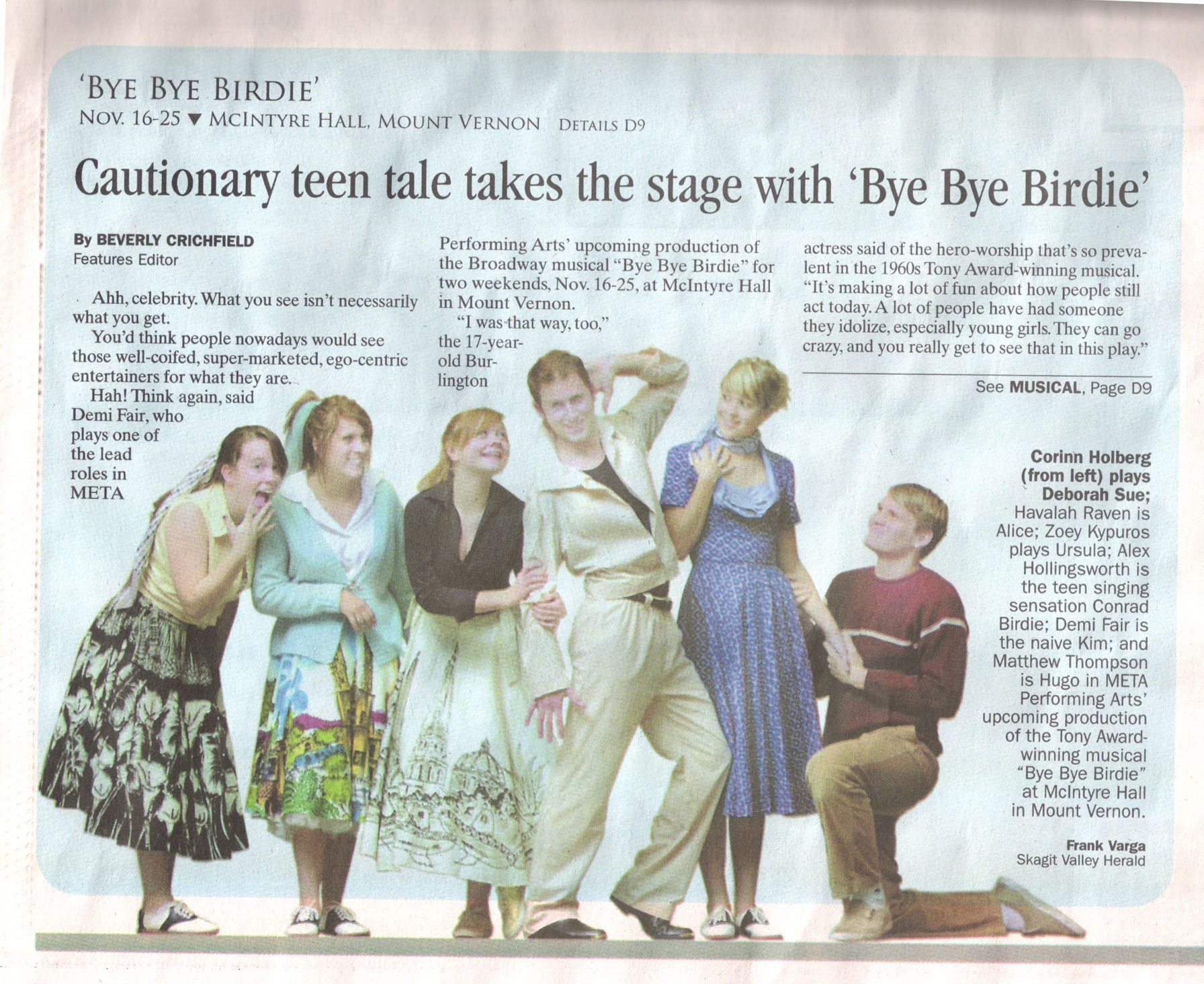
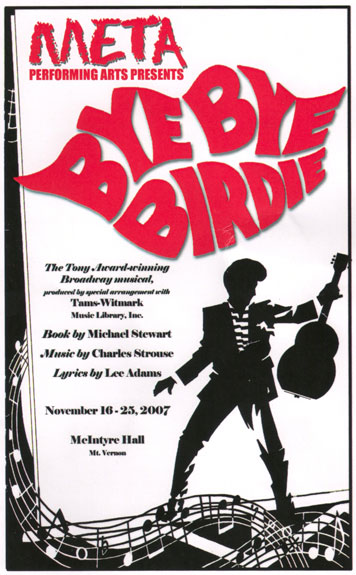
Bye Bye Birdie Nov. 16-25 2007

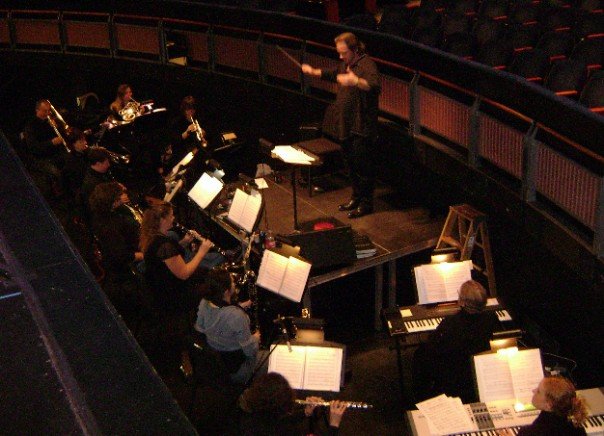
Mount Vernon, WA – META Performing Arts presents Bye Bye Birdie November 16-25, 2007 at McIntyre Hall in Mount Vernon, WA. Come down to the orchestra pit and say hello!

SHOWTIMES:
Fri Nov 16 – 7:30
Sat Nov 17 – 7:30
Sun Nov 18 – 2pm

Fri Nov 23 – 7:30
Sat Nov 24 – 2pm and 7:30
Sun Nov 25 – 2pm

Bye Bye Birdie is a Tony Award-winning musical with a book by Michael Stewart, lyrics by Lee Adams, and music by Charles Strouse.