Bistro a JoJo – Montreal Canada

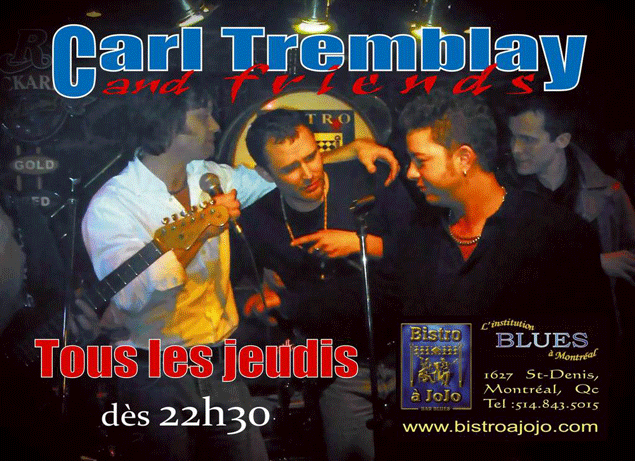
carl-jeudi.gif

Bistro a JoJo. Le Temple du Blues a Montreal. I listened to Carl Tremblay and friends live at Bistro a JoJo last weekend and it really rocked. 3am rolled around really fast and I didn’t want them to stop. Smoking guitar player ala Stevie Ray Vaughan, a Hammond B3 player they nickname “Animal” for good reason, rock solid drums and a bass player that rocked like Tower of Power. Carl Tremblay led them through great arrangements. Everything had a southern rock feel.

I got to meet Carl but he speaks French and I don’t know any – but he thumped his fist on his heart when I told him the name of the friend that sent me to the club to hear him. That’s good enough for me.
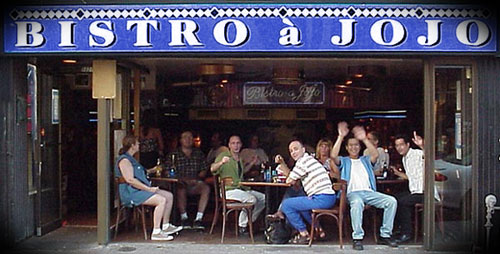
facade.jpg

moyen.jpg

bistro-jojo.jpg

Visit the Bistro a JoJo website at http://www.bistroajojo.com.

About the Bistro a JoJo in Francais:

Le Bistro à JoJo,
a été fondé le 2 août 1975 par Joe Lévis le propriétaire du fameux restaurant le Saint Malo situé en face du Théâtre Saint-Denis. . Il raconta qu’à l’époque il a dû ouvrir un endroit pas loin de son restaurant pour transférer sa clientèle grandissante qui y venait seulement pour boire un verre et ça durait souvent tout l’après-midi. C’est alors que Joe Lévis, surnommé JoJo, acheta une bâtisse à quelques pieds de son resto, où il y avait au sous-sol une petite librairie qu’il transforma vite en un bar très chaleureux situé au 1627 Saint-Denis appelé le Bistro à JoJo.

Après deux ans d’existence, soit en 1977, Joe Lévis (JoJo) vend l’immeuble à des actionnaires indépendants et le fond de commerce à Marc Botrel un Breton et François Tavernier un Belge, deux associés européens d’origine. Ils ont tenu le Bistro pendant 19 ans. Ce sont eux, avec la complicité de Jean Millaire, qui ont eu l’ idée de faire des spectacles de Blues au Bistro et ce fut le Johnny Blue Band qui a eu l’honneur d’ être le premier « Band » officiel à jouer pendant 2 ans à tous les lundis de 1985 et 1986 au Bistro. Ce fut le début d’une vocation musicale qui n’a jamais depuis, cessé de grandir. Mais à un moment donné les tensions montent entre les deux associés de longue date et le Bistro ferme ses portes en octobre 1996 après 21 ans de travail acharné

Pendant 2 mois le local du Bistro était à louer et les clients et artistes disaient que c’était comme passer devant un salon funéraire. La rue Saint Denis venait de perdre son institution Blues de 21 ans d’existence. C’était inconcevable de laisser un tel endroit changer de vocation

Et c’est là que je (Francis Chamberland) commence les négociations avec le propriétaire de l’immeuble qui était déjà en négociation pour louer le local à la chaîne de restaurant Dairy Queen. Mais j’arrive rapidement à une entente et achète le fond de commerce, et tous les équipements sur place, avec mes associés de l’époque, Carl Sprat et Élie Sabbath. C’est alors que nous ouvrons officiellement les portes du Bistro à JoJo dans un temps record après 2 semaines de travail acharné, le 16 décembre 1996. C’est Jimmy James qui fut le premier «Band» à jouer sur la nouvelle scène et un tout nouveau système de son. Ce soir là, le Bistro était plein à craquer, c’était très encourageant pour l’hiver qui s’installait, mais tout n’était pas si facile entre les associés pour les idées futures du Bistro. L’association ne dure pas longtemps avec Carl Sprat qui se retire en mars 1997 après 3 mois et par la suite Élie Sabbath me vend ses parts. Je deviens alors le seul et unique propriétaire après 10 mois d’association, soit le 15 octobre 1997.

J’ai su conserver l’ancien décor, mais en améliorant seulement les points faibles du Bistro. J’ai conservé intégralement le fameux bar original construit par Joe Lévis lui-même et beaucoup d’autres objets originaux s`y trouvent encore. Le décor intérieur et toutes les améliorations apportées, soit, le système de son, la scène, l’éclairage, la peinture, le bois sur les murs, les instruments accrochés un peu partout, sans oublier les boîtes murales contenants des objets d’artistes, ont toutes été imaginées dans ma tête dès que j’ai visité le local pour la première fois. Et quand nous avons installé la première guitare de Jean Millaire au centre du Bistro dans notre première boîte officielle, des guitares, des Félix, des disques d’or, ont commencé à arriver, par tous ces autres artistes et supporteurs du Bistro.

C’était l’association officielle des artistes Québécois avec le Bistro à JoJo qui venait supporter notre cause pour exposer leurs réussites sur les murs. Ceci enchante les grands admirateurs, et met le vent dans les voiles au Bistro à JoJo, qui était à l’époque, encore très fragile. Et rapidement les médias s’emparent de ce nouveau concept québécois et plusieurs journalistes supportent le nouveau Bistro dans sa nouvelle démarche. Ils écrivent plusieurs articles sur ces artistes exposés, et ensuite, de fil en aiguille, des lancements d’album comme Marjo, la grande Mentor du Bistro. Après toutes ses années les murs chantent Marjo, elle est l’artiste ayant le plus assuré l’avenir de «son Bistro», comme elle le dit si bien, d’où vient la fameuse rumeur qu’elle est la propriétaire de la place. Mais, ce n’est pas le cas, ça ne l’a jamais été non plus. Par contre, nous retrouvons ces 3 disques d’or exposés au Bistro et de nombreux objets personnels, dont plusieurs trophées et vêtements de scène y sont exposés.

Comment oublier Eric Lapointe, un autre artiste qui nous a toujours supporté depuis le tout début, qui a tourné plusieurs entrevues sur place au Bistro et qui est devenu notre artiste surprise par excellence de par ces nombreuses apparitions sur scène avec les Blues Men comme Carl Tremblay, Jim Zeller, Matt Laurent, Carlos Veiga et plusieurs autres. On peut retrouver aussi plusieurs objets de valeurs appartenant à Eric dont, un disque d’or, sa première guitare, un Félix et j’en passe. Bob Walsh a lui aussi sa place au centre parmi les nombreux autres artistes comme, Bob Harrisson, Steve Hill, Carl Tremblay, Jim Zeller, etc.

Aujourd’hui le Bistro à JoJo est l’endroit par excellence des artistes pour des nuits magiques inoubliables, ce qui charme à tous les soirs notre clientèle mélomane du Bistro, qui continue toujours de croître en grand nombre. L’ambiance extraordinaire et le personnel toujours aussi attachant nous placent aujourd’hui comme le NO 1 du spectacle Blues à Montréal et grâce à nos spectacles de Blues 7 soirs sur 7, nous avons pu faire connaître un très grand nombre d’artistes de Blues et même, d’auteurs, compositeurs québécois et ça continue

Je tiens à remercier les gens dans l`ombre, qui pendant toutes ces années, ont su m`aider à administrer le Bistro. Dominique, ma conjointe et gérante.

Je remercie également, tous les artistes ayant contribué au soutien de la musique « live au » Bistro et dans tous les autres bars de Montréal et plus particulièrement à André Ménard (de l’équipe spectra, qui a cru en nous), Jean Millaire, Marjolène Morin, Gerry Boulet, Justin Boulet, Breen Leboeuf, Eric Lapointe, Matt Laurent, Carl Tremblay, Bob Harrisson, Jim Zeller, Paul Deslaurier, Guy Bélanger, Rejean Lachance,Joe Jammer, Michel Barrette, Linda Lemay, Daniel Boucher, Jimmy James, Francine Raymond, Colin James, Martin Deschamps, Laurence Jalbert, Bob Walsh, Steve Hill, John Mc Gale, Carlos Veiga, Joe et Roger Levis et tous les autres, vous êtes dans mes pensées.

Merci pour tout,
frank.jpg

Francis

Bye Bye Birdie rehearsal photos

bbb2.jpg

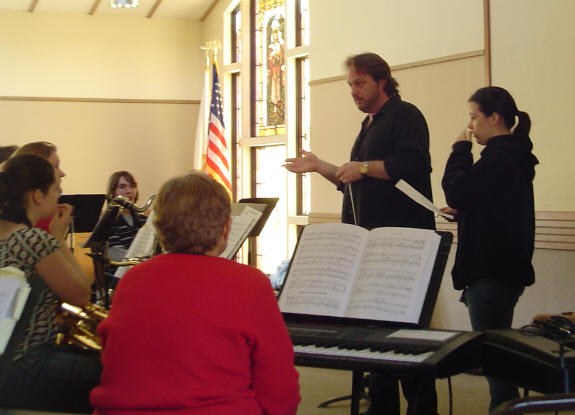
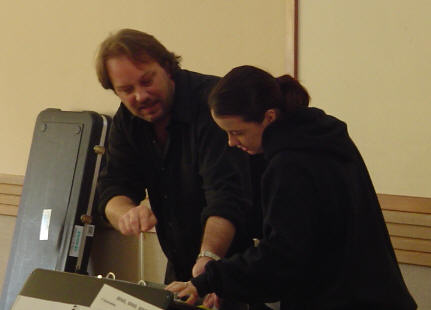
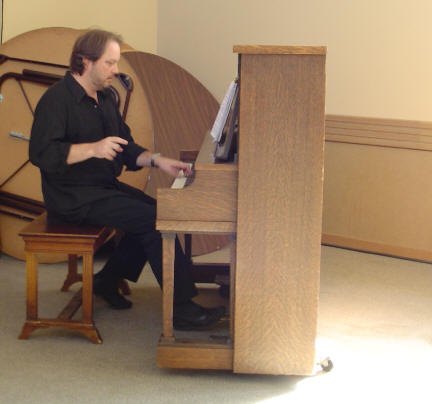
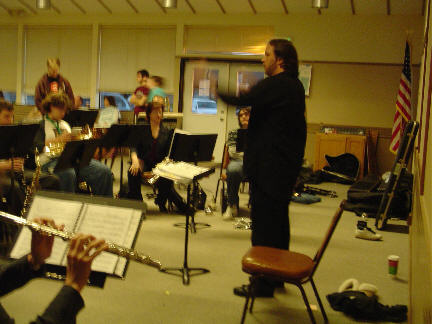
Here are some rehearsal photos from Bye Bye Birdie which I conducted at McIntyre Hall (Mount Vernon, WA) in November 2007.

bbb-conrad.jpg

bbb-keyboard-army.jpg

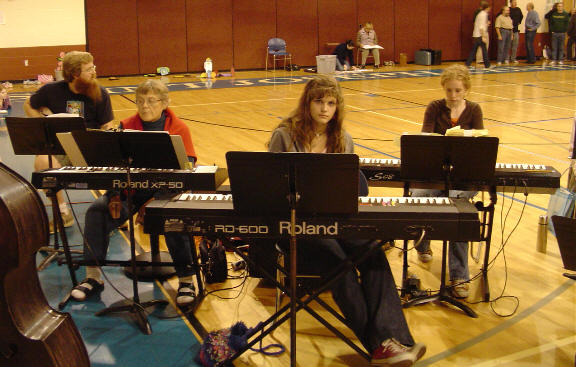
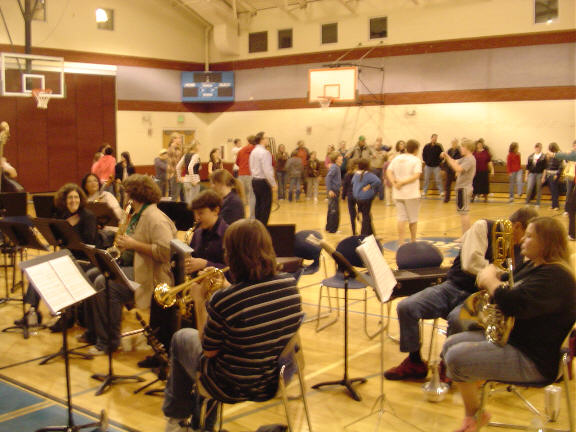
This was what I called the “keyboard army”. We had three keyboardists covering piano, strings and percussion bell parts. I opted use synth strings in favor of having a full sax and horn section. The music for Bye Bye Birdie at the time was supposed to sound rock, but it’s really more of a big band Broadway type sound.

bbb-conrad2.jpg

bbb-rehearsal.jpg

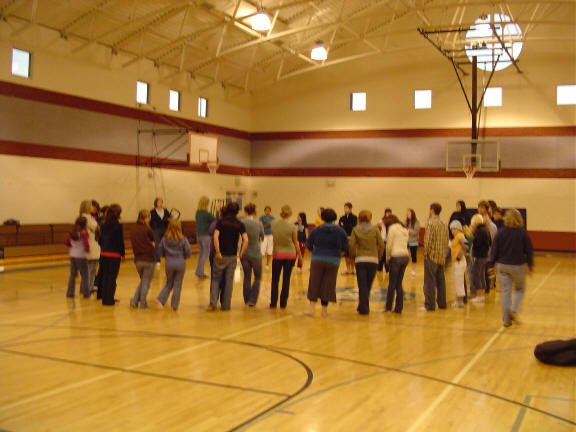
Full cast rehearsal with partial orchestra at a local gymnasium. Note to self, orchestra rehearsals do not work well in gymnasiums

bbb-rehearsal2.jpg

bbb-conrad3.jpg

First run-throughs with the pit orchestra.

bbb-conrad4.jpg

bbb1.jpg

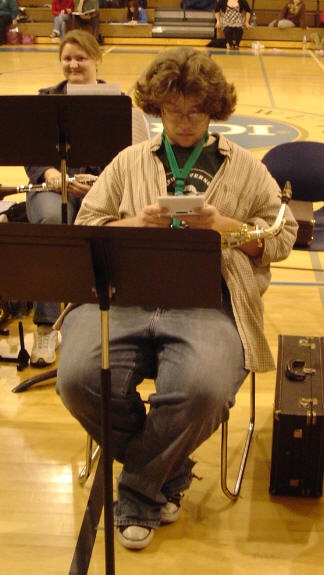
I think this is one of the orchestra members, Kyle, playing video games…

Montreal with Cirque – Week 3

Email received:

Thanks for the update! The Conrad I have come to know is a fairly private man and I respect this. I guess when you are dealing with a first class outfit, its first class all the way around.  If I can read between the lines, it looks like they foster a culture that allows all participants to move forward, not feeling compelled to stay in the box. Allowing musicians to create yet move as one.

You are a well traveled man from previous experiences. I suspect much of what you are experiencing is not foreign; different form and culture, but relative to traveling with Freddy and alike. The other things I am curious about are simply the place you are staying, is it an apartment or hotel? How is the food? What is grocery shopping like? I suspect you enjoy dinning out, expensive, a luxury you desire but relish this experience and are trying to take it all in at once. I appreciate the dialogue. Take care.

*********************

Hi all!

I’ve received several emails wondering why I haven’t been posting on my blog much. Believe me, there are so many things I’d love to post about – but trying to remain true to keeping all the details of my current project under wraps.

I’ve been in Montreal for several weeks now at the Cirque Du Soleil headquarters rehearsing for their new show in Macao, China.

We’re staying in the heart of Montreal just a few blocks from St. Catherine street – a central party and shopping district. We each have our own apartment and they are very nice with a gym and swimming pool. I’ve been trying to hit the gym and pool on a regular basis (with varying degrees of success).

Within just a few blocks of us are dozens and dozens of restaurants from a wide variety of nationalities. Tonight we had Indian, a couple nights ago Thai – pretty much anything you can image – it’s very international.

In the downtown area merchants are very accomadating about speaking English – especially in the restaurants. The further away you get from downtown, it gets a little more difficult. But so far I’ve only had one person be outright rude that I wasn’t speaking French. Walking down the street and hearing people talk it seems about 80% French and 20% English.

What amuses me is that people seem to automatically know if you’re English – and will say “Excuse me” instead of speaking in French. (Maybe the Levi jeans are a giveaway and the “New York” winter hat). Black seems the popular color for Montreal winter wear. Seems that EVERYONE is wearing black. Maybe because it’s easier to see against the snow, or maybe everyone is just ultimately cool.

My personal opinion is that the people in Montreal are very easy on the eyes. A very good looking bunch of people. And of course they all seem sophisticated to me because they have French accents. So there you go – my superficial take on Montreal.

There are lots of smaller Mom and Pop type markets where we can buy fresh food to make at the apartment. Many of the normal brands you would see in the states with a little more international variety.

The musicians I’ve heard here are top notch. Last week I heard a band at Bistro JoJo with a guitar player that struck me as an up and coming SRV – and a B3 player that gave an incredible show. And this was just a local bar band. Maybe I got lucky – some local musicians turned me on to the club.

The whole Cirque experience has been very enjoyable so far. I really love my fellow band mates – players from the US, Australia, Sweden and Armenia. A great family to play in China with.

Many of the artists are planning on moving their families to China – and it turns out there were a lot of last minute marriages so people could immigrate their partners to China. Being single, I’m just looking forward to working hard for Cirque and I’ll see where my time and creativity lead me down the road.

Several people have asked me, “Won’t it be hard for you to do the same show night after night?”. Not at all. Every show is a brand new opening night and a chance to give your ultimate focus and passion. What’s greater than that? My interest is in the experience of people in the audience, not my own. I want each person in the audience to experience the opening night magic of Cirque. I would guess that most artists share that passion.

A shout out to my friends in Mount Vernon, WA and Southern California. This sure has been a fun ride so far…

Olivier Milchberg

 olivier-milchberg.jpg

English/Français/Español

Olivier Milchberg born in Paris, November 7th, 1963. He studied piano and guitar, both classical and jazz for 10 years. At 19, he joined the group Los Incas, founded by his father Jorge Milchberg. He began as guitarist, then continued as flute solo.

The international tours and multiple recordings with Los Incas gave him a much experience as a poly-instrumentalist. He founded Muance Productions in 1988, both as a recording studio and for production of traditional music.

He shares his time between concerts, composition, artistic direction and as producer.
From 1998 on, he developed a passion for oriental music. In 1999 he joins the group Pêcheurs de Perles founded by the Irakien singer Mohamed Alnuma. Olivier Milchberg approaches music with a global conception.

This approach brought him to play numerous instruments traditional or ethnic, like bouzouki (Greek and Irish) and cumbus (Turkish banjo). He’s had a passion since a very young age for reed and bamboo flutes like the “Kena”, “bansouri flute” from India, the ney.

Finally, his ear and mastery of rythm enable him to play the different percussion instruments with ease. His musical research is more than all based on music with soul and roots, in which his inspiration comes for the development of his personal expression.

—————————-

Né à Paris le 7 novembre 1963, il y étudie le piano et la guitare, classique et jazz, pendant dix ans. Il rejoint à 19 ans le groupe Los Incas fondé par son père Jorge Milchberg, en tant que guitariste, puis devient flûtiste soliste.
Les tournées internationales et les enregistrements avec Los Incas lui donnent une grande expérience poly-instrumentale.
Il fonde en 1988 Muance Productions, structure de production de musiques traditionnelles et studio d’enregistrement. Il partage son temps entre les concerts, la composition, la direction artistique et la production discographique.
Il collabore avec de nombreux musiciens de traditions musicales diverses, tels que Sergei Starostin (Russie), Christian Zagaria (médiéval-Oriental), accompagne Delphine Aguilera et Hombeline (chants Occitans), intègre les groupe Bandzydeco (Cajun), Kapela (musiques de l’est), Passe Montagne (bals folks), Balkanic Trio (de l’Europe à l’Orient).
Il rencontre et rejoint en 1999 l’ensemble Pêcheurs de Perles fondé par le chanteur iraquien Mohamed Alnuma, collabore avec le chanteur palestinien Moneim Adwan.
Olivier Milchberg aborde la musique avec une conception globale d’arrangeur. Cette approche l’a amené à pratiquer de nombreux instruments, traditionnels ou ethniques, comme le bouzouki (grec et irlandais), le cumbus (banjo turc). Il s’est passionné depuis très jeune pour les flûtes de roseau et de bambou comme les kenas, les flûtes bansouri d’Inde, le ney. Enfin, son oreille et sa maîtrise du rythme lui permettent de jouer des percussions avec aisance. Sa recherche porte avant tout sur les musiques qui ont une âme et des racines, dont il s’inspire pour développer son expression propre.

———————————————-

Olivier Milchberg nació en París el 7 de Noviembre de 1963,
Estudió piano y guitarra, clásica y jazz, durante diez años.
A los 19 años se unió como guitarrista al grupo Los Incas fundado por su padre Jorge Milchberg, para convertirse luego en flautista.
Las giras internacionales y las grabaciones con Los Incas le han han permitido acumular una gran experiencia poli-instrumental.
En 1998 funda “Muance Productions”, estructura de producción de músicas tradicionales y estudio de grabación.
Reparte su tiempo entre los conciertos, la dirección artística y la producción discográfica.
A partir de 1998 se apasiona particularmente por las músicas orientales.
En 1999 integra el conjunto Pêcheurs de Perles fundado por el cantante iraquí Mohamed Alnuma.
Olivier Milchberg aborda la música con una concepción global.
Este enfoque le permite practicar numerosos instrumentos, tradicionales o étnicos, como el bouzouki ( griego e irlandés) o el cumbus (banjo turco); desde muy jóven siente pasión por las flautas de caña y de bambú como las kenas, las flautas bansouri de India o el ney. Su oído y su conocimiento del ritmo le permiten tocar percusiones con facilidad.
Su investigación se ocupa sobre todo de las músicas que poseen un alma y unas raíces, en las cuales se inspira para desarrollar su propia expresión.

Rachael Cogan

 racheal-cogan.jpg

Racheal Cogan’s recorder sounds as pure as a new-born babe’s conscience. But all it takes is for her to bend a note and that purity is suddenly rent by a flash of the ancient lusts that afflict us all. (John Shand, Sydney Morning Herald Sun, February 17-18, 2007)

Tony Lewis [is] one of Sydney’s most versatile and accomplished exponents of non-Western percussion (Sydney Morning Herald, Metro, April 23, 1999)

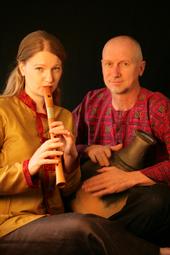
Racheal Cogan (recorders) & Tony Lewis (percussion) perform captivating melodies and rhythms informed and inspired by the music of many cultures. Their unique repertoire includes traditional pieces from Greece, Turkey and Iran, as well as compositions by Racheal Cogan and Ross Daly. Racheal and Tony’s work is drawn from an impressive amount of first hand experience in the study and performance of musical forms across the world, spanning Asia, Africa, Europe and the Middle East, and the indigenous musics of Australia. Their new CD Transience: Contemporary Modal Music, released by Orpheus Music in January 2007 (OM 602). “is spiritual, the musicians have artistry, creativity, vision and sheer mastery of their instruments. These two cultural beatniks have come up with something very special, the synergy between them has created music that will long graze on your CD player and consciousness.” (Jaslyn Hall, Limelight: March 2007)

Racheal and Tony first performed together in Armidale NSW, in January 2005, and have since been performing Australia wide at the Brisbane Multicultural Arts Centre, Townsville Community Music Centre in Qld, the Boite in Melbourne, Eastside Arts in NSW, and the Art Gallery of New South Wales. They have also conducted workshops together for the Music Education Unit of the Sydney Conservatorium of Music (NSW) and for the Music Centre North Queensland.

Racheal Cogan has worked extensively in modal music forms around the world. In Melbourne in 1993 she co-founded the Greek music group the haBiBis, whose CD Intoxication won an ARIA award in 1999. In 2000 she travelled to Athens to study, perform and record with Ross Daly and his ensemble Labyrinth throughout Greece, Turkey, and Macedonia. Since then she has studied Persian classical music with Hossein Omoumi in France, Karnatic Music with Karaikudi R. Mani in India, and performed with Kurdish musician Fardin Karamkhani in the USA. Racheal recorded her CD Sojourn in Greece, with Ross Daly, Kelly Thomas and Angeliki Xekalaki. Sojourn was released in Australia in 2006 by Orpheus Music. In 2008 and 2009, Racheal is based in Macau, China, working with Cirque du Soleil.

Tony Lewis has performed, studied, and conducted cultural exchange project in various parts of Africa, Asia and the Pacific, and in indigenous communities around Australia. He has worked with many of Australia’s leading music groups, including Waratah (with Sandy Evans & Satsuki Odamura), The Renaissance Players, Riley Lee, and many others. Tony appeared as a soloist at the Commonwealth Drum Festival (Auckland 1990), and was a segment Musical Director for the Opening Ceremony of the Sydney 2000 Paralympic Games. He has composed major works for the Perth Festival, the Festival of the Dreaming, the Aboriginal Islander Dance Theatre, and Sadari Theatre Company (Seoul). In duo with Racheal, Tony performs on hand drums such as tabla, zarb and udu.

Rachel Cogan & Tony Lewis have many more concerts and projects planned. More information about Racheal Cogan & Tony Lewis can be found at:www.rachealcogan.com

Maria Andersson

 maria-andersson.jpg

Maria Andersson was born in a small town in Sweden called Västervik. She lives in Stockholm where she writes music, plays some guitar and sings. She works with acoustic bands and is also a vocalist with Cirque Du Soleil.

In Sweden, Maria Andersson works with musicians including Linnea Ohlsson – Cello, Cecilia Persson – Piano, Lisa Eriksson -Accordeon, Mattias Fjellström – guitars, Clas Lassbo – bass and Povel Ohlsson – Percussion.

Happy New Year from Mount Vernon WA

100_1768.jpg

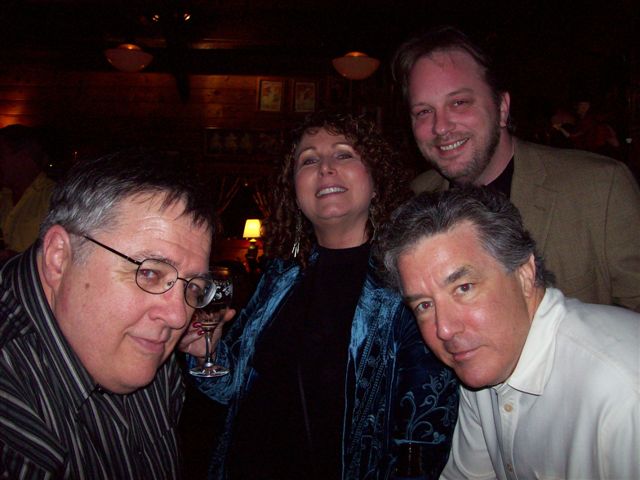
From the New Year’s Eve Party (and my going away party) at the Conway Muse in Conway, WA. Pictured from left is notable impromptu orator Harold Paige, the effervescent and demanding director Jane Skinner, myself, and the McDreamy Mr. Skinner.

A little late for Happy New Years – but I just got the picture. There was a great band at the party with good jazz jams and even a fireworks show. I sure will miss Mount Vernon and the wonderful people here!

Memories of Mount Vernon WA

weloveyouconrad.jpg

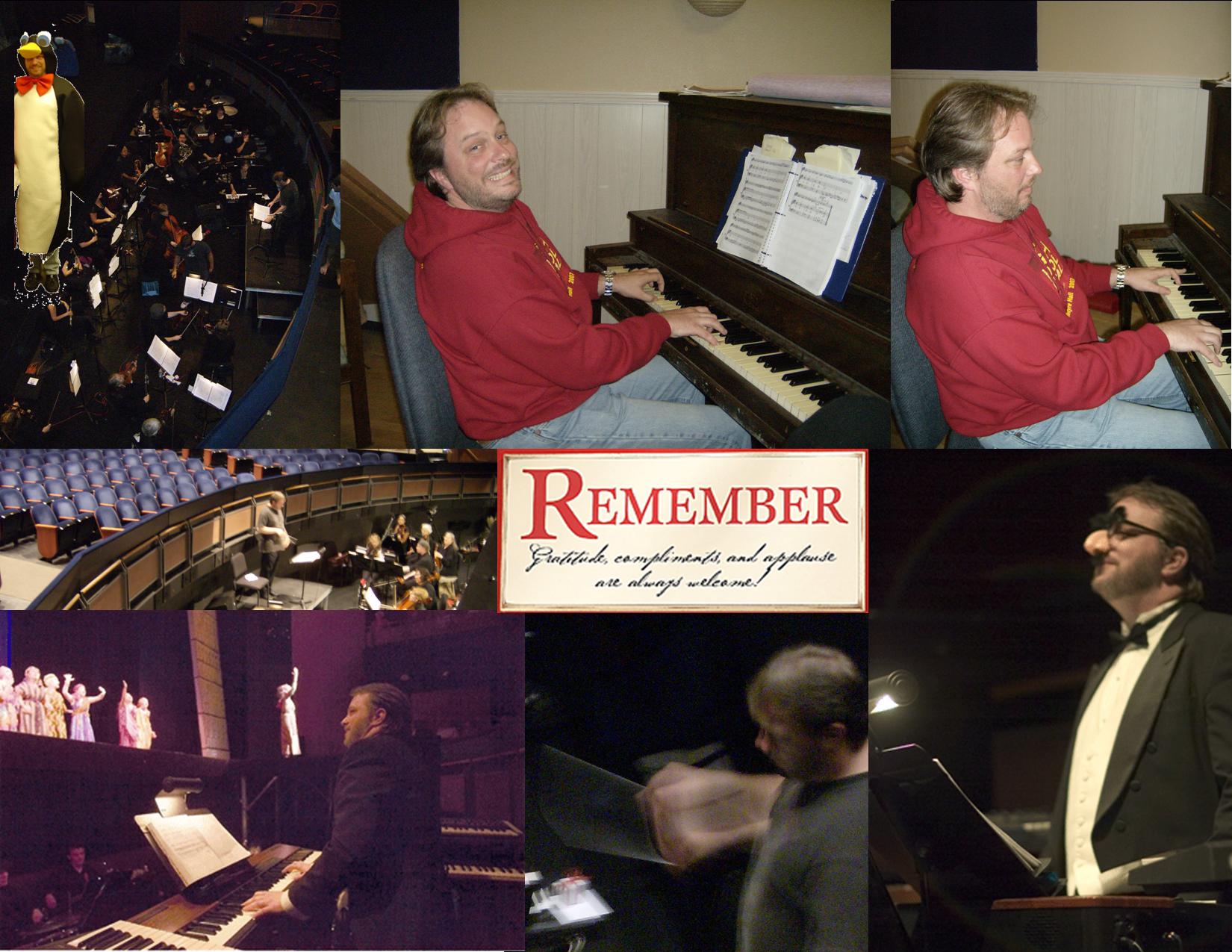
My friend Suzann just sent me this montage of some shows I’ve conducted while in Mount Vernon, WA. I can make out Elton John’s AIDA, Seussical, Disney’s High School Musical, Rocky Horror Show and Brigadoon. (The penguin outfit is what I wore in Seussical).

In a couple days I leave for Montreal, Canada to join the creation process for Cirque Du Soleil’s new show in China. Thanks Suzann for the good Mount Vernon, WA memories!

One of Suzann’s favorite sounds (and mine too!) is the sound of an orchestra tuning. I got extra brownie points with her when I had her brought down into the pit to sit in the middle of the Brigadoon orchestra while they tuned.

“A friend knows the song in my heart and sings it to me when my memory fails.”
– Donna Roberts

Victoria’s View on the Christmas Gloria

Article by Vicki McCarty about my Christmas Gloria which debuted Christmas Eve 2007.

Victoria’s View

“Drop off the music you got Wednesday and pick up the new packet.  Conrad has revised it”!  Huh?  Our jaws dropped in disbelief…how can that be?  We just got it and have only had one rehearsal…and we’re singing it tonight!!!    We took note of the sign on the front door and shook our heads.  This was turning into a memorable Christmas – in more than one way.  I could not have imagined this kind of Christmas Eve even a few years ago.  We entered and emptied the notebook with the music we had just picked up 5 days ago.  We were still reeling from the announcement our young music director had made just 2 weeks earlier.  “I’m thinking of writing a new piece of music for Christmas in a week – just like Bach and Mozart used to do!”   He went on to explain that it was common for them to write something new every week for church the next week.  So, he sat down and did it himself, just to see if it was possible.  I could not help but think what confidence he had in our choir – to think we could perform it after just one long practice – and do it in Latin – that took some confidence.

Two hours later, the service began.  Could we do it – the small group of musicians gathered together – we rehearsed it through twice with the orchestra – then our moment came.  A quiet fell over the congregation – and the first performance of Conrad Askland’s Christmas Gloria in D was born.  And it was beautiful.   A true Christmas miracle happened that night.  A wondrous story was told again, and became new and real to all there.  It was heralded with a beautiful new composition written to announce the glory of God.  A new Bach had done the impossible – composed, rehearsed, and presented his new work.  And we got to be there for the event.

We returned home to a house with no decorations, no tree, no dinner, and only the two of us.  But our heads were still ringing with the sound of Gloria in Excelsis Deo.   A memorable Christmas – in so many ways.  Move over Bach and Beethoven – there’s a new kid in town.

With caring,

Victoria

Yamaha S90 ES – Best Touch Keyboard

 yamaha-s90-es.jpg

I spent several hours at Guitar Center in Seattle, WA yesterday playing all of their 88-key keyboards. I was looking for the best overall controller; a keyboard that I could play legit piano on, but also fast synth runs, control zones and utilize aftertouch for samples. The internal sounds were not important to me.

From their selection I like the Yamaha S90 ES best for overall touch for all applications as a controller keyboard. Players that have to do piano and complex synth on the same board know what a challenge this can be. For piano tracks you need the weighted action so you don’t realize it’s not a “real” piano, and for synth you need a quick action to do the fast sixteenth note runs without getting bogged down.

Some nice extra perks on the Yamaha S90 ES include four zone control sliders on the front that are easily accessible for mixing samples. Also has variable velocity curves for different styles of playing (light for synth work and heavier for legit piano feel). When I clicked on the Performance bank to just check out the sounds too, I was surprised that I really dug the internal drum samples. Found myself actually jamming for a bit with the grooves and most important of all: Forgetting I was playing a synth, not a piano. To me that’s the bottom line. If I have to think about the instrument, it’s no good to me. I need to get lost in the feel and lines of what I’m doing.

And a little plug for Guitar Center. As much bad press as they get for customer service, I had a salesman who got me all the manuals for everything I wanted and was there to answer any question I had. I never felt like I was bothering him. I’m not exactly a salesman’s dream at a music store – I’m very picky, always want to read manuals and don’t care for small talk. Thank you to Jovonn who helped me out.

Often people ask me what the best keyboard is to get. You really can’t go wrong with any board by Roland, Yamaha or Korg. In general, Korg has the best variety of sounds and Yamaha has the best feel. But my overall favorite is usually Roland, so I was surprised to see that a Yamaha board won my heart (I own several keyboards by all three manufacturers).

OVERVIEW

Is the S90 ES an 88-note weighted action digital piano with the sonic flexibility of a synth or a synthesizer with the best sounding piano samples ever available? Actually, it’s the perfect balance of both. The new multi-velocity stereo samples of Yamaha’s hand-built S700 grand piano, the damper reverb effects, and half damper capability all ensure the S90 ES has the most expressive acoustic piano sound Yamaha has ever offered in a synthesizer.

The 128-note polyphony tone generator based on the award winning Motif ES (including 8 inserts, 2 system and separate mastering effects) and Studio Connections, mLAN, and PLG expandability give it all the sonic power and control flexibility of our Motif ES workstation lineup. The new S90 ES, the perfect balance of synthesizer and piano.