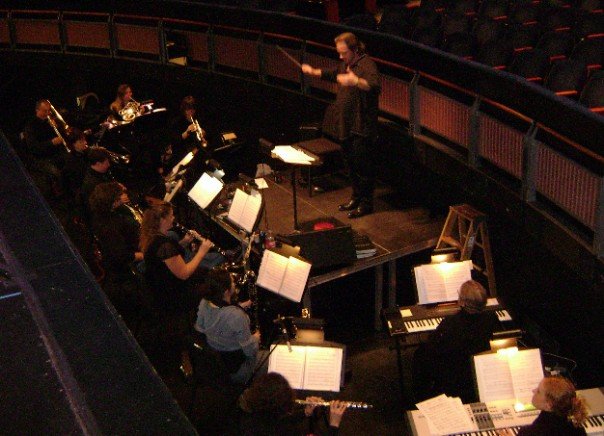
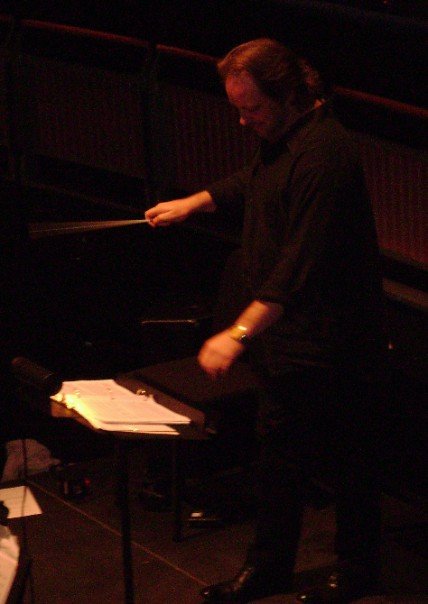
If you’ve been following along with the “Gloria Challenge” then this page has everything you might be interested in. Full instrument and conductor scores, rehearsal MP3’s, final performance MP3 and links to posts made during the process.
The “Gloria Challenge” was to follow the footsteps of JS Bach to compose and perform a full scale sacred work for SATB Chorus and Chamber Orchestra at a church service, and to do it all within one week. The piece I composed was the “Christmas Gloria” and it was performed at the Christmas Eve service at Mount Vernon Presbyterian Church in Mount Vernon, WA.
I had setup several high end microphones to get a quality recording, but my tapes would not format for the recording. So as a last resort I set a CD recorder on top of the church organ and recorded off it’s internal mics. I’m disappointed we didn’t get a better recording, but it will give you an idea of the piece.
The “Gloria Challenge” came about as I was Googling “JS Bach” a couple weeks ago and read again how he composed so much music for the entire church year, often preparing a full scale piece in a single week. That has always fascinated me, so I thought I’d take a swing at it and see what I could do. It was a great devotional time for me, and a bit tense to get it all together.
Thank you SO MUCH to all the vocalists and musicians who took the challenge and stepped up to the plate.
The process was gruelling to do this in a week. I was pretty sick the evening of our performance and collapsed Christmas Day. If I did this on a regular basis I think it would go much smoother. But I was pleased with the finished product. From talking to chorus members most of them were pleased as well considering the time restraints. The choir got one three hour rehearsal – then a run-through before the performance.
Of course it’s all just a scholastic game if the piece doesn’t inspire the listener and fit appropriately into the service. From feedback I’ve received people were very moved by the piece. There was a thirty second standing ovation at the end of the piece. That’s a little rare for church services, especially a Christmas Eve service. I take it that people were very moved by the text and music.
For me, the piece brought alive the mystery and nobility of Christmas. It also brought some depth to the season for me as I was huddled in seclusion working on the piece instead of watching Christmas specials on tv.
The dedication for the Christmas Gloria is to Ruth Haines and the Mount Vernon Presbyterian Church choir. I really enjoyed the couple years I spent with all of you as music director at MVPres. And thanks to Ruth Haines who always kept me organized even when I didn’t know it.
So yes, I’d say we did it.
Christmas Gloria Musicians:
Trumpet – Cindy Luna
French Horn – Amanda McDaniel
Tuba – Bruce Hanna
Oboe – Rebecca Wright
Flute – Linda Slone
Clarinet – Michelle Hanna
Harpsichord – Ruth Haines
Double Bass – Marilyn Parman
Timpani – Todd Parks
Imagine what it must have been like to be there the night Silent Night was heard the first time. Or any of the lasting works of composers who excitedly sat and composed to have special music ready for Christmas. Hearing a major work for the first time – being present at the debut is something that not everyone has an opportunity to experience. But those attending the candlelight service at Mount Vernon Presbyterian Church on Christmas Eve will have such an experience.
Conrad Askland has been working in the mode of the old masters, and an assemblage of musicians and singers will perform for the first time his work, Gloria in D. This is an undertaking similar to that of years past. It will be a meaningful Christmas experience, and a wonderful Christmas gift to the community.
Askland has been music director at MVPC for the last year and has directed the music for several theatrical productions in Skagit county. The Christmas eve performance will be his last before he leaves to be Assistant Bandleader and Keyboardist for Cirque du Soleil in Macau, China.
*Updated 12/23/07 – These scores are now final versions. Please transfer rehearsal markings to these new scores. We will have copies of new scores for you on Christmas Eve. 5pm call time for rehearsal with chorus and chamber orchestra.*
Musicians – your scores are available in .pdf format here:
Ah…the Gloria Challenge Part II. I thought I’d write a little background on why I think it’s so cool, and some of the earthly details on creating inspiration.
The “Gloria Challenge” is to write a complete Gloria for chorus, chamber orchestra and organ in one week. And then perform it Christmas Eve.
I’m a JS Bach nut. Most people that know me get that well enough. If I could listen to just JS Bach the rest of my life I’d be a happy man. I was raised Lutheran, so there’s that whole part of it too. JS Bach was Lutheran, and the king of counterpoint, and the king of Baroque music. He had several sons who were also composers – they called him the “old Bach” and thought his music to be old fashioned. Bach had lots of personality problems with his church employers – and from most accounts they didn’t really realize what they had. Part of Bach’s duties was to rehearse the choirs and write weekly Cantatas for the services. I think he has three existing yearly cycles – that’s three years of different chorales and cantatas for each week of the church calendar.
One of Bach’s sons was given all of the old JS Bach manuscripts when his father died. The son ran into money problems himself at the end of his life and sold many of them. I think I even heard a story that some of Bach’s songs were used to wrap cheese. His music was largely forgotten until Mendellsohn revived and re-discovered JS Bach’s music. Ever since then Bach’s music has been revered as some of the best in Western civilization. Bach lived 1685-1750, his death closed the era of what we call the Baroque Period. Mendellsohn revived the music around 1820. That’s all off the top of my head, feel free to correct me on dates.
Bach was very devout to his faith. On all his manuscripts he would write “S.D.G.” for “Soli Deo Gloria” – or “Only for the Glory to God”. It was a reminder of what his music work was all about. He even had manuscript paper created for him that had the S.D.G. watermark.
So that’s some background. The part that has always fascinated me is how he often wrote a full work in just a week and then had it performed at the church service. I always wanted to do that….I’m sure I’m not the first musician to have a little Bach fantasy like that.
While I’m waiting for my next Cirque Du Soleil gig to start I’ve finished all my theater shows and concerts. The only thing left is to finish my post as music director of a church through Christmas Eve. I get stir crazy pretty quick – so last week late at night I emailed a couple musicians to see if they’d like to play for Christmas Eve. I got a couple responses that people were busy – which was great, because the next morning I realized how much extra work that would be. But one musician emailed back Tuesday night and said they had cancelled their gig with the Philharmonic to play for the service.
Yikes! Now I was stuck – I had messed with a musician’s income. I decided Tuesday night to go ahead and try to write a Gloria in week. I set my scoring computer up and started Wednesday at 3pm. My deadline is the following Wednesday at 6pm – to have the piece complete for chorus, organ and chamber orchestra. As crazy as the challenge is – several musicians from my pit orchestras have volunteered to play the piece and we have emails flying all over the place to beef up our chorus.
I worked on the piece all day Thurs-Fri-Sat – Right now the score is 14 minutes long at about 50 pages. I’m going to have to cut it down quite a bit but I’m very pleased with the progress. It’s in neo-classical style. Since the piece is also a tribute to the work of Bach – it begins with the chorus singing “Soli Deo Gloria”.
Here is the original GLORIA latin text:
Gloria in excelsis Deo,
et in terra pax hominibus
bonae voluntatis.
Domine Deus, Rex coelestis,
Deus Pater omnipotens.
Domine Fili unigenite
Jesu Christe.
Domine Deus, Agnus Dei,
Filius Patris.
I have used this portion of the text in this order, with addition of SDG:
Soli Deo Gloria – Only for the Glory of God
Domine Deus, Rex coelestis, – Lord God, heavenly King, God the Father almighty
Deus Pater omnipotens. – Lord the only
Domine Fili unigenite – begotten Son
Jesu Christe. – Jesus Christ
Domine Deus, – Lord God
Agnus Dei, – Lamb of God
Filius Patris. – Son of the Father
Gloria in excelsis Deo, – Glory in the heights to God
et in terra pax hominibus – And on earth peace to men
bonae voluntatis. – of good will.
The whole first paragraph takes up only about 45 seconds, where Gloria in excelsis Deo is the bulk of the piece, with a duet around “et in terra pax hominibus” and chorus responds with “bonae voluntatis”.
The beginning paragraph is set for a dark Medieval sound, which to me signifies part of the mystery of Christmas. The waiting and apprehension of not quite knowing what is coming. Sure, we know now – we’ve got the book. But what did it feel like back then for people that knew it was coming, but weren’t at the pretty manger scene. Was it a little scary and unsure?
After the intro the Gloria breaks into a traditional neo-Baroque sound that is a mix of Handel and Bach. Brass fourths and french horn hunting calls with timpani and woodwinds in Baroque motor rhythms. The “et in terra pax” is a duet with a slightly modern sound, but still something Bach could have done. This is a respite from the banging of the timpani and honking of the brass. Then the chorus resumes with the main uptempo theme, does a circle of fifths walkdown and build up into a pipe organ cadenza, then finishes with royal fanfare.
Now the sleigh bells…..yes, I put a section in for sleigh bells. I realize it has nothing to do with the biblical Christmas story, and that Santa Claus nor his reindeer appear in either Matthew, Mark, Luke OR John. But it makes me laugh everytime I think about it, and the Gloria is ALL about joy. So they stay in.
So there it is. Scores will be available in a few days and I’ll post scores and recording after Christmas so you can check it out.
My mother asked me how the piece was coming along and I said sadly, “It doesn’t sound as good as Bach” to which she replied: “Hmpfff….that’s only YOUR opinion.”
Bach wouldn’t be impressed. No one can be Bach. But I think he’d be flattered that 300 years later we’re still in awe of his passion and music.
The congregation will decide Christmas Eve if we hit the mark or not……..
It’s just to much fun not to take the challenge. One week to write a Gloria for SATB, Chamber Orchestra and Organ. I’m starting on it today. If you’re a local musician and would like to be scored into the piece for our 7pm Christmas Eve service in Mount Vernon, WA please email me.
Vocalists interested in joining us on the piece for Christmas Eve please join us for practice Wednesday December 19 from 6-9pm at Mount Vernon Presbyterian Church – 15th and Broadway across from Skagit Hospital.
Will I pull it off? Is it too much and I’ll fall on my face? Will it sound good and inspire men’s hearts or be some superficial diddy suitable only for a child’s toy? Will it be the greatest music ever heard? Stay tuned….
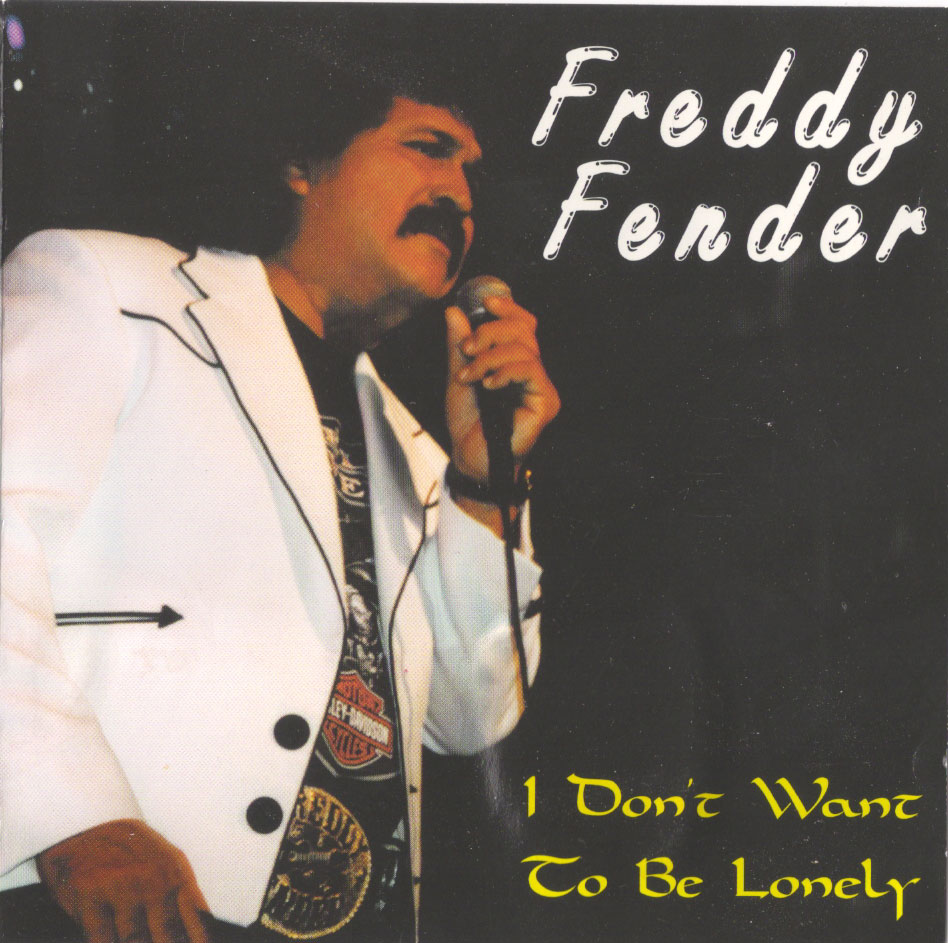
Artist: Freddy Fender
Album Title: I Don’t Want To Be Lonely
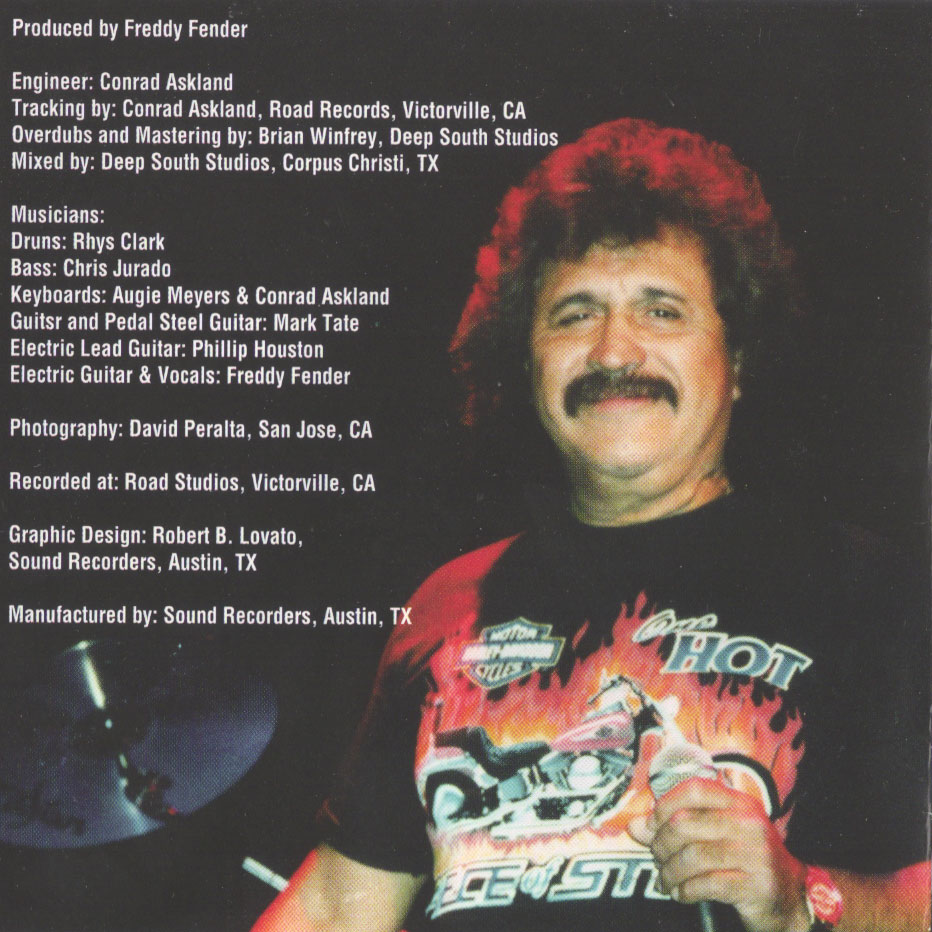
Produced by Freddy Fender
Engineer: Conrad Askland
Tracking by Conrad Askland, Road Records, Victorville, CA
Overdubs and Mastering by Brian Winfrey, Deep South Studios
Mixed by Deep South Studios, Corpus Christi, TX
MUSICIANS:
Drums: Rhys Clark
Bass: Chris Jurado
Keyboards: Augie Meyers and Conrad Askland
Guitar and Pedal Steel: Mark Tate
Electric Lead Guitar: Philip Houston
Electric Guitar and Vocals: Freddy Fender
Photography: David Peralta, San Jose, CA
Recorded at: Road Studios, Victorville, CA
Graphic Design: Robert B. Lovato
Sound Recorders, Austin, TX
Manufactured by: Sound Recorders, Austin, TX
“I Don’t Want To Be Lonely”
Words and Music by Freddy Fender (Baldemar Huerta)
I don’t want to be lonely, lonely for your love
For I, just love you only and baby you’re the one I’m thinkin’ of
I know, you love another and baby I know you don’t want my love
But I, I love you only and baby you’re the one I’m thinkin’ of
I don’t want to be forsaken, just dreaming babe, ’bout your love
I don’t want to be mistaken, but I think babe you’re the one I’m thinkin’ of
Cause I, I’ll be the lonely one. Baby, you’re the one I’m thinkin’ of.
I know you love another and I know you don’t want me anymore
But I, could never love no one else and I will be your love forever more
But I don’t want to be lonely, lonely for your love
Cause I, I’ll be the lonely one and baby you’re the one I’m thinkin’ of.
And baby you’re the on I’m thinkin’ of
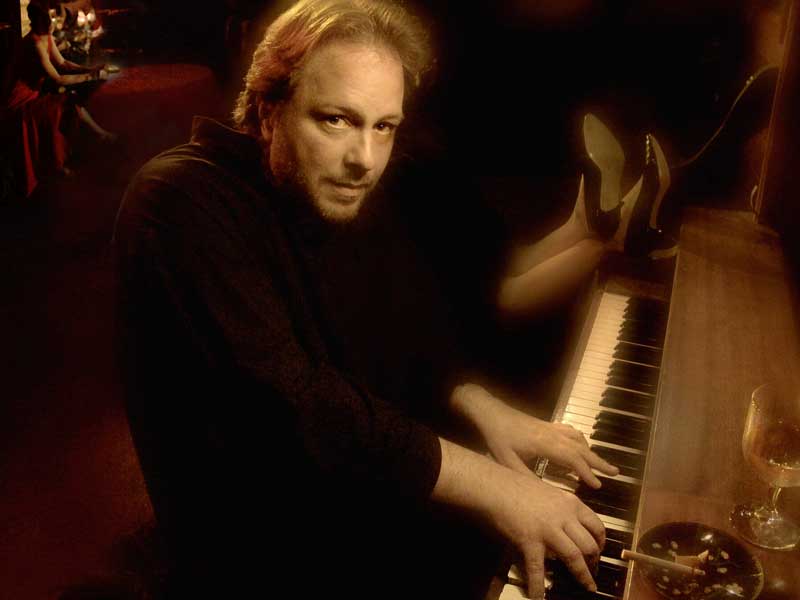
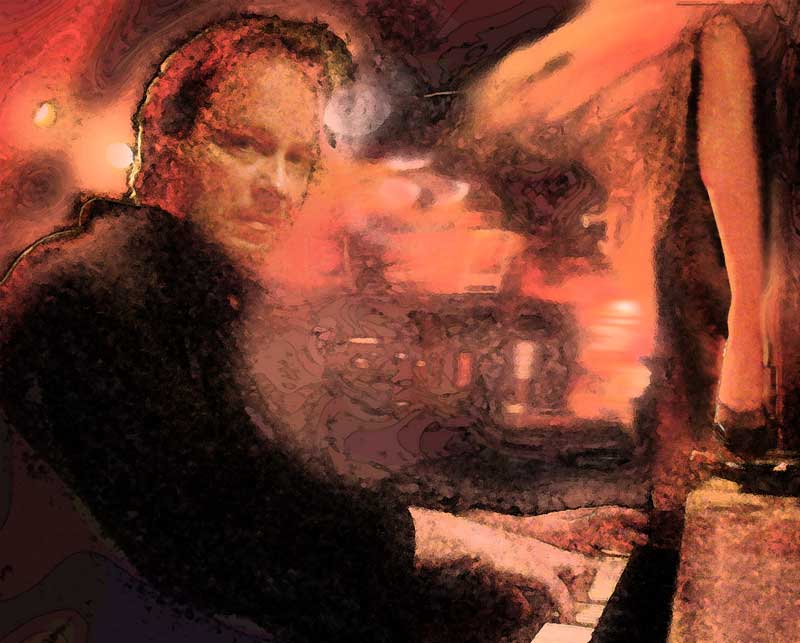
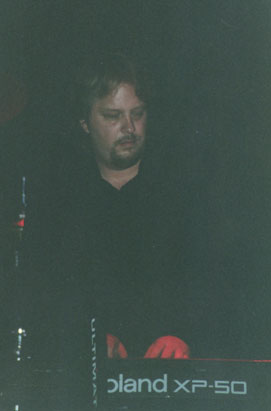
New promo photos of Conrad Askland by Sergei Petrov. Click for full size. See other work by Sergei at http://www.spandas.com
Taken at The Muse in Conway, WA – one of my favorite places to jam late at night. Thank you Sergei! The graphic effects in this second shot are not very flattering, but I’ll post it up anyway.
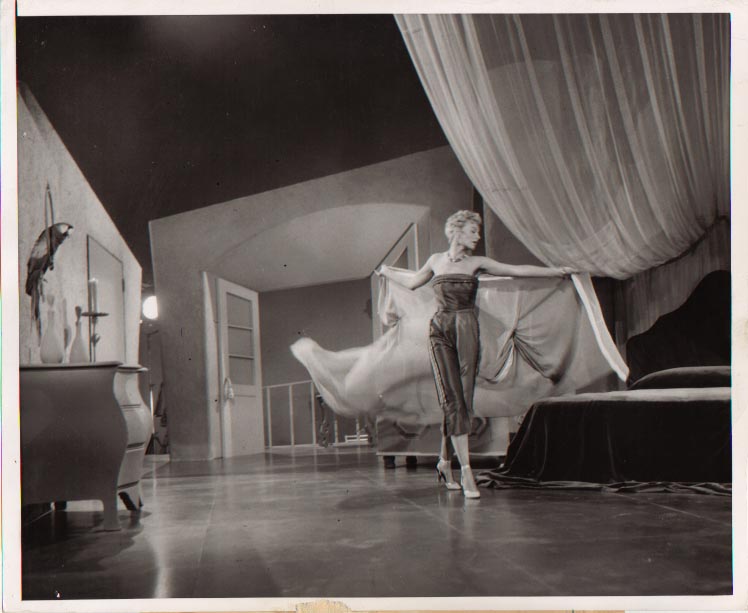
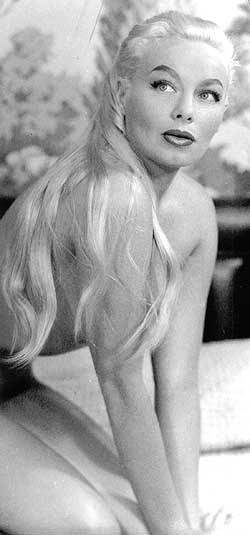
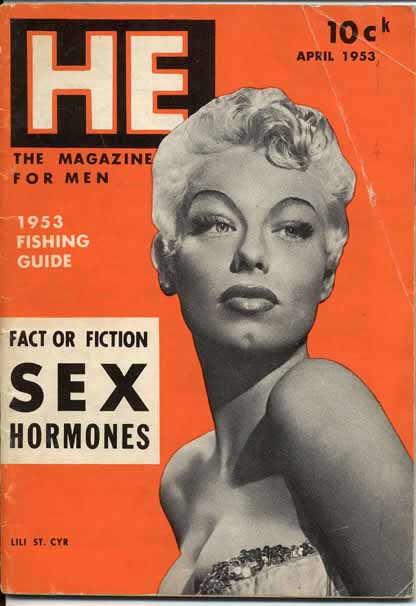
In the Rocky Horror Show musical during the “Floor Show” segment there’s a line Janet sings: “God Bless Lily St. Cyr”. I was curious what the reference was about, so here’s info about Lily St. Cyr. (In the show it is spelled Lily St. Cyre, other incorrect spellings include Lilly Saint Sear, Lilly Saint Cear and Lily St. Seer). Cyr is pronounced like “seer”.
Lili St. Cyr (June 3, 1917 or 1918 – January 29, 1999), was a prominent American burlesque stripper.
Birth name Willis Marie Van Schaack
Born June 3, 1917
Minneapolis, Minnesota
Died January 29, 1999
Los Angeles, California
Spouse Ted Jordan
Early years
She was born as Willis Marie Van Schaack in Minneapolis, Minnesota in 1917 or 1918. She had a sister, Rosemary Van Schaack Minsky. Her grandparents, the Klarquists, reared her and her two show business sisters, Dardy Orlando and Barbara Moffett.
Having taken ballet lessons throughout her youth, she began to dance professionally as a chorus line girl in Hollywood. Unlike other women who have stroke-of-luck stories about being plucked from the chorus line and selected for a feature role, St. Cyr had to beg her manager at the club to let her do a solo act. From her self-choreographed act she eventually landed a bit part at a club called the Music Box in San Francisco, with an act called the Duncan Sisters. It was here that she came to a revelation: A dancer’s salary was only a small fraction of what the featured star’s salary was. The difference? The featured star was nude.
From the 1940s and most of the 1950s, St. Cyr with Gypsy Rose Lee and Ann Corio were the recognized acts in striptease. St. Cyr’s stage name is a patronymic of the French aristocracy, which she first used when booked as a nude performer in Las Vegas. Though she is rather obscure today, her name popped up regularly in 1950s tabloids: stories of her many husbands, brawls over her, and her attempted suicides.
St. Cyr was married six times. Her best-known husbands were the musical-comedy actor Paul Valentine, restaurateur Armando Orsini, and actor Ted Jordan in 1955.
Career
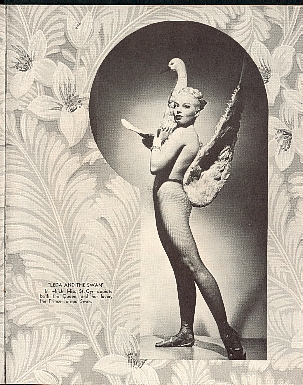
St. Cyr’s professional career started as a chorus line dancer at the Florentine Gardens, in Hollywood. Over the ensuing years and in a variety of different venues, many of St. Cyr’s acts were memorable, with names like “The Wolf Woman”, “Afternoon of a Faun”, “The Ballet Dancer”, “In a Persian Harem”, “The Chinese Virgin”, However, Quebec’s Catholic clergy condemned her act, declaring that whenever she dances “the theater is made to stink with the foul odor of sexual frenzy.” The clergy’s outcry was echoed by the Public Morality Committee. St. Cyr was arrested and charged with behavior that was “immoral, obscene and indecent.” She was acquitted but the public authorities eventually closed down the Gayety Theatre where she performed. In the 1980s, St. Cyr wrote a French autobiography, “Ma Vie De Stripteaseuse.” In the book, she declared her appreciation for the Gayety Theatre and her love for the city of Montreal.
While performing at Ciro’s in Hollywood, (billed as the “Anatomic Bomb”), St. Cyr was taken to court by a customer who considered her act lewd and lascivious. In court, St. Cyr insisted to the jury that her act was refined and elegant. As St. Cyr pointed out, what she did was slip off her dress, try on a hat, slip off her brassiere (there was another underneath), slip into a negligee. Then, undressing discreetly behind her maid, she stepped into a bubble bath, splashed around, and emerged, more or less dressed. After her appearance as a witness, as a newspaper account of the time put it, “The defense rested, as did everyone else.” St. Cyr was acquitted.
While St. Cyr starred in several movies, an acting career never really materialized. In 1955, with the help of Howard Hughes, St. Cyr landed her first acting job in a major motion picture in the Son of Sinbad. The film, described by one critic as “a voyeur’s delight”, has St. Cyr as a principal member of a Baghdad harem populated with dozens of nubile starlets. The film was condemned by the Catholic Legion of Decency. St. Cyr also had a role in the movie version of Norman Mailer’s The Naked and the Dead in 1958. In this film, St. Cyr plays ‘Jersey Lili’, a stripper in a Honolulu night-club and girlfriend of a soldier who boasts to his pals that he has her picture painted inside his groundsheet. Regrettably, heavy edits of St. Cyr’s night-club routine by censors result in some choppy editing in an otherwise finely crafted film. But St. Cyr’s movie career was short lived, and typically she settled for playing a secondary role as a stripper, or playing herself. Her dancing is featured prominently in two Irving Klaw films, “Varietease” and “Teaserama.”
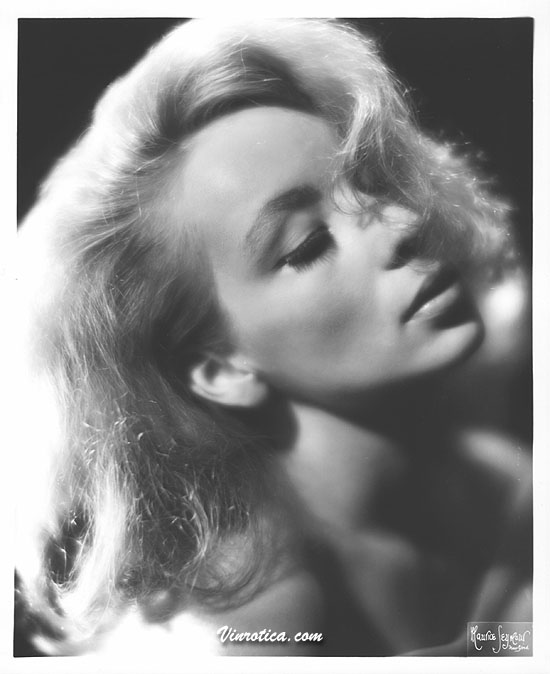
St. Cyr was also known for her pin-up photography, especially for photos taken by Bruno Bernard, known professionally as ‘Bernard of Hollywood’, a premier glamor photographer of Hollywood’s Golden Era. Bernard said that Cyr was his favorite model and referred to her as his muse.
Retirement
When St. Cyr retired from the stage she began a lingerie business in which she would retain an interest until her death. Similar to Frederick’s of Hollywood, the “Undie World of Lili St. Cyr” designs offered costuming for strippers, and excitement for ordinary women. Her catalogs featured photos or drawings of her modeling each article, lavishly detailed descriptions, and hand-selected fabrics. Her marketing for “Scanti-Panties” advertised them as “perfect for street wear, stage or photography.” St. Cyr spent her final years in obscurity and in seclusion, tending to her cats.
Death
She died in 1999 under her maiden name “Willis Marie VanSchaack” in Los Angeles.
Legacy
After St. Cyr’s death, with a renewed interest in burlesque, and especially in Bettie Page, legions of new fans began rediscovering some of the dancers in Irving Klaw’s photos and movies. During this time A&E devoted a special to burlesque in 2001 which included a piece on St. Cyr.
Influences and cultural references
In 1989, one of St. Cyr’s husbands, Ted Jordan, wrote a biography of Marilyn Monroe entitled “Norma Jean: My Secret Life With Marilyn Monroe”, in which Jordan claims that St. Cyr and Monroe had a lesbian affair. The claim is widely disparaged by Monroe biographers. The publisher of Jordan’s book, Liza Dawson, editor for William Morrow and Company, makes a more credible claim in an interview with Newsday in 1989, stating that “Marilyn very much patterned herself on Lili St. Cyr – her way of dressing, of talking, her whole persona. Norma Jean was a mousy, brown-haired girl with a high squeaky voice, and it was from Lili St. Cyr that she learned how to become a sex goddess.” Lili St. Cyr is mentioned in the musical “The Rocky Horror Show”. The final line of the song “Don’t Dream It”, (sung by the character Janet Weiss, as played in the film version by Susan Sarandon) is “God bless Lili St. Cyr!”
Filmography
* Love Moods (1952)
* Bedroom Fantasy (1953)
* Striporama (1953)
* Varietease (1954)
* Teaserama (1955)
* Son of Sinbad (1955)
* Buxom Beautease (1956)
* The Naked and the Dead (1958)
* I, Mobster (1958)
* Runaway Girl (1962)
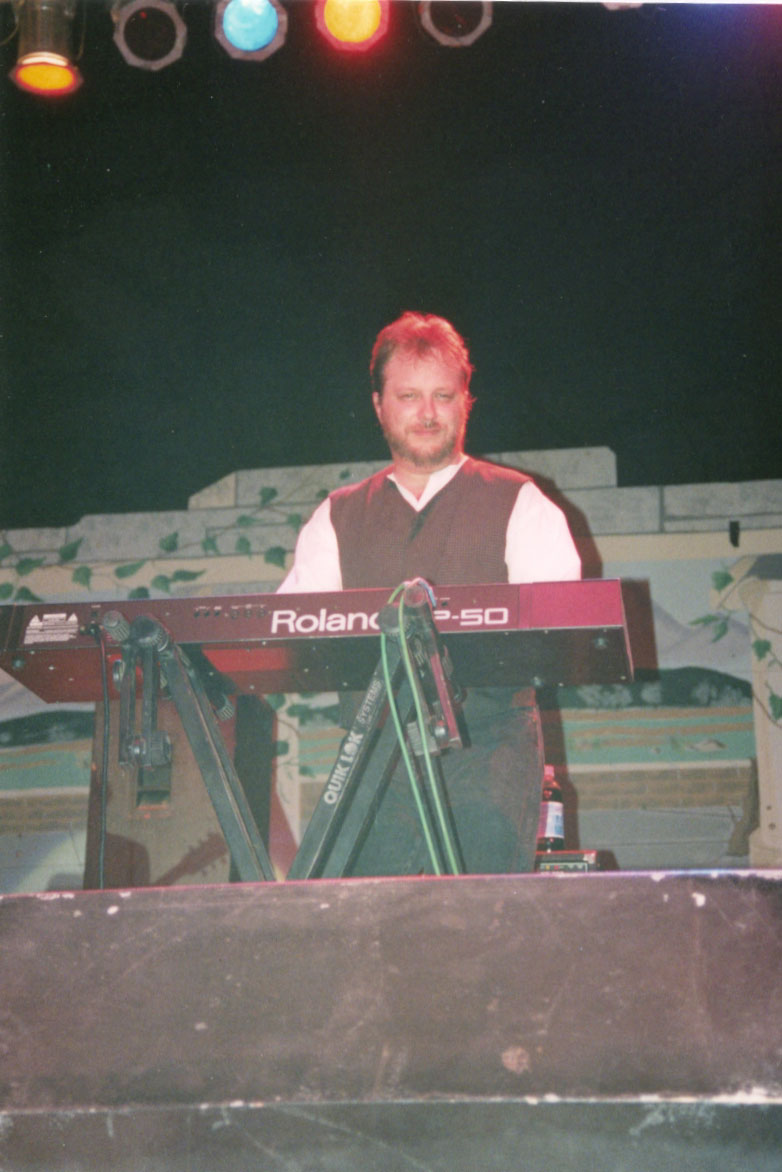
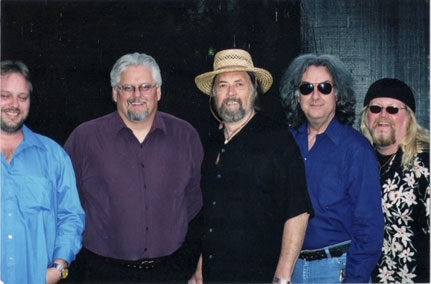
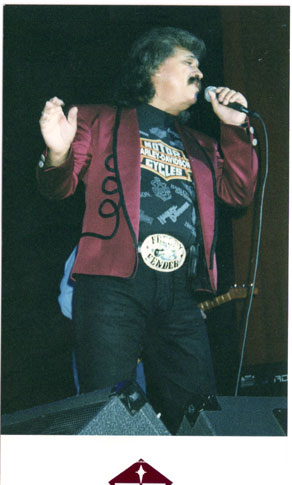
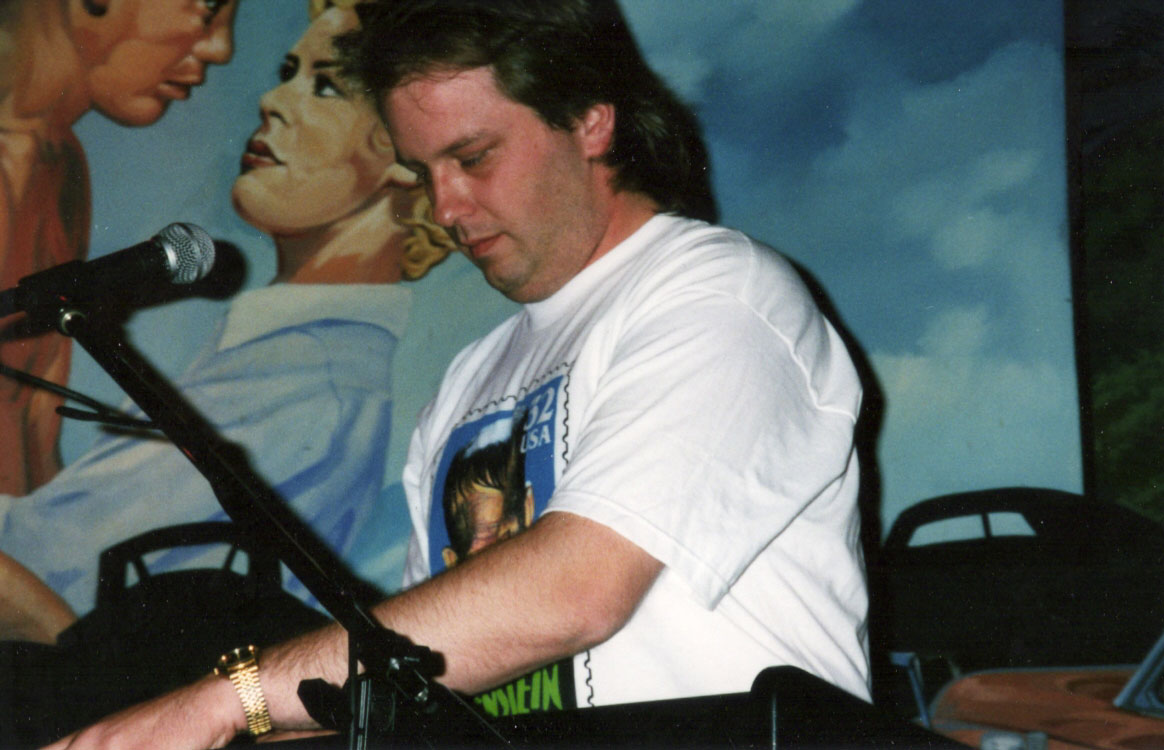
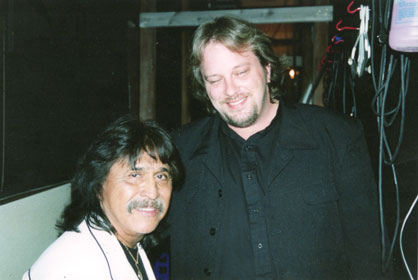
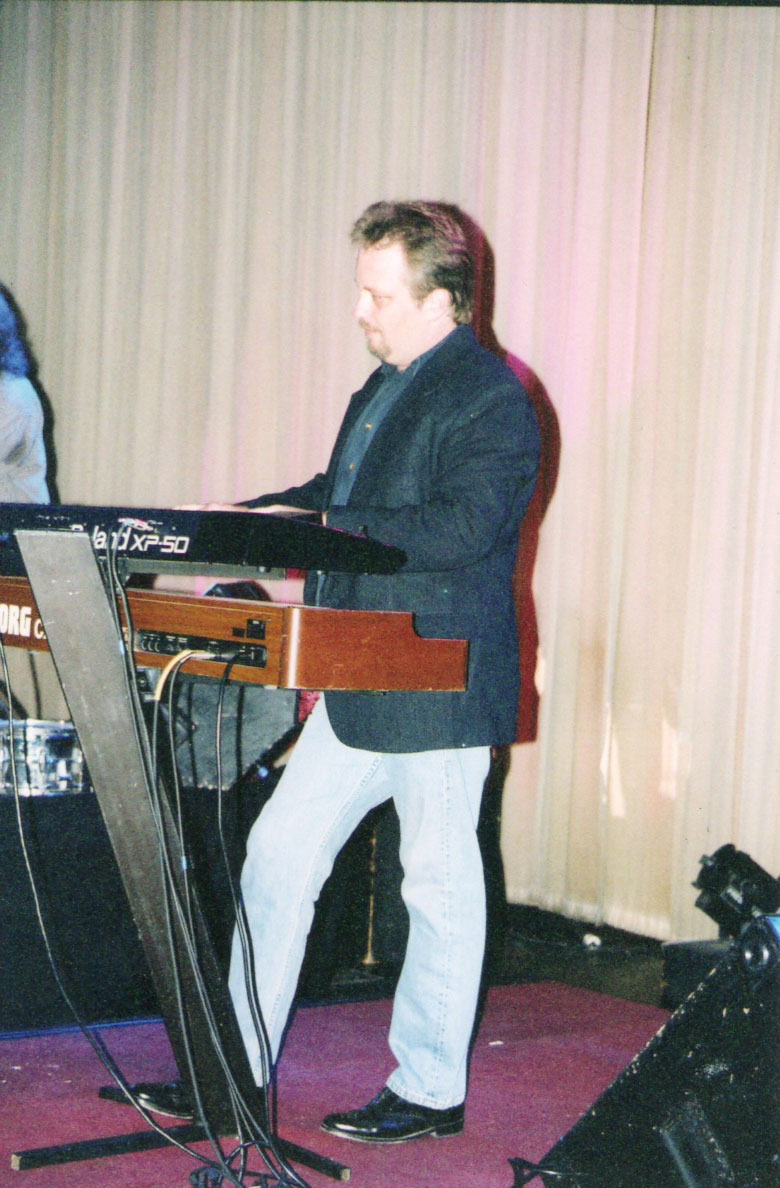
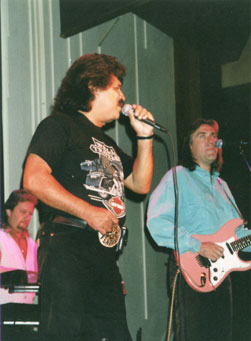
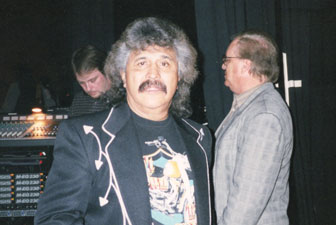
David Peralta, former road manager for Freddy Fender, sent me these photos a while back. Pictures of Freddy, the Freddy Fender band and yours truly back when I played in his band. Freddy Fender passed away in 2006 and we all miss him a lot. People ask me how Freddy was to work for and I always have the same response “It was awesome.” Being a musician touring with Freddy Fender was very fun.
Conrad Askland – Freddy Fender Band
The Freddy Fender Band 2004 (part of it)
From left: Conrad Askland (keyboards), Vern Monnett (Pedal Steel), Augie Meyers (Piano/Accordion), Rhys Clark (drums) and Mark Tate (guitar). We normally worked as a 7 piece group: Freddy on vocals/guitar, two keyboards, bass, drums, guitar and pedal steel.
Photo from 1995 Christmas Card that Freddy Fender sent to his friends.
One night before a gig I shaved my goatee/beard. Freddy got a kick out of that and said “Aiy-yai-yai! Gringo – when you shave you look like a boiled egg!”. He’s kind of right!
Freddy Fender and Conrad Askland
Around 2004 – This page has some of the worst pictures of me in the history of the world. But I’m putting them up anyway because I loved Freddy Fender.
I think I’m about to burp or something in this one. Probably too much Menudo.
Yeah ok, so I’m porked out in some of the pics. But I have a defense. When you’re on the road, there’s two things you look forward to: finally being able to sleep in your room and THE FREE BUFFET! Maybe that was just me and the bass player. We had great buffets while working with Freddy. Don’t tell me you wouldn’t totally pork out if you could get away with it.
We usually flew to all our gigs but we’d still have to hunker down in the vans to drive from the airports to the gigs. Freddy didn’t like stopping for very long so he’d have the driver stop at an AM/PM and tell us to be back in 5 minutes. Mmm….corndog, Funions, soda – ok, made it back in time. Then we’d get to the venue and it was time to hit the buffet. THEN at the gig it was in our rider to have a deli spread backstage.
We were big boys. Pound for pound, a very good deal for any booking agent. It was a total blast and we were treated top notch. Ok, back to the Jenny Craig….