I Hate To Audition!

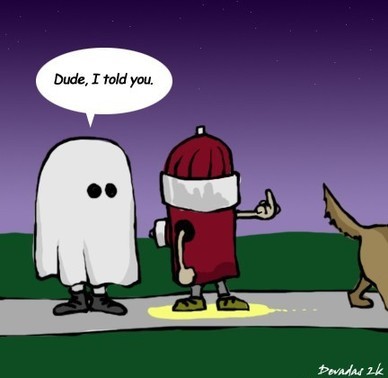
369515018_m.jpg

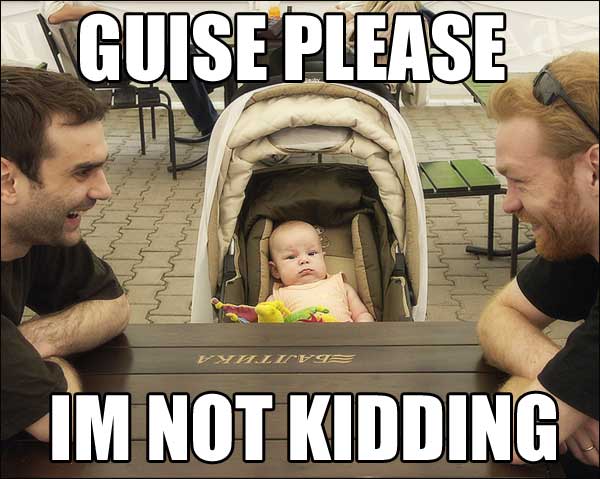
I thought this was a great capture of the audition experience. As an adult I haven’t had to audition too many times, usually I’m on the other side of the desk. But some of the auditions I’ve had were gut wrenching. I’ll have to post some day about my audition with Cirque Du Soleil. YIKES! Those French Canadians are very disarming.

I’ve worked with the writer, Suzann McLamb, in AIDA and SEUSSICAL. Also seen her in Lil Abner and the local bard company Shakespeare Northwest. She’s very talented and in her own words, the ultimate “theatre junkie”.

Which reminds me I need to post sometime about the rush of theatre performance. It is indeed intoxicating. See my previous post about AUDITION TIPS FOR A MUSICAL.
.

I Hate To Audition
by Suzann McLamb

I hate to audition and I’ll tell you why …

My throat seizes up and I feel like I’ll die.

My stomach performs a gymnastics routine.

Performance is flight, my auditions turn green.

The trembling begins in the sole of my foot

And shakes its way out of my head at the roots.

My vision gets wavy; my tunnel ears ring.

I open my mouth expecting to sing.

Instead of a lovely melody sound,

Comes the gravelly howl of a dog in the pound.

So, that didn’t go well. I’m crazy for staying!

It’s monologue time; Should’ve spent more time praying!

What was my first line and what is the next?

They’re knitting their eyebrows and looking perperplexed.

I speak but don’t hear words or know what I’m saying

Is it Shakespearean English or rambled delaying?

Help me! Help now! Help me get off the stage.

I feel like a mouse in the rock python’s cage.

My body’s constricting and I’m turning blue.

How I got up here, I haven’t a clue,

I’ll laugh when it comes ’round to cast party time

And I’ve danced in the limelight and aced all my lines.

But now I’m still here and they want a dry read.

It’s murder! It’s hopeless! I’ll never succeed!

The room spins again, I can’t see the fine text.

Please, oh please won’t you just holler out, “Next!”

A call back? You’re kidding! That’s such a surprise!

Past evil auditions … shy thespians thrive.

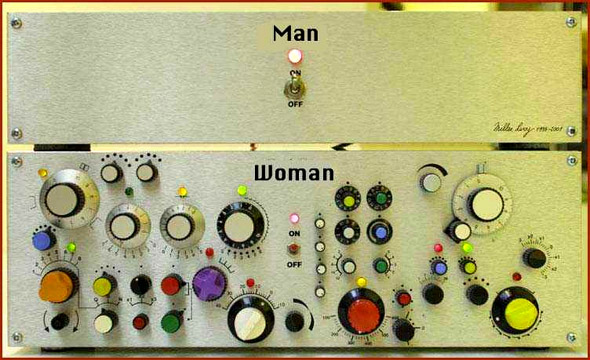
Men’s Rules – The Difference Between Men and Women

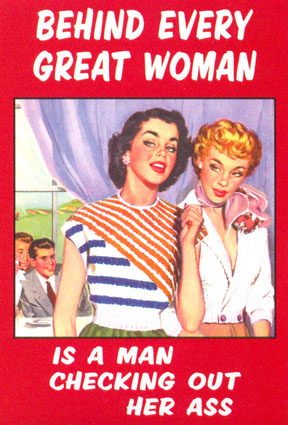
manwomanfhfix5.jpg

At last a guy has taken the time to write this all down

Finally, the guys’ side of the story.

We always hear “the rules”

From the female side.

Now here are the rules from the male side.
These are our rules!
Please note… these are all numbered “1”
ON PURPOSE!
1. Men are NOT mind readers.

1. Learn to work the toilet seat.
You’re a big girl. If it’s up, put it down.
We need it up, you need it down.
You don’t hear us complaining about you leaving it down.

1. Sunday sports. It’s like the full moon
or the changing of the tides.
Let it be.

1. Shopping is NOT a sport.
And no, we are never going to think of it that way.

1. Crying is blackmail.

1. Ask for what you want.
Let us be clear on this one:
Subtle hints do not work!
Strong hints do not work!
Obvious hints do not work!
Just say it!

1. Yes and No are perfectly acceptable answers to almost every question.

1. Come to us with a problem only if you want help solving it. That’s what we do.
Sympathy is what your girlfriends are for.

1. A headache that lasts for 17 months is a Problem.
See a doctor.

1. Anything we said 6 months ago is inadmissible in an argument.
In fact, all comments become null and void after 7 Days.

1. If you won’t dress like the Victoria ‘s Secret girls, don’t Expect us to act like soap opera guys.

1. If you think you’re fat, you probably are.
Don’t ask us.

1. If something we said can be interpreted two ways and one of them makes you sad or angry, then we meant the other one

1. You can either ask us to do something
Or tell us how you want it done.
Not both.
If you already know best how to do it, just do it yourself.

1. Whenever possible, Please say whatever you have to say during commercials.

1. Christopher Columbus did NOT need directions and neither do we.

1. ALL men see in only 16 colors, like Windows default settings.
Peach, for example, is a fruit, not A color. Pumpkin is also a fruit. We have no idea what mauve is.

1. If it itches, it will be scratched.
We do that.

1. If we ask what is wrong and you say “nothing,” We will act like nothing’s wrong.
We know you are lying, but it is just not worth the hassle, besides we know you will bring it up again later.

1. If you ask a question you don’t want an answer to, Expect an answer you don’t want to hear.

1. When we have to go somewhere, absolutely anything you wear is fine…Really.

1. Don’t ask us what we’re thinking about unless you are prepared to discuss such topics as baseball, the shotgun formation,
or golf.

1. You hav e enough clothes.

1. You have too many shoes.

1. I am in shape. Round IS a shape!

1. Thank you for reading this.
Yes, I know, I have to sleep on the couch tonight;

But did you know men really don’t mind that? It’s like camping.

Ave Maria by JS Bach

1760-08-wdheq-if-300.jpgI received a note saying someone was desperately trying to find history of the JS Bach “Ave Maria” and was not finding anything online.

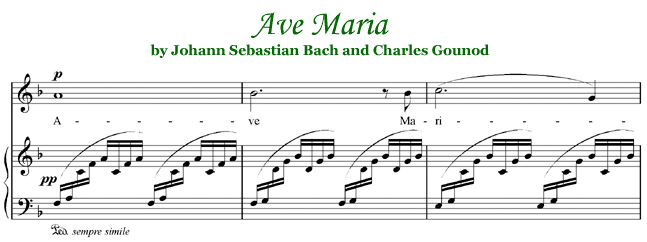
Bach never wrote the Ave Maria. Aha! It was Gounod that took a prelude by JS Bach, and then put a melody on top with lyrics to the Ave Maria.

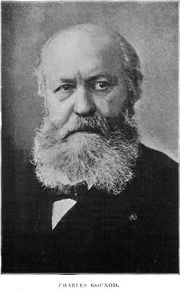
JS Bach was an unwitting partner in the collaboration. Charles Gounod was a French composer who lived from 1818-1883. Read the Wikipedia Page on Charles Gounod. So google “Gounod Ave Maria” and you’ll find it readily available from most sheet music suppliers.
Here’s a bit of the music to refresh your memory:

bagoavma-excerpt.gif

Photo of composer Charles Gonoud

180px-charles_gounod.jpg

Musical settings of the Ave Maria

The Ave Maria has been set to music numerous times. Among the most famous settings is the version by Charles Gounod (1859), adding melody and words to Johann Sebastian Bach’s first prelude from the Well-Tempered Clavier. Antonín Dvořák’s version was composed in 1877. Another setting of Ave Maria was written by Giuseppe Verdi for his 1887 opera Otello. Russian composer César Cui, who was raised Roman Catholic, set the text at least three times: as the “Ave Maria,” op. 34, for 1 or 2 women’s voices with piano or harmonium (1886), and as part of two of his operas: Le Flibustier (premiered 1894) and Mateo Falcone (1907).

This text was also very often set by composers in the Renaissance, including Jacques Arcadelt, Josquin Desprez, Orlando di Lasso, and Giovanni Pierluigi da Palestrina. Before the Council of Trent there were actually different versions of the text, so the earlier composers in the period sometimes set different versions than the ones shown above. Josquin, for example, himself set more than one version of the Ave Maria. Here is an example of a text set by Josquin which begins with the first six words above, but continues with a poem in rhymed couplets:

Seussical the Musical – Last weekend to see the show

hat-seussical.jpgThis is your last weekend to see META’s production of Seussical the Musical at McIntyre Hall (Mount Vernon, WA). Shows open to the public are Thurs, Fri, Sat 7pm shows and closing Sunday 2pm matinee (November 9-12, 2006).

Many people have asked me if it’s a fun production. The answer is yes, it’s WAY fun. Our 20 piece orchestra is fantastic and it’s a blast to conduct it. So, be there or be square.

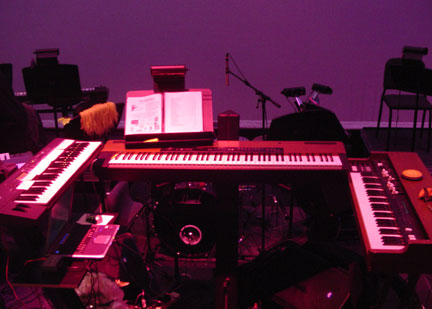
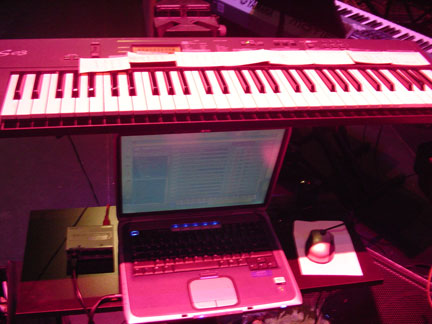
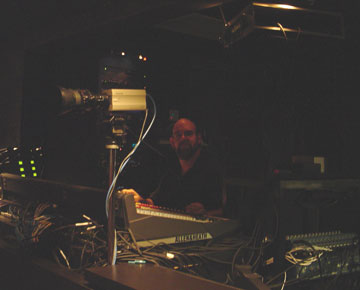
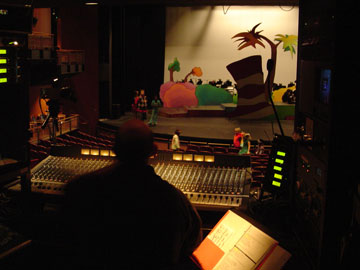
Here’s a photo of my setup for the show. I also play keyboards. My favorite setup is using three keyboard arrays in a “U” shape. I usually have one main keyboard in front so I have easy access to scores, batons, etc. For this show I just use one keyboard on either side. To my right I use a B3 replica synthesizer by Korg, and to my left is a Yamaha keyboard triggering my laptop computer. I use Kontakt by Native Instruments and program a custom sound bank for special effects and pre-show music. I think it’s much better to time the sound effects live with the action, rather than relying on compact discs. It also allows me to overly multiple effects where needed in real time. In addition to my keyboards, we have FOUR more keyboardists. Keyboard heaven!
keyboard-seussical.jpg

keyboard-kontakt.jpg

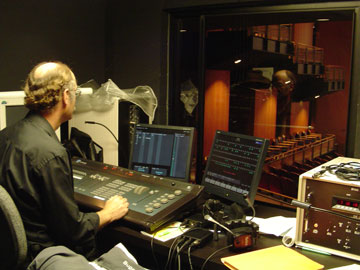
Lighting booth at McIntyre Hall preparing cues.

mcintyre-hall-light-booth.jpg

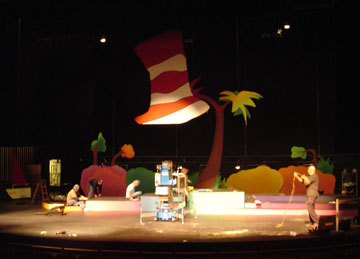
A photo during tech week while setting the stage for Seussical. The hat is flown.

setup-set-seussical.jpg

setup3.jpg

seussical-scrim.jpg

seussical-set.jpg

View of Seussical stage from the sound room. For this production we use 18 wireless microphones and an extra mixing board for a total of 40 channels between vocalists and orchestra.

sound-seussical.jpg

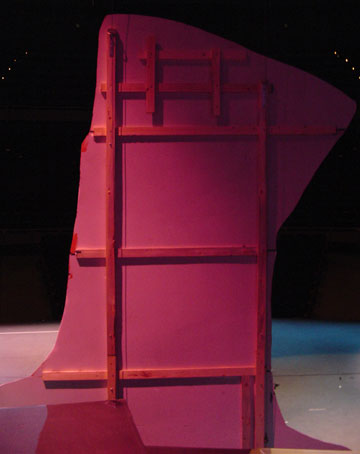
Backside of the Seuss tree and added reinforcements.

tree-back.jpg

Looking at the sound booth.

sound2-seussical.jpg

hat-seussical.jpg

hat-back.jpg

RHPS – 7th Best Musical of All Time

Rocky Horror Picture Show was voted the 7th best musical of all time by Channel 4 viewers. See 100 Best Musicals List.

.
7. The Rocky Horror Picture Show (1975) The ultimate audience participation movie. Richard O’Brien’s cult musical tribute to Hollywood’s horror B-movies is rocket powered by Tim Curry’s performance as the crazed Dr Frank N Furter. Hosting a convention of alien deviants at his Ohio castle, the transvestite doctor unveils his latest creation, a love machine called Rocky Horror. Great rock’n’roll, great characters, great musical.

Bush wants Pro-Homosexual Drama Banned

December 9, 2004

http://arts.guardian.co.uk/features/story/0,11710,1369643,00.html

President Bush wants ‘pro-homosexual’ drama banned. Gary Taylor meets the politician in charge of making it happen

What should we do with US classics like Cat on a Hot Tin Roof or The Color Purple? “Dig a hole,” Gerald Allen recommends, “and dump them in it.” Don’t laugh. Gerald Allen’s book-burying opinions are not a joke.

Earlier this week, Allen got a call from Washington. He will be meeting with President Bush on Monday. I asked him if this was his first invitation to the White House. “Oh no,” he laughs. “It’s my fifth meeting with Mr Bush.”

Bush is interested in Allen’s opinions because Allen is an elected Republican representative in the Alabama state legislature. He is Bush’s base. Last week, Bush’s base introduced a bill that would ban the use of state funds to purchase any books or other materials that “promote homosexuality”. Allen does not want taxpayers’ money to support “positive depictions of homosexuality as an alternative lifestyle”. That’s why Tennessee Williams and Alice Walker have got to go.

I ask Allen what prompted this bill. Was one of his children exposed to something in school that he considered inappropriate? Did he see some flamingly gay book displayed prominently at the public library?

No, nothing like that. “It was election day,” he explains. Last month, “14 states passed referendums defining marriage as a relationship between a man and a woman”. Exit polls asked people what they considered the most important issue, and “moral values in this country” were “the top of the list”.

“Traditional family values are under attack,” Allen informs me. They’ve been under attack “for the last 40 years”. The enemy, this time, is not al-Qaida. The axis of evil is “Hollywood, the music industry”. We have an obligation to “save society from moral destruction”. We have to prevent liberal libarians and trendy teachers from “re-engineering society’s fabric in the minds of our children”. We have to “protect Alabamians”.

I ask him, again, for specific examples. Although heterosexuals are apparently an endangered species in Alabama, and although Allen is a local politician who lives a couple miles from my house, he can’t produce any local examples. “Go on the internet,” he recommends. “Some time when you’ve got a week to spare,” he jokes, “just go on the internet. You’ll see.”

Actually, I go on the internet every day. But I’m obviously searching for different things. For Allen, the web is just the largest repository in history of urban myths. The internet is even better than the Bible when it comes to spreading unverifiable, unrefutable stories. And urban myths are political realities. Remember, it was an urban myth (an invented court case about a sex education teacher gang-raped by her own students who, when she protested, laughed and said: “But we’re just doing what you taught us!”) that all but killed sex education in America.

Since Allen couldn’t give me a single example of the homosexual equivalent of 9/11, I gave him some. This autumn the University of Alabama theatre department put on an energetic revival of A Chorus Line, which includes, besides “tits and ass”, a prominent gay solo number. Would Allen’s bill prevent university students from performing A Chorus Line? It isn’t that he’s against the theatre, Allen explains. “But why can’t you do something else?” (They have done other things, of course. But I didn’t think it would be a good idea to mention their sold-out productions of Angels in America and The Rocky Horror Show.)

Cutting off funds to theatre departments that put on A Chorus Line or Cat on a Hot Tin Roof may look like censorship, and smell like censorship, but “it’s not censorship”, Allen hastens to explain. “For instance, there’s a reason for stop lights. You’re driving a vehicle, you see that stop light, and I hope you stop.” Who can argue with something as reasonable as stop lights? Of course, if you’re gay, this particular traffic light never changes to green.

It would not be the first time Cat on a Hot Tin Roof ran into censorship. As Nicholas de Jongh documents in his amusingly appalling history of government regulation of the British theatre, the British establishment was no more enthusiastic, half a century ago, than Alabama’s Allen. “Once again Mr Williams vomits up the recurring theme of his not too subconscious,” the Lord Chamberlain’s Chief Examiner wrote in 1955. In the end, it was first performed in London at the New Watergate Club, for “members only”, thereby slipping through a loophole in the censorship laws.

But more than one gay playwright is at a stake here. Allen claims he is acting to “encourage and protect our culture”. Does “our culture” include Shakespeare? I ask Allen if he would insist that copies of Shakespeare’s sonnets be removed from all public libraries. I point out to him that Romeo and Juliet was originally performed by an all-male cast, and that in Shakespeare’s lifetime actors and audiences at the public theatres were all accused of being “sodomites”. When Romeo wished he “was a glove upon that hand”, the cheek that he fantasised about kissing was a male cheek. Next March the Alabama Shakespeare festival will be performing a new production of As You Like It, and its famous scene of a man wooing another man. The Alabama Shakespeare Festival is also the State Theatre of Alabama. Would Allen’s bill cut off state funding for Shakespeare?

“Well,” he begins, after a pause, “the current draft of the bill does not address how that is going to be handled. I expect details like that to be worked out at the committee stage. Literature like Shakespeare and Hammet [sic] could be left alone.” Could be. Not “would be”. In any case, he says, “you could tone it down”. That way, if you’re not paying real close attention, even a college graduate like Allen himself “could easily miss” what was going on, the “subtle” innuendoes and all.

So he regards his gay book ban as a work in progress. His legislation is “a single spoke in the wheel, it doesn’t resolve all the issues”. This is just the beginning. “To turn a big ship around it takes a lot of time.”

But make no mistake, the ship is turning. You can see that on the face of Cornelius Carter, a professor of dance at Alabama and a prize-winning choreographer who, not long ago, was named university teacher of the year for the entire US. Carter is black. He is also gay, and tired of fighting these battles. “I don’t know,” he says, “if I belong here any more.”

Forty years ago, the American defenders of “our culture” and “traditional values” were opposing racial integration. Now, no politician would dare attack Cornelius Carter for being black. But it’s perfectly acceptable to discriminate against people for what they do in bed.

“Dig a hole,” Gerald Allen recommends, “and dump them in it.”

Of course, Allen was talking about books. He was just talking about books. He never said anything about pink triangles.


Rocky Horror Show Banned in Singapore

November 1, 2003
http://news.bbc.co.uk/2/hi/entertainment/3190176.stm

The Rocky Horror Show film, banned in Singapore for nearly 30 years, is finally making its debut in the country, according to reports. The 1975 film of the musical, starring Susan Sarandon, was banned by Singaporean authorities because of it sexual and masochistic content. The movie will be shown for the first time at an outdoor Halloween party on 1 November, the Straits Times paper said. Only people who are more than 21 years old will be allowed to watch the film.

The film sees a couple stumble into a castle run by a deranged, cross-dressing scientist. It also stars Tim Curry, Meat Loaf and Richard O’Brien, who wrote the musical. Singapore’s government is known for its strict censorship of entertainment, including films, TV programmes and pop music. Cult favourite Singapore recnetly banned episodes of the US comedies Six Feet Under and Ally MacBeal, and the film Zoolander, where one of the characters plots to assassinate the prime minister of Malaysia. The film has proven to be a cult favourite with fans all over the globe, with cinemas encouraging fans to dress up as the characters for interactive screenings.

The Rocky Horror Show musical made its London debut in 1973 at the Royal Court Theatre, and became a massive hit overnight. Jason Donovan donned fishnets and corsets to play Frank ‘n’ Furter in the silver anniversary production of the show. Others who have played the role include Darren Day, Anthony Head and former champion skater Robin Cousins, as well as Robbie Williams’ friend Jonathan Wilkes.

Stanwood Lutefisk Dinner 2006 !

lutefisk-dinner.jpgOh lutefisk, oh lutefisk, how fragrant your aroma.

Oh lutefisk, oh lutefisk, you put me in a coma.

Every year on the last Sunday of October, the Lions Club in Stanwood, WA puts on their famous Lutefisk Dinner. It was a scary time waiting to be served. The same kind of fright you feel waiting to enter a haunted house. I’m happy to report we all lived to see the next morning. The lutefisk was awesome served with butter and cream sauce, and lots of potatoes to mix in with it.

I am told the Stanwood lutefisk dinner is famous throughout the Pacific Northwest and Western Canada. Many people drive hundreds of miles to enjoy this particular dinner. The meal also included Swedish meatballs and Swedish style potato lefse. I prefer Hardanger lefse, but hey…..the Swedes try their best. (Hey, next time have some more Norwegians on board) hehe

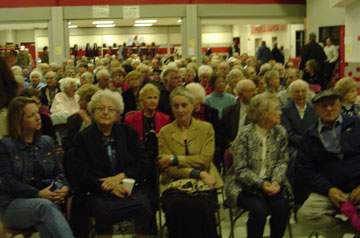
Guess why these people look grumpy? Because they haven’t got their lutefisk fix yet!

.
lutefisk-waiting.jpg

We had to wait in line about an hour before we could be served. I’m told it’s not unusual to wait two hours for this meal.

.

LUTEFISK RECIPE

Neil Sticha of Bloomington, Minnesota, persuaded one of his favorite Norwegian cooks, Shirley LaBissonniers, to share her recipe for lutefisk.

First of all, invite brave people over for dinner who do not have misconceptions about this wonderful fish! Next, go to a store that carried the freshest of fish and seafood. Ideally, you would get the lutefisk that they pull out of a barrel (most stores hate those barrels a lot and don’t do that anymore). Second best, it comes skinless and “trimmed” and packaged in a plastic.

Purchase the lutefisk a day before you want to serve it. Take it out of the plastic bag, put it in a large bowl, and cover with ice water. Change this water two to three times and keep in the refrigerator (if your family will let you). This firms up the fish.

lutefisk-dinners.jpgPut the lutefisk in a glass baking dish and season with salt and pepper. Put in a preheated oven at 375 degrees F. for 25 to 30 minutes. The fish is done when it flakes easily with a fork. Do not overcook it or it will look like white Jello! It will be not brown.

In Minnesota, we allow at least a pound of lutefisk per person, served with hot melted butter. The two side dishes are riced potatoes and very small cooked frozen peas – no exceptions.

And, of course, you must have lefse. This is a ritual which we try to repeat as often as possible and as long as we can get the fresh lutefisk.

HISTORY OF LUTEFISK

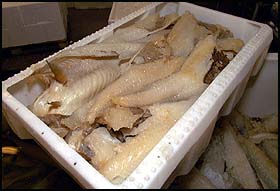
lutefish1.jpg Lutefisk (pronounced LEWD-uh-fisk) is dried cod that has been soaked in a lye solution for several days to rehydrate it. It is then boiled or baked and served with butter, salt, and pepper. The finished lutefisk usually is the consistency of Jello. It is also called lyefish, and in the United States, Norwegian-Americans traditionally serve it for Thanksgiving and Christmas. In many Norwegian homes, lutefisk takes the place of the Christmas turkey. In Minnesota and Wisconsin, you can find lutefisk in local food stores and even at some restaurants. It is a food that you either love or hate, and, as some people say, “Once a year is probably enough!”

During the fall in Wisconsin, people watch their local newspapers for announcements of lutefisk suppers, which are usually held in Norwegian churches. usually every Norwegian church will host at least one lutefisk supper between October and the end of the year. The dinners have become so popular that lovers of the special dish drive great distances, and these are not just people of Scandinavian descent.

The history of lutefisk dates back to the Vikings. On one occasion, according to one legend, plundering Vikings burned down a fishing village, including the wooden racks with drying cod. the returning villagers poured water on the racks to put out the fire. Ashes covered the dried fish, and then it rained. the fish buried in the ashes in the ashes thus became soaked in a lye slush. Later the villagers were surprised to see that the dried fish had changed to what looked like fresh fish. they rinsed the fish in water and boiled it. the story is that one particularly brave villager tasted the fish and declared it “not bad.”

lutafisk-2.jpgNorwegian-Americans believe that lufefisk was brought by their ancestors on the ships when they came to America, and that it was all they had to eat. Today the fish is celebrated in ethnic and religious celebrations and is linked with hardship and courage.