Q&A – How To Be a Record Producer

Dear Conrad Askland,
I am a college student and I’m interested in going into the recording business. Since that is your field I was wondering if I could ask you a few questions about the job.

What is considered more valuable in being a record producer, education or experience? Do you think you can do the job without a college education? Does a master’s degree increase your chances for getting the job? What do
entry level jobs pay? What are the chances for advancements and within what time frame? When you first started out did you always work as a producer, or did you start out as something else first? What would you say the job of being a record producer entails? What would you say happens day to day? And who are considered leaders in the field?

I really appreciate you taking the time to answer my questions.

Brittany *Last Name Edited*

*********************************

Hi Brittany,

Nice questions well thought-out. Happy to answer them. I had an email similar to this a couple weeks ago, and told the person not to listen to me because I don’t consider myself successful. But as I’m writing this today I’m working on the new launch of a new internet network, doing a lot of work for Toyota, and am working on a track for a very well known hip hop artist (a track that had previously been rejected by another artist at the same label, or should I say “the” label). So right off the bat, that’s what it’s like for me to be a music producer. No matter how much you’ve done, you always feel like you could do more and do better – and THAT to me is the key, the drive to keep improving.

.

There will always be better and worse than you, don’t worry about it. Create your own bar – don’t get pompous that you stomp someone else’s art into the ground, and don’t get so self-conscious that you think you are worthless. Very important stuff here. We are artists, we are sensitive, we feel to a greater degree than most people…..I think.

.
Enough poetry, here’s answers to your questions:

.
What is considered more valuable in being a record producer, education or experience?

It only matters what you can deliver. Just like Music Business is two words – “Music” and “Business” – the term Record Producer is two words “Record” (which has just stayed that way because CD Producer or Digital Download Producer doesn’t sound as cool) and the second big one “PRODUCER” – You have to produce. That’s all that matters. No resume or degree or contact will help you if you can’t produce. That being said, the EXPERIENCE of higher education and the KNOWLEDGE of real world experience is very, very important. Get all the experience you can. I was kicked out of college, and there were a couple jobs I couldn’t apply for because I didn’t have a Bachelors, but most jobs could care less. What can you DO.

.

Do you think you can do the job without a college education?

Of course you can. But the more knowledge you have, the wider base of talents you have to keep working on new jobs. So I highly recommend anyone who is really serious, to go to a 4 year college that has a well known recording and producing program. Colleges that come to mind would be North Texas State, Berklee and UCLA. I was kicked out of both Pacific Lutheran University and the University of Miami, but the years of study I had at those I put to use a LOT in the studio, and was able to do jobs other studios couldn’t. What I learned at college was theory and classical performance, all the audio work and engineering I learned on my own.

.
Does a master’s degree increase your chances for getting the job?

For education or corporate it might be important, but not for producing artists. The KNOWLEDGE may be great, but I wouldn’t worry to much about the papery. “Yo, this is Busta Rhymes. I heard your track, it’s great and I want you to produce my album. But I can only hire someone with a Masters Degree” – I don’t think you’ll run across that too much.
What do entry level jobs pay?
For studio work you’ll be getting $10 an hour if you’re lucky, and that’s after an internship. DO NOT go into music production if you want to make money. There are so many recordig studio schools now pumping “graduates” out like a mill. And they are all scrambling for any work they can get. It’s kind of sad.

.
What are the chances for advancements and within what time frame?

That’s all up to you. My biggest piece of advice, keep a cool head under pressure. It’s hard to find.

.
When you first started out did you always work as a producer, or did you start out as something else first?

I started as a classical vocalist when I was very young. Had very serious training. The highest profile of those was performing four operas with Seattle Opera. My first full time paid gig after high school was playing piano for Nordstrom when I was 19. Then I started working at a music store selling pianos and synths, and would give free lessons to close sales. So inadvertantly I started teaching piano, and a lot of people started asking me to record tracks to perform with. Jobs started paying more, had GTE hire me to do a lot of corporate work – I kept buying new gear, and that’s when it all started. I never set out to be a music producer, and never had a goal of having a recording studio. A path just opened and I went with it.

.
What would you say the job of being a record producer entails?

A record producer is responsible for making sure the final product is produced to the satisfaction of the client. That’s it. Now how to get there takes a lot of knowledge of music, engineering and dealing with people. I always make sure that the client and myself are on the same page before I start. There are some clients you will NEVER be able to please, or you don’t have the skill set to do what they need. So those jobs you need to be smart enough to turn down or your life will be hell. If I have a project I really want to do, but don’t have all the skillz necessary to complete, sometimes I’ll offer to do it at a reduced rate or even free, so I garner the experience. You need to get something out of the project: Money, Experience or Creativity. If you don’t get any of those things, don’t do it.

.
What would you say happens day to day?

Hard to answer. Five years ago I had my studio open to the public, was touring with a famous artist, and had a few other small commitments. So I was scheduled VERY tight, literally coming in from the airport and starting a session within 30 minutes. Also was working on marketing a large library of audio releases, so my days were easily 12 hour days 7 days a week. Now I’m working in live theatre and focusing just on soundtracks and composing. So my time is more focused on fewer projects, but the projects are much larger so they take more concentration and focus. For me, I enjoy this much more, which is why I changed things around this way. You need to know the environment you work best in, and then do it. For instance, I cannot get anything done until I’ve received payment from a client – so I demand payment before I start on a project. It’s not to cover my butt, it’s so I get the project done. Mozart had the same problem early on, couldn’t finish projects.

.
And who are considered leaders in the field?

Music producers past and present worth checking out:

Dr. Dre, Prince, Don Was, Rick Rubin, Mike Shipley, Sean Combs, Walter Afanasieff, John Paul Jones, Bill Laswell, Glen Ballard, Brian Eno, Trevor Horn, Quincy Jones, Jeff Lynne, Giorgio Moroder, Phil Spector, John Williams

Hope this helps. Maybe someday I’ll have my Grammy and someone will add my name to the list.

🙂

Conrad

Skye Dahlstrom – Choreographer and Singer

skye.jpgI have the honor of working with Skye Dahlstrom on the META Production of SEUSSICAL which will run at McIntyre Hall, Mount Vernon, WA the first two weeks of November 2006. Skye is the choreographer and has a great imagination for choreography and working with kids.

I first saw her work this last summer in Guys and Dolls which performed in Stanwood and the Kirkland Performance Center. She was choreographer for that show and also a lead dancer in the Havana cabaret scene. A real standout for that show was the choreography she did for the “Luck Be a Lady” dance sequence.

We all know Skye is going to do great things.

🙂

Conrad

********************

Info on Skye from the web:

Skye has been dancing since she was 2 years old, when she first saw Michael Jackson on TV. She began dancing formally at age 6 and continued to study Ballet and Jazz until she was 12. Skye has been choreographing for 6 years, beginning with routines for her cheer team at age 11.

Since then, she has choreographed for competitive cheerleading, talent shows, and school productions (2004 Stanwood High School’s Grease). She has previously taught hip hop dance at the Stanwood Sports Club, and is currently an instructor for Kid Stage in Everett.

Skye has won many awards, including 1st place at nationals in the dance division, and 1st place for choreography of her cheer team. At age 12, she took first place at the Stanwood-Camano fair lip sync impersonating Michael Jackson. Skye is currently a back up dancer for Raz B from B2k. They have performed at half time shows in Sacramento and toured of Europe in 2006.

Protecting Online Audio Download Files from Theft

audiodownloads.jpgI have made several runs at trying to setup online audio download sites and now I’m finally getting it going. It’s a little easier now than four years ago when I first wanted to do it.

But the problem I always come up to is how to protect the audio.

THE SPOILER: I have come to the conclusion that you have to overdub the sample audio with overdubs for theft protection, and I’ll explain why as we go through options here.

I’m writing this article so others have the info to reference to. I found very little when looking online. If any info is incorrect or you have more info to add, please leave a comment on this post with the info.

OPTIONS FOR PROTECTING AUDIO

  • Play lower quality fidelity for samples
  • Encode audio into a flash player
  • Pull audio into database and call via PHP
  • Use Real Audio to pull seperate play files
  • Use Quicktime so basic users can’t see source
  • Overdub audio onto samples, making the sample unuseable

1) Play lower quality fidelity for samples – This works for some applications. I know SoundDogs does this for their sound effects. Overdubs won’t work for their foley fx because the samples are so short. I have used SoundDogs a lot and think their setup is great for sound effects, but I don’t think it’s the best solution for music tracks. If you play lo fidelity clips for customers, what if your final product does not match their expectations? If you play for them what they’re going to get then you will have fewer customer complaints and/or chargebacks. Audio downloads have a high incidence of chargebacks, so showing customers exactly what they’ll be getting is a first line defense for that.

2) Encode audio into a flash player – I have spent SO many hours working with this. At one point even downloaded the Wimpy flash player. I see a LOT of sites using a flash player to hide their audio source. The problem is, you can see where the file is being pulled up from if you view the source code. If your answer to that is “Well, how many people know how to view the source code?” I think more than you think. Viewing source code is easy. I would guess the largest group of people that would want to snatch audio are younger people, and they are saavy with computers – and everyone has a friend who’s a computer geek. Viewing source code isn’t even approaching a geek thing anymore, it’s just something people know about – like popping the hood on their car. So a big NO for using a flash player as the source code will show your audio location.

3) Pull audio into database and call via PHP – This is a nice option, and I’ve seen source code of many sites doing this. For me, it’s a little out of my league to setup – so it’s not an option. Also, I’m afraid that someday my database will crash and I won’t be able to retrieve the audio. If someone reading this has an approach that normal folks can use to implement this, please let us know about it.

4) Use Real Audio to pull seperate play files – In the old days Real Audio and MP3 were going head to head. I put my money on Real Audio, thinking they would win the audio wars. I was wrong. People still have problems playing some Real Audio files, and it’s very time consuming to make the seperate .ra and .ram files needed to pull it off. Frankly, it’s a real headache in my opinion. If you have hundreds of audio files to protect, then you have hundres of .ra and .ram files to make. And then I guarantee you will get emails that some people can’t play it, so you need MP3 options too. If you have MP3, why have Real Audio too?

5) Use Quicktime so basic users can’t see source – The Pro version DOES allow viewing the source. The Pro version is not very expensive, so I imagine a lot of people have it. I don’t think this is a wise option.

6) Overdub audio onto samples, making the sample unuseable – This is my suggestion. Users can hear the actual fidelity of your sound file, and you have a seperate public audio sample you can make accessible to the public while keeping your actual clean downloads secure and protected. You can record your own overdubs, or go to a local recording studio and get it done for not much. Chances are if you have online audio samples, you probably already have the gear for audio overdubs.

Here is a sample of an audio file protected with overdubs:

MP3 Hip Hop Instrumental with Overdub Theft Protection

Notice the overdub vocal has been limited to a small audio frequency range so it doesn’t interfere to much with the listening experience of the track as a whole. I find it very easy to tune out the overdub while listening to the track. In addition, the overdub also contains information useful for customers listening.

For fast easy overdub mixing see my article on the Acoustica MP3 Mixer

I vote for overdubbing to provide audio protection to music samples. Have more info? Please leave a comment.

Review: Acoustic MP3 Audio Mixer

I’ve got a lot of gear. Nice pro high end gear like Digidesign’s Pro Tools, and lots of computers. My little office alone has five computers in it. But you’d be amazed how often I need to do something very very simple, but the high end gear slows me down.

Case in point – I have 300 audio samples that I’d like to use as audio samples for customers, but need to add overdubs for the samples so they aren’t stolen without payment. To further complicate things, I’m using these 300 tracks across 5 different websites, making a total of 1500 tracks that need to be layered with overdubs. It needs to sound good, but since it’s just streaming samples it is not critical to be audiophile quality.

Enter the Acoustic MP3 mixer. It mixes four tracks of stereo MP3 files. I love it. I’m able to click and quickly import my sample tracks and edit them to the overdub vocal. All I need is volume control to set the levels between the tracks, and a fade feature. Fade is NOT a feature on Acoustica, so my work-around was to let the overdub vocal hang on after the sample track with a plug for the hosting website.

Here’s an example of what I’m talking about to protect audio:
Rap Instrumental with Theft Protection Overdubs

For more info on Acoustic, go to the Acoustic Website and look for the “MP3 Mixer”. It’s a free 30day trial, then I think it’s $24.95 – a good square deal in my opinion.

If you want more control, then this isn’t the software for you. But if you just want to mix together some MP3’s quickly without firing up all your gear, Acoustica is a nice alternative.

WA Mozart French Horn Concertos

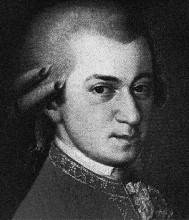
mozart.jpgThe Mozart French Horn Concertos – what awesome works they are. I am accompanying a very fine French Horn player from the local symphony this weekend. We will perform the Third French Horn Concerto. It’s interesting to be on the other side of the tracks as an accompanist. I studied the Mozart french horn concertos when I was in High School and college, especially the third concerto.

I was an ok French Horn player, not terrific. I had first chair in Jr. High and Interlake High School, but in the big scheme of things that’s not saying much. Two of my bad memories of high school are playing a wrong note on French Horn at the year’s end state competitions for band – and the band director at the time, Leo Dodd, felt really let down. He didn’t mention it, just gave me “the look”.

And at district solo competitions I performed the Third Concerto and got a “good” marking. At the time it was devastating – I had assumed it would be an excellent. And family consoled me, but I knew they didn’t understand the depth of my pain – to be “good”. Reality was I spent about two hours a week practicing the horn away from band, to be “excellent” I should have practiced ten hours – but my heart wasn’t in it. I loved the SOUND of the French Horn, the boldness of the instrument, everything about it – except practicing. And French Horn is a hideous instrument when not played well.

So now I avenge my past – the horn player I am accompanying – Jim Gaudette – is an incredible horn player with impeccable tone. He’s heard all the Barry Tuckwell recordings (in my youth Barry Tuckwell was the #1 player to fashion after). Jim will conquer my past defeats with his bold horn playing, and I will accompany him with the fire of a Viking raid.

To those listening it will just be a beautiful performance, but for me it will be making up for past blemishes I created for Mozart and the French Horn.

It’s interesting the things we remember, and the things we hold onto.

Information on the French Horn
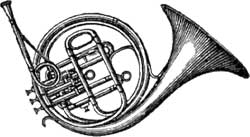
french-horn2.jpgEarly horns were much simpler than those in current use. These early horns were simply brass tubing wound a few times and flared into a larger opening at the end (called the bell of the horn). They evolved from the early hunting horns and, as such, were meant to be played while riding on a horse. The hornist would grip the horn on the piping near the mouthpiece and rest the body of the horn across his arm so that only one hand was needed to play and the other could be free to guide his steed. The only way to change the pitch was to use the natural harmonics of that particular length of tubing by changing the speed at which the lips vibrated against the mouthpiece; but by using a long tube and playing high in the harmonic series, considerable melodic variety was possible. The best-know example from this era is the Quoniam from JS Bach’s Mass in B minor.

Later, horns caught the interest of composers, and were used to invoke an outdoors feeling and the idea of the chase. Even in the time of Wolfgang Amadeus Mozart, however, the horn player (now a part of the early orchestra) still had a much simpler version of the horn; he carried with him a set of crooks, which were curved pieces of tube of different length which could be used to change the length of the horn by removing part of the tubing and inserting a different length piece.

The player now held the horn with both hands, holding the tubing near the mouthpiece with one, and putting the other into the bell, which was either rested upon the right knee of the player or the entire horn was lifted into the air. Now the pitch played could be changed in several ways. First the player could change the harmonic series which the instrument as a whole had by removing and inserting different sized crooks into the instrument, changing the length of the horn itself. Less globally, given a particular crook, the vibration of the lips could be varied in speed, thus moving to a different pitch on the given harmonic series. Finally, now that the player had his hand in the bell, the hand basically became an extension on the length of the horn, and by closing and opening the space available for air to leave the bell, he could bend the pitch to interpolate between the elements of a harmonic series. This interpolation finally made the horn a true melodic instrument, not simply limited to a harmonic series, and some of the great composers started to write concerti for this new instrument. The Mozart Horn Concerti, for example, were written for this type of horn, called the natural horn in the modern literature.

QandA: How to Become a Professional Music Producer

Hi, my name is mike and i recently moved here to costa mesa. I found your email through searching google for becoming a music producer and found your site. I had a couple of questions

I have cubase and Reason 3. I use reason to make beats. I like the production in Bone thugs n harmonys E. 1999 Eternal CD Its very clean and well rounded… Anyways, one of my problems is most of reasons sounds are not that clean or nice as most professionally done resords, like bone thugs or Dr. Dre. are thier sites that have good reason samples.A better program..??

Im serious about becomming a professional music producer / engineer for both movies and songs. I would really benefit from information on how to become a better producer from how to arrange songs to know which sounds sound best with other ones. Do you think I need to go to a school or classes or is thier any online information…I know like one trick which is when you have a slow song addind a bit of reverb to the snare to open the mix up a bit… but more tricks that help you achieve a certain sound is what im looking for. Any information is very much appreciated – mike

*********************************
Hi Mike,

Big question…….hope I can be a little help. I did production for an Aftermath artist last year, and my style is very similiar to Dr. Dre in some aspects (No, I am not saying I’m as good as Dr. Dre) – The other producer told me when Dre heard the track he said “This sounds just like what I produce, you need to bring me something I can’t already do. I’ve already got this sound.” Really bummed me out, because it was a great open door for me to get involved with Aftermath. (For the record, I think if I could have met with Dre personally I’d be working at Aftermath right now, but that’s another story. Yo Dre, you reading this? Call me) – Now if I was knee deep in Aftermath productions, I would focus on tweaking elements to distinguish my sound more, but since that’s not the case, I keep learning everything I can – and continue using my own judgement for my sound.

You mention you have one ear candy trick. You need more. How do you get them? I can tell you what I’ve done. I highly recommend the Mix Bookshelf series as a whole – great books on mic techniques for different instruments, mixing, mastering, etc. I have easily a thousand music books in different styles, study tools for mixing techniques, tutorials, videos etc on every aspect of mixing and mastering I can get. At one point I even spent six months working with the Golden Ear training method.

Any time I meet an engineer I try to learn something from them – most people are happy to share their knowledge in little bits and pieces. I don’t try to impress, I try to listen and pick up everything I can – to me that’s the secret. Walk away smarter.

I’ve also spent a lot of time listening to reference CD’s of similiar mixes to the styles I’m working on. If I’m producing a punk band, I’ll have a major commercial release of a similar punk band style to reference for my mix. This alone has been the biggest single help in my mixes. Need to listen to a MAJOR COMMERCIAL RELEASE and listen to it on the SAME SPEAKERS YOU ARE MIXING ON. This approach is helpful to learn the rules before you get your own foundation.

I’ve seen a lot of bad info online – like a mix by the numbers program. Like anything online, make sure you’re getting your info from a good solid source. MIX magazine is great, I suggest you subscribe to it. Anything MIX puts out in it’s book series or recommendations is usually rock solid. The more knowledge you have, the larger palette of ideas you have to pull from, the more flexibility and creativity you’ll have in the studio. Keep in mind you never arrive at a final destination in your understanding of music production – it’s a constant evolution. The day you think you’ve “arrived” – is the day to quit.

You mentioned the reverb on the snare for a ballad – it’s important to understand the reasoning behind that. A ballad typically has a lot more space in the audio spectrum – so it lends itself better to effects. There is a great book on the Art of Mixing that can show you how to visualize audio mixes as a three dimensional environment. Panning is left to right, audio frequency up to down, volume and effects is back to front and width. This concept is also very powerful in bringing a quick visualization to your mixes. When you can see the mix in you mind’s eye like this, let’s say for a ballad, then you would see there is more space to use if you want, like reverb on a snare drum. Want to kick it up a bit more? Time the reverb so the tail closes in time with the beat, and put a delay on the verb so it doesn’t wash out the snare attack.

Turn it around – see that there’s a lot of space open in your mix, and just leave it that way. Purposefully leave out effects, have the vocal bone dry. The idea to internalize is that you need to have control of where you want to go – so the snare reverb bit you brought up is something that might work on one song, but not another. Intuition and experience will dictate to you what to do.

I have 15 years working at a public commercial studio with clients of all styles and walks of life – this was a great training ground for me. A producer is not a dictator to stomp on everyone’s ideas, with paying clients you need to accomplish what they want. When you’re in this environment, you HAVE to learn to do new things. So I’d suggest you get in that environment if you can.

For music schools, real and serious music schools – I recommend North Texas State, UCLA or Berklee. For a real deal education. There are a ton of recording schools out there, but I don’t personally know a lot of people working full time from those, might exist, I just don’t know about them. But I used to have like one person a WEEK come into the studio and want a job because they just graduated from a recording engineer school. But none of them understood music. To me, a music producer at a busy project studio is worthless without an understanding of music. So that’s my next piece of advice – learn music theory. It will keep you working when other people are looking for jobs.

For clean samples, you really should get them from the actual source if you can – otherwise there are lots of great libraries out there. Sony, Big Fish, ProSessions, ACID, to name a few. When I worked with the co-producer on the Aftermath project, all his samples were directly from an MPC. Another common trick is to run directly from the unit into a high end tube mic pre to fatten the sound, even if you’re dumping directly to a digital format.

Next piece of advice, think long term in your career if you’re really serious about it. For instance, I closed my studio in California last year – but I’m taking the down time to learn more about orchestras. I’m doing a lot of conducting with orchestral and choral groups. I could cry in my beer about the studio being closed, but once it’s open again, I’ll have a whole new set of skillz conducting orchestras – so when Dr. Dre calls me to produce a hip hop album with a real orchestra I won’t just be able to say I’m ready – I WILL be ready.

Hope that helps. Keep the faith.

Is Music a Gift FROM God or TO God?

Is music a gift FROM God or TO God? I’ve been grappling with this question in particular this week. I was asked last week at church choir practice if I thought music was created by God as a gift for man, or if it was created by man as a gift for God.

I instictively answered that I believe music is a creation of man. After saying those words I felt odd, as if I had said something wrong. There are some things that are easy to say as a facade, but may not actually be a true representation of our inner motivations. Of course, there is the possibility that neither option is true, but we’ll leave that out for the sake of discussion.

If music is a gift from God for man to worship God, then we would be commanded to only use music for that purpose. I am all too aware that many people subscribe to this school of thought. But I am struck with the not-so-popular thought among church folk that this situation is exceedingly boring. I try my best, with my feeble human mind, to picture God listening pleasantly to the first hundred or so songs in his praise – and in time I would think he would long for a change of pace. But who am I to pretend to know the mind of God.

But I do know my OWN mind a bit – and I grow tire of the same fare. If I listen to all Baroque music too much, I can’t help but turn on the classic rock station for a while. And when that gets old I want to hear some Jazz, then some country, then I am back at Baroque again. Sometimes I want to hear songs that teach me, and sometimes I just want to be in a mood. Sometimes I want to be challenged, and sometimes I just want to get lost in a thought.

Music is a tempestuous mistress. It serves different purposes at different times. Anytime it is put into a box with firm borders I become a little restless.

Music is soundwaves – we have a Western scale of half steps, where the 13th step is an octave above the first step. And to us this is “music” – in other cultures there are 24 steps, using quarter tones. And in some music there is only 5 steps making a pentatonic scale. What is “good” or “bad” depends on the ear of each culture – what Western ears might describe as being out-of-tune might be absolutely delightful to an Indian or Eastern ear.

So then, which does God prefer? That answer might safely be “whatever glorifies his name” or something along those lines. Well then, we aren’t talking about music anymore, we are talking about intention and lyrics. And when it comes to instrumental music without lyrics, we are left with only intention. Is God less pleased when instruments are out of tune? Suppose the musicians do not have the skill to know they are out of tune, is God less glorified? Would be difficult to answer that question with a “yes”.

So I submit to you that music is a non-issue when it comes to praise – it is the intention of the heart that is most important.

Jesus said to give unto God what is God’s, and give unto Caesar what is Caesar’s. So when it comes to praise music, let the intention of the heart be the gift to God. Let the music be for man.

And I would humbly ask that if I have to listen to you during this process, please tune your instruments and play them well. And THAT, is the point of all this rambling. God will have an eternity to enjoy the intent of your heart; I would like to spend my short time on earth hearing music performed well. 🙂
***********************

Luther saw music not as a liturgical act but a natural talent to be used in the world. Writings of Martin Luther:

Music is an outstanding gift of God and next to theology. I would not give up my slight knowledge of music for a great consideration. And youth should be taught this art; for it makes fine skillful people (W-T 3, No. 3815).

Nor am I at all of the opinion that all the arts are to be overthrown and cast aside by the Gospel, as some superspiritual people protest; but I would gladly see all the arts, especially music, in the service of Him who has given and created them (W 35, 474).

Song: If I Could Go Anywhere

Song: If I Could Go Anywhere

I wrote this song in 2003. On this demo track vocals are by Cherish Whisner, Background vocals by Fred Reliford, Guitar parts by Sean Clavin. The rest of the track I sequenced on ProTools.

I’d like to pick up the tempo a little more in this song and let the beat slide a little more for a looser feel. I feel it would work equally well as a country or R&B/hip hop arrangement. For a country arrangement I can definately hear the pedal steel.

My personal inspiration for the lyrics were my friends at the time in Southern California. At the time I had a job with a very small church and was being approached by a larger church to join them. This song was my statement to the smaller church about what they meant to me. It was a great core group of people. The memory of those people is strong and an inspiration to me. Although my personal religious conviction has changed since then, I value that time with them and what is has brought to me.

.
I purposely left the lyrics a bit ambiguous so it would appeal to different relationships in different situations. Better to let the listener fill in the details with their personal life to better connect with the piece. It has been performed three times, two times for a church service and once at a wedding. To me it is not simply a love song, it is a statement of conviction between peoples that have endured the long race together.
If-I-Could-Go-Anywhere-Final.mp3

Verse 1
After all this time
After all we’ve been through side by side
We’re still standing strong
Holding on to the love deep inside
And I wouldn’t trade it for the world

Chorus
If I could go anywhere
Anywhere in the universe
And if I could have anything
That my heart desired
I know where I’d want to be
And I know what I’d want to have
If I could go anywhere, have anything
I’d be here with you

Verse 2
I can cry a tear
And you’ll always be there holding me tight
So I’ll take a chance
And wear my heart on my sleeve by letting you know
Just a bit of how I really feel

Chorus

Bridge
There may be other places more beautiful than this
But they’re not the same without you by my side
There may be other people who try to catch my eye
But they don’t know anything about what moves me

Chorus
So if I could go anywhere, have anything
I’d be here with you
Tag
With you
With you

Music Related World Records

When I was a kid I had a copy of Guinness Book of World Records and I wore that book out. We didn’t have the internet back then, so to find all the strange and bizarre in one place was a treasure trove. Wouldn’t it be great to know you had the world’s record in something, no matter how ridiculous? I was looking online for piano related world records and didn’t find what I was looking for; like the most hours playing a piano without stopping (that would be a fun one to try). But I did find some other fun music related world records, so here they are as of August 2006.
Check out the Guinness World Records Website

Oldest Symphony Orchestra
The oldest existing symphony orchestra, the Gewandhaus Orchestra, of Leipzig, Germany, was established in 1743.

Youngest No.1 Classical Artist
Welsh soprano Charlotte Church was just 12-years and 9-months old when her debut album, Voice Of An Angel, reached No. 1 in the UK classical album charts on November 9, 1998. It went double platinum in the UK within four weeks of release. Church first appeared on stage at the age of three at a Welsh holiday camp.

Most Prolific Conductor
The Austrian conductor, Herbert von Karajan (1908–89), made over 800 recordings. He was conductor of the Berlin Philharmonic Orchestra, the Vienna State Opera, and La Scala Opera of Milan, and founded the Salzburg Festival, in 1967.

Most Prolific Symphonist
The most prolific symphonist was Johann Melchior Molter (1696–1765) of Germany, who wrote over 170 symphonies.

Most tour tickets sold in a day (concerts)
A total of 1.6 million tickets, valued at £80 million (US$142,825,258.47) were sold in the first 24 hours (November 19 2005) for Robbie Williams’ 2006 World Tour.

Most Valuable Cello
On June 22, 1988, a Stradivarius cello was sold for a record £682,000 ($1,213,960) at Sotheby’s, London, UK. The cello, known as “The Cholmondeley”, was made in Cremona, Italy, in approximately 1698. The instrument is called the Cholmondeley as it is known to have been in the possession of the Marquess of Cholmondeley in the middle of the last century, from whom it passed to an English amateur, Mr Drury, and from him to David Bittner, a Viennese dealer.

Most Valuable Music Manuscript
The record payment for a musical manuscript is $4.1 million, paid by James Kirkman at Sotheby’s, London, England, on May 22, 1987, for a bound volume of nine complete symphonies in Mozart’s handwriting. Consisting of 508 pages, the book was sent in for auction by a private anonymous collector. Sotheby’s reportedly described it as “the most important music manuscript to be auctioned this century”.

Oldest Jazz Club
The Village Vanguard cellar jazz club opened in New York City, USA, in 1935, and has hosted mainstream jazz concerts ever since. Artists who have appeared there include John Coltrane, Miles Davis, Stan Getz, Wynton Marsalis, and Thelonious Monk.

Longest Album Title
The album with the longest title to reach the US chart contains ninety words. ‘When the Pawn Hits the Conflicts He Thinks Like a King What He Knows Throws the Blows When He Goes to the Fight and He’ll Win the Whole Thing ‘Fore He Enters the Ring There’s No Body to Batter When Your Mind Is Your Might So When You Go Solo, You Hold Your Own Hand and Remember That Depth Is the Greatest of Heights and If You Know Where You Stand, Then You Know Where to Land and If You Fall It Won’t Matter, Cuz You’ll Know That You’re Right.’The album was by Fiona Apple, a singer from New York. It was released on November 9, 1999.

Loudest Drummer
A peak reading of 109.1 decibels was recorded during a show by the French one-man show The Jerome Experience (aka drummer Jéróme Dehèdin) at the Celtic Warriors 10th Birthday Bash at Woodgreen Animal Shelter, Cambridgeshire, UK on April 12, 2003.

A peak-level sound meter was used to record Dehèdin’s drumming, which peaked at a volume equivalent to a propeller plane taking off and louder than a pneumatic drill from 3 m (10 ft) away.

Most Drumbeats In A Minute
The most single-stroke drumbeats played in one minute is 1,026, achieved by Johnny Rabb of the USA, on April 28, 2000, at the Nashville Music Institute, Nashville, Tennessee, USA.

Most drumbeats in a minute, hands
The world record for the most single-stroke drumbeats played in one minute is 1,507 and was achieved by Alberto Arias Pellitero (Spain) on the set of ‘Guinness World Records – El Show De Los Records in Madrid, Spain on May 25, 2006.

Largest choir
Excluding sing-alongs by stadium crowds, the greatest choir assembled contained 60,000 singers who sang in unison at the finale to a choral contest held among 160,000 participants in Breslau, Germany on August 2 1937.

Largest Concert Audience For A Rock Artist
The largest paying audience ever attracted by a solo performer was an estimated 180,000–184,000, in the Maracanã Stadium, Rio de Janeiro, Brazil, at a Paul McCartney concert held on April 21, 1990.

Largest Orchestra
The world’s largest orchestra consisted of 6,452 musicians from the Vancouver Symphony Orchestra and music students from throughout British Columbia. They played at BC Place Stadium, Vancouver, Canada, on May 15, 2000.

Largest Trombone Ensemble
The largest trombone ensemble consisted of 289 musicians, who gathered to play for 9 minutes 28 seconds at Café-zalencentrum, Broekhuizen, Netherlands, on June 8, 1997.

Largest Violin Ensemble
On June 15, 1925, at Crystal Palace, London, UK, 4,000 child violinists gathered to play Recollections of England – Selection by Mareston, conducted by Arthur Payne and assisted by HM. Grenadier Guards Band.

Highest Paid Pianist
Wladziu Valentino Liberace earned more than $2 million per 26-week season with a peak of $138,000 (then $49,285) for a single night’s performance at Madison Square Gardens, New York City, USA in 1954.

Farthest Distance Traveled By A Human Voice
The normal intelligible outdoor range of the male human voice in still air is 180 meters (200 yd). Silbo, the whistled language of the Spanish-speaking inhabitants of the Canary Island of La Gomera, is intelligible under ideal conditions at 8 km (5 miles). There is one recorded case of the human voice being detectable at a distance of 17 km (10.5 miles) across still water at night.

Fastest Rap MC
Ricky Brown (USA) rapped 723 syllables in 51.27 seconds on his track “No Clue” at B&G Studios, Seattle, Washington, USA, on January 15, 2005.

Fastest Playing Of The Sailor’s Hornpipe
Trombonist Peter “Fats” Baxter, of Hove, England, played The Sailor’s Hornpipe in 8.5 seconds at the House of Commons in Westminster, London, England, on December 15, 1998. The Sailor’s Hornpipe is a well-known English folk tune, often performed to accompany a dance, which is believed to have been invented by sailors of the English navy.

Biggest-Selling Christmas Song
Bing Crosby’s recording of White Christmas (1942) has sold over 100 million copies around the world, with at least 50 million sales as singles. White Christmas has been reissued annually since 1942. The latest chart success with the song was in December 1998, when it charted for three consecutive weeks in the UK, reaching No. 29.

Stuart Hunt – Conductor and Music Director

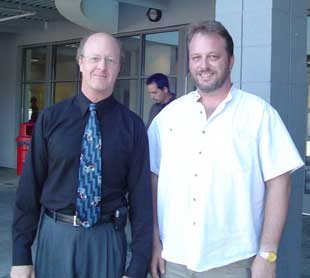
DSC01023.jpgSTU BABY IN THE HOUSE! I have to let you know about my friend Stuart Hunt. I met him while working on Elton John’s AIDA. Being new in town there was a lot of info I needed and he totally hooked me up. He’s one of the “good guys”. Not only did he hook me up, but spent a considerable amount of time detailing his approach to orchestra scores, choral conducting and mindset on preparing music for performance.

(Photo – at Intermission where Stuart was conducting Guys and Dolls – Stuart (left) and Conrad (right).

So let me tell you what I like most about Stuart. Stuart DEALS. What’s that? People that “deal” are the people that jump right in and start getting things done, they don’t mess around. I went to see Jacques Brel at the Lincoln Theatre, Stuart saw me and grabbed me by the arm to give me a tour of the whole backstage area and introduced me to all the players. Then before the show and at intermission brought up all the little nuances and music approaches to listen for. It was intense. Stuart is intense. I like that.

I had told him I needed some assistance on preparing a score. Most people would have given a couple tips over the phone. Not Stuart – he cleared a day for me, had me come over to his house and sat down with me in person to go over the score in detail. What kind of man is this? I thought…that would take this time. Stuart has a passion for music that is totally absorbing, that is our common bond. So if he has time he will help where he can. This should be the NORM where people share their experience like this. Sadly it is not. Stuart is a priceless treasure to the arts in Skagit County, in my very not so humble opinion.

We also share a religious conviction that commands our work to be the best it can be. That is a strong bond and he has been very open with me about his personal testimony, which aside from music is most moving by itself.

Stuart Hunt has been an incredible inspiration and resource to me. His insight particularly into choral music is mind blowing. So a big thumbs up to Stu Baby for being one of the “good guys”, and I highly recommend him for any choral or conducting work.

STUART HUNT – BIO

Stuart Hunt has an Associate of Arts degree from Lower Columbia College, and a Bachelor of Arts and Bachelor of Music from the University of Washington, studing conducting under Prof. Rodney Eichenberger. He was Director of Choral activities in Quincy, WA for eighteen years and was Choral Conductor at Marysville-Pilchuck for twelve years. Mr. Hunt was the Associate Conductor of the Seattle Girl’s Choirs from 1990-2003. Choirs under his direction have performed 7 concert tours of the US West and East coasts, 5 concert tour of British Columbia, and 2 5-nation concert tours of Central Europe-with second and third prizes in the Vienna Youth and International Festival. In 2000 Seattle Girl’s Choir Cantamus, under his direction, placed 2nd in the International Kathaumixw, the highest place of any choir in Norht America of 42 choirs from 25 nations.

For two years, he was a staff arranger for Warner Bros. Music, arranging the Supersound series for string orchestra. His choral compositions are published by Hinshaw Music. He is past president of the Sno-King music educators and served 5 years as Pacific Northwest Repertoire and Standards Men’s Choir Chair for the American Choral Directors Association.

Since 2004, he has been a board member of the Skagit Performing Arts Council and conducts or voice coaches an average of 3 musicals per year – most recently: Oklahoma, Annie, Jacques Brel is Alive and Well and Living in Paris, The Magic Flute, Oliver, The Sound of Music, Wonderful Life, Elton John’s AIDA and Guys and Dolls. Active as an adjudicator, lecturer, clinician, independent conductor, and arts curriculum consultant for school districts, Mr. Hunt has a lovely wife, 4 children and is the founder of the Northern Sound Children’s Choirs and conductor of the Adoria Treble Choir.