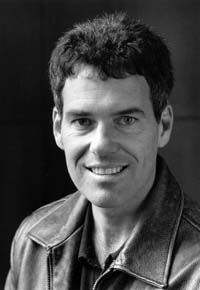
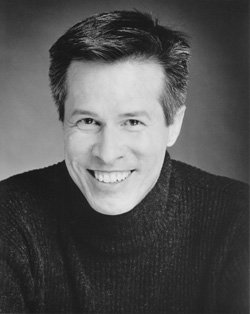
I want the whole world to know about Stephen Rumph. His voice is absolutely amazing. I wrote about it in my review of Skagit Opera’s Carmen. I went online to track him down and found out he’s not only an amazing vocalist, but active in music research (which I’ve listed below).
There are artists that are good, and artists that are talented, and artists that entertain us. But every once in a while you see an artist perform that touches the depth of your soul. That’s what Rumph’s performances do for me.
Stephen Rumph can take a note and morph it into so many different textures. It’s note a note anymore; it’s a living entity by itself. Well, read my review above, I don’t want to blather on and repeat myself. (Did I tell you he is AMAZING?)
I’m jealous he got an education at Oberlin. I had applied to Oberlin after high school and wasn’t accepted. I auditioned for voice, piano and composition. They turned me down for voice and piano, and said my compositions were illegible (and they still are! Thank God for computers!).
So as I continue to digress from my praises of Rumph I’m struck by a thought. Sometimes when I perform I have people come up to me and they are at a loss for words, and they look a bit silly during this interim. I’m not saying I’m so great, it’s just that if you perform a lot then their are a certain number of people you’re going to touch at a deep root level (that’s the way it SHOULD work, anyway). So here I am on the other side of the fence, at a total loss to describe to you the beauty of this man’s voice.
I guess it’s like when you laugh at your friends for being tongue twisted when they see a star they admire, then they laugh at you when it’s a star YOU admire. So right now, Stephen Rumph is my star. I hope he rocks the opera world big time.
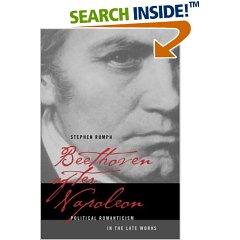
His book: Beethoven After Napoleon – is available from Amazon.com
ABOUT THE BOOK
Beethoven After Napoleon Book Description In this provocative analysis of Beethoven’s late style, Stephen Rumph demonstrates how deeply political events shaped the composer’s music, from his early enthusiasm for the French Revolution to his later entrenchment during the Napoleonic era. Impressive in its breadth of research as well as for its devotion to interdisciplinary work in music history, Beethoven after Napoleon challenges accepted views by illustrating the influence of German Romantic political thought in the formation of the artist’s mature style. Beethoven’s political views, Rumph argues, were not quite as liberal as many have assumed. While scholars agree that the works of the Napoleonic era such as the Eroica Symphony or Fidelio embody enlightened, revolutionary ideals of progress, freedom, and humanism, Beethoven’s later works have attracted less political commentary. Rumph contends that the later works show clear affinities with a native German ideology that exalted history, religion, and the organic totality of state and society. He claims that as the Napoleonic Wars plunged Europe into political and economic turmoil, Beethoven’s growing antipathy to the French mirrored the experience of his Romantic contemporaries. Rumph maintains that Beethoven’s turn inward is no pessimistic retreat but a positive affirmation of new conservative ideals.
From the Inside Flap
“A brilliant and unfailingly provocative reading of Beethoven’s music. Rumph challenges and refines our views of the subject, reinterpreting overly familiar music in striking new ways. Wonderful critical and interpretive observations abound; the author writes with great imagination and flair.”–Scott Burnham, author of Beethoven Hero
“Rumph shows at last the extent to which Beethoven’s late period, the period of his most spiritual and ‘inward’ music, was a response to political change. In effect his book is an extended retort to E. T. A. Hoffmann’s two-centuries-old claim that Beethoven’s kingdom was not of this world–and it’s about time! Rumph’s argument will be resisted by Hoffmann’s many heirs; but it is most compelling, not least because it answers so many long-standing questions about ‘the music itself’ and clears up so many misconceptions about the nature of musical romanticism.”–Richard Taruskin, Class of 1955 Professor of Music, University of California, Berkeley
. Staff Bio from University of Washington Stephen Rumph joined the School of Music faculty in autumn 2002. He earned a B.M. degree in voice from the Oberlin Conservatory and his M.A. and Ph.D. in musicology from the University of California, Berkeley. Prior to coming to UW, Rumph lectured in music history at both Berkeley and the San Francisco Conservatory of Music.He has published articles in Nineteenth-Century Music and the Journal of Musicology. His book, Beethoven After Napoleon, a political study of the composer’s late works, was published in summer 2004 by University of California Press. Rumph is currently researching Mozart’s absorption of sacred music, in the context of Enlightenment aesthetics and language theory.
In addition to his scholarly work, Rumph has sung leading tenor roles, including Rodolfo, Hoffmann, Lenski, Tamino, and the Duke of Mantua, with West Bay Opera, Berkeley Opera, Pocket Opera, Livermore Valley Opera and other companies throughout the San Francisco Bay Area.
Carmen by Georges Bizet
Skagit Opera
McIntyre Hall October 6-15, 2006
I went with friends to the opening night of Skagit Opera’s CARMEN. I was blown away. This is the third opera I have seen by Skagit Opera – they have all been very good. But this time they really showed how they are continually working to raise the bar and improve every aspect of their productions.
The orchestra was absolutely fantastic. For a scaled down group they had a great command of dynamics under conductor Dean Williamson. To me, the key to great music for a show is not to notice it, it should seamlessly interweave with the action. And this orchestra did. It allowed me to become fully engaged in the action and singing. Espcially after the first act the orchestra was gelling very well. My normal complaint with scaled down groups is the wimpy string section sound – not in this production. Sharyn Peterson was concertmaster – she and Dean Williamson performed some magic and delivered a power very unusual for the size of group they had. The pathos of the lust in the music was all evident in their delivery. Bravo!
And to my friend who says it seems like I’ve done everything – yes I did perform in Carmen with Seattle Opera as a boy soprano back in…..mmmm……I think it was 1977 or 1978. But that was a lifetime ago.
One of the people I watched the opening night with is a well cultured European who commented: “I have seen many, many Carmens. But I have NEVER seen one as sexy as this one!” I agree. Sarah Heltzel was extremely sexy in the role. Her performance was…..how shall we say…..spicy and tantalizing. She made it very believable that men were falling in love with her left and right. From reading her bio (part of which is listed below), she is just starting to make her mark. She has the makings of a very strong and lengthy career ahead of her.
Don Jose performed by Stephen Rumph. (Read more about Stephen Rumph.) Stephen is my new favorite opera tenor. I saw him perform last year, I think it was in the Magic Flute. He has such command over his high falsetto and often makes use of switching between his chest voice, to head voice and back with apparent ease. It is reminiscent of an Irish tenor, the sweetness to the note – or the sound you might expect from Schubert Lieder – then just as swift he pounces with full power and reminds you fine enough that he is a tenor for the opera house. Of all the voices I have heard with Skagit Opera, his alone is the most moving and magical to me. You truly must hear it to believe it. In Magic Flute and the beginning of Carmen he plays very straight laced, kind of “prince charming” roles – it was surprising to see him at the end turn into the love crazed psychopath that Don Jose turns into before he kills Carmen. Great acting transition and entirely believable to me.
Ron Wohl is one of the founders of Skagit Opera. I think it’s fair enough to say he earned his role in this Carmen. He blended in with the full time pros evenly and steadily. Whatever he has been studying vocally has definately paid off and he is seeing ample returns. And of course he is always a commanding presence onstage, I think he’s like 15 feet tall. 🙂
The set was static and used for all four scenes – Plaza, Gypsy Tavern, Mountains and Bull Fighting ring. Awnings were changed for scenes and a drape across the top with special lighting was used for the Mountain scene. The set was construced for this particular run by Steven Craig who is revered locally for all his wizardy in theatre, including set design. I spoke with Steven Craig about the set design and he said it was very challenging to design one set for all four locations. He said Carmen is noted for it’s monstrous set changes, I thought his solution was very inventive – typical Craig style!
PRE SHOW LECTURE
The Sunday before opening night there was a free public lecture by conductor Dean Williamson. He noted that in Carmen the word “love” is sung so many, many times in the opera – but it is best substituted by the word “want”. The opera really has little to do with love. It is more about lust and wanting ownership over the affections of another individual. He also noted that in the final grand Toreador scene it is sometimes choreographed for a group of thirty or so chorus members to keep entering through the audience and quickly change costumes backstage to re-enter again for the bull fight arena scene. This can sometimes go on for quite a while, giving the impression that hundreds of people are entering the arena.
It was also noted that Bizet’s premiere of Carmen was not received well by the public. They did not like it. Bizet died a few months later, supposedly of depression and a broken heart. As my friend in attendance said, “It’s always like that you know, you have to die before people can like it.”
I look forward to Skagit Opera’s next production!
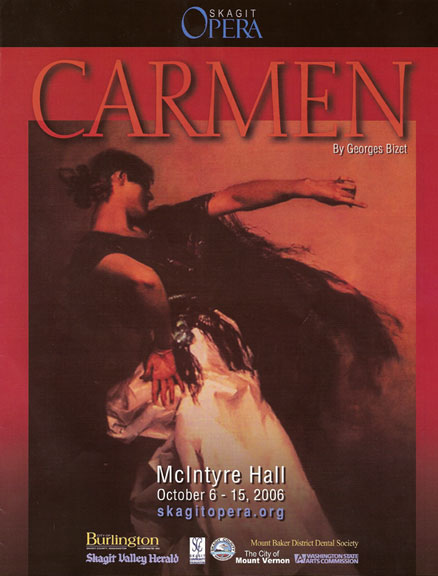
Skagit Opera Carmen Program Cover
Erich Parce – Stage Director Baritone Erich Parce has been a frequent guest of opera companies throughout North America and Europe, including the Metropolitan Opera, San Francisco Opera, San Diego Opera, Seattle Opera, Greater Miami Opera, L’Opera de Nice and L’Opera de Montreal.
Dean Williamson – Conductor Dean Williamson, one of the country’s foremost emergin opera conductors, has conducted all of the Seattle Opera Young Artists Program productions. He conducted Tales of Hoffman for Seattle Opera in 2005 and has conducted at Wolf Trap.
Sharyn Peterson – Concertmaster Sharyn Peterson, Skagit Opera Co-founder, Orchestra Coordinator and Concert Master, will again be the backbone of our wonderful Starry Night Orchestra and will conduct our production of Amahl and the Night Visitors. She holds a B.A. in Fine Arts and an M.A. in Violin Performance / Pedagogy from the University of Washington.
Julie Benzinger – Mercedes
Mezzo Soprano Mezzo Soprano Julia Benzinger has been a featured performer with the Sarasota Opera, Britten-Pears Young Artist Programme, Yorke Trust, Opera Pacifica, Bellevue Opera, Concert Opera of Seattle, Maud Powell Festival, Seattle Opera Guild, Rome Festival, Rainier Symphony, Seattle Symphony Chorale and Mancester Camerata.
Charles Crowley – Morales
Baritone Baritone Charles Crowley has received Bachelor’s and Master’s degrees in vocal performance from the University of Oregon and Western Washington University respectively. He has performed in many operatta, musical theater and opera productions in the Seattle area.
Sarah Heitzel – Carmen
Mezzo Soprano Lauded by the Seattle Weekly for her “perfectly polished and vivacious” singing, American Mezzo-Soprano Sarah Heitzel makes her role debut as Bizet’s Carmen with Skagit Opera. Heitzel made her Seattle Opera debut in 2005 as Siegrune in their acclaimed Der Ring des Nibelungen, also replacing an ill Rhinedaughter in Das Rheingold at the last minute.
Signe Mortensen – Micaela
Soprano Signe Mortensen has quickly made her vocal and theatrical mark in the Pacific Northwest region and beyond. She has worked with companies and symphonies including: Tri-Cities Opera, Skagit Opera, Bellevue Opera, Music of Rememrance, Off-Center Opera, Northwest Opera in Schools, Opera Pacifica, Seattle Gilbert and Sullivan Society, Northwest Savoyards, Hans Wolf Community Outreach, and the Rain City Symphony.
Timothy Proctor – Remendado
Tenor Originally from Santa Ana, California, Timothy Proctor makes his Pacific Northwest operatic debut as Remendado in Skagit Opera’s production of Carmen. Timothy received his Bachelor of Music in Vocal Performance in 2000 from CSU, Fullerton.
Richard Riddell – Dancairo
Baritone A graduate of Anacortes High School and Skagit Valley College, Mr. Riddell studied theater arts at Washington State University, the National Shakespeare Conservatory, and the Hartt School of Music at the University of Hartford. After graduation, Richard went on to a successful professional career singing roles with the Connecticut Opera, Chautauqua Opera, Opera Pacific, Michigan Opera Theatre, the Bronx Opera and Opernhaus Zurich.
Stephen Rumph – Don Jose
Tenor Stephen Rumph has established himself as a leading tenor in both opera and oratorio. Last season he sang Rudolfo in La Boheme with Tacoma Opera, and the tenor solo in Mozart’s Requiem with both Northwest Sinfonietta and the Walla Wall Symphony.
Morgan Smith – Escamillo
Baritone Originally from White Plains, NY, Morgan Smith received his training from Columbia College and the Mannes College of Music in New York City. The baritone made his professional operatic debut in 2001 , singing the role of Donald in Benjamin Britten’s Billy Budd with Seattle Opera.
Carl K. Turner – Lillas Pastia
Tenor Carl K. Turner comes originally from Tennessee and was a vetern performer at Opryland USA where he logged more than 300 performances as Captain Andy in Showboat. He studied acting under William Ball at the American Conservatory Theatre in San Francisco, and subsequently performed with San Francisco Shakespeare Festival, Eureka Theatre, San Mateo Civic Light Opera and various fringe theaters.
Cristina Villareale – Frasquita
Soprano Seattle native Cristian Villareale has performed all over the Northwest with organizations such as Seattle Opera, ACT Theatre, Skagit Opera and Village Theatre. Cristina began her career in musicals and plays. She was introduced to opera as a teenager, making her Seattle Opera debut as the young Gretel in Massenet’s Werther.
Ron Wohl – Zuniga
Bass-Baritone Ron Wohl sang Don Basilio in our Barber of Seville, the Major General in our Pirates of Penzance, Ko-Ko- in our Mikado and the Learned Judge in our Trial by Jury. He is a member of the Seattle Opera Supplementary Chorus and sang in their August 2003 production of Wagner’s Parsifal and in Gotterdammerung in 2005.
Skagit Opera presents Carmen
Music by Georges Bizet
Libretto by Henri Meilhac and Ludovic Halevy after the novella by Prosper Merimee
English Libretto and Dialogue by Mr. Sheldon Harnick
Premiere: March 3, 1875 at the Opera-Comique, Paris
This performance October 6 and 13 7:30pm – October 8 and 15 at 2:00pm
McIntyre Hall, Mount Vernon, WA
Conductor – Dean Williamson
Stage Director – Erich Parce
General Director – Ron Wohl
Set Designer – Steven Craig
Technical Director – Bruce Weech
Stage Manager – Rebecca Heilig
Concertmaster – Sharyn Peterson
Costumer – Charles Caine
Costumes – Malabar Limited, Toronto
Costume Coordinator – Lynne Rittenhouse
Choreography – Sara de Luis
Chorus Director – Scott Rittenhouse
Hair and Makeup Designer – Mary Bingham
Assistant Stage Manager – Breanne Desmarais
Accompanist – Glenda Williams
Rehearsal Assistant – Carl Turner
Properties – Carole Lindberry
Light Design – Steven Craig
Sound Engineer – Jerry Fortier
Light Operator – Don Willcuts
Stage Crew – Dave Mumford, Spencer Desmarais
Master Carpenter – Phil Brown
Publicity – Ron Wohl, Bill Arnett, Nancy Peterson, Ellie Slabodnik
Program – Ron Wohl, Scott McDade
Photography – Eric Hall, Gary Brown
Lobby Display – Robert Slabodnik
Cover and Season Graphics – Scott McDade
Special thanks to Talisman Productions
Ensemble Chorus
Lynne Rheinhardt, Chris Galbraith, Lydia Randall, Micke Rickert, Beth Wallace, Betsy Senff, Phil Trautman, Brian Myrick, Eric Hall, David Cross.
ORCHESTRA
Violin I
Sharyn Peterson
Danae Otterness
Tara Stewart
Andrea Talley
Violin II
Marcus Talley
Ann Glenn
Christine Wilkinson
Jessica Marshall
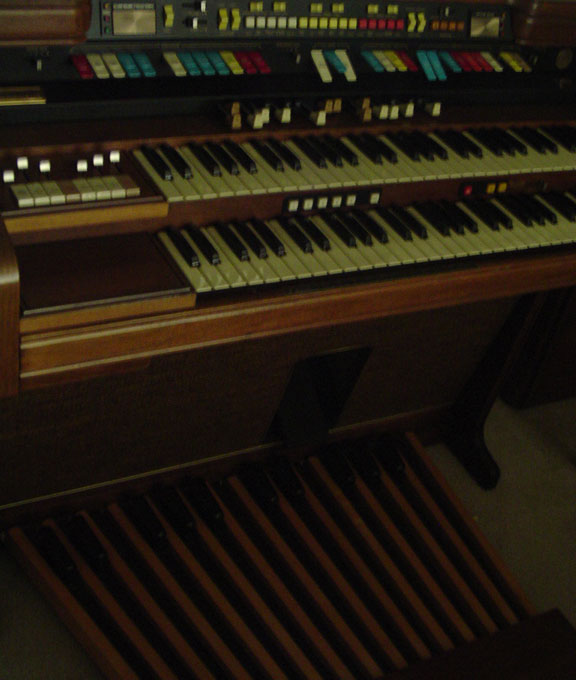
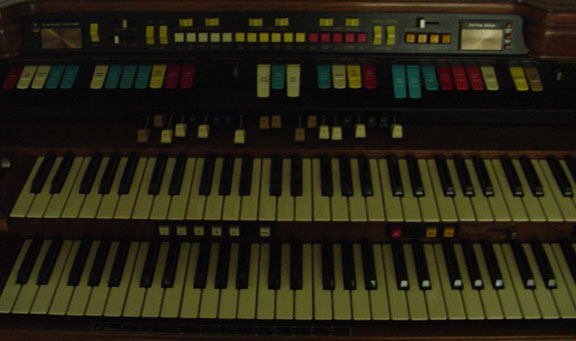
Well, new to me. I am so jazzed. A local organ repairman told me several months ago he’d keep an eye out for an organ for me. I told him I wanted a Hammond with B3 style drawbars and at least a two octave pedal board. He called this morning and SHABAM, here it is.
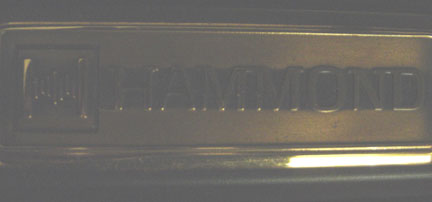
This is a Hammon 328322 Commodore. It has a two octave pedal board, real Leslie speaker built in, string section, rhythm and all the accompanying cheezeball effects. I told him I’ll never use the other stuff, just the leslie and drawbars and he said that’s typical of “real organists” and “purists”. So I guess I’m a “real organist” and a “purist” by that definition.
I’m conducting Seussical the Musical in November and I was going to cover the B3 organ parts on my Korg CX-3, which is a Hammond B3 and Leslie clone digital keyboard. But the repairman said he’d haul this organ up to the performing arts center, so I might just break it in onstage for that show. Too cool.
My friend Herb has been making fun of me for YEARS because he has a B3 with a Leslie and doesn’t even play keyboards. He’s been rubbing it in mercilessly. So Herb, if you’re reading this, and I know you are, I am hot on your trail buddy – getting closer to that B3………
And if someone is reading this and has a B3 or tons of money, I have an idea……why don’t you send me a Hammond B3. Yeah, I think that’s a good idea.
Skagit Opera is getting ready to open Bizet’s opera Carmen at McIntyre Hall, Mount Vernon, WA. There will be a free preview talk with director Erich Parce & conductor Dean Williamson – including musical selections from the opera.
I have seen two Skagit Opera productions: The Magic Flute and the Marriage of Figaro – both were excellent productions. Hope to see you at the show!
Sunday, Oct. 1st – 2 pm – McIntyre Hall
Carmen Performances by Skagit Opera at McIntyre Hall, October 2006
Friday, October 6 at 7:30pm
Sunday, October 8 at 2pm
Friday, October 13 at 7:30pm
Sunday, October 15 at 2pm
More Information on Dean Williamson
Dean Williamson, one of the country’s foremost emerging opera conductors, was until 2002 music director of the Seattle Opera Young Artists Program.He has led all of the program’s productions, including Cosi fan tutte, Le nozze di Figaro, Don Giovanni,La Cenerentola, and La bohème.
In 2001, he was asked to conduct a new production of Lucia at the Minnesota Opera. His success there led to numerous other invitations and in 2002 he made his debut at the Wolf Trap Opera with Don Pasquale.
Engagements in 2004 included Carmen at the Opera Theatre of St. Louis, Sondheim’s Passion at Minnesota Opera, Don Pasquale at the San Francisco Opera’s Merola program, Cosi fan tutte at the Seattle Opera Young Artists Program and L’Italiana in Algeri at Boston Lyric Opera.
In 2006 he returns to Spokane Opera for the New Year’s Eve gala, then conducts Il barbiere di Siviglia at the Washington East Opera. In February, he makes his Kentucky Opera debut with another production of Il barbiere di Siviglia, then comes back to the Seattle Opera YAP to lead The Turn of the Screw. In the spring and summer he returns to the Opera Theatre of St. Louis for Il barbiere di Siviglia, opening the season there. In the fall he conducts Die Zauberflöte at Opera Colorado.
Acclaimed by London’s Opera as a virtuoso at the keyboard, he was for twelve years principal coach and pianist for the Seattle Opera. Mr. Williamson has also performed throughout the United States, Canada, and Europe as accompanist with some of the world’s leading singers.
Deeply committed to teaching, he has given masterclasses at universities around the country, and has served on the judging panels of many competitions and scholarship auditions, including the Metropolitan National Council.
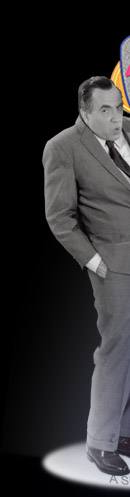
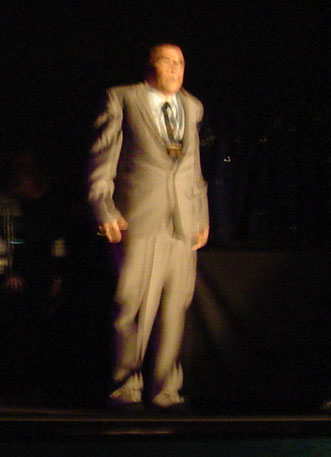
I got the chance to see “A Really Big Shew” at the Tulalip Casino this past Sunday. I thought it was fantastic. The show is hosted by Jerry Hoban who portrays Ed Sullivan. He is FANTASTIC! If you remember the Pulp Fiction scene where they are at the restaurant and Ed Sullivan MC’s the show, that was Jerry Hoban. Visit the Really Big Shew website.
I’m a little bummed because I had the chance to hang out with Jerry Hoban on Saturday but didn’t, after seeing his show I just wanted to talk with him for hours. The show ran for several years in Laughlin, Nevada and switches out it’s acts depending on the venue.
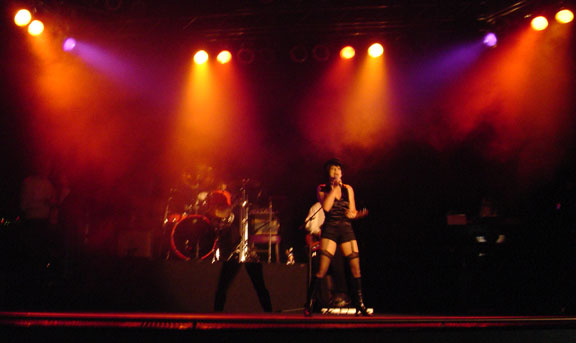
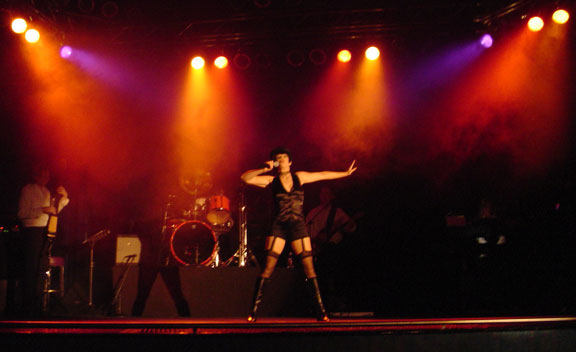
My good friend Gailyn Addis was doing Liza Minelli the night I saw the show, and will be doing Olivia Newton-John later in the week. She was AWESOME as Liza Minelli, really incredible. Gailyn and I did a tour of Japan about 10 years ago when I was musical director for Ron Stein’s Hollywood Superstars. We had a troupe of background singers, musicians, dancers and tribute performers for Elvis, Buddy Holly, Tina Turner, John Lennon and Marilyn Monroe. When I worked with Gailyn Addis she was dong the Marilyn Monroe tribute. She also does Judy Garland and Madonna.
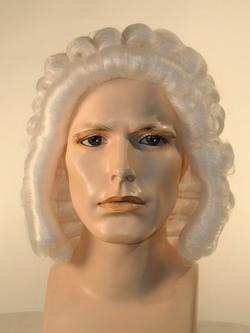
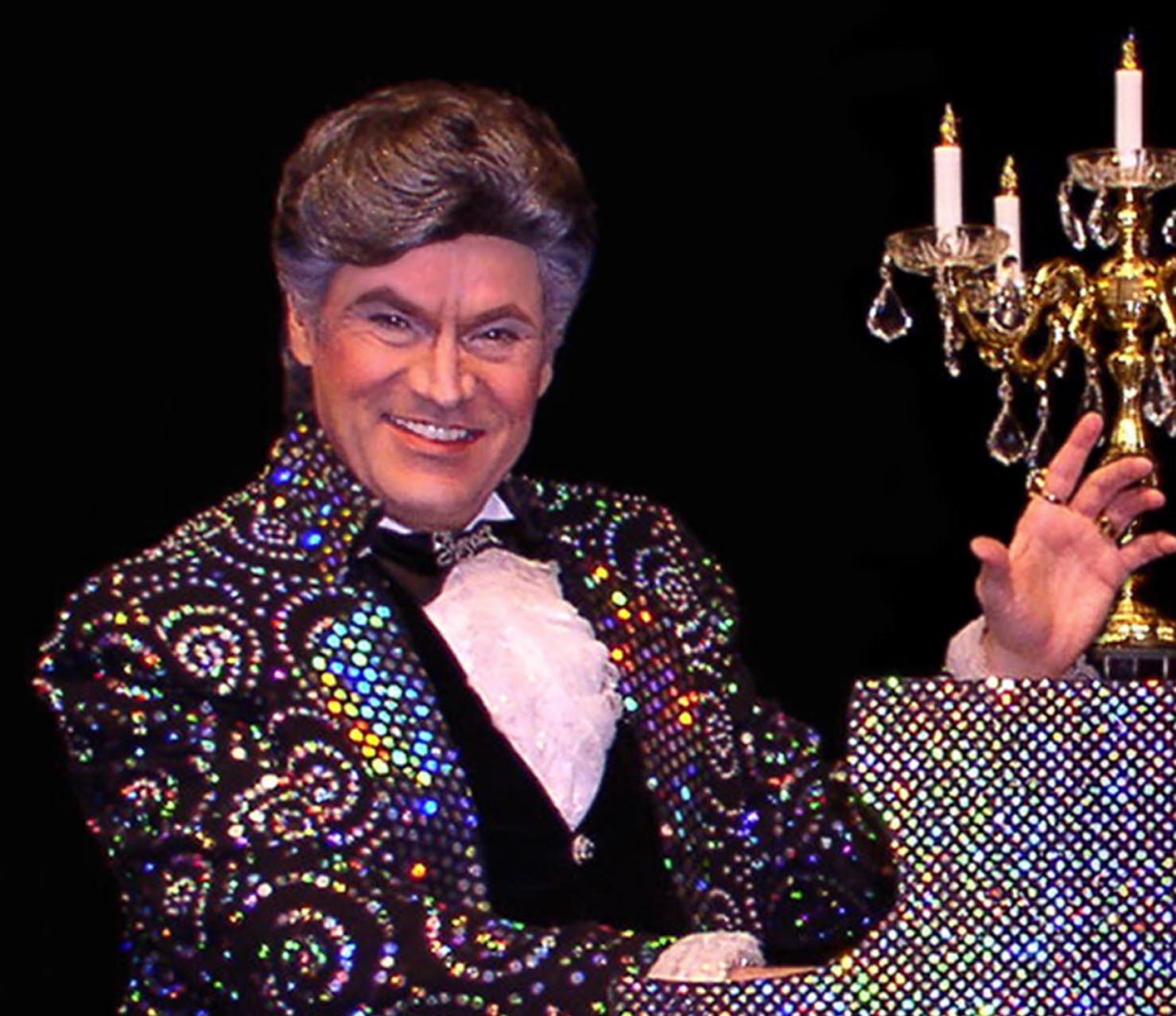
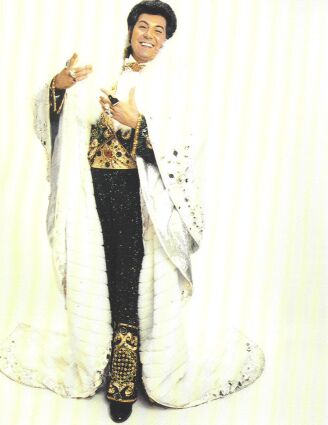
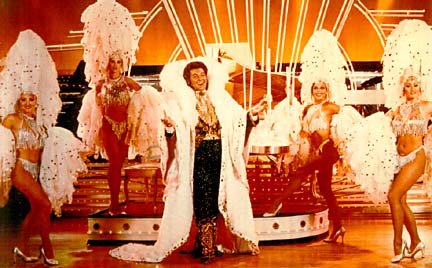
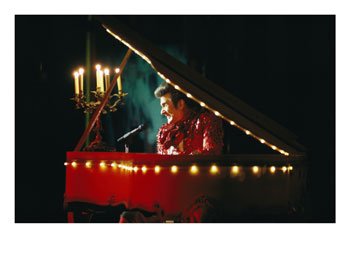
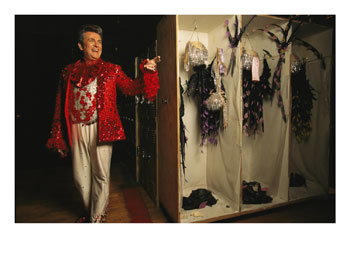
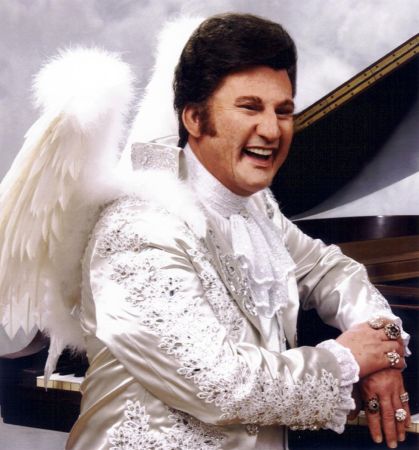
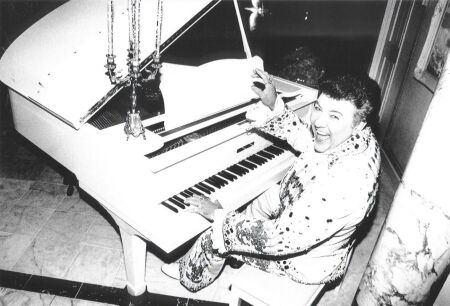
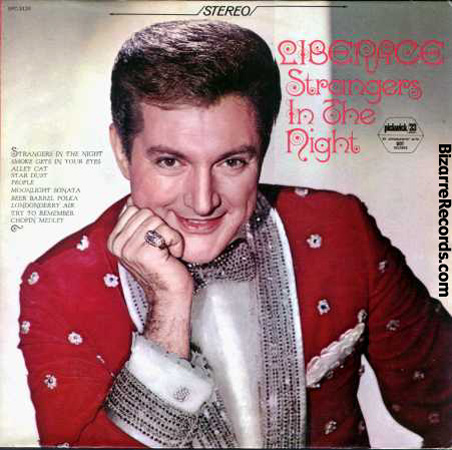
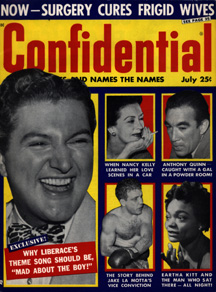
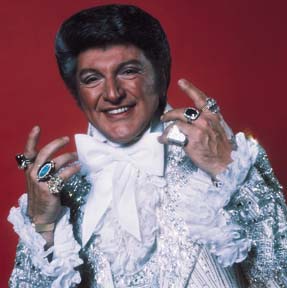
So you’ll notice some posts lately on my site with information about Liberace impersonators, and details of JS Bach’s face. After hanging out with Gailyn while she was up here, I kind of got the bug to do an impersonation bit. It just sounds like fun. Gailyn is THE MASTER at studying characters, and I don’t have any dreams of being as good as she is, but I think I could do a fun Liberace, Elton John and JS Bach. JS BACH? WHO DOES JS BACH IMPERSONATIONS? No one, it’s just crazy enough for me to do. I would like a JS Bach impersonator, so maybe someone else will too. So far I’ve ordered the wigs for Liberace and JS Bach, have a costume designer looking into creating a Liberace outfit, and I’ve ordered an Elton John costume and glasses. So we’ll see what happens.
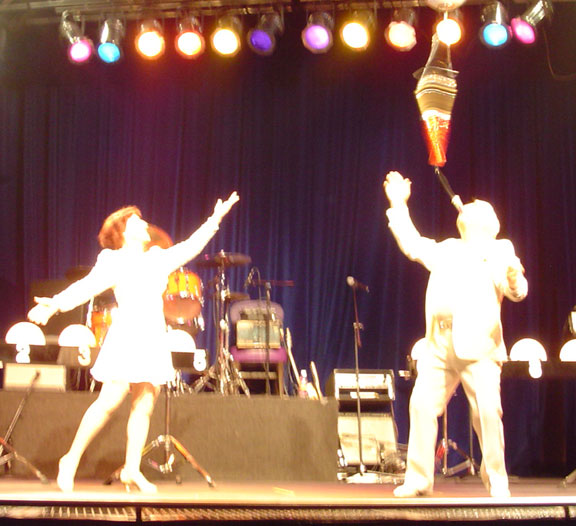
THE REALLY BIG SHEW – was very fun. Murray the magician performed a unique act using palming techniques with compact discs, a very interesting and captivating cabaret act. I got to speak with him for a bit at dinner after the show. He’s currently working at the MGM in Vegas with his own show, and is getting ready to go to Greece and other far away places with his act. He said what I saw was his scaled-down cabaret act, in Vegas he does the full show. He reminded me very much of Johnny Depp, an ultra cool personality and ultra hip. Best wishes to you Murray as your career continues to build.
The show also had a spinning plate act. On tv this act might have seemed corny, but performed live it was great. You just don’t see acts like that anymore. It was a classic performance, and rumor has it the act ACTUALLY PERFORMED ON THE ED SULLIVAN SHOW. That made it very cool.
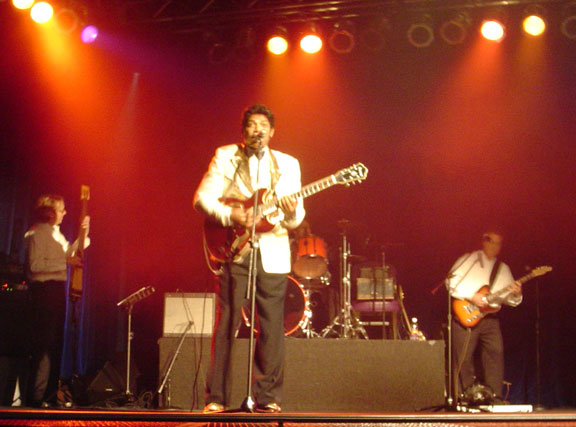
There was also tribute performances to Little Richard, James Brown, Neil Diamond – a puppet act and many inuendo jokes by Ed Sullivan, which were very funny (he writes the jokes himself).
So congrat to a Really Big Shew, may your run last longer than M*A*S*H – Jerry Hoban, you are awesome, nice job!
Conrad
****
Music Tribute Acts Available for Really Big Shew:
Ann-Margret
The Beatles
James Brown
Johnny Cash
Ray Charles
Chubby Checker
Cher
Petula Clark
Patsy Cline
Bobby Darin
Sammy Davis, Jr.
Neil Diamond
The Doors
Bob Dylan
The Everly Bros
The Four Tops
Aretha Franklin
Judy Garland
Buddy Holly
Janis Joplin
Tom Jones
Jerry Lee Lewis
Liberace
Little Richard
Dean Martin
Johnny Mathis
Bette Midler
Liza Minnelli
Marilyn Monroe
Rick Nelson
Roy Orbison
Elvis Presley
The Rolling Stones
Frank Sinatra
Nancy Sinatra
Barbra Streisand
The Supremes
The Temptations
Tina Turner
Ritchie Valens
Frankie Vallie
Hank Williams
Jackie Wilson
Stevie Wonder
The Young Americans
Specialty and Novelty Acts:
Akrobatic
Adagio
Komedi Kontortions
Ed Alonzo Magic & Comedy
Yogi Baird Fiddle Playing Contortionist
Jim Barber & Seville Comedy Ventriloquist
Jack Benny Comedy Tribute
Dan Birch Illusionist
The Bizzarros Body Balancing Team
Bouncin’ Dan The Paddleball Man
Circus Boy Bobby Hunt
Rider of the World’s Smallest Stunt Cycle
Brad Cummings Ventriloquist
The Dancing Gouchos Specialty Dance and Drums
Jeff DeHart Emmy Award Winning Impressionist
El Gleno Grande A Man and His Zebra Sasha
Fedorchev Aerialist Extraordinaire
Janice Hart Comedianne Impressionist
The Hamners Grande Illusionists
The Hartzells Death Defying Crossbow Team
Hillel – Mr. Balloon Man
TM Jesse and James Country Comedy
Bob Moore’s Amazing Mutts Comedy Canine Troup
Murray The Guy with the CD’s
Magically Musical Illusions
Pete Michaels Ventriloquist
John Parks
The Funny Plate Spinning
Waiter Johnny Peer’s Muttsville Comix Going to the Dogs
Price & McCoy Acrobatic Team
Mark Nizer The Bad Boy of Juggling
Rice & Renee Comedy Rope Trick Team
Kip Reynolds Juggling Comedian
Almost Joan Rivers Comedy Tribute
Red Skelton Comedy Tribute
Cameron South Magical Comedy
James and Kathy Taylor Comedy & Adagio Dance
Leslie Tipton Contortionist
The Great Tomsoni & Company
The Wizard of Warsaw Jimmy Travis
Comedian Dario Vaquez Speed
Juggling Sensation Waldo & Woodhead
The Masters of Mayhem … and more!
I run a network of free discussion forums on a variety of areas including music, theology, politics, sports and niche groups. The first of all my forums was Fender-Talk.com – A forum for guitar players that love Fender guitars. A little ironic because at the time I was playing keyboards for Freddy Fender.
They tolerate me on this forum, because I don’t play guitar. Actually, many of the forums I run it’s true that I am not a member of the group that’s represented by the forum. I started this forum with a friend of mine from the Roy Rogers Jr. band, and he loves Fender guitars.
All my forums are free, and it’s taken a considerable amount of money to keep them going – but I really believe in them, and the discussions between members have helped countless people in so many ways.
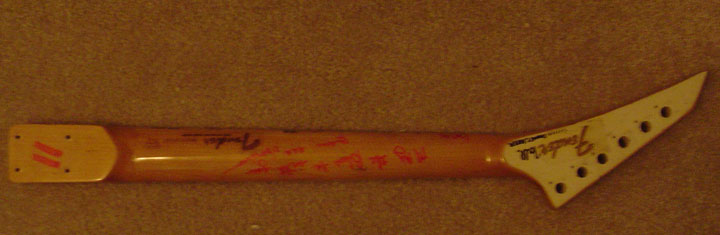
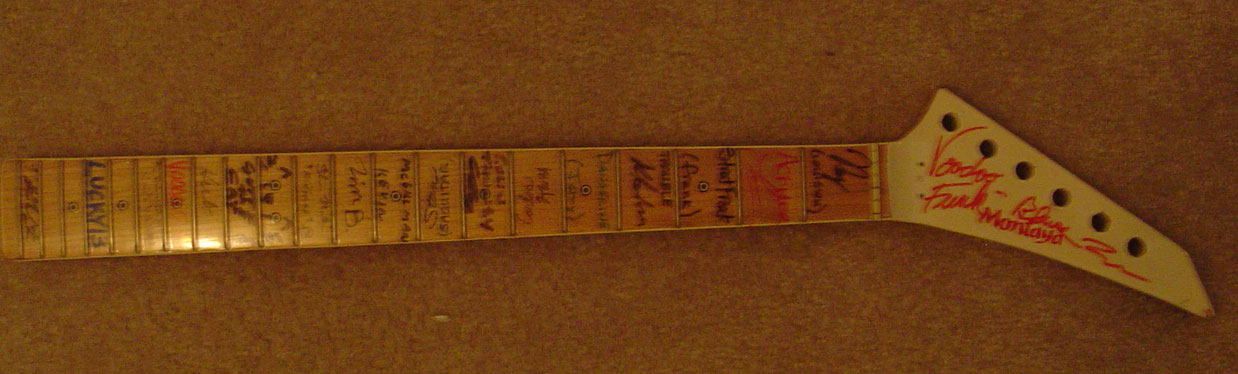
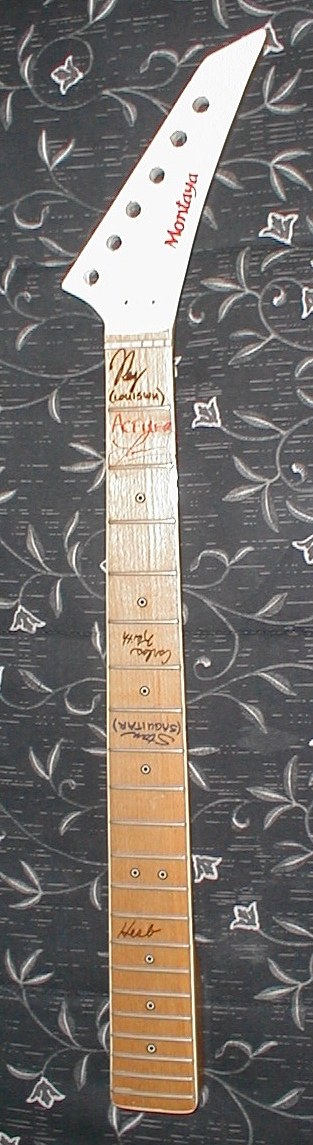
But THIS post is about the MONTOYA NECK! In December 2003, nearly THREE YEARS AGO – members at Fender-Talk.com started mailing a Montoya guitar neck to each other. They each signed the neck and sent it on to the next member.
Now there’s 19 signatures on the neck, so if everyone had sent it UPS and got it right to the next person, this process should have taken about three months. But these are guitar players we’re talking about – so it took them THREE YEARS to do this. The forums went through a tumultous time in between there, and were even down for a couple months. But they persevered, as guitar players always do, and just today I received the Official Montoya Neck in the mail. AWESOME!
I own a brand new Fender American-made Strat that was signed by Freddy Fender and has only been played by him, but this headstock is much more valuable to me. It marks three years of transition and persistence, and a great memory of a fantastic group of people – the members at Fender-Talk.com
Coolest thing of all, I knew NOTHING about all of this until earlier this year, a complete surprise.
THANKS GUYS!!!!!!!!
Conrad
THE FENDERTALK NECK FRONT
FT NECK BACK
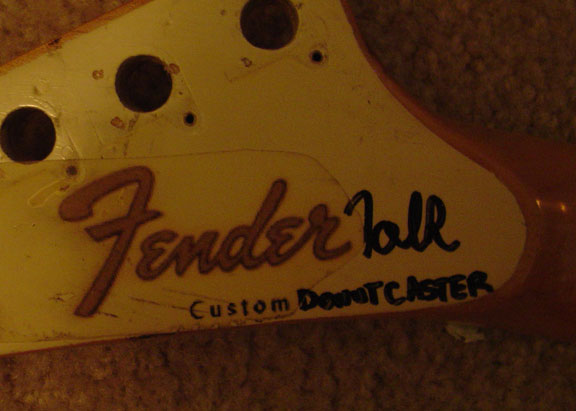
CLOSEUP OF HEADSTOCK BACK
Reads: FenderTalk Custom DonutCaster
(At FenderTalk we LOVE to talk about Krispy Kreme Donuts)
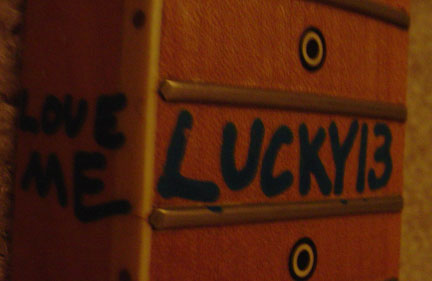
Lucky13 Signature – Reads “LOVE ME”
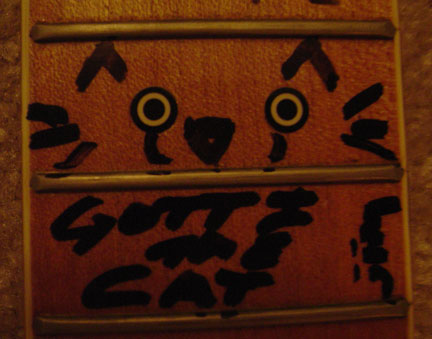
Gotti the Cat Signature with Cat Drawing
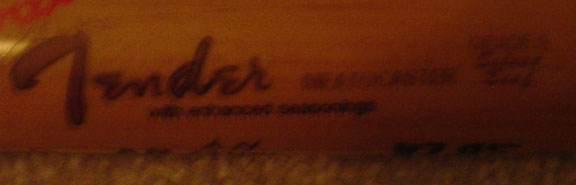
Closeup of Back reads:
Fender MeatoCaster
with enhanced seasonings
Grade A Safest Beef
THE FENDERTALK NECK IN JANUARY 2004
Here are the member signatures and locations on the neck:
Voodoo Funk – New York
LouisWu – Tucson, Arizona
ACFixer – Victorville, California
StratFreak – West Virginia
Trouble – North Carolina
Dangerine – New York
Carlos – Marion, Illinois
Colin – Tulsa, Oklahoma
SAGuitar – Oregon
McGillman – Nevada
Tim B. – Naples, New York
Midiman
Gotti the Cat – So Cali
Herb – Kansas
Voodoo
CAFeathers
Lucky13 – Reno, Nevada
Last name unreadable
December 2003 – The Original Montoya Neck Thread
January 2004 Montoya Neck Thread
January 2004 Montoya Neck Thread
February 2004 Montoya Neck Thread
June 2004 Montoya Neck Thread
July 2004 Montoya Neck Thread
May 2005 Montoya Neck Thread
September 2006 FT Neck Thread
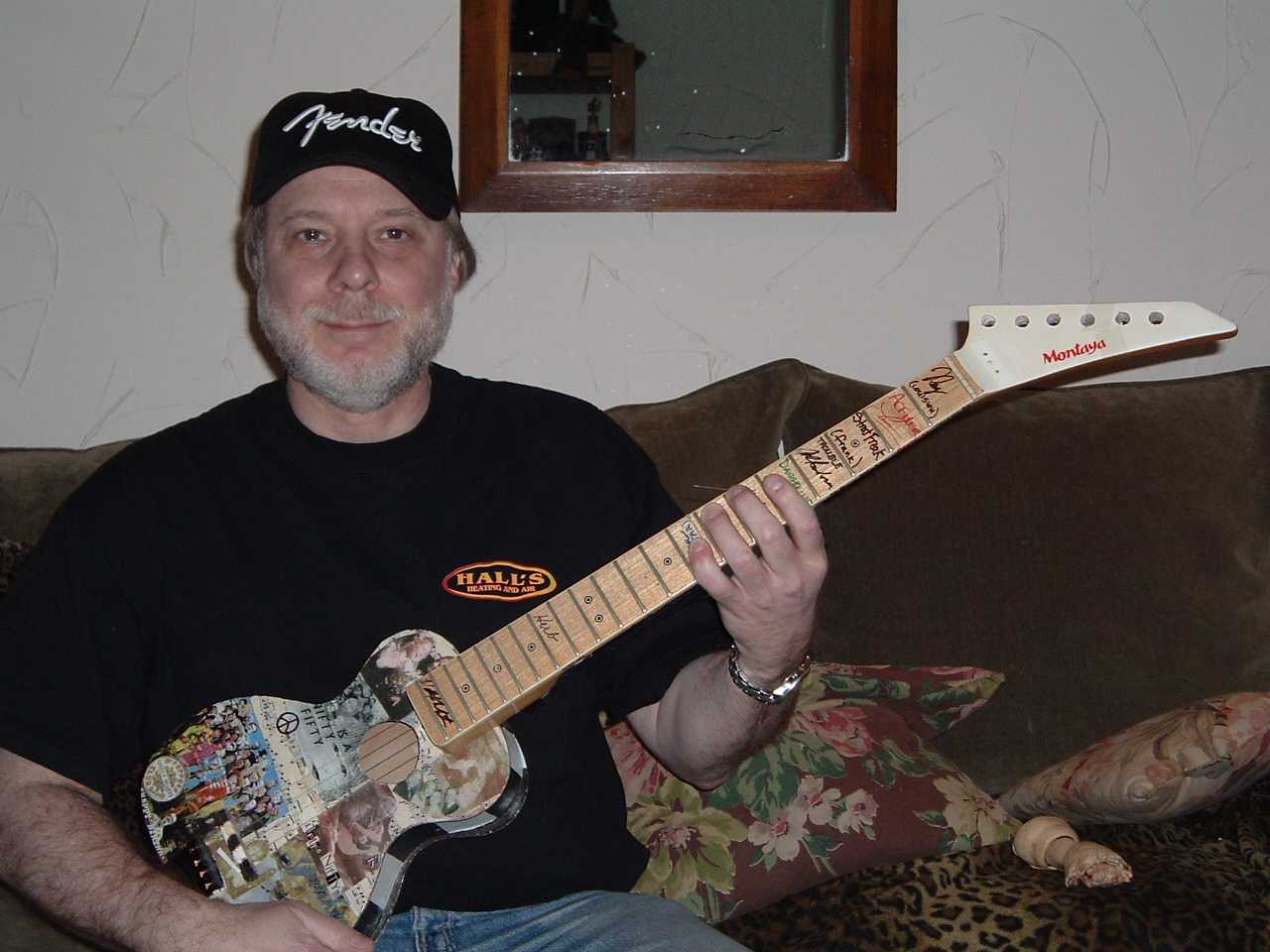
Montoya Neck in January 2004, at that time signed by:
LouisWu (Ray) – Tucson, Arizona
ACfixer (Lance) – Route 66 (Victorville), California
Carlos (Keith) – Marion, Illinois
SAguitar (Stan) – Oregon
Herb – Kansas City
Dangerine49 (Fender-Talk Member) Holding the Montoya Neck
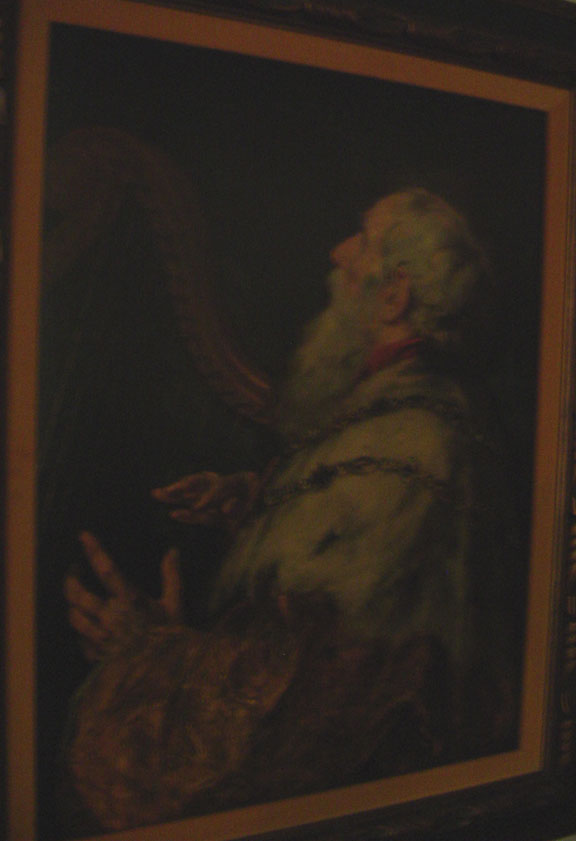
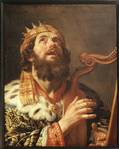
There is a painting that has been in my family for about 30 years and was recently given to me. It is King David and His Harp by Peter paul Rubens. Of course we don’t have the original, but it is a fine print in a very elaborate frame.
It’s textures are dark, with the slight glimmering of King David’s robe. King David is quite old in the painting and looks with devotion towards heaven as his worn and calloused fingers pluck the strings. It is a painting I spent endless hours staring at as a child, and even today find myself gazing at it almost daily now that it’s in my house.
The painting is a statement of faith, of a live well-lived, of humble devotion to God. To me it is the most beautiful painting I have ever seen. My father loved it also. To him it was a statement of power and stately position, to me it is much more humbling.
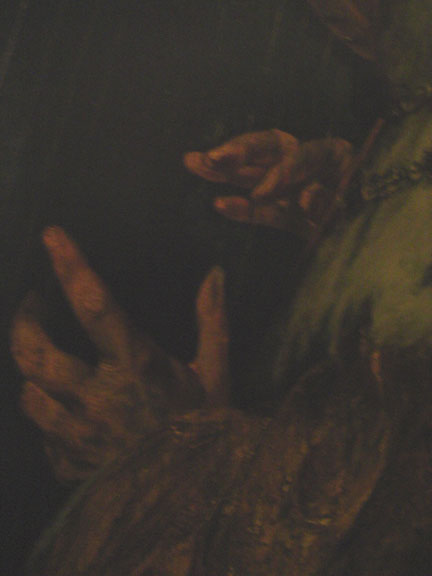
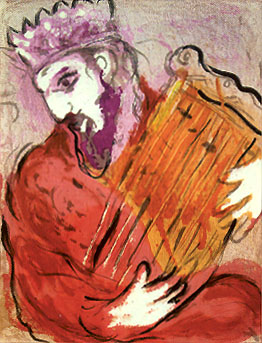
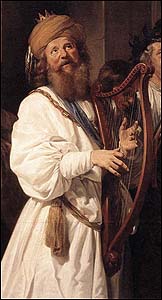
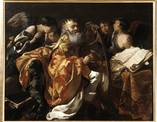
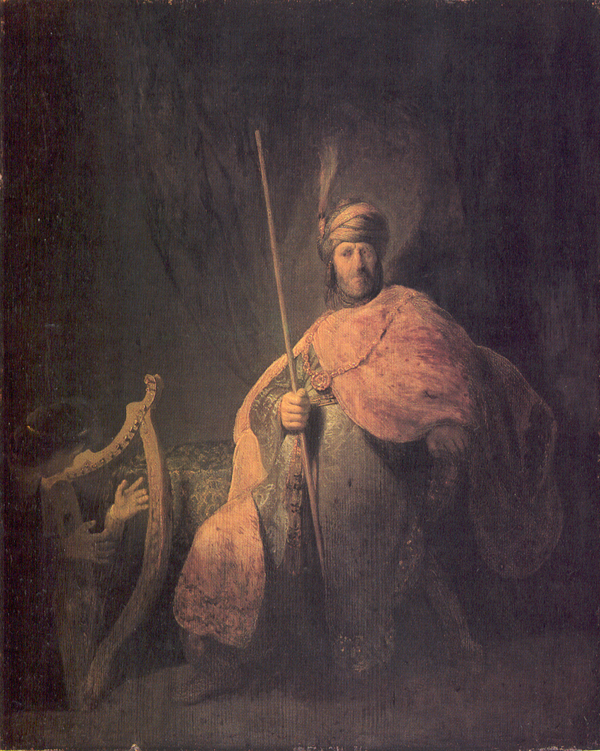
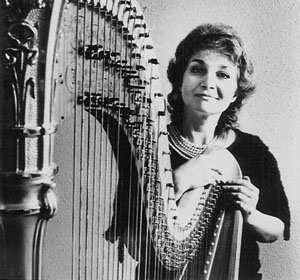
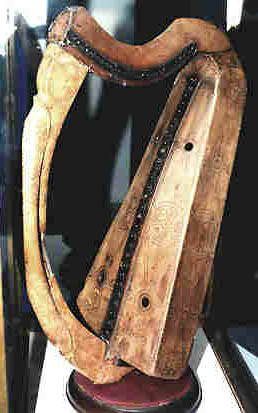
Here are details from my own print of the Rubens painting. I’ve also included below several other paintings by Peter Paul Rubens, as well as paintings of King David playing his harp, and paintings/pictures of the harp in ancient and modern settings.
When I look at the painting, I feel comforted for having spent a life in music, and for the humble possession of faith.
Creator: Peter Paul Rubens (1577-1640) , Flemish
Period: Northern Baroque
Museum: Städelsches Kunstinstitut, Frankfurt (Main), Germany
CLOSEUP OF HANDS
OTHER PAINTINGS BY PETER PAUL RUBENS
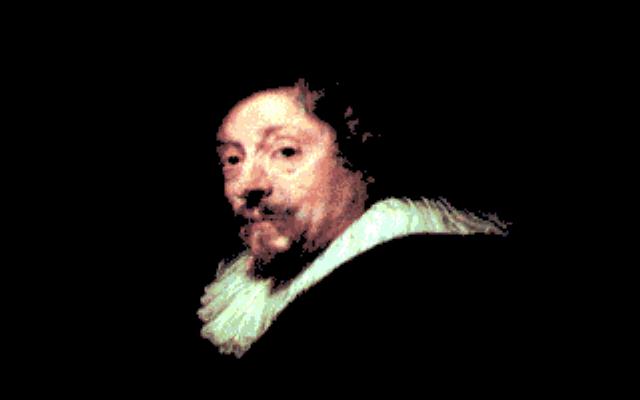
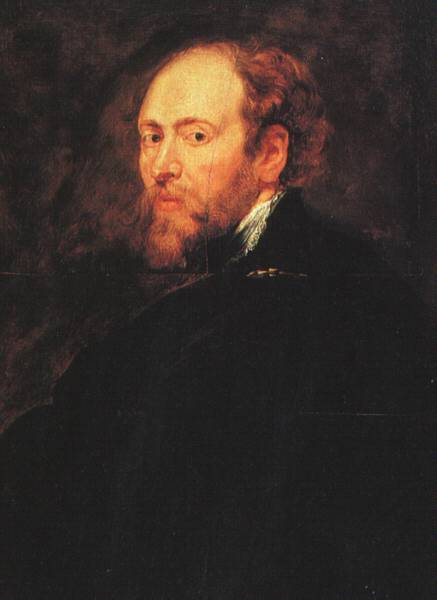
Self Portrait?
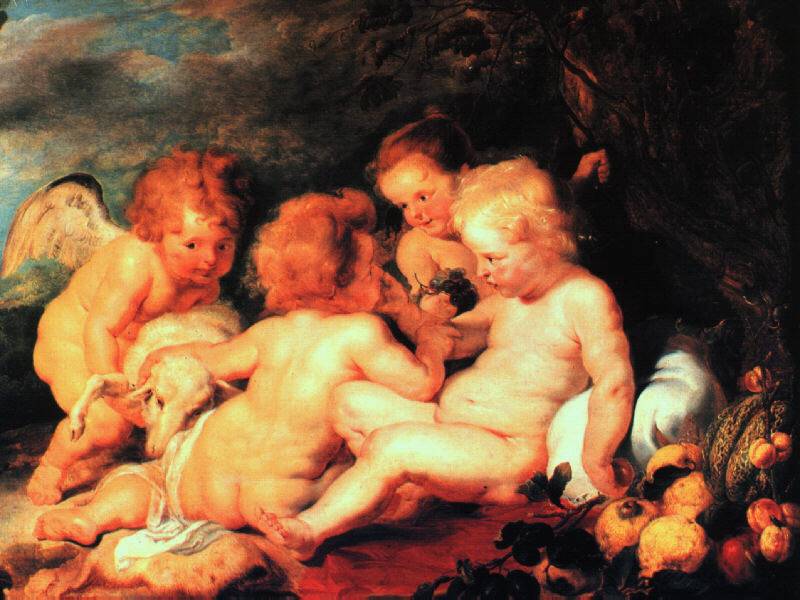
Christ and Saint John with Angels
Wilton House at Wiltshire, England
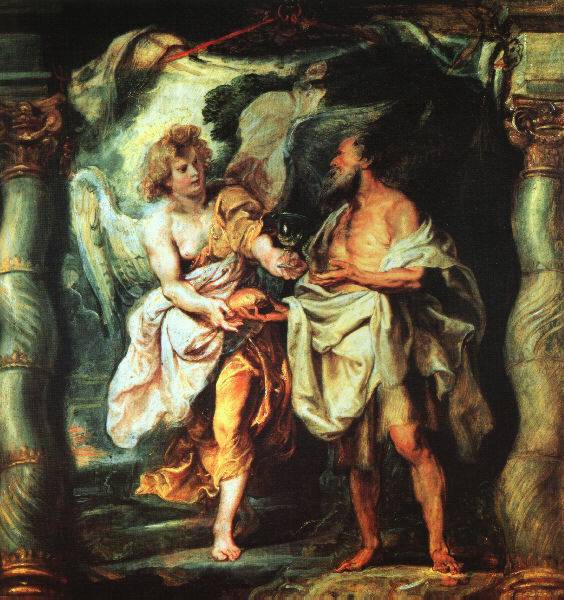
The Prophet Elijah Receiving Bread and Water from an Angel
1625-28 Musee Bonnat, Bayonne, France
Self-Portrait
1628 Oil on canvas, Uffizi
ABOUT PETER PAUL RUBENS
The Flemish baroque painter Peter Paul Rubens, b. June 28, 1577, d. May 30, 1640 was the most renowned northern European artist of his day, and is now widely recognized as one of the foremost painters in Western art history.
By completing the fusion of the realistic tradition of Flemish painting with the imaginative freedom and classical themes of Italian Renaissance painting, he fundamentally revitalized and redirected northern European painting.
Rubens’s upbringing mirrored the intense religious strife of his age–a fact that was to be of crucial importance in his artistic career. His father, an ardently Calvinist Antwerp lawyer, fled in 1568 to Germany to escape religious persecution, but after his death (1587) the family moved back to Antwerp, where Peter Paul was raised a Roman Catholic and received his early training as an artist and a courtier. By the age of 21 he was a master painter whose aesthetic and religious outlook led him to look to Italy as the place to complete his education. Upon arriving (1600) in Venice, he fell under the spell of the radiant color and majestic forms of Titian, whose work had a formative influence on Rubens’s mature style. During Rubens’s 8 years (1600-08) as court painter to the duke of Mantua, he assimilated the lessons of the other Italian Renaissance masters and made (1603) a journey to Spain that had a profound impact on the development of Spanish baroque art. He also spent a considerable amount of time in Rome, where he painted altarpieces for the churches of Santa Croce di Gerusalemme (1602; now in Hopital du Petit-Paris, Grasse, France) and the Chiesa Nuova (1607; now in Musee de Peinture et Sculpture, Grenoble, France), his first widely acknowledged masterpieces. His reputation established, Rubens returned (1608) to Antwerp following the death of his mother and quickly became the dominant artistic figure in the Spanish Netherlands.
In the mature phase of his career, Rubens either executed personally or supervised the execution of an enormous body of works that spanned all areas of painting and drawing. A devout Roman Catholic, he imbued his many religious paintings with the emotional tenor of the Counter-Reformation. This aggressively religious stance, along with his deep involvement in public affairs, lent Rubens’s work a conservative and public cast that contrasts sharply with the more private and secular paintings of his great Dutch contemporary, Rembrandt. But if his roots lay in Italian classical art and in Roman Catholic dogma, Rubens avoided sterile repetition of academic forms by injecting into his works a lusty exuberance and almost frenetic energy. Glowing color and light that flickers across limbs and draperies infuse spiraling compositions such as The Descent from the Cross (1611; Antwerp Cathedral) with a characteristically baroque sense of movement and tactile strength.
A love of monumental forms and dynamic effects is most readily apparent in the vast decorative schemes he executed in the 1620s, including the famous 21-painting cycle (1622-25; Louvre, Paris), chronicling the life of Marie de Medicis, originally painted for the Luxembourg Palace. In order to complete these huge commissions, Rubens set up a studio along the lines of Italian painters’ workshops, in which fully qualified artists executed paintings from the master’s sketches. Rubens’s personal contribution to the over 2,000 works produced by this studio varied considerably from work to work. Among his most famous assistants were Anthony van Dyck and Frans SNYDERS.
Rubens’s phenomenal productivity was interrupted from time to time by diplomatic duties given him by his royal patrons, Archduke Ferdinand and Archduchess Isabella, for whom he conducted (1625) negotiations aimed at ending the war between the Spanish Netherlands and the Dutch Republic and helped conclude (1629-30) a peace treaty between England and Spain. Charles I of England was so impressed with Rubens’s efforts that he knighted the Flemish painter and commissioned his only surviving ceiling painting, The Allegory of War and Peace (1629; Banqueting House, Whitehall Palace, London).
During the final decade of his life, Rubens turned more and more to portraits, genre scenes, and landscapes. These later works, such as Landscape with the Chateau of Steen (1636; National Gallery, London), lack the turbulent drama of his earlier paintings but reflect a masterful command of detail and an unflagging technical skill. Despite recurring attacks of arthritis, he remained an unusually prolific artist throughout his last years, which were spent largely at his estate, Chateau de Steen.
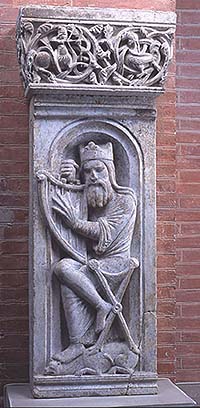
PAINTINGS OF KING DAVID PLAYING HIS HARP
Information About the Harp
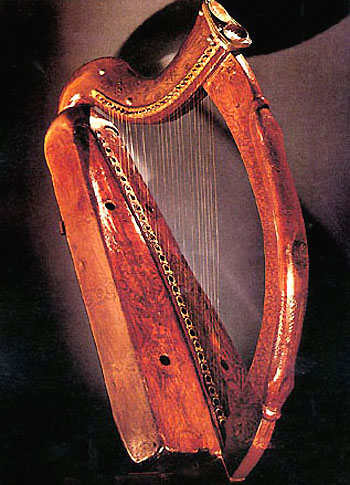
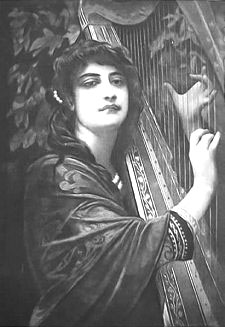
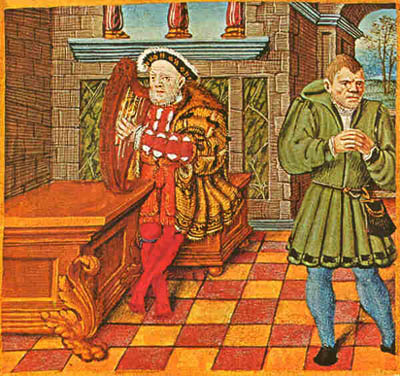
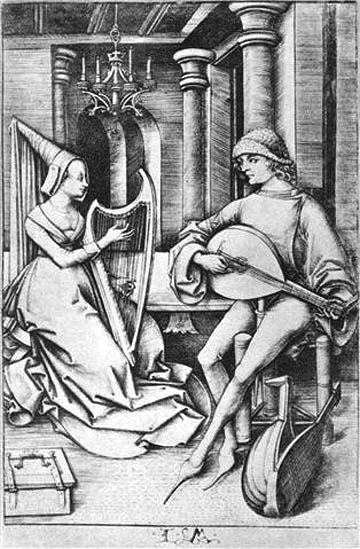
The harp is the only plucked-string instrument standard to the orchestra. Harps go back many thousands of years. Ancient Middle Eastern paintings show harps being played 2500 years before the Christian era. You can always identify King David in paintings and books because he was known to play the harp.Small harps have been used by bards, minstrels and troubadors for many hundreds of years, because they are easy and portable. It was in the Renaissance in Europe that big floor harps began to be used in ensemble music. The hard part with harps was to make them so they could play in any key. They usually had only “white keys”, and had to be retuned constantly. For a while, harps were built with two and three rows of strings, which made them quite hard to play.It was in 1782, in France, that the “double-action harp” was invented. This innovation allowed the player to raise and lower the pitch of the strings using pedals. And it was from this method that the modern double-action pedal harp evolved. By the mid-1800s, there were so many double-action harps that Western composers were able to write orchestral parts for the harp. Tchaikovsky and Debussy wrote some of the loveliest harp parts.
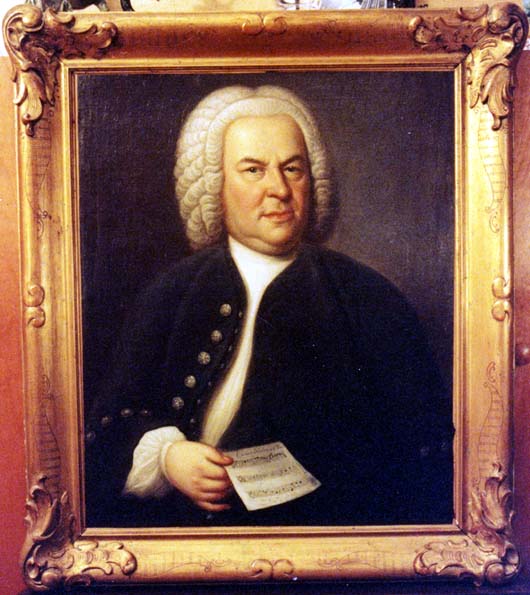
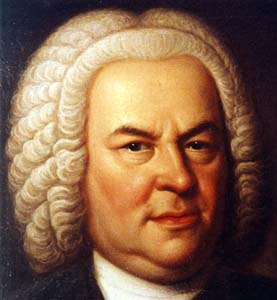
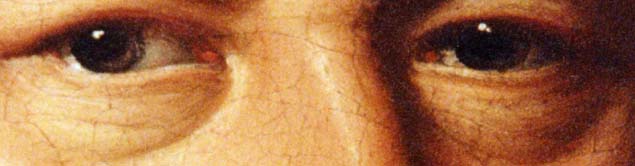
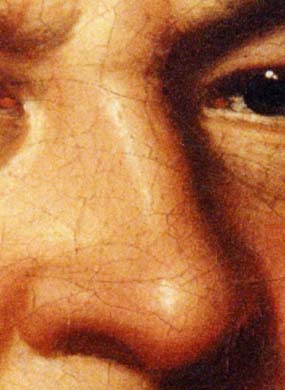
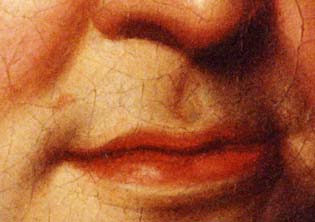
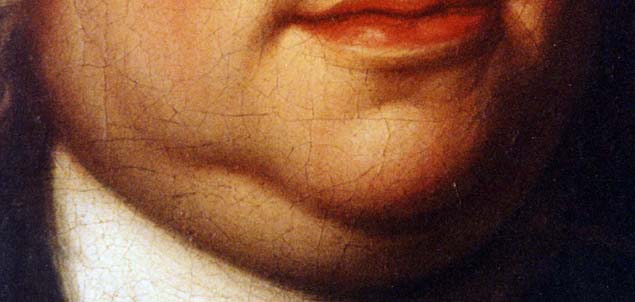
Portraits and images of Johann Sebastian Bach. Most of the images of JS Bach have not been well authenticated. The following images are considered the most authentic. For years I have seen different pictures of JS Bach and never understood why they look so different, now I know.
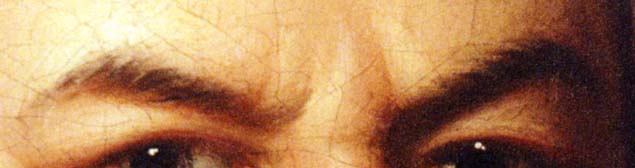
The most authentic image of Johann Sebastian Bach – painted by Elias Gottlob Haussmann in 1748.
Bach style wig
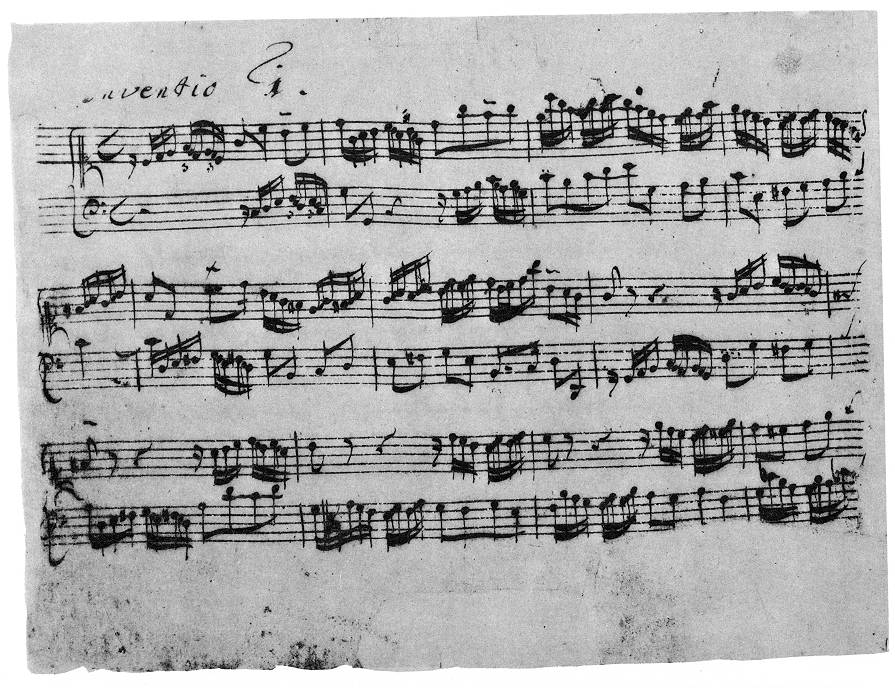
Original Bach Manuscript – Invention in C
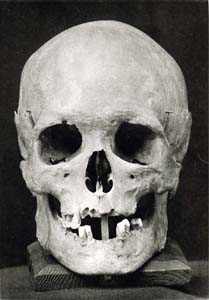
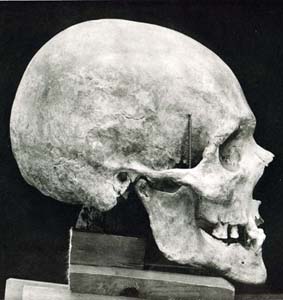
JS Bach Skull – Authenticated, but exhumed from an unmarked grave. Bach was not toothless, but did not have many teeth left when he died.