Meg Brockie – Jeanette d’Armand
Understudy – Laurie Miller
Charlie Dalrymple – James Scheider
Mr. Lundie – Bob Nydeger
Harry Beaton – Ryan Edwards
Jean MacLaren – Natalie Howell
Understudy – Elisa Fuller
Jane Ashton – Elisa Fuller
Archie Beaton – John Hepola
Mary Beaton – Laurie Miller
Andrew MacLaren – Clarence Holden
Anne MacLaren – Kathleen Kernohan
Bonnie MacGuffie – Kelly Pollino
Angus MacGuffie – Tom Mueller
Frank (the Bartender) – TBA
Kate – Ashley Rinas
Sandy Dean – Kristina Howell
Maggie – Stacy Lazanis
Fishmonger – TBA
Francis – Emma Asgharian
***PLEASE NOTE: Actors with understudy roles are double-cast in other roles. ALSO: Roles of men and women of the town may be switched around as we begin rehearsals and I am able to try out people in the various roles. Regardless of this, those people who are given speaking roles will have one of the men/women’s speaking roles.
Ensemble
Anna Jenny
Trina Jenny
Sarah Jenny
Luke Thompson
Erin Hemenway
Kalli Roberts
Elizabeth Sunderland
Kris Hemenway
Sarah Holcomb
Debbie Wolf
Kelli Bates
Jonathan Wolf
Katie Hudak
Christine Wolf
Jordan Rinas
Robin Carpenter
Ali Rinas
Juanita Kolbeck
Tess Gribin
Lauren Lippens
Abi Rinas
Sarah Howell
Kelli Niemeyer
Bianca Campbell
Kristina Niemeyer
Kelli Denike
Rebecca Wright
Calli Johnson
Francis Roane
Caitlin Edwards
Launi Kucera
Alex Hollingsworth
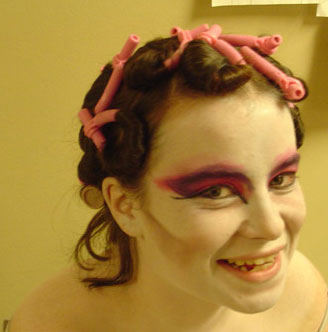
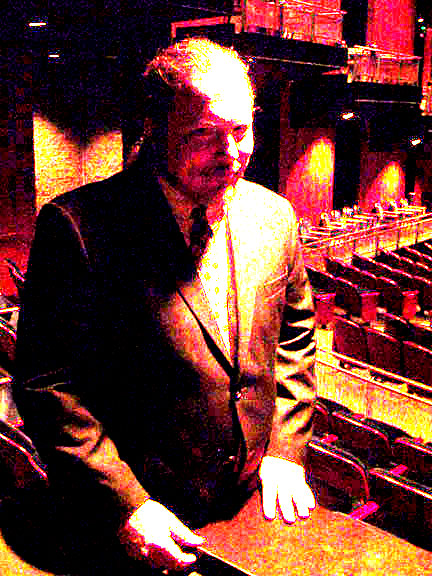
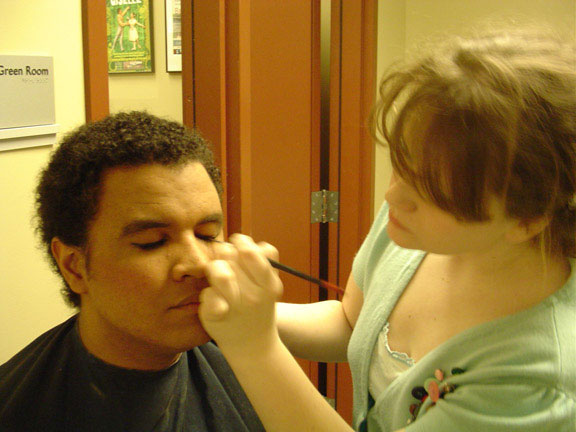
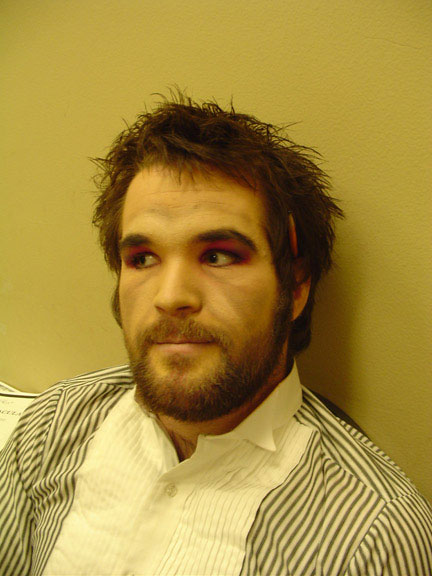
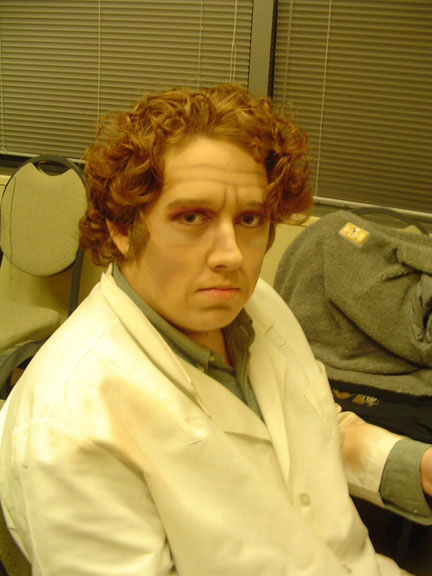
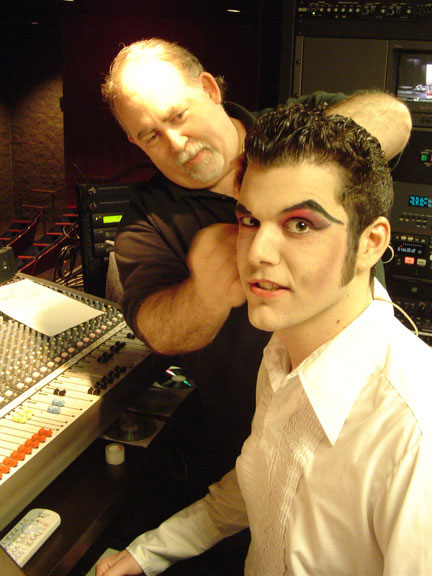
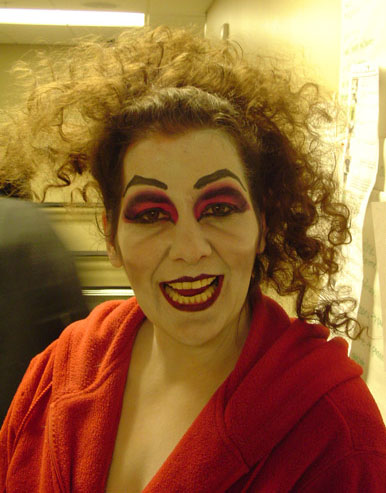
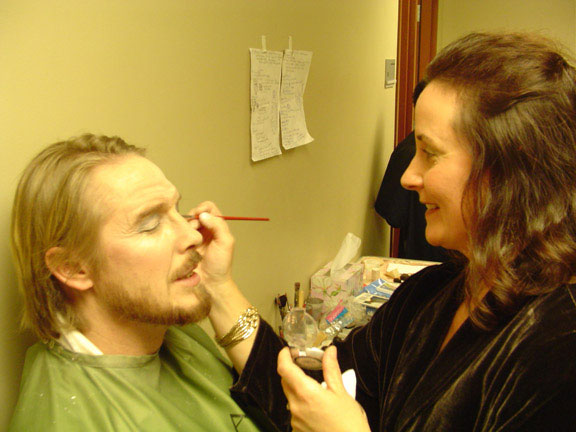
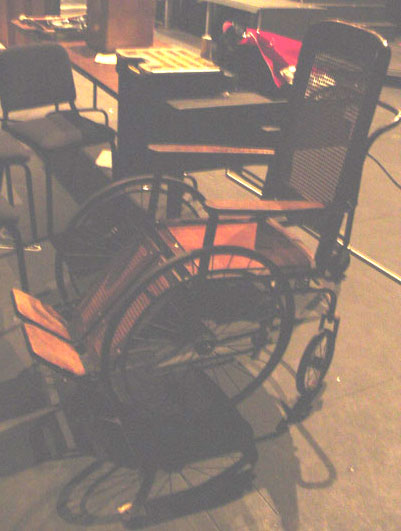
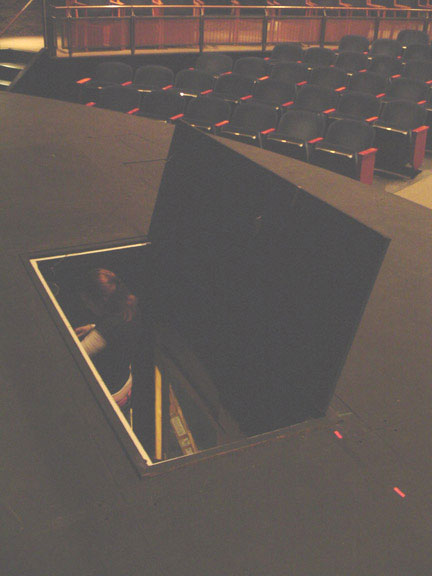
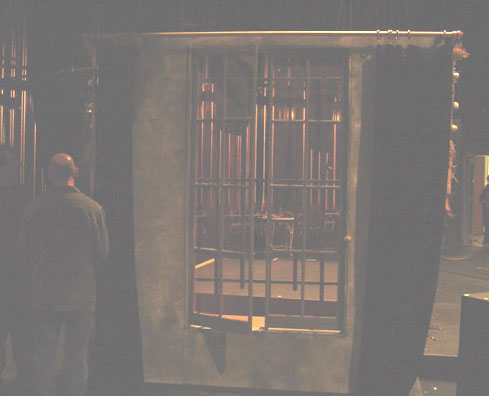
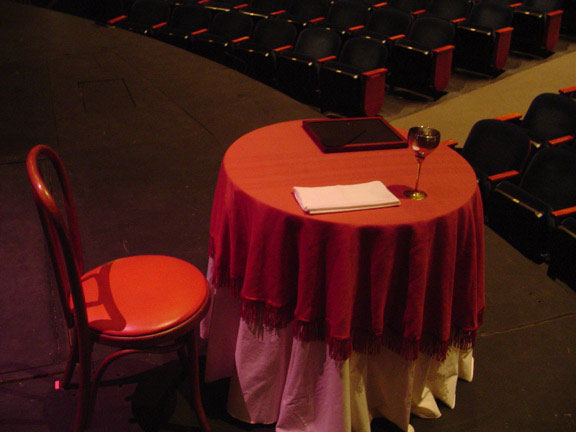
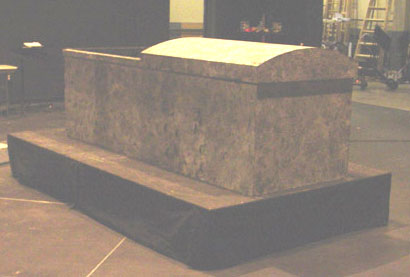
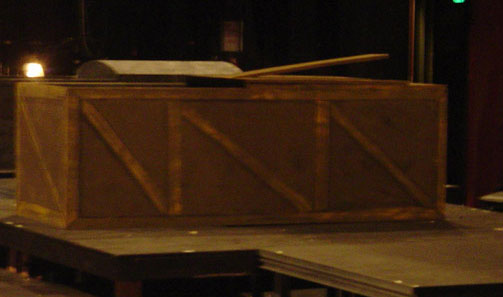
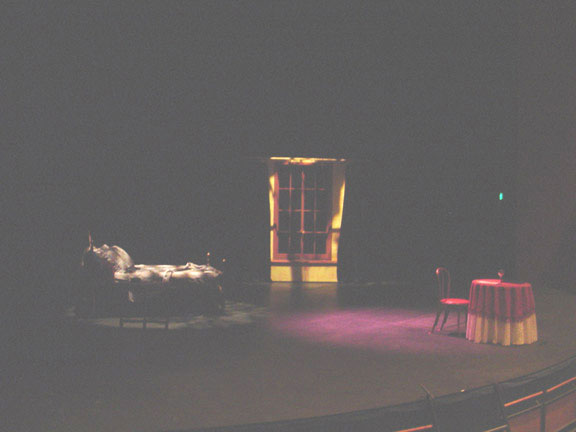
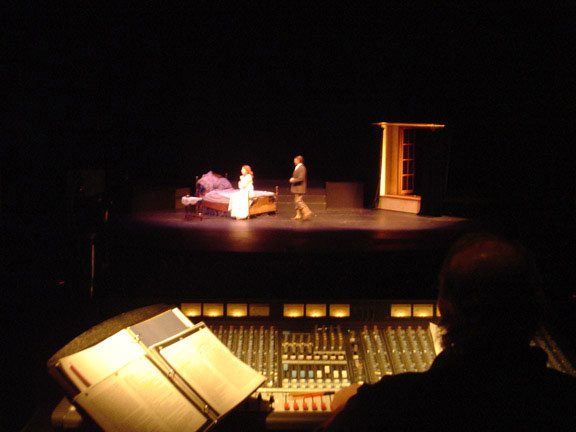
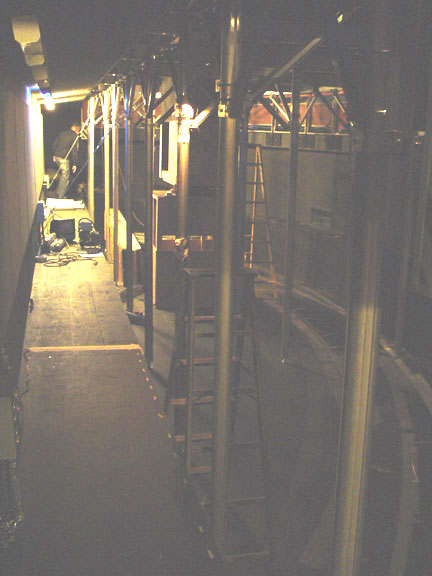
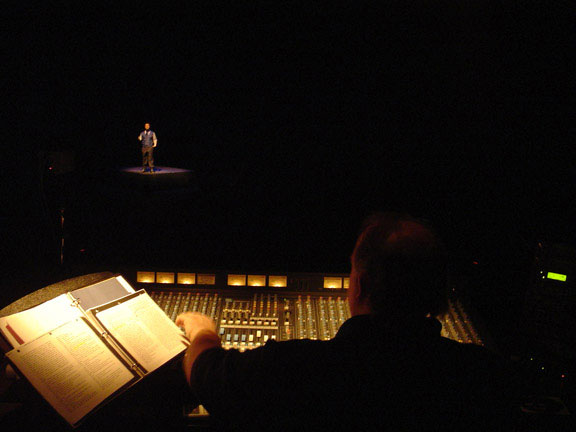
Cast photos, set pics and cast/crew credits for the live stage production of Dracula presented by the Skagit College Theater Department at McIntyre Hall (Mount Vernon, WA) February 2007.
Dracula by Steven Dietz
From the novel by Bram Stoker
Originally produced by the Arizona Theatre Company, Tucson/Pheonix, Arizona. David Ira Goldstein, Artistic Director. Robert Alpaugh, managing director.
Dracula – James Padilla
Van Helsing – David Cox
Mina – Lydia Randall
Maid/Female Attendant – Suzann McLamb
Harker – Alex Mutegeki
Seward – Mark Pedersen
Lucy – Erin Hemenway
Waiter/Attendant 1 – Miles McGillivray
Attendant 2 – Jared Conforti
Vixen 1 – Carolyn Travis
Vixen 2 – Christina Stephens
Renfield – Trey Hatch
Director Damond Morris
DIRECTOR’S NOTES
Under my sheets with Dracula and a flashlight in my hands, I flipped through page after page, unable to put the novel down and too frightened to read on. I was nine when I first read the novel Dracula and twelve when I saw the 1931 film on TV. Dracula is a creature that scares me in a primal way. Like snakes, spiders, bats and rats he gives me a creepy crawly feeling in the pit of my stomach. What happens in the night just outside your window while you are sleeping? We all know there are no such things as monsters, right? Just be sure you don’t invite them in.
Oh, and your neck, be sure to check your neck… Enjoy the show!
– Damond Morris
Dracula Crew
Director – Damond Morris
Costume Design – Maura Marlin
Set and Lighting Design – Steve Craig
Sound Design and Music – Jerry Fortier and Conrad Askland
Additional Music – Ian Hansen
Technical Direction – Mark O’Brien
Stage Manager – Dinah Steveni
Assistant Stage Manager – Christine Dykema
Makeup – Mary Bingham
Properties Mistress – Cathy Savage
Scenic Charge Painter – E.A. Risser
Special Projects – Michael Marlin
Technical Assistant – Tarah L. McKitrick
Costumer Crew – Carolyn Travis, Lydia Randall, Crystal Dominguez, Kathleen Luther, Lindsey Bowen, Michelle Beach
Makeup Assistant – Nicole Trepus, Ellen Palmer
Lighting Technician – James Yandle
Lighting Crew – Nate Young, Ryn Bishop, Michael Mejia, Randy Kivett
Stage Crew – Quat Hatch, Dory Hurtado, Nate Young
Fly Crew – Nate Young
Producer – Andy Friedlander
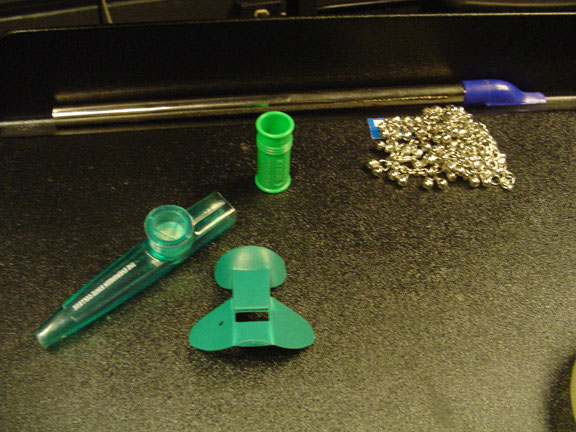
Here’s a simple way to do live sound effects for Tinkerbell in stage productions of Peter Pan.
Use a colored laser pointer for Tinkerbell, preferably a professional projector made specifically for this effect (you can rent these). In the picture above you’ll see a nose flute, kazoo, metal chain to rustle for tinkle effects, a mouth buzzer and an inexpensive slide whistle.
Use these together to create realistic Tinkerbell audio fx while running the projection system. Tinkerbell is sometimes happy with light hearted buzzing sounds and sometimes angry with aggravated buzz type sounds. The slide whistle is good for “yes” and “no” responses to Peter Pan dialogue.
Since these are lighter ambient type sounds, you’ll probably want to use a condensor microphone, not a dynamic mic. If you don’t understand that, your sound engineer will. Just tell him “condensor mic”.
Total cost for Tinkerbell sound props is under twenty five dollars.
You can rent a professional Tinkerbell laser beam projector from ZFX, Inc at www.zfxflying.com
Here it is, my new Dracula Overture. People have had emotional experiences listening to it. I wrote this for the Skagit Valley College Theater Department’s presentation of Bram Stoker’s Dracula at McIntyre Hall (Mount Vernnon, WA) – February 2007.
I was asked to write music for the show less than 48 hours before it opened. Understandably many of the music cues were added on subsequent shows. This is the mix used on the closing show, February 18, 2007.
ABOUT THIS PIECE
It’s pretty dang creepy. It’s an overture for Dracula, it should be. I did a rough sketch of it and got positive feedback from the cast so I did a quick orchestration and added in female vocals to round it out. Dracula’s castle is located in the Carpathian mountains – the cast jokingly refer to this song as the “Carpathian National Anthem”.
One thing I like about the intent of this piece – it sobers up the audience for the mood of the play very quickly. Interesting to me, when I first did a remix with the female vocals I brought all of the vocals down in the mix. It didn’t have the same effect, didn’t feel like the audience was in the mood of the production. I brought the vocals back up and it seemed to do the trick.
The heavy chant is derivative of the Rite of Spring by Igor Stravinsky. I often pull ideas from the Rite of Spring when I’m working on darker pieces. Why? The Rite of Spring pretty much freaks me out. It should be noted that the Rite of Spring was dedicated by Igor Stravinsky to the Glory of God, he had a religious conversion late in life. But when Rite of Spring was first premiered it caused riots. The music is dark and is often used as a template for suspense and horror soundtracks. The theme of Rite of Spring is based on pagan dance.
Several people have asked me what language is being sung on my Dracula Overture. It’s just words I made up using percussive consonants and quasi Latin. I wanted to allude to Dracula and the struggle against good and the power of the crucifix. So I came up with the word “Drahko” to phonetically represent Dracula and the Latin “Christo” with an “o” on the end. There is also the word “Creya”, an allusion to the Creed and the Spanish “creer” (to believe). The end result should be nice percussive sounds that have the illusion of being Eastern European – and a little quasi Latin as a secondary layer of meaning for those familiar with Latin and the Mass. The most difficult part was to quickly invent words that did not remind people of English words. The intent was to create the feeling that a chorus from ancient times was singing.
Dracula is indeed a story of redemption. In this Steven Deitz version of Dracula, there is no cliff hanger at the end. There is no scene that says “Hey, Dracula might still be out there.” Dracula and his minions are completely destroyed by the power of faith in the cross, and the bravery that only love can fuel.
And I say all that partly as a pre-emptive excuse. It was my intent to write a dark piece, but the finished product is more ghastly than I had anticipated. This one time, I slightly regret having acheived my goal. My regret lies in this: my songs of redemption that give the whole production final repose and balance to faith have not been orchestrated. So listening to t he overture by itself is like swallowing a cup of salt….when it should be mixed in with the full meal. It does not make sense to me to orchestrate them now unless preparing a new production.
Perhaps there is an angel out there who will commission me to complete the entire Dracula as a full opera as it should be. I am well aware many have tried on this plot and failed, but those people were not me. 🙂
Lyrics as Language
Drako De So Le Kriva
Iste Preava Kristo
Saya Miasto Akra Preatua
Lokra Preasolappe
Tea Se Pregulate
Via Preatofea Drako Se La
Drako Creya
Here are sound effects you can use in Seussical the Musical. This is a free download. I have provided the files in .wav format so they are ready to burn. The Seussical FX are a single download as a compressed folder.
These are the same effects I used while conducting Seussical the Musical in 2006. It covers effects for the Act II Overture, last scene egg breaking, bird chirping after the egg hatches, Horton’s frustrated elephant call, wild animal grunts for “Monkey Around”, Thunder for opening of Act II, explosion from Jojo’s military scene. I used the water splash sound for when the Cat in the Hat sneezes on the Who’s in “How Lucky You Are”. It was a pretty funny addition.
If you find these sound effects useful or if there’s any problems with them, please drop a note on this post and let me know. Of course I’d love to hear about your Seussical production and how these sound effects worked for you. This sound effects download is free, if you feel like putting a link on your site to mine that would be much appreciated.
Seussical FX Pack Includes:
bang-wonk
bird-chirp
bugle-cartoon
dog-bark
elephant-single-call
explosion
eggshell-crack
grunt1
grunt2
horn-ahooga
horn-comedy
slide-whistle
thunder
water-splash
7,676 kb download in compressed file. All sound fx are in .wav format ready to be burned to CD. On a fast internet connection this free download should only take a couple seconds.
Click on link above and save this compressed folder to your computer. Once downloaded, right click on the compressed folder and select “extract” to uncompress the folder contents.
Drop a note and let me know how these worked for you. ROCK ON SEUSSICAL!
TECH NOTES:
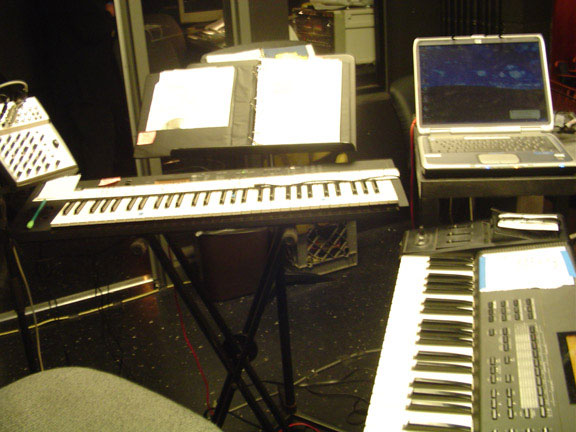
I ran the sound fx live from a virtual keyboard on a laptop. It allowed me to time the fx exactly where I wanted them. You could also have a sound tech run the effects, but they might need a couple cd players with fast transports (For instance, in the Overture to Act II if you want three distinct “wonk” sounds, this would require fast juggling between the CD players).
I added the slide whistle in a lot more than the score called for – had a great effect especially in the circus scenes.
Update May 2009
“VIRTUAL KEYBOARD” – Had a question as to what that is. I used the software Kontakt to map these sound effects to a keyboard, then triggered the sounds live from a midi keyboard connected to my laptop. This gives easy triggering for keyboardists that can time the sounds to the action, or trigger the sound effects to the exact beat needed in the scores (like in the Entracte to Act II). Kontakt costs several hundred dollars and has a little learning curve to get into. If you’re used to using music software, you should be able to figure out how to drag the sounds to the software, with only a few *minro* headaches (translation: it’s not super dooper easy for a first time user).
The challenging part of vocal coaching is getting singers to understand the feeling of vocal placement for their particular voice. It’s common at some point to show a vocalist an actual anatomy picture of the throat and muscles involved in vocal production. After that, it’s a mind game to have them understand the nuance of their own instrument.
One way to have singers bring the sound forward is to have them push out with their hands slowly while they are singing. It will look something like water aerobics – a bit silly looking and awkward. But I’ve heard this work well with individuals and especially in larger vocal ensembles. Just in bringing the hands forward I would estimate a 30% increase in overall volume without degradation of tone.
With a vocalist recently we tried this excercise but it wasn’t producing the desired effect. So I had them actually walk forward slowly while singing several phrases. For this particular vocalist it did the trick. The lightbulb went off in their head and they were very excited to feel the difference in bringing the sound forward.
Often I have heard a vocalist who is singing individual notes, but not driving through the end of a phrase. It’s as if they are sitting complacently on each note. The hand and walking excersises prove useful in getting a vocalist to visualize the forward motion of a phrase.
When a vocal phrase is “given up on” before it’s completion, it’s not very interesting to listen to. Why should the listener be engaged if the vocalist is not interested in the phrase? By singing through with intent to the very last note of a phrase, the listener is engaged in what is happening.
The walking forward is nothing I have ever read about – but came about because of a related idea I keep in mind. If you are instructing someone and they are not fully grasping the thought then you have two basic approaches: you can keep repeating the same information until they get it, or you can find a new way to explain the concept. I have found that finding a new analogy or explanation is infinitely more productive. I’ve slowly made it a habit. The reward is seeing the lightbulb shine in someone’s eyes; yes, they’ve got it!
And the thought that drives the creation of different examples is this: Know the final outcome you want. Chances are there are many varied roads to get there. Just pick one.
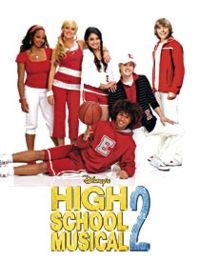
High School Musical Part Two begins production soon. The movie is slated to begin production in Utah on February 19th, 2007.
On February 9th, it was reported that three of the cast members are holding out for a more lucrative contract. The actors reported to be involved in the dispute are Ashley Tisdale, Corbin Bleu and Vanessa Anne Hudgens. Disney Channel representatives claimed rehearsals would begin on schedule at the end of February.
HSM 2 PLOT
To stay together as a team during the summer, the East High Wildcats get jobs at the Evans’ country club as caddies, bus boys, and cooks. Every year the country club puts on a show in which all the club members and employees put on their own acts. Sharpay unites the club members, while the basketball team organizes the employees.
The producer, Bill Borden, has confirmed that Troy will kiss Gabriella, and that there will be a musical number that occurs at the swimming pool.
PLANNED CREDITS
Directed by Kenny Ortega
Produced by Bill Borden
Written by Peter Barsocchini
Starring Zac Efron, Vanessa Anne Hudgens, Ashley Tisdale, Lucas Grabeel, Corbin Bleu, Monique Coleman
Distributed by Disney Channel
Planned Release date August 17, 2007
Preceded by High School Musical
Followed by Haunted High School Musical
Richard O’Brien’s Rocky Horror Show music score calls for Piano/Conductor’s Score, Synthesizer, Bb Tenor Saxophone, Guitar, Bass Guitar, Drums. Having not received the scores yet, I am not clear yet whether the Bb Tenor Saxophone part is only played by a character or played throughout.
NEW RHS BROADWAY SOUNDTRACK RECORDING
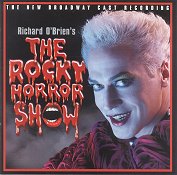
The Rocky Horror Show – The New Broadway Cast Recording (RCA Victor 2001) – More than 25 years after the “Time Warp” The Rocky Horror Show returns to Broadway.
The new cast recording is a fresh serving of 70’s hedonism and raunch, with such songs as “I Can Make You a Man,” “Science Fiction Double Feature,” and “Damn It, Janet.”
Rocky Horror ShowThe Rocky Horror Show started on stage in London, flopped on Broadway, then was reborn in the 1975 cult film. With memorable characters including the super-square Brad Majors, his virginal fiancee, Janet Weiss, and Dr. Frank N. Furter, Rocky Horror is as much a part of 70’s rock history as Led Zeppelin.
The hit production reopened in November 2000, and includes Alice Rippley as Janet Weiss, Tom Hewitt as Frank N. Furter (the role made famous by Tim Curry) and Jarrod Emick as Brad Majors. Also appearing is Dick Cavett.
Rocky Horror ShowThe soundtrack was recorded on March 12, 2001, at Clinton Recording Studio A in New York City, with a band that included Henry Aronson as conductor and keyboardist, Jon Korba on synthesizer, Clint de Ganon on drums, Irio O’Farrill, Jr. on bass, John Benthal on guitar, and Lou Marini on saxophone.
If you’ve never seen The Rocky Horror Show, then get acquainted with the new Broadway cast recording.
High School Musical rehearsal schedule for musicians can be found here: HSM Musician Rehearsal Schedule. HSM musicians please visit that page for updates and musician-specific info. Still need two guitars and latin percussion. If you play either of these instruments and have contacted me, please email me again.
Would also still like two marching Sousaphones and a 4 team drum line for a couple numbers.
Suggested Films for Dracula Projects. I highly recommend the newer Masterpiece Theater presentation of Dracula from PBS. Very nice contrast by the Dracula actor between the old and young Dracula parts.
Dracula Films
Nosferatu, Eine Symphonie des Grayens (The Undead, a Symphony of Horror) (1922)
Directed by F.W. Murnau. A silent classic of the German expressionist cinema. Believed to be the first vampire film. Based loosely on Bram Stoker’s novel.
Nosferatu, Phantom der Nacht (The Undead, Phantom of the Night) (1979)
Directed by Werner Herzog. German remake of the original vampire film. Starring Klaus Kinski.
Dracula (1931)
Directed by Tod Browning and starring Bela Lugosi. Classic by Universal Studios, also responsible for the famous Frankenstein movies of the 1930s and ’40s. Based on the Deane/Balderston play, the film transforms Dracula into a type of suave, continental lover.
Horror of Dracula (1958)
Directed by Terence Fisher. Starring Christopher Lee (Dracula) and Peter Cushing (Van Helsing). The first of the Hammer horror series of Dracula films. Loosely based on Stoker’s novel.
El Conde Dracula (1970)
Spanish version directed by Jesus Franco and based fairly closely on Stoker’s novel. Stars Christopher Lee (Dracula). Franco portrays the Dracula story as a confrontation between youth and age.
Love at First Bite (197 )
Stars George Hamilton (Dracula). Parody of the Dracula legend. Dracula enters the Disco Age to pursue the reincarnation of his lost love. A dancing Dracula??
Dracula* (1973)
Made-for-television movie directed by Dan Curtis. Starring Jack Palance (Dracula) and Nigel Davenport (Van Helsing). Gives more sympathetic portrayal of Dracula as a noble warrior yearning for his lost love.
Dracula (1977)
BBC/PBS miniseries directed by Philip Saville and starring Louis Jourdan. More faithful to Stoker’s novel than previous versions. Filmed on location at Whitby.
Dracula (1979)
Set at the beginning of the twentieth century. Dracula is portrayed as a romantic, dashing hero/villain; Lucy is a sexually liberated woman who is Dracula’s perfect mate. Directed by John Badham. Starring Frank Langella (Dracula), Laurence Olivier (Van Helsing), and Kate Nelligan (Lucy).
Bram Stoker’s Dracula* (1992)
Very faithful to the novel, except for the inclusion of a love story between Dracula and Mina; Mina is the reincarnation on of Dracula’s lost love. The love story transforms Dracula from the Satanic to the Byronic hero type. Directed by Francis Ford Coppola. Starring Gary Oldman (Dracula), Wynona Ryder (Mina), and Anthony Hopkins (Van Helsing).
Dracula, Dead and Loving It (1997)
Parody of Dracula written and directed by Mel Brooks (Young Frankenstein). Lacks the brilliance of Brooks’ attempt at the Frankenstein legend. Stars Leslie Nielsen (Dracula) and Mel Brooks (Van Helsing).
Dracula 2000 (December, 2000)
Update of the Dracula story produced by horror master Wes Craven. Check out the trailer.
Related Vampire Films
Vampire Hunter D (1985)
A classic of Japanese animation. The story is imaginative, if bizarre. When the ancient vampire Count Lee plans to claim a village maiden as his bride, the mysterious vampire hunter known as “D” sets out to rescue her. Although Japanese, the film has strong similarities to American Westerns. It also features the theme of human duality that is central to Stoker’s novel. Contains scenes of graphic violence.
Dark Shadows (1966-1971)
An ABC Gothic soap opera recounting the adventures of the vampire Barnabas Collins. Episodes of the television series and two spin-off movies, House of Dark Shadows (1970) and Night of Dark Shadows (1971), are available on video.
Dark Shadows (1991)
Revival of the old television series. Stars Ben Cross as Barnabas Collins.
The Night Stalker (1971)
In this made-for-television movie, an eccentric Los Vegas reporter investigates a series of murders that he believes were committed by a vampire. A major influence on the later X-Files TV series. Stars Darren McGavin.
Salem’s Lot (1979)
Television mini-series (a shorter movie version is also available) of Stephen King’s horror novel . An ancient vampire attempts to take over the town of Salem. Stars David Soul and James Mason.
The Lost Boys (1987)
When two boys move to California, they become involved with a dangerous gang of teenage biker vampires. Stars Kiefer Sutherland and Diane Wiest.
Nick Knight (1989)
Made-for-television movie about a vampire who has become a Los Angeles police detective. He investigates a series of murders in which the victims were drained of blood.
Forever Knight (1992-93)
Television series based on the Nick Knight movie. While trying to recover his mortal nature, the vampire Nick Knight decides to serve humanity as a crime-fighting cop.
Interview With the Vampire (1994)
Film version of Anne Rice’s novel about a young vampire coming to terms with his new vampire nature. The three main characters, Louis, Lestat, and Claudia, make interesting comparisons to Dracula. Louis and Lestat can also be compared as Byronic (Louis) and Satanic (Lestat) heroes. Stars Brad Pitt (Louis), Tom Cruise (Lestat), and Kirsten Dunst (Claudia).