Star Wars Trumpet Stacy Hedger
Auditions for Salome
 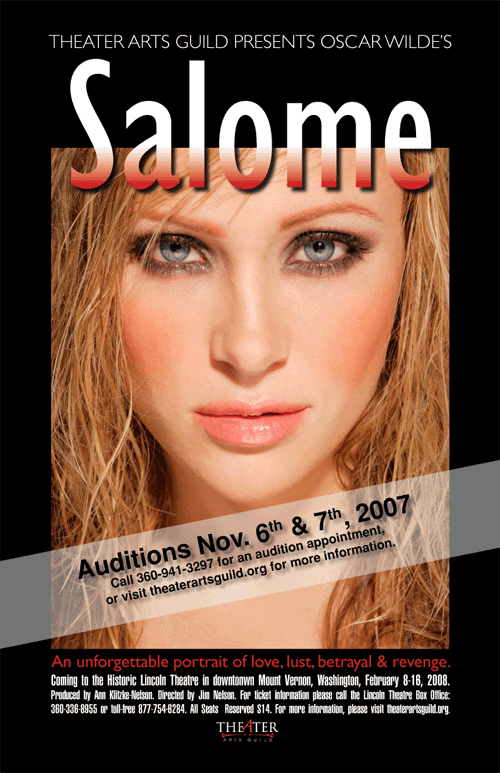
Mount Vernon, WA – The Theater Arts Guild announces auditions for Oscar Wilde’s Salome. Salome is based on the biblical character and story – an unforgettable story of love, lust, betrayal and revenge.
Performance Dates: February 8 – 16, 2008
Audition Dates: November 6 & 7, 2007
Location: Lincoln Theatre, Mount Vernon, WA
Audition Times: 6, 7, or 8 PM
(Please check in 10 min. prior to your audition time)
Cast Call
There are parts for 16 adult actors (17 years +).
For more information visit www.TheaterArtsGuild.orgÂ
Page Cavanaugh
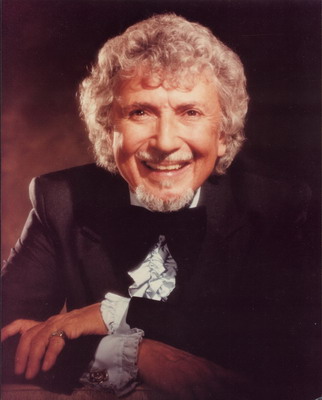
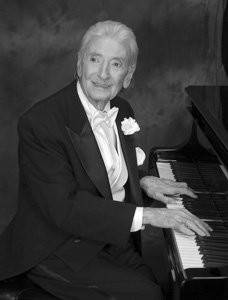
Visit pianist Page Cavanaugh at http://www.pagecavanaugh.com . Page has celebrated his 85th birthday and is still going strong doing gigs.
Watch the Page Cavanaugh 85th Birthday on YouTube.com – or search YouTube for “Page Cavanaugh”.
The last time I saw him was around 1993. I was playing keyboards for a country band in Los Angeles and saw his name on the marquee at a club down the street. On my night off went in to hear him. He sounded fantastic with his trio. And I was very happy that he remembered me. You see, Page was my first jazz piano teacher and the story of those lessons is pretty awesome.
When I was twelve years old my family took a three week cruise down in the Virgin Islands and through the Panama Canal. I played piano and french horn at the time. In fact, I was so concerned about “losing my lip” in those three weeks that I brought my french horn with me to practice.
On the cruise ship the kids could hang out in the bar. And in that bar I heard the most amazing piano player – Page Cavanaugh. That’s all I wanted to do was sit in there and hear him play. My Dad got to be friends with him and hired him to give me piano lessons. At the time it was around my second year of playing piano. So I would meet Page on the off hours and he taught me about jazz, creativity and how to love a piano.
I still remember when he asked me to play a song – and about all I could play was “Fur Elise” by Beethoven. So he says to me, “That was great – what would happen if you did this to it?” And he started to improvise a jazz rendition of the piece. For a twelve year old kid, this was a whole new world I didn’t even know existed. I had never heard jazz music live, much less got to listen to complete sets of a jazz trio in a bar.
I became Page’s tag-along – and he brought me to the cruise ship crew parties (which were very wild to say the least) and behind the scenes to meet the other artists and tech crew. In this day and age, these kind of things might be frowned upon – but I had a blast and whole heartedly thank Page for letting me see what the scene was all about.
We lived in Seattle at the time and Page would visit our house when he was in port from other cruise ship gigs. It was great for me, because he was able to check in and give me tips as I progressed.
Page Cavanaugh is about the most fun person you’ll ever meet. And he sure has inspired and guided a lot of artists. Page let me know what I would be in for if I decided to be a musician. And that was worth it’s weight in gold. Thank you Page!
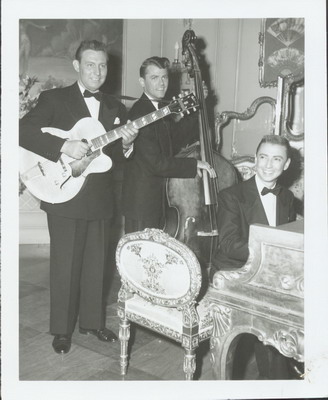
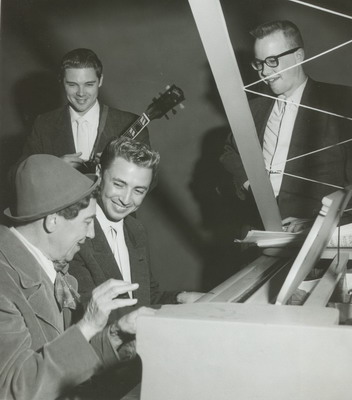
Bob Morgan, Chick Parnell, Page Cavanaugh circa 1950
BIOGRAPHY OF PAGE CAVANAUGH
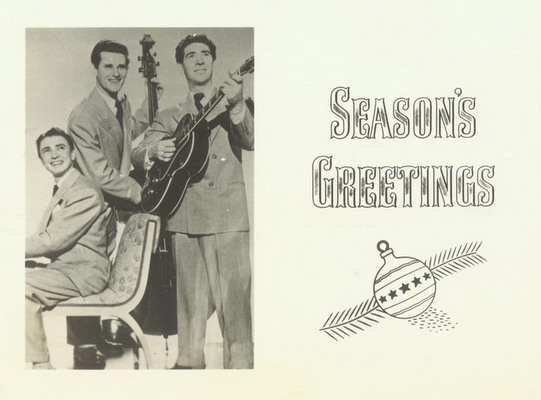
By the time he was ten years old he had become interested in the piano and by his teenage years was an accomplished player on the keyboards. His first steady work was in the territory band, the Ernie Williamson Orchestra, in the late nineteen thirties . During the Second World War stationed in Sacramento, California, , Cavanaugh was the replacement pianist for an Army trio called The Three Sergeants, and in that group made the acquaintance of Al Viola and Lloyd Pratt who would form a musical partnership after their military service was over. By the mid forties, now based in Los Angeles, the small unit called The Page Cavanaugh Trio began to get club work in the Southern California area. They patterned their musical style after the King Cole Trio and developed a unique vocal sound which consisted of soft voiced unison singing. Soon they were garnering great reviews and spreading popularity. They began recording for small West Coast labels and soon found a few musical spots in motion pictures.
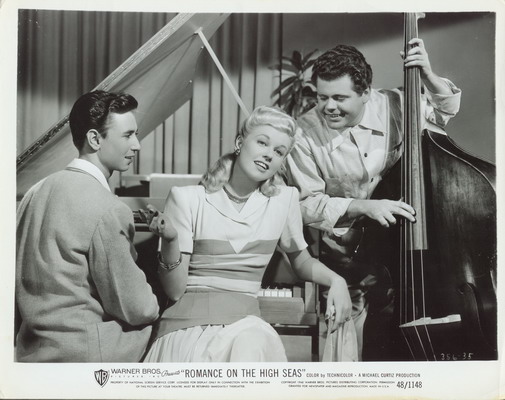
PC with Lloyd Pratt (bass) in Doris Day film debut, “Romance on the High Seas” (1948)
PAGE CAVANAUGH CELEBRATES 85th BIRTHDAY
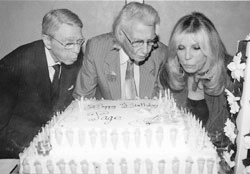
The guests included Tom Hatton, Steve Tyrell, Army Archerd, Pinky Winters, Ray Evans, Jack Reilly, Corky Hale, Peter Levinson, Marilyn King, Nancy Sinatra Sr. and Nancy Sinatra Jr., Morris Diamond and Peter Menefee, to name just a few.
A cake was presented and Cavanaugh cut the first slice. Accompanied by bassist Phil Mallory, Cavanaugh sang “Three Little Bears,” “My Last Affair,” “Tea For Two,” “San Francisco” and “It’s Magic.”
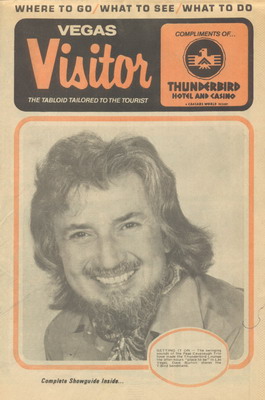
Page in Vegas 1970s
TV show with Chico Marx, 1950s
Christmas – 1949
More recent photo of Page
Skagit Opera – HMS Pinafore 2007
 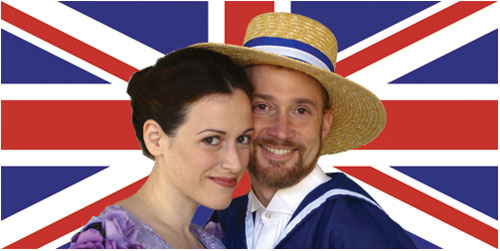
Cristina Villareale and Scott Rittenhouse as Josephine and Ralph
Skagit Opera Presents:
Gilbert and Sullivan’s
HMS Pinafore
Extreme silliness and beautiful music on the high seas!
Information at www.skagitopera.org
At Beautiful McIntyre Hall, Mount Vernon
Tickets (toll-free) 866 624-6897
Fridays and Saturdays, October 5, 6, 12 & 13 at 7:30 pm
Sundays, October 7 & 14 at 2:00 pm
Please join us for an
Opening Night Gala – Oct. 5 at 6 pm at McIntyre Hall
Refreshments, Specials Guests
$5 donation – free for season ticket holders – no-host bar
Discounted Season Tickets for Skagit Opera’s 2007/2008 Season
Buy HMS Pinafore, Amahl and the Night Visitors & La Bohème tickets and get the October 28 Seattle Opera Young Artist show for free . Now at the McIntyre Hall ticket office
Individual non-discounted tickets available
on the telephone or at www.mcintyrehall.org

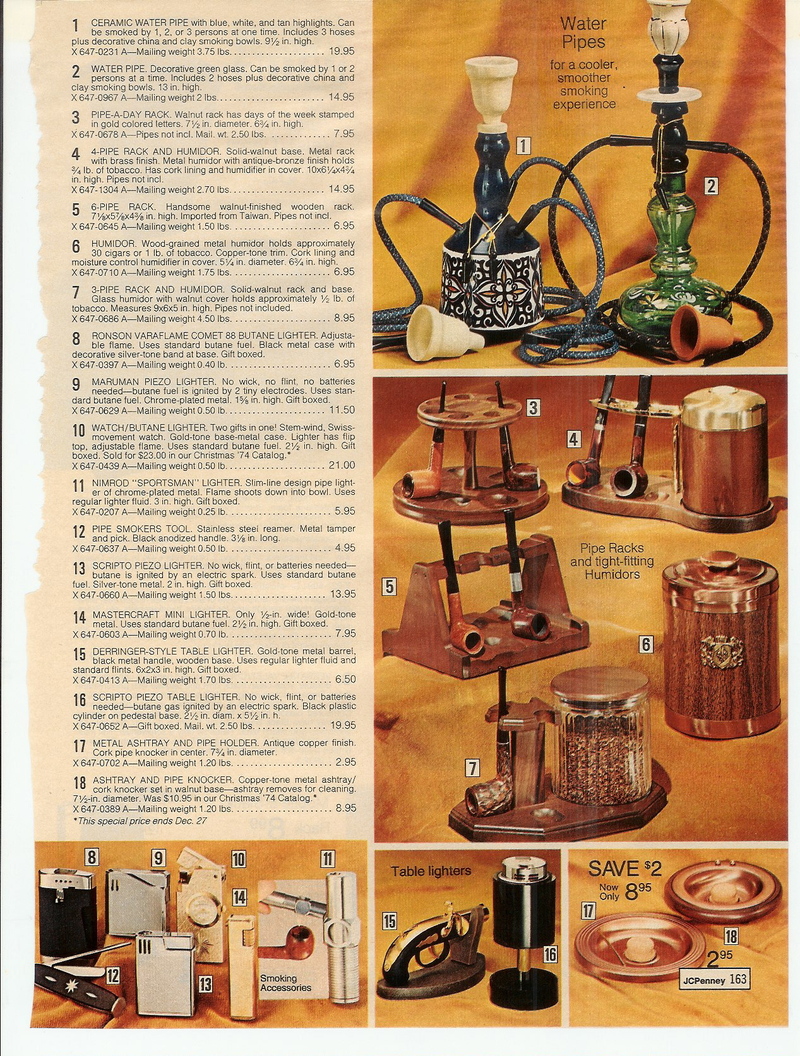
JCPenney Catalog 1975

My how times have changed. Ladies, think about this 1975 JCPenney catalog ad next time you complain about how your man is dressed. And they say clothing styles go in cycles, so maybe we can look forward to this hot look coming back. Is that guy on the left Freddy Mercury?
And from the same catalog:
Sam Cooke – Basin’ Street Blues
Basin Street – Preservation Hall JB 1971
Musician Openings for Bye Bye Birdie
Musicians still needed for Bye Bye Birdie. Show is produced by META Performing Arts and will run at McIntyre Hall later November 2007. Show dates and details are at https://www.conradaskland.com/blog/2007/07/bye-bye-birdie-musician-page/
MUSICIAN SPOTS STILL OPEN:
- Timpani/Percussion
- Drums (Trap Set)
- Alto Sax
- Trombone II
- Trumpet III
Contact Conrad if interested in auditioning. We will have a full pit orchestra for this production.
Cabaret Flambe – Oct 12-13 2007 – Lincoln Theater
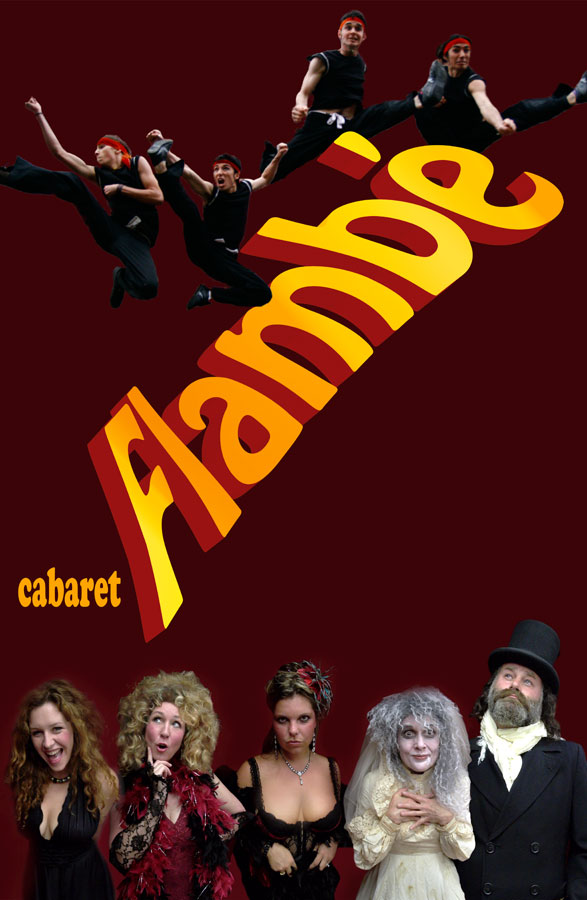
TWO NIGHTS ONLY!
Northwest Theatre Arts/the Conway Muse
Proudly present
Cabaret Flambé
The Lincoln Theatre
(360) 336-8955
Friday and Saturday
October 12th & 13th @ 8 PM
Featuring
NANDA
Northwest Theatre Arts (producers of the Moulin Rouge Cabaret) proudly presents Cabaret Flambé, an unforgettable night of song, dance, laughter and intrigue served in a New Orleans club setting. Features special guests, NANDA, an amazing juggling, dancing, acrobatics, stage fighting, music and comedy act you won’t soon forget!
The intention of the show is to excite the imagination and nurture acceptance and a lifelong passion for the theatre arts.
The production was inspired by New Orleans, created by Elfa Gisla as a show to raise funds for the 200.000 people that are still homeless as well as the Conway Muse, opening in the fall, so it can continue to help New Orleans.
With Special Performances by
Elfa Gisla, Jennings Watts, Lindsey Bowen, Ria Peth, Peggy Wendel, Sarah Simmons, Sarah Webber, Kate Kypuros-
Conrad Askland & Orchestra.
Tickets $16, $19, $22
NANDA –four extremely creative young men who are destined to greatness and this is a unique opportunity to see their performance before they hit it BIG!
“Following on the footsteps of the wildly popular Rick Epting Benefit for the Arts in September, producer Elfa Gisla creates a similarly dazzling presentation of amazing local talent and whimsical comedy. This is a show you won’t forget & you won’t want to miss!” Rusty Robertson.
The Roots of New Age Music
September 2004 – “New Age” is a term that’s lost a bit of it’s luster over the years. In theology it’s better represented by “New Thought”, but in music the term New Age still holds to describe a genre of instrumental music that is thoughtful, usually instrumental, and a great background for keeping with our own thoughts.
New Age music has it’s roots with the Impressionist music movement around the 1900’s. The Impressionist composers were mostly French and included Francis Poulenc, Claude Debussy and Erik Satie – part of “Les Six”. In the mid to late 1800’s German music ruled. The orchestrations and sheer numbers of performers had gotten so large it was hard to imagine anything larger. The peak of giant productions culminated with Wagner’s “Ring” opera cycle with runs nearly 12 hours and employees hundreds of performers. Impressionist music reacted to this by scaling down, being light and often times it’s purpose was simply as background music. This was a revolutionary idea at the time.
Three famous piano pieces from the original Impressionist “New Age” composers are Trois Gymnopedies by Erik Satie, Perpetual Movements by Francis Poulenc and Claire De Lune by Claude Debussy. The current music movement started by these composers was picked up in the 1970’s by pianist George Winston and later expanded by artists like Kitaro, Yanni and Vangelis; incorporating electronic sound sources.
I use elements of the impressionist styles when I play background music for meditation. If you listen closely you’ll hear slowly evolving tonal centers, triplets in the right hand vs. duplets in the left (Debussy “Arabesque” style), motor rhythms of constant steady movement and simple high melodies (a device from Minimalism). The composer I keep close to heart while playing for meditations is Francis Poulenc.