Skagit Opera 2007 – The Marriage of Figaro

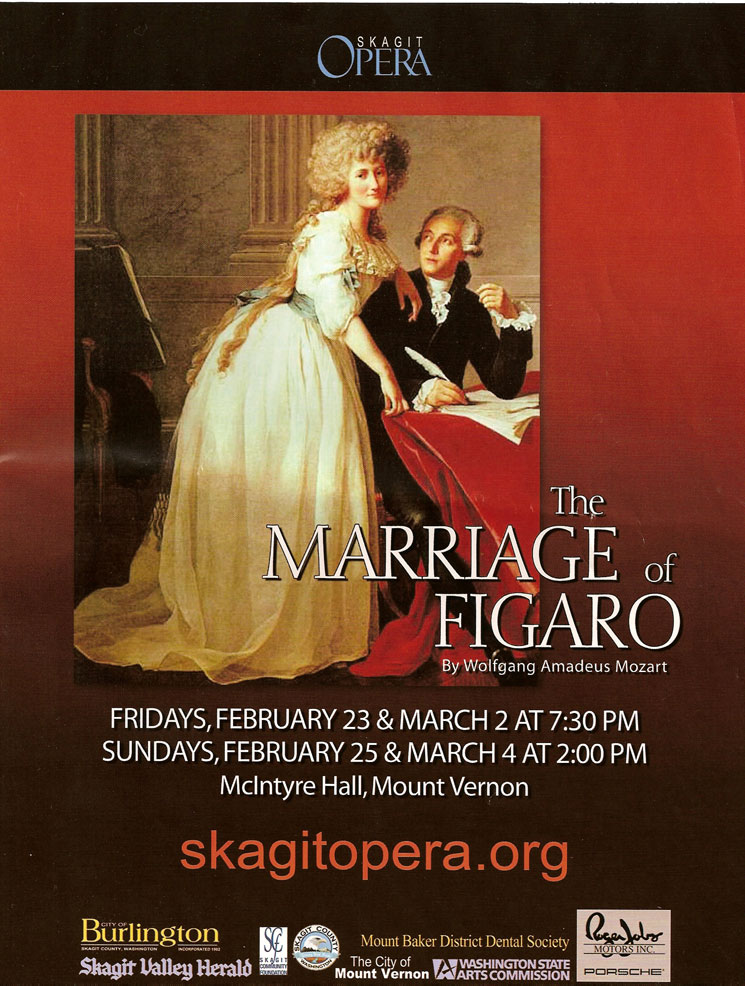
marriage-of-figaro-program.jpg Mount Vernon, WA (McIntyre Hall) – Skagit Opera presented Mozart’s The Marriage of Figaro February 23 to March 4, 2007. I attended the second weekend Friday performance.

I have had many people ask me what I thought of the performance. Maybe in part they think I have an extra edge in reviewing the finer details of the performance and am able to critique with some artistocratic snobbery. When I attend a concert I get lost in the performance if it’s done well, I don’t burden myself with trying to analyze the technical details. It’s only when something is not quite right that I begin to analyze what the source is. On this production of The Marriage of Figaro I was able to fully engage in the show, because there just wasn’t anything glaring that was wrong. It was all around wonderful.

I can describe Skagit Opera’s presentation in one word: FLAWLESS. It was truly incredible. No show is actually flawless, but as an audience member it was an incredible experience. When I blog about local shows I make it a point to not bring up any negative points. If I have something negative to say about a local production I keep it to myself. I want to support local arts, not tear it down. I can tell you that this is the first presentation in Skagit County where I have nothing negative to say, there is nothing I am omitting. Skagit Opera has established themselves as the real deal with lightning speed.

I was a little bummed I didn’t get to go to the pre-lecture on opening night, so it was a great bonus when Erich Parce came out at the beginning of the opera and explained many of the opera plot twists and turns. The plot does get a little complicated and his pre-show synopsis helped keep us all on the same page.
marriage-of-figaro.jpg

Photos by Gary Brown are available from StageImages.com

Skagit Opera chose to do this opera in English – and I saw they are currently asking for audience feedback on whether to keep the operas in English or perform them in the original language. The choices are apparent – have a show that is easily digested by modern concertgoers, or retain the beauty of the original phrasing and language as the composer intended. For my vote I’m torn on that. I love to hear the original language, to know what I am hearing is authentic. Yet as an audience member, it’s a nice change to just be able to just sit back and be entertained – to digest the opera easily as a show. I never thought I would say this – but I think I enjoy the English shows more. At least then we all know exactly when to laugh. When you hear an opera in a foreign language that’s the point when you can tell who knows the opera and who doesn’t – the people IN THE KNOW realize the exact points where they are supposed to laugh.

Dean Williamson conducted a tight, fast paced show. For as long as this opera is the orchestra and cast kept pretty tight throughout. I could always hear the vocals well over the music thanks to very subtle sound reinforcement by Jerry Fortier. Jerry’s approach is to enhance the sound just below the threshold of noticing that it’s happening. He does this transparently and does it exceedingly well with the Opera shows. The string section was nice and full thanks to Sharyn Peterson’s leadership. In other shows I have usually heard at least one instrument grossly out of tune, there was none of that in this show. Intonation with the orchestra was excellent. I was talking with a friend about this show’s orchestra and they said, “I KNOW, IT SOUNDED LIKE A BROADWAY PIT BAND!” – and I know they meant that as a high compliment to the tightness of this show’s musicians.

Acting was incredible in this Marriage of Figaro. They characters were so animated, and used their acting skills to the hilt in propelling the plot forward. Any subtle elements of the plot that may have been confusing, the actors clarified with their acting. It was like watching professional actors who also happened to sing, whereas with opera you often find great singers that leave a little to be desired in their acting. Not the case here.

Jenny Knapp was an audience favorite in her portrayal of Cherubino. It is such a funloving role, and it’s hard to imagine anyone could play it with such pixy frivolity as she did. She could have pulled it off on acting alone, but her voice was also solid as a rock and hypnotizing in the lower registers.

Matthew Hayward as The Count. I have seen him in other roles where he was the Hero, and it was fun to watch him play the villian. He made us despise him as the count just as much as he made us love him as the Hero. I’d be interested to see his career unfold and the wide variety of roles he will be able to command.

Matthew Curran (Figaro) and Jessica Milanese (Susannah) worked so well as a team with their interactive acting that I wonder if they’ve done this role pairing together before. In particular these two were champions of expressing each turn of the plot with their acting as well as vocally. One of the reasons their acting was so apparent is because you didn’t have to strain to understand their words, and they didn’t make your gut tense up when they went for the high notes. They made it appear effortless so the audience could just get lost in the plot and action. If either Matthew or Jessica happen to read this post I would be interested to know if you’ve worked as a pair before, or if you’ve done these roles before. I’m guessing you have both done these roles before, and give it a 40% chance you’ve also worked as a pair before. It was awesome!

Set design was top notch. I don’t know if the “dancing trees” are considered props or set, but they were very fun in the closing acts too. It is always amazing to me when comedy from several hundred years ago is still funny today – side-splitting funny at that!

Ok, enough gushing over how fantastic Skagit Opera is. I really need to find something wrong with them that I can critique or people will start thinking I’m a shill hired by them to give flawless reviews. SKAGIT OPERA ROCKS!!!

Skagit Opera presents
THE MARRIAGE OF FIGARO

Music by Wolfgang Amadeus Mozart
Original Italian libretto by Lorenzo da Ponte
English libretto by Ruth and Thomas Martin

Premiere: the Burgtheater, Vienna, May 1, 1786
Performed now at McIntyre Hall, Mount Vernon, WA
February 23, 25 and March 2, 4 – 2007

CAST

Figaro – Matthew Curran
The Count – Matthew Hayward
Cherubino – Jenny Knapp
Susannah – Jessica Milanese
The Countess – Mieke Rickert
Marcellina – Ellen McLain
Antonio – Daniel Oakden
Barbarina – Megan Chenovick
Don Basilio – Darrell Born
Doctor Bartolo – Ron Wohl
Don Curzio – Scott Rittenhouse
PRODUCTION CREW

Conductor – Dean Williamson
Stage Director – Erich Parce
Costumer – Carl Bronsdon
Costume Coordinator – Lynne Rittenhouse
Set – Seattle Opera
Set Designer – Curtis Wallin
Hair and Makeup – Mary Bingham
Technical Director – Bruce Weech
Stage Manager – Rebecca Heilig
Accompanists – Glenda Williams, Rhonda Kline, Andres Pelaez, Christina Siemens, Lynne Rittenhouse
Chorus Director – David Cross
Chorus Coordinator – Lynne Rheinhardt
General Director – Ron Wohl
Light Design – Steven Craig
Sound Engineer – Jerry Fortier
Light Operator – Don Willcuts
Fly Captain – Dave Mumford
Stage Crew – Damien Rocco, Quentin Griffith, Josh Herrin, Nate Young
Follow Spot – Cameron Craig, Steve Fisher
Publicity – Bill Arnett, Ellie Slabodnik, Nancy Peterson
Program – Ron Wohl
Photography – Eric Hall, Gary Brown
Lobby Display – Robert Slabodnik
Special thanks to Talisman Productions

STARRY NIGHT ORCHESTRA

1st Violins – Sharyn Peterson, Danae Otterness, Andrea Talley, George Huang

2nd Violins – Christine Wilkinson, Jessica Marshall

Violas – Rachel McGuire, Natalie Muri, Morgan Schwab

Celli – Matthew Rehfeldt, David Jones

Bass – Thomas Mayes
Percussion – Mary-Ellen Hodges
Flute 1 – Kimberly Breilein
Flute 2 – Lindsey Peterson
Harpsichord – Andres Pelaez
Oboe 1 – Jonathan Peterson
Oboe 2 – Jennifer Weeks, Kristen Gillig
Clarinet 1 – Eugene Zoro
Clarinet 2 – Kimberly Fay
Bassoon 1 – Pat Nelson
Bassoon 2 – David Strangland
Horn 1 – Robin Strangland
Horn 2 – Beverly Soler
Trumpet 1 – Malcolm Peterson
Trumpet 2 – Kipp Otterness

OPERA CHORUS

Sopranos – Lynne Rheinhardt, Ariane Brandt, Beverly Pearson, Carrie Denny

Altos – Ginny Ramey, Dani Keller, LuAnne Hargis

Basses – Gary Ramey, Dave Cross, Rod Brandt, Eric Hall

Children – Colin Rittenhouse, Paige Rittenhouse, Zoe Slabodnik, Aya Ochiai

COVER CAST
Susannah – Megan Chenovick
Figaro – Jonathan Silvia
Antonio – Erich Parce
Barbarina – Ava Trenga-Schein
Countess – Kathy Roche-Zujko

THE MARRIAGE OF FIGARO – NOTES

Le nozze di Figaro ossia la folle giornata (Trans: The Marriage [literal, Wedding] of Figaro or the Day of Madness), K. 492, is an opera buffa (comic opera) composed in 1786 by Wolfgang Amadeus Mozart, with libretto by Lorenzo da Ponte, based on a stage comedy by Pierre Beaumarchais, Le mariage de Figaro (1784). Although the play by Beaumarchais was at first banned in Vienna because it satirizes the aristocracy, the opera became one of Mozart’s most successful works. It is now regarded as a cornerstone of the standard operatic repertoire, and Opera America claims it to be the sixth most performed opera in North America. The overture is especially famous and is often played as a concert piece. The contemporary English translation is by Ruth and Thomas Martin.

Are Lyrics and Melody Equal Partners?

DEPARTMENT OF PSYCHOLOGY, AMERICAN UNIVERSITY, WASHINGTON, DC

Abstract by S. Omar Ali and Zehra F. Peynircioglu

We explored the role of lyrics and melodies in conveying emotions in songs. Participants rated the intensity of four types of emotions in instrumental music or the same music paired with lyrics. Melodies and lyrics conveyed the same intended emotion in Experiments 1 and 3 but were mismatched in Experiments 2 and 4. The major findings in Experiments 1 and 2 were that lyrics detracted from the emotion in happy and calm music (positive emotions), but enhanced the emotion in sad and angry music (negative emotions). In all cases, melodies of songs were more dominant than the lyrics in eliciting emotions. In addition, in Experiments 3 and 4, the emotion in the songs appeared to transfer, simply by association, to pictures of common objects arbitrarily paired with the songs.

“In all cases, melodies of songs were more dominant than the lyrics in eliciting emotions.”

Would you rather hear weak lyrics with a strong melody or strong lyrics with a weak melody? Or is it all about context and dependent on the presentation?

This test was probably too small to extract any solid information, but the line about melodies being more dominant than lyrics jumped out at me. Surely in styles like Country music it’s true that lyrics are king. It’s a storytelling genre. And there are many contemporary styles where it’s very fashionable to have the same I-V-vi-IV progression droning over new lyrics. It works, and it’s used in most styles of music including contemporary worship.

But can you remember when you first heard your favorite melody? The power it had, it held you in it’s grasp and charmed you. I know a very fine orchestra conductor, Roupen Shakarian, who has said the draw of the melodies in Bach’s Fugue in G minor was what drew him into a music profession. I had the same experience with the same song, ironically (though I had never thought about it until I heard that from Roupen, so maybe I’m making it up.) Point is, the power of a melody can change a life.

Can we say the same about lyrics? My experience is there are those that listen primarily to lyrics and those that focus on melodies and music. I am one that listens to music. Most of my favorite songs I could not tell you more than a couple of the lyrics. Often, I’m amazed to find out later that the lyrics of a song I like are actually very good. Maybe I miss out on the experience as a whole by focusing just on the music. But it’s not something I control, it’s just the way I’m wired.

Do you listen to lyrics or music, or both in tandem? And what was the song that changed you or spoke to the depths of your soul?

Skoochies, City Beat and The Monastery

monasterywa-exteriro-darrelleroy.jpgSeattle, WA – A little flashback here. I’m wondering how many people remember the early and mid 80’s clubs in Seattle that was Skoochies, City Beat and The Monastery. I’m also interested how many of those people ended up being in the arts as a profession.

I was talking to a theater director a couple days ago. He’s one of those people I feel a connection to and don’t quite know why. He’s very well read with a Master’s Degree in Theater and a Bachelor’s from Cornish. He was in the early Seattle Grunge scene playing in concerts with Alice in Chains before they got signed. And off the cuff I mentioned “Do you ever remember a club called The Monastery” – his eyes lit up and he said “SKOOCHIES!”.

These clubs are a difficult thing to describe if you weren’t there. They weren’t just clubs, they were entire sub-cultures. Every once in a while I overhear someone put down local Goths and I kind of smile (and usually remain silent.) I was what you might call a “Goth” in the early 80’s (we called it “Bat Cavers”) – did the all black outfits, ratted out the hair, wore makeup, danced all night til 4 am and carried all the intellectual faux we could muster. As an adult I don’t regret any of it, in fact it was a very formative time and I shudder to think that I would have ever missed it.

Our favorite bands were The Cure, OMD (Orchestral Maneuvers in the Dark). Bauhaus, The Art of Noise, Spandau Ballet, Prince, The Eurhytmics, etc….

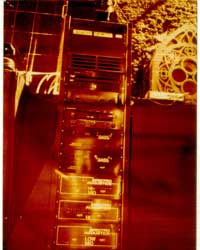
THE MONASTERY – AMP RACK

monasterywa-phaselinear-amprack.jpg

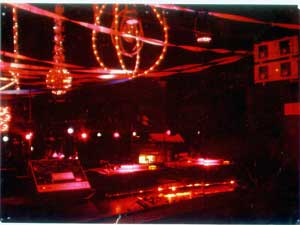
THE MONASTERY – DJ BOOTH

monasterywa-phaselinear-djbooth.jpg

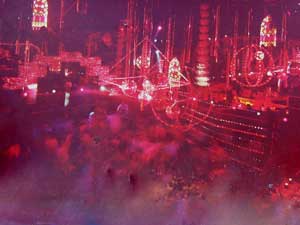
THE MONASTERY – DANCE FLOOR

monasterywa-smokedancefloor.jpg

Maybe it’s a Seattle thing, maybe it’s an art thing, maybe it’s a Washington thing, maybe it’s just because I was raised outside Seattle. There’s a bond up here like I have never felt anywhere else. I’ve lived in Miami, Los Angeles, spent 20 years in Southern California and I can tell you – THERE IS ABSOLUTELY NOTHING LIKE THE ARTS AND EXPRESSION IN SEATTLE AND SKAGIT COUNTY. It is so rich you can taste it.

These clubs were a place for expression, for those of us that felt pigeon-holed everywhere else. Especially at The Monastery, it was a place to take things right to the edge. I recognized back then that this was a thing “for a time”, few things last forever. It is unfortunate I had many friends from that time that didn’t recognize this and they didn’t get out in time, and they are no longer with us. At the time many adults viewed us as having the “hubris of youth”. Now having a 20 year retrospect I don’t see it that way. It was a place for us to carve our identity, and some of us needed a little edgier carving than most desire.

Skoochies, City Beat and The Monastery all closed down. I know specifically The Monastery was a thorn in Seattle’s side for many years and finally got closed down after many attempts. But for us that were underage and wanted to experience life on the edge, it was a great place.

The innocence of the under 21 crowd in those clubs was evident, and there was a dark side to the older crowd that infiltrated some of those clubs, especially The Monastery. I don’t think those clubs would ever get off the ground in this day and age. For those that didn’t have a strong sense of self I’m sure there are countless horror stories and emotional scars.

I cannot tell you how many times in producing music or in the studio I pull from the sensations created in those clubs. Especially for dance tracks and avante garde scores, it takes me only a moment to remember The Monastery experience. For that I am very thankful because it is so unique. And I don’t regret any of. I’m also thankful I got out of the scene before it devoured me. For those that didn’t, I remember you and my heart goes out to you.

THE MONASTERY AND SEATTLE ART CULTURE
BY CHARLES MUDEDE


charles-mudede.jpg Cultural conservatives rely upon the singular example of the Monastery to bolster the argument that all-ages clubs necessarily result in perversion and debauchery. George Freeman ran the Monastery under the constitutionally protected cloak of the separation of church and state. The Monastery wasn’t a club but a religious sanctuary, free from the financial and legal restraints of the city government. It was an after-hours, all-night anomaly, defined and clothed in religious speak; one could only gain entrance to the place by becoming a member of Freeman’s church, paying tithes. There was a “baptismal” pool, and Freeman gave nightly sermons.

Although it raised the ire of parents who were alarmed at the pan-sexual nature of the clientele and the drug use within, the city finally clamped down on the club due to the panic over bathhouses and the spread of AIDS. Those same conservatives, however, ignore the fact that the Monastery was but one of a few clubs that were open and intended for all-ages shows. The one I remember best was a place in Pioneer Square called the Metropolis, because I frequented a reggae night they had there.

The larger problem, though, isn’t the obvious fact that idle youth who have nowhere to go resort to drugs and crime, but rather that American pop culture and the larger politic is almost wholly dependent on rampant youth for its life and vigor. Rock, punk, new wave, and hiphop are entirely youth entities. Without that deviant input, what we’ll end up is staid and fossilized–hence the Experience Music Project’s wholly fossilized youth culture.

To the current Goths and champions of counter-culture – I am too old to be part of your experience now, but I remember it well. Don’t let us old farts tell you how to dress or express yourself, and remember who you are through the experience so you can make it out in good form. I can tell you there is no reward for an early death (and no drama worth retelling) but there are great rewards for coming out the other side strong and bold. Be safe, realize it’s for a time and get out if you see things starting to crumble around you. If it gets REAL bad, please email me.

What made me get out? The innocent playfulness of the scene changed drastically when I turned 21. It was not playtime anymore. Every couple weeks you’d hear about someone you were acquainted with that had died, the late night intellectualism slowly revealed itself as drug induced repetitive blabbering, and most of all was seeing those who were older not accomplishing much. When I stripped away my rebelliousness from my visual presentation and focused it on ideas and art, I found life to be much more full for me.

Part of your Rite of Passage is when you realize you have been given gifts and they should not be focused inward, but outward in service. And of course, only an old fart would say something like that……

So give a shout out if you remember The Monastery, Skoochies or City Beat – and I’d be very interested to know what profession you are in now. You can post anonymously on this thread.

Update 12/08 – I’m also catching up with a lot of you on Facebook, so please add me as a friend there.*

Update 09/09 – There is an active Skoochies group on Facebook, and a reunion has been scheduled for Sept or Oct 2009 – so join that on Facebook. Lots of pics uploaded, you may spot yourself in one!

Update 10/09 – October 3, 2009 was the “Skoochies Resurrection” reunion. 740 people attended in Seattle, Wa. I believe it was held at the actual original Skoochies building.

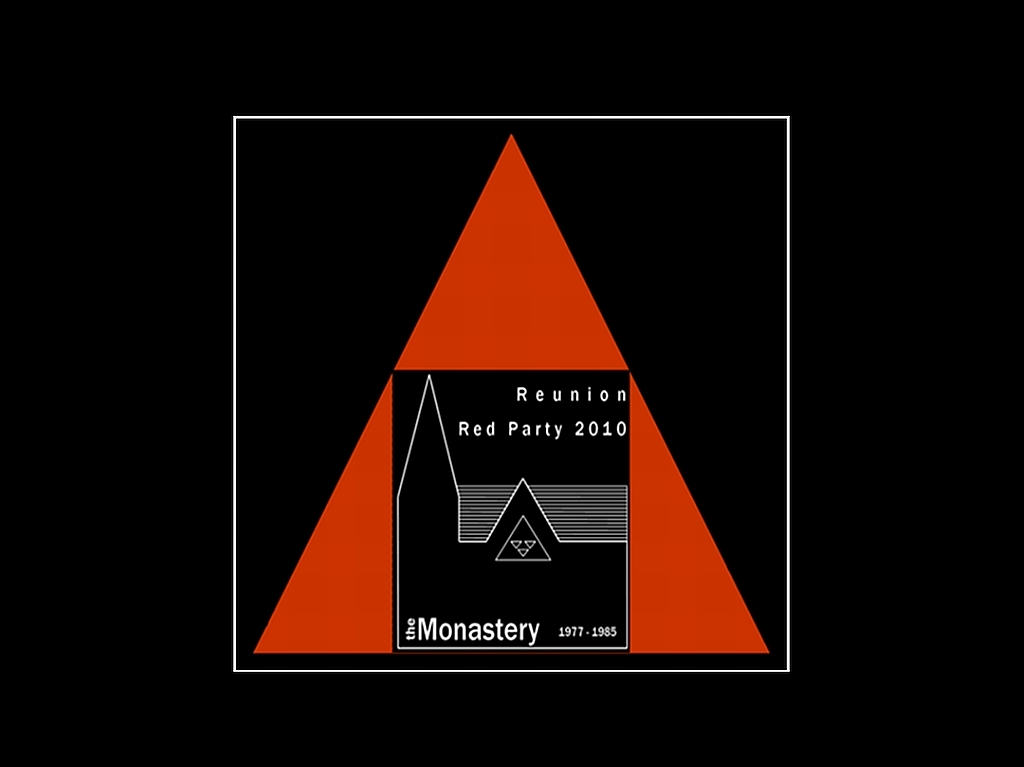
Update 07/10 – Here is the graphic from the 2010 Reunion Red Party for The Monastery (1977-1985). There is also an MP3 download of the music from that evening available. Should I make it available here?

UPDATE 09/19 – Conrad Askland’s fourth full length musical “Pray the Gay Away”® takes place in 1982 and includes an LGBTQ+ support group called “Youth Pride”. Some of the Youth Pride member costumes are being based around the look of people that went to Skoochies, Monastery and City Beat. Info about the show available here on this blog at https://conradaskland.com/blog/category/shows/ptga/ or at the official PTGA website: Pray the Gay Away

What Does Classically Trained Mean?

“Little Johnny is classically trained” – translation is: “Little Johnny can read music.” Or this one, “My Aunt Thelma was a concert pianist” – translation is “My Aunt Thelma can play Chopin and gave a concert once which I wasn’t actually at.”

“Classically trained” and “Concert pianist” are two terms I hear quite a bit, and I wonder what they really mean. To me, the phrase “classically trained” should mean that you did a lengthy apprenticeship with a full time performer. And the phrase “concert pianist” should mean you made your sole living for several years giving concerts of classical music.

More important than being classically trained is if you can SOUND like you were classically trained. Not including vocals, it seems to me that classical training is about understanding the theory, execution, nuance and historical style of what you are playing.

For instance, if I have a piano student studying a piece by Bach; the first step is for us to uncover how Bach would have performed the piece in his time. We take great care to do research on tempos and embellishments. Thanks to the internet we can usually get some gratis audio samples so we can also hear how a top pro would approach the piece. Our first approach is replication, to be a historical jukebox and copy what has been.

Then we throw that all out the window and let imagination dictate all the different possibilities the student can create to alter the piece. That is the magic of personal expression and the “road less traveled” to finding your true personal voice of expression.

In my own studies this phrase was instilled in me: “You must learn the rules before you can break them.” I add to that, telling students: “You must learn the rules before you can break them. But once you have learned them, you have earned the artistic license to take any direction you like.” To me this is the perfect synthesis of dedicated research that honors music history and intention, while giving the full reigns of creativity to the performer.

“Classical music” is a diluted term. It actually refers to a fairly short segment of music history, with specifically Beethoven as it’s champion. Mozart was not of the Classical music era, nor was Bach, or Stravinsky, or Gershwin, or Buxtehude…. We have enough time in modern music history behind us that to play “Classical music” specifically from that era is actually limiting. There are many more styles that are just as appropriate for sophisticated expression of the human condition. (My favorite, as all my friends know, is Baroque music, specifically Bach.)

I hear an insincerity in the term “Classically trained”; a detachment from anything that is really relevant. The same feeling I get when I hear “Are you religious?”. Show us how “classically trained” you are by the level of your performance, and show us how “religious” you are by how you live your life. Move us with your notes and then we may want to know how you do it, inspire us with the living of your life and we may want to know how you got to be that way. The proof is in the pudding.

There is no real soul searching drive to creating music if you cannot make the listener dream louder, laugh, cry, question themselves, feel sure about themselves……SOMETHING beyond the pedestrian idleness like sitting in front of a t.v.

Learn all you can, express each note as if it were your last, research the style and let your creativity take you to places no one has been before. And when they ask you if you’re Classically trained, you can say: “I don’t know about that, but I play it damn good.”

Bono NAACP Acceptance Speech

“True religion will not let us fall asleep in the comfort of our freedom. Love Thy Neighbor is not a piece of advice, it’s a command. That means that in the global village we’re going to have to start loving a whole lot more people.”

Bono receives an award from the NAACP. He talks about how inspirational the NAACP has been to him for global equality, and how inspirational the faith of black American churches have been to him.

“Don’t let anyone tell you it cannot be done. We can be the generation that ends extreme poverty.”

Disney High School Musical

disney-high-school-musical.gif

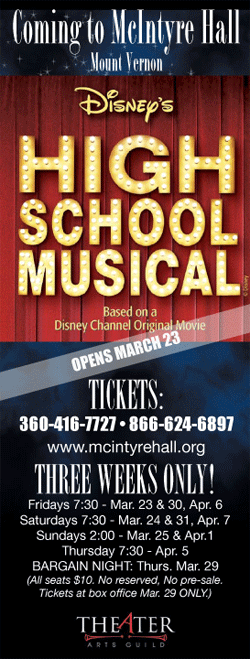
Mount Vernon, WA – Disney’s High School Musical opens at McIntyre Hall (Mount Vernon, WA) on March 23, 2007 for a threek week run. Included in the run is a school show and a bargain night on Thursday March 29th.

This show is the latest craze with pre-teen audiences. See it and find out what the fad is all about. It’s silly, it’s fun and great family entertainment. And the message of the play is fantastic: Don’t accept what others think about you, follow your dreams.

I can tell you we have a very strong ensemble chorus and we’re all looking forward to the opening. If you have a child in elementary or middle school, this would be a great show to see with them.

See you at the show!

The Power of Prayer

The power of prayer. Is it real? Does it work? Am I instantly banished to hell for asking the question?

There was a prayer study several years back that claimed to prove that intercessory prayer works. Please note the word “intercessory”, which is a prayer done on someone else’s behalf. This is an important distinction, as the subject itself is a difficult one, if not impossible, to subject to scientific study because of the immense variables. Long story short, that first study was shown later to have actually proved that intercessory prayer had NEGATIVE affects, not positive. This came out later in the peer review process of the study, which concluded that the results had been skewed to arrive at a pre-determined outcome that the results did not support (which is of course contrary to the entire scientific process).

What I find interesting is that when those initial prayer study results were released, they were heralded on the internet as proof of the power of prayer. But yet a couple years later when it was shown the study results had been a fraud, THAT fact was mysteriously silent. I have heard that prayer study mentioned many times in church circles as proof of the power of prayer, but when I bring up the fact that the study had since been shown to be false the normal response is “Well, what does science know anyway.” This is a classic form of positive attribution. Positive attribution is where we have a predetermined belief, and we only see what supports that belief instead of the whole of information around us. It is a normal human condition, and one that we all fall prey to in one form or another.

At the same time another prayer study was in process. It was a more in depth study over a ten year period. The results of this study were much anticipated and you can read about it in the New York Times Prayer Study article. In short, the study showed that intercessory prayer actually had negative results on those with life threatening illnesses.

Three points to emphasize:

  1. This study was done specifically on INTERCESSORY PRAYER, not on “prayer” as a whole.
  2. This study is fairly recent and still needs to go through a healthy peer review process for validation.
  3. Even the head of the Skeptic’s Society, Michael Shermer, has pointed out the many pitfalls and variables that make doing a definitive study on the subject of prayer very improbable.

But yet even knowing all of this there is the side of faith and the Christian walk that has a very different perspective. I like reading, and I like having all the information. But when you are in a crunch, it can be very empowering to know that people are praying for you. In fact, it can be the single element to give you the personal strength to carry on. Is the prayer actually working, or is it just the fact that you know they are praying for you?

I have a small group that prays for me on a regular basis. They are my Prayer Warriors. In my darkest times they were some of the few that stood by my side. Their specialty is prayer – it’s what they do, it’s what they whole heartedly believe in. When I need to pierce the veil to break through and challenge myself, they are the ones I turn to.

I had the experience today where in passing I shared a fairly significant event with one of them. They were very excited and shared with me their specific prayer from a week ago. It was very specific, no Nostradamus-style vagueness in it. And it timed with a specific event that occurred within a week after their prayers.

Is this positive attribution on my part? Maybe I’m just seeing what I want to see. I guess I go back to one of my favorite statements: “I do not believe in prayer, and am constantly amazed at how well it works.” Being a skeptic does not change my reverence for the things I do not understand, or diminish my amazement at the experience of the walk of faith.

My whole post can be condensed to this: You may know what you know and know it well. But when you come across a dark time in your walk, where will you turn? Who’s arms will embrace you when all have left your side? Remember those in prayer when you are strong, so they can remember you when the roles are reversed.

Thank you to my Prayer Warriors. You are my most prized gift.