Dracula Overture Remix Competition

Official Dracula Overture Remix Competition. One hundred dollar prize to the winner that does the winning remix using my Dracula Overture audio files. Winner will be decided by the RapDogs.com moderators.

Here’s details:
My Dracula Overture was premiered on February 10, 2007 at McIntyre Hall, Mount Vernon, WA. Here is a track of the vocals and also a track of the music soundtrack. Entry rules and any changes or additional info will be posted here on this page. More Dracula Overture information.

AUDIO DOWNLOADS FOR REMIX
1 – Original Askland Dracula Overture MP3Song Info
2 – Vocals Only MP3
3 – Music Soundtrack Only MP3

Tech Info
Song is 126 BPM. Key of F minor. Chord progression is Fm – Abm – C and also Fm – Abm – Bm – Dm

DRACULA REMIX COMPETITION RULES:

  1. Deadline for submission is March 10th, 2007. Artists must post a link to their audio file by that date here: RapDogs.com Dracula Remix Submissions – To post a link you will need to open an account at RapDogs.com which is free. We are not responsible if you cannot get the link posted, so don’t wait til the last minute.
  2. On submitting, artists give permission for me to post their audio file entry on my website whether they win or not.
  3. The composer of the original, Conrad Askland, will also be entering the competition but is not eligible for the prize. If he wins, next in line will win prize money.
  4. We will also have some public voting polls and those results will be made public, but cash prize is decided by the RapDogs moderators.
  5. Winner can be paid via PayPal or by Cashier’s Check and must be verified through their member account at RapDogs.com – In other words, the winner will be notified through their member account at RapDogs.com for payment information. Make sure your entry is posted on the RapDogs.com thread from your account.
  6. In their remix, artists may not use any samples they do not have clearance for. Do not steal other people’s material to use in the remix.
  7. There are no artistic limitations to the remix. Artists may alter the original files and add according to their artistic vision.
  8. Winner will be announced within a reasonable time after March 10th, 2007 (within a couple weeks) – And payment will be made in April 2007 providing artist has supplied payment contact info from their RapDogs.com account.
Dracula by Steven Dietz

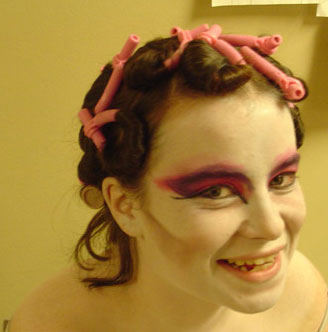
vixen1.jpg Cast photos, set pics and cast/crew credits for the live stage production of Dracula presented by the Skagit College Theater Department at McIntyre Hall (Mount Vernon, WA) February 2007.

Dracula by Steven Dietz
From the novel by Bram Stoker

Originally produced by the Arizona Theatre Company, Tucson/Pheonix, Arizona. David Ira Goldstein, Artistic Director. Robert Alpaugh, managing director.

Check out Conrad’s scary Dracula Overture – it’s creepy!
UPDATE – New Dracula Overture Remix Competition!

2007 McIntyre Hall Dracula Cast

Dracula – James Padilla
Van Helsing – David Cox
Mina – Lydia Randall
Maid/Female Attendant – Suzann McLamb
Harker – Alex Mutegeki
Seward – Mark Pedersen
Lucy – Erin Hemenway
Waiter/Attendant 1 – Miles McGillivray
Attendant 2 – Jared Conforti
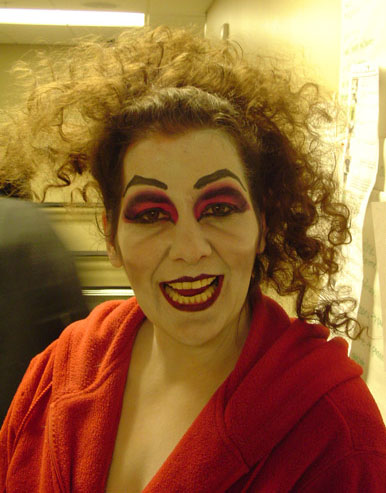
Vixen 1 – Carolyn Travis
Vixen 2 – Christina Stephens
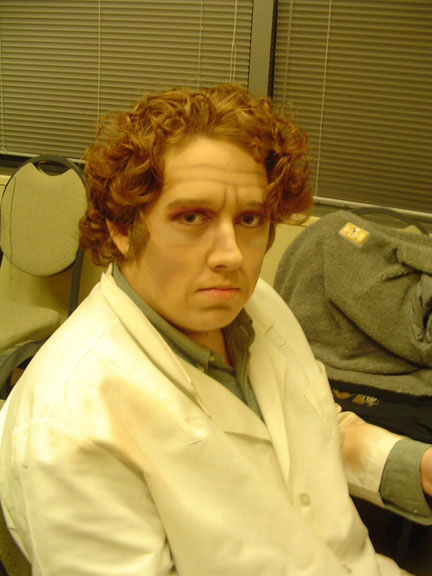
Renfield – Trey Hatch

damond-morris.jpg
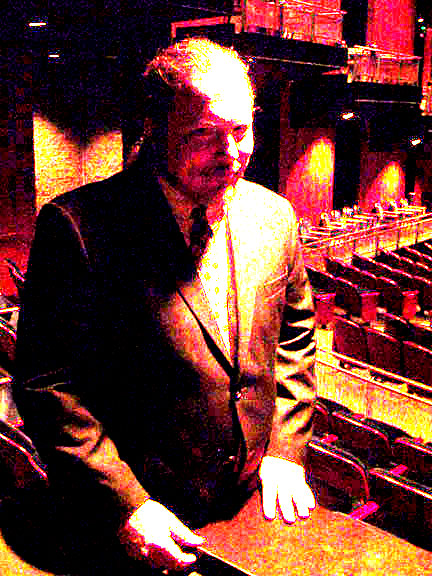
Director Damond Morris

DIRECTOR’S NOTES

Under my sheets with Dracula and a flashlight in my hands, I flipped through page after page, unable to put the novel down and too frightened to read on. I was nine when I first read the novel Dracula and twelve when I saw the 1931 film on TV. Dracula is a creature that scares me in a primal way. Like snakes, spiders, bats and rats he gives me a creepy crawly feeling in the pit of my stomach. What happens in the night just outside your window while you are sleeping? We all know there are no such things as monsters, right? Just be sure you don’t invite them in.

Oh, and your neck, be sure to check your neck… Enjoy the show!

– Damond Morris

Dracula Crew

Director – Damond Morris
Costume Design – Maura Marlin
Set and Lighting Design – Steve Craig
Sound Design and Music – Jerry Fortier and Conrad Askland
Additional Music – Ian Hansen
Technical Direction – Mark O’Brien
Stage Manager – Dinah Steveni
Assistant Stage Manager – Christine Dykema
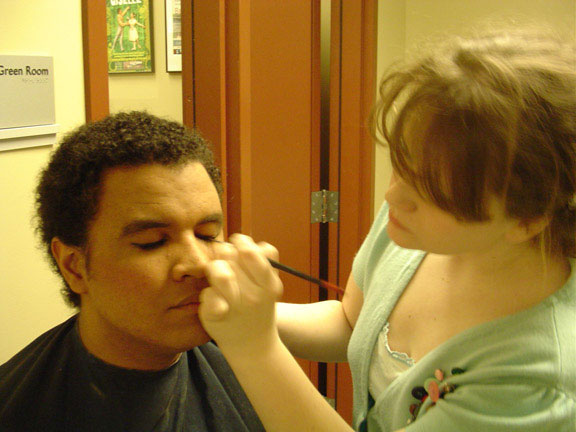
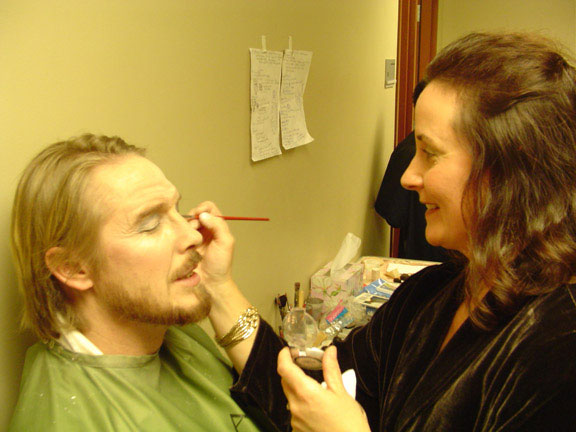
Makeup – Mary Bingham
Properties Mistress – Cathy Savage
Scenic Charge Painter – E.A. Risser
Special Projects – Michael Marlin
Technical Assistant – Tarah L. McKitrick
Costumer Crew – Carolyn Travis, Lydia Randall, Crystal Dominguez, Kathleen Luther, Lindsey Bowen, Michelle Beach
Makeup Assistant – Nicole Trepus, Ellen Palmer
Lighting Technician – James Yandle
Lighting Crew – Nate Young, Ryn Bishop, Michael Mejia, Randy Kivett
Stage Crew – Quat Hatch, Dory Hurtado, Nate Young
Fly Crew – Nate Young
Producer – Andy Friedlander

CAST PHOTOS – Click for full size image

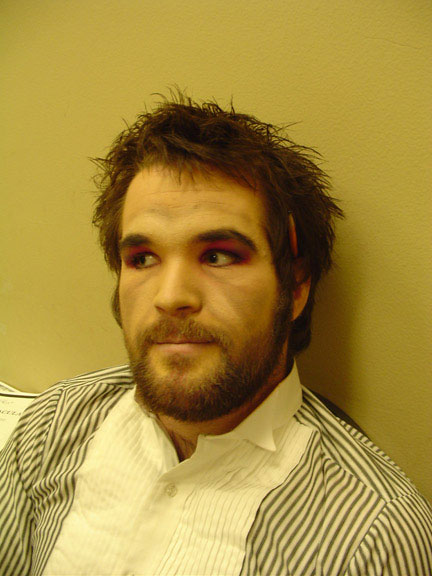
Harker – Alex Mutegeki

harker-makeup.jpg

Waiter/Attendant 1 – Miles McGillivray

attendant2.jpg

Attendant 2 – Jared Conforti

attendant.jpg

Dracula – James Padilla

dracula-jerry.jpg

Vixen 1 – Carolyn Travis

vixen2.jpg

Vixen 2 – Christina Stephens

vixen1.jpg

Seward – Mark Pedersen

seward-makeup.jpg

DRACULA STAGE SET DESIGN

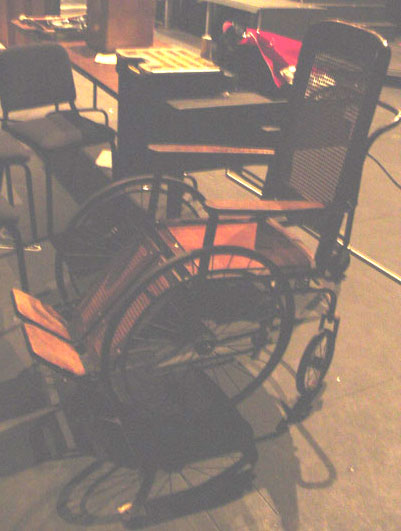
Prop – Wheelchair

set-wheelchair.jpg

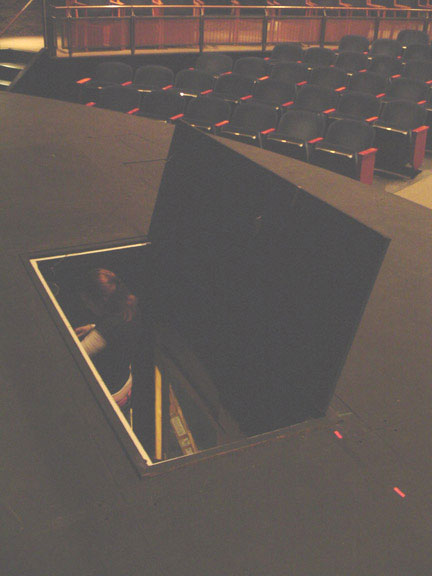
Stage – Trap Door

set-trap-door.jpg

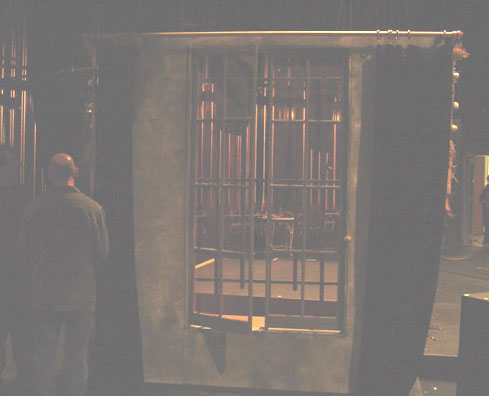
Set – Sanitarium Window

set-sanitarium-window.jpg

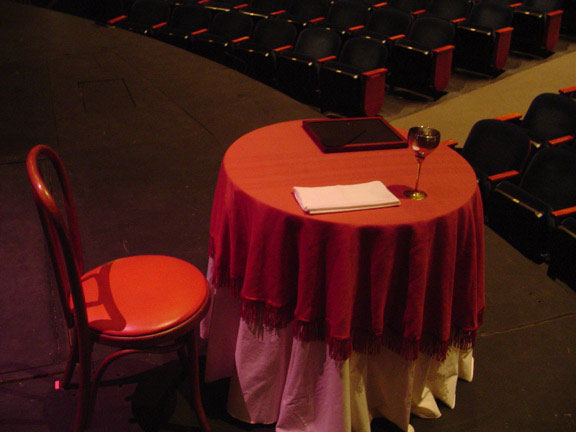
Set – Renfield’s Table

set-renfield-table.jpg

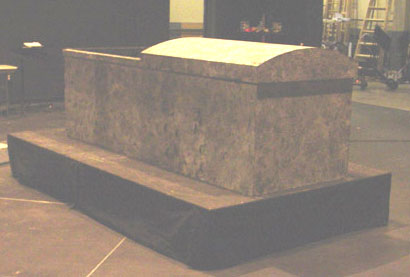
Set – Lucy’s Crypt

set-lucy-crypt.jpg

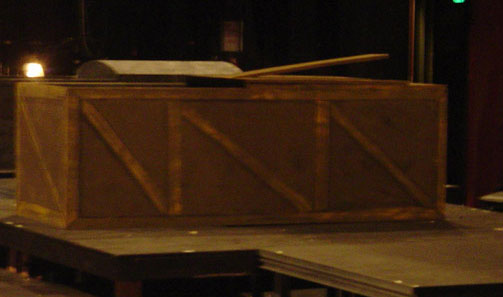
Set – Dracula’s Casket

set-dracula-casket.jpg

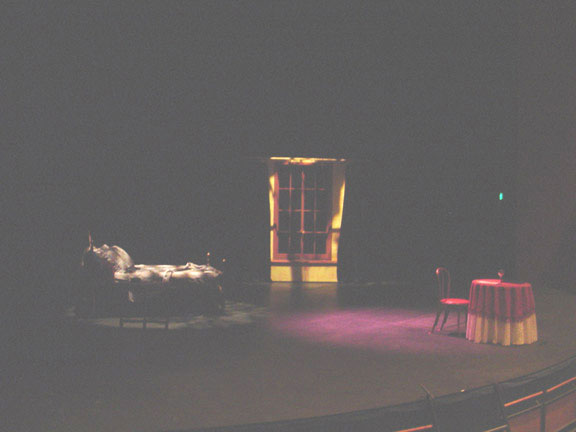
Set – Bedroom

set-bedroom.jpg

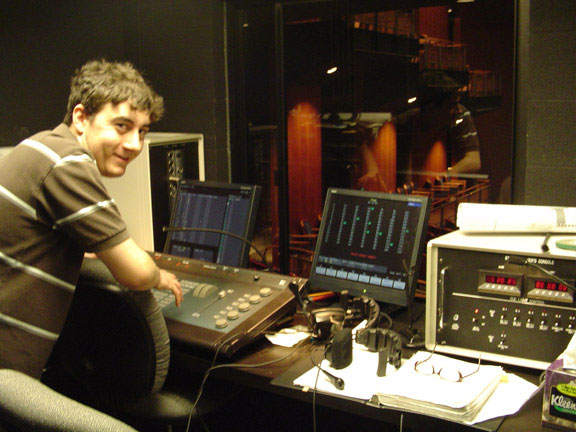
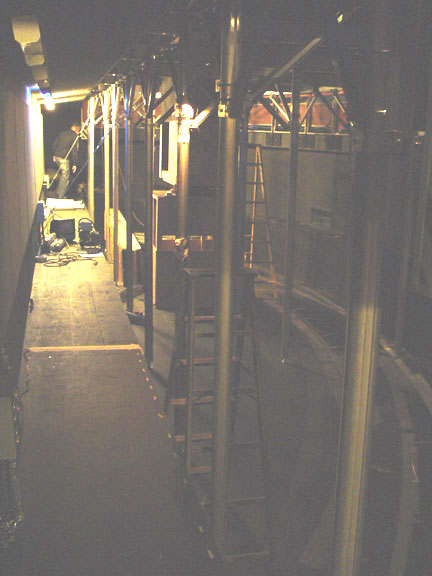
TECH PHOTOS

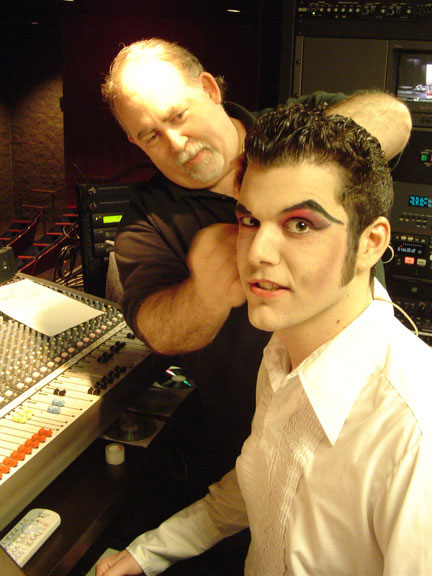
tech-booth.jpg

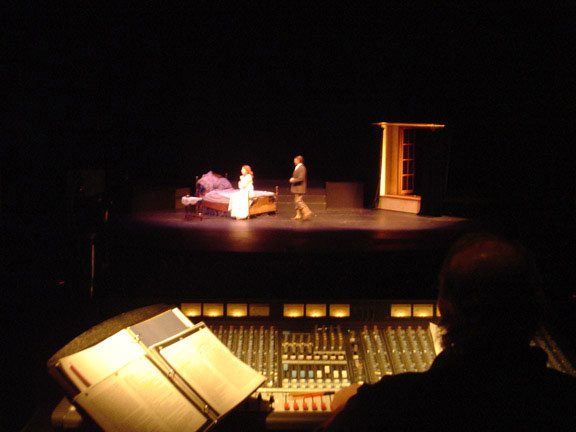
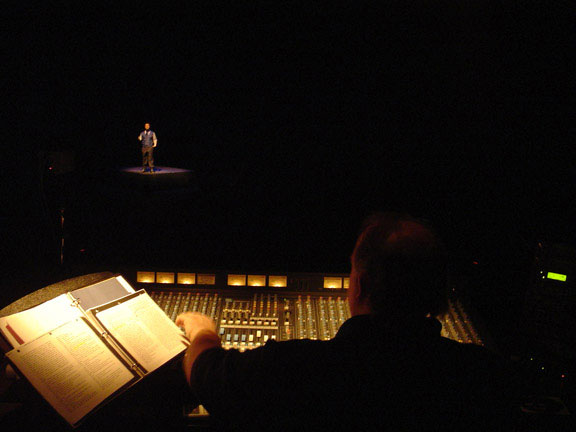
Bedroom Scene from Sound Booth

scene.jpg

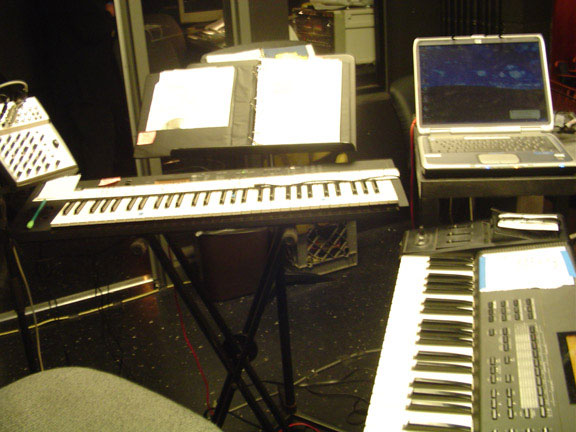
Keyboards for live FX and Music

keyboards.jpg

Hydraulics underneath Orchestra Pit

hydraulics-pit.jpg

Harker monologue

harker-solo.jpg

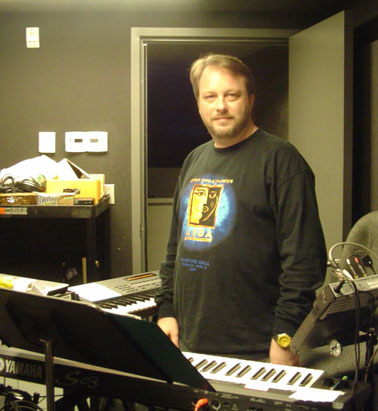
Conrad Askland at keyboard rig

conrad.jpg

Peter Pan Tinkerbell Live Sound

peter-pan-tinkerbell.jpg

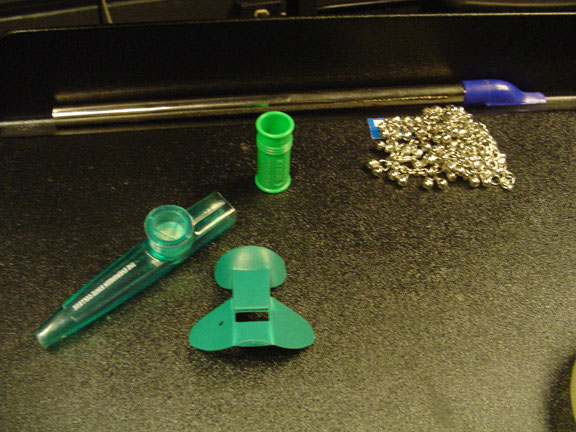
Here’s a simple way to do live sound effects for Tinkerbell in stage productions of Peter Pan.

Use a colored laser pointer for Tinkerbell, preferably a professional projector made specifically for this effect (you can rent these). In the picture above you’ll see a nose flute, kazoo, metal chain to rustle for tinkle effects, a mouth buzzer and an inexpensive slide whistle.

Use these together to create realistic Tinkerbell audio fx while running the projection system. Tinkerbell is sometimes happy with light hearted buzzing sounds and sometimes angry with aggravated buzz type sounds. The slide whistle is good for “yes” and “no” responses to Peter Pan dialogue.

Since these are lighter ambient type sounds, you’ll probably want to use a condensor microphone, not a dynamic mic. If you don’t understand that, your sound engineer will. Just tell him “condensor mic”.

Total cost for Tinkerbell sound props is under twenty five dollars.

You can rent a professional Tinkerbell laser beam projector from ZFX, Inc at www.zfxflying.com

Kenneth DeJong – Organist and Composer

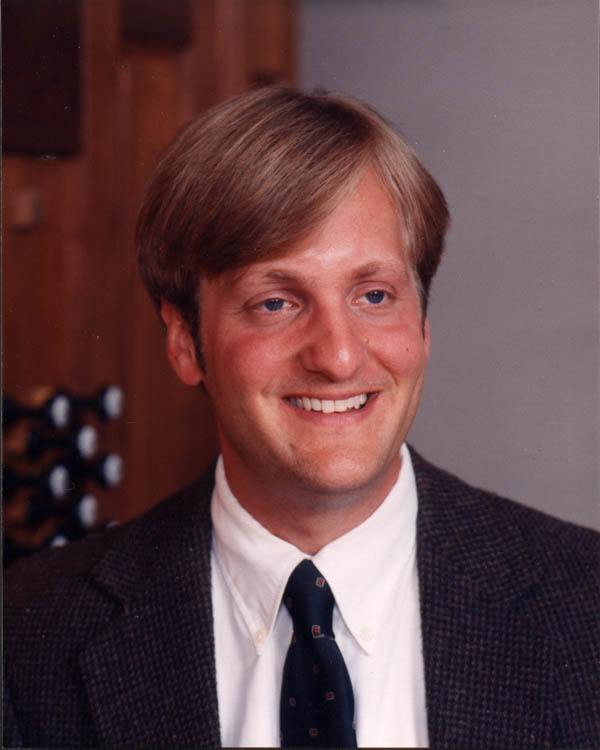
kenneth-dejong.jpg I have heard about Kenneth DeJong for many years and finally got to meet him at the Augsburg Fortress Music worskshop in Seattle, WA. An original wedding march he composed for organ was played by concert organist Douglas Cleveland (Music Director, Plymouth Congregational Church, Seattle, WA)

Mr. DeJong is music director for St. Andrew’s Lutheran Church in Bellevue, WA. This is the church I grew up in and was confirmed at. For many years as a young boy I sang and played at church services there, and they always let me practice in the sanctuary when I wanted. For a couple years that sanctuary felt like my second home. I never officially thanked St. Andrews for that – so here’s my official thank you.

I took advantage of access to their keyboard instruments and spent many hours playing the piano and organ in the sanctuary. For a while they even had a hand built harpsichord which I would tune by hand for Bach pieces. I also remember practicing jazz voicings on the church piano, and wondering if that was theologically sound. That was back in 1984 or so, church music has come a long way.

Kenneth is a composer, master organist, conductor and gifted vocalist One of his intriquing projects is singing with a male chorus consisting of all music conductors – it’s called Male Ensemble Northwest. I haven’t heard them yet, but he says it’s a great group – so it must be VERY good.

I have heard through the grapevine that Kenneth DeJong does very good work with congregational orchestras and ensembles. Hopefully I’ll meet up with him again to find out more info on that.

Kenneth DeJong – Organist and Music Director
St. Andrew’s Lutheran Church (Bellevue, WA)

Kenneth L. DeJong, Music Director and Principal Organist, has been at Saint Andrew’s since 1988. Following his undergraduate work and military service, he received a Master’s Degree in Conducting from the University of Washington. He taught for six years at Los Angeles Baptist College before returning to Seattle to pursue a doctorate degree. He has taught at Seattle Pacific University, Trinity Lutheran College, the University of Puget Sound, and the University of Washington.

He served as Music Director at Seattle’s First Presbyterian Church for six years, during which time he founded the Bellevue Chamber Chorus, which he conducted until 1998. He conducts the Lyric Arts Ensemble, sings in Male Ensemble Northwest, and is a frequent adjudicator and clinician. His Saint Andrew’s agenda includes worship hospitality and creativity, participation in vocal and instrumental ensembles by members of Saint Andrew’s, and creation of additional opportunities for growth and enjoyment of the arts in and around the Saint Andrew’s community. He is married to Kelley Mannon and they (with her son Brad) live in Issaquah.

Douglas Cleveland – Concert Organist

douglas-cleveland.jpg

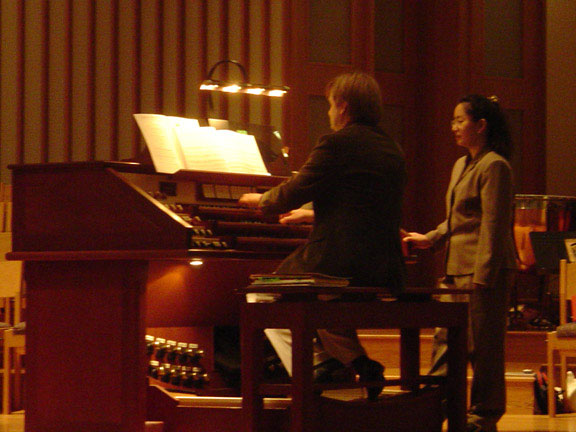
Douglas Cleveland is music director of Plymouth Congregational Church in Seattle, WA. He was our guide for the 2007 Augsburg Fortress music seminar. Mr. Cleveland is a master concert organist and played very difficult pipe organ music with ease. We picked up quite a bit of choral and pipe organ music and are currently integrating it into our worship services at Mt. Vernon Presbyterian Church.

Mr. Cleveland was an excellent host for this event and made our reading through the music an enjoyable experience. As an added bonus I got to hear original organ music by Kenneth DeJong, currently music director of the church I was confirmed at as a boy – St. Andrews Lutheran Church, Bellevue, WA.

Buxtehude Organ Sample – .wma

Douglas Cleveland – Biography

dougcleveland.JPGDouglas Cleveland began his tenure as Director of Music at Plymouth Congregational Church, Seattle in September of 2004. At Plymouth he directs three choirs and oversees a fine arts series.

A native of Washington State, Mr. Cleveland began his organ studies with Jane Edge in Olympia and continued his study in high school with Edward A. Hansen at the University of Puget Sound’s Community Music School. In 1986 he entered the Eastman School of Music of the University of Rochester where he earned the Bachelor of Music degree in 1990. While at Eastman, he served as Director of Music at the Lutheran Church of the Resurrection. As an undergraduate at Eastman, he won first prize in several organ competitions including The Westminster Choir College Graduate Competition, The Luther Place Memorial National Organ Competition in Washington, D.C., The Scarritt Undergraduate Competition in Nashville, Tennessee and the AGO Region VIII Competition in Seattle. He was also a finalist in the 1990 Grand Prix de Chartre, France and the Calgary International Organ Competition. Mr. Cleveland received the Master of Music degree in 1994 from Indiana University, Bloomington.

While at Indiana University, he served as assistant organist and choirmaster at Christ Church Episcopal Cathedral in Indianapolis, where he frequently directed the famed choir of men and boys and began the volunteer choir program. He also won first prize in the American Guild of Organists National Young Artists Competition in Dallas and the Ft. Wayne National Organ Competition.

Since winning these prizes, he has performed in 48 of the United States, as well as such venues as Westminster Abbey, Notre-Dame Cathedral, The Cathedral of Berlin, St. Patrick’s Cathedral in Melbourne, The Moscow Conservatory, and the Minato Mirai Concert Hall in Yokohama, Japan. He has performed with several symphony orchestras including the National Symphony at the National Cathedral in Washington, D.C. Mr. Cleveland served as Assistant Professor of Organ and Church Music at Northwestern University from 1999 to 2004. While on the faculty of Northwestern, he received the Searle Fellowship for teaching excellence. He served as a visiting faculty member at St. Olaf College in 1997. Mr. Cleveland has recorded three CD’s which have received critical acclaim in Fanfare, The American Record Guide, The Organists Review, The American Organist, The Diapason, the Association of Anglican Musicians and the Living Church Magazine.

Current as of September 2006

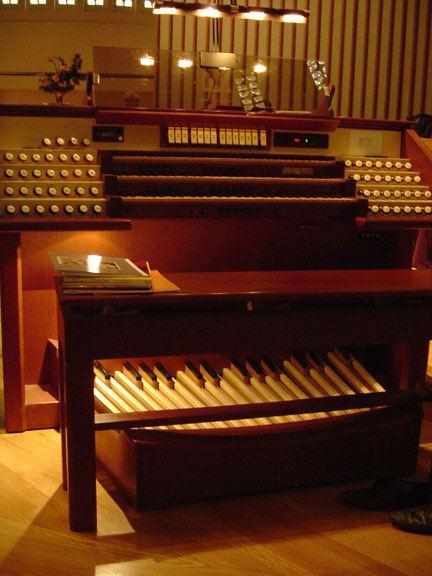
Pipe Organ at Plymouth Congregational Church
Seattle, WA

pipe-organ.jpg

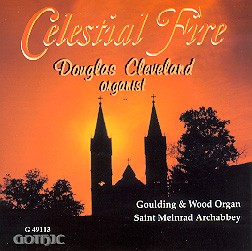
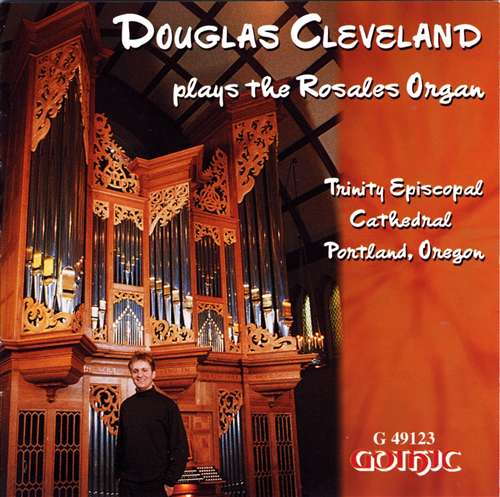
Douglas Cleveland CD Recording Covers

douglas-cleveland-cd1.jpg

douglas-cleveland-cd2.jpg

Haggis vs. Lutefisk

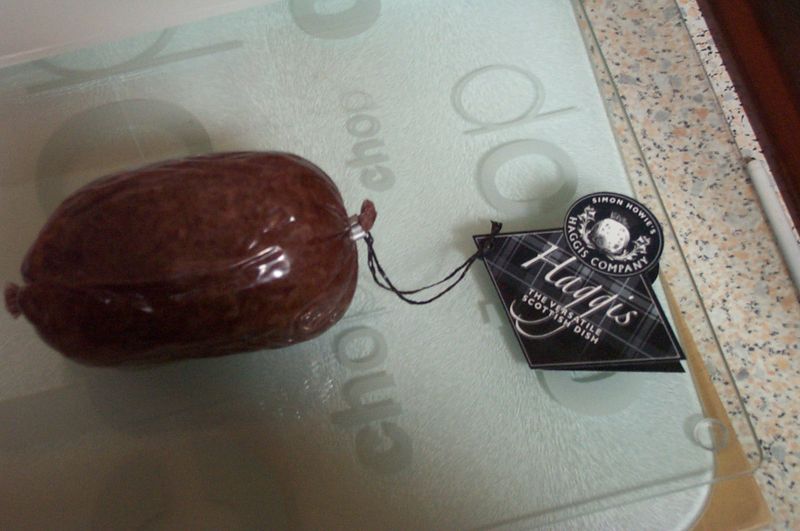
haggis2.jpg I have learned much in this life. Some that I have learned are things that I wish I hadn’t. That is my introduction to Haggis, the unearthly revenge of Scotsmen they call food.

Lutefisk is something I am proud of as a Norwegian. True, it’s entirely disgusting. But Lutefisk gives Norwegians something to talk about when news is slow. I would guess that somewhere in the history of Scotland there must have been one too many rainy days. Somewhere, someone who did not want to be known, created the first Haggis.

Haggis is a traditional Scottish dish. Although there are many recipes, it is normally made with the following ingredients: sheep’s ‘pluck’ (heart, liver and lungs), minced with onion, oatmeal, suet, spices, and salt, mixed with stock, and traditionally boiled in the animal’s stomach for approximately an hour.

I tried Haggis for the first time recently, or more accurately: Haggis tried me. I had been asked to direct some music for a Robert Burns dinner for the local Celtic Arts society (which was very fun, I even wrote some songs for the Burns dinner which you can find on my website here by searching for “Robert Burns music”.) The Master of Ceremonies for the Burns supper, Skye Richendrfer, asked one of our sopranos to lead the dinner guests in Auld Lang Syne and here is where our evening took a devlish turn: She innocently said, “Sure, I’d love to. As long as we can try some Haggis, I’ve never tried it.”

The words still echo a chill down my spine. We had no idea what we were in for.

If you cannot afford to buy authentic Haggis, let me explain to you how to make a substitute. Take a recipe for meatloaf and leave a chunk of that on your doorstep in the rain for a couple days. Make sure to invite creepy crawlies to nibble on it. Then leave it on your kitchen counter for a couple weeks. Next put it in your refrigerator and take it back out about two years later. That will be a close second.

But there’s an upside, and here’s where Haggis wins over the much loved Lutefisk. With Haggis you get to wash it down with Tequila and lime. If the Sons of Norway lodges would start serving Aquavit (Scandinavian Everclear) then we might have a fighting chance against the Scots.

I have eaten three things that are badges of courage: Haggis, Lutefisk and dog in South Korea. My Haggis badge I wear highest.

MODERN HAGGIS LORE

haggis2.JPG Haggis is an amusing subject for many people. Those who ask a Scotsman about it rarely get a straight answer. A common reply to the question “What is a haggis?” often goes along the following lines. “A haggis is a small three-legged Scottish Highland creature, which has the limbs on one side shorter than the other side. This means that it is well adapted to run around the hills at a steady altitude, without either ascending or descending. However a haggis can easily be caught by running around the hill in the opposite direction.” Surprisingly, this humorous myth is believed by many tourists, and thus they are shocked — and possibly disappointed — to hear the truth. See also sidehill gouger.

Many tourists are also duped (or nearly duped) by Scottish pranksters attempting to lead them on a ‘Wild Haggis Hunt’. The Scotsman newspaper’s web site runs an annual Haggis Hunt.
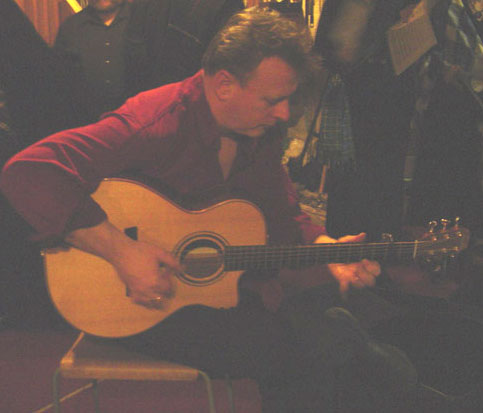
Haggis is also used in a sport called haggis hurling, throwing a haggis as far as possible. The present World Record for Haggis Hurling has been held by Alan Pettigrew for over 21 years. He threw a 1.5 lb Haggis an astonishing 180 feet, 10 inches on the island of Inchmurrin, Loch Lomond, in August 1984.

Tony McManus – Scottish Guitar

tony-mcmanus.jpg January 2007 I had the pleasure of hearing Tony McManus play guitar at the Robert Burns concert in Mount Vernon, WA. I was directing the Scottish choir in between his guitar presentations.

Tony McManus is not just a performer or musician, he is a divine experience. Let me tell you about it.

He was very unassuming backstage. In fact I didn’t know he was the headline performer. Very quiet and focused. A little light noodling to warm up, but nothing flashy. The kind of playing you’d expect from someone who is bashful to be heard. I had spoken with the sound man before the concert, he was a bit nervous because he hadn’t done sound checks yet with McManus and wasn’t sure what setup the artist would want. (As it turns out, a master artist like McManus already knows what is going to happen and was easily prepared.)
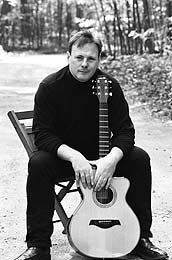
McManus was so low key before his portion that I made the incorrect assumption this was a throwaway gig for him (which it may very well have been, but you would never have known it from his performance). I got a lesson in master artist craftsmanship when he took the stage.

tonymcmanus3.jpgTony McManus walked slowly onto the stage and started talking in a very low relaxed voice. As if he was playing in your living room. He played with a style that made you think he hadn’t REALLY started playing yet, that he was just THINKING about playing and would get around to it eventually. He introduced his pieces, gave some background on Robert Burns and Auld Lange Syne.

Before you know it, the entire audience was laser-beam focused on him. His playing was so absolutely amazing, I can tell you that women backstage were literally swooning over the beauty of his music. (I am not exaggerating, they were “swooning”, as if they were on the verge of fainting from the overpowering beauty of tone.) To my ears it was like listening to the sound of diamond’s sparkle. I myself managed to restrain myself from visibly swooning.

And there was the lesson. He needed no great trumpet fanfare entrance. He did not need to establish himself as worthy of playing for us. He had no need of ego to show us that what he was doing was difficult. He simply was.
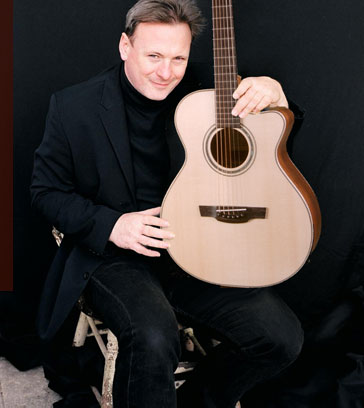
I have heard many world class acoustic guitar players (and politeness makes me withold that list for what comes next), but I have never heard a solo acoustic guitar player that touched my soul as the live playing of Tony McManus. I’d like to say the experience was mine alone, but no doubt it was shared by every single person in attendance that evening.

tony-mcmanus2.jpgTONY McMANUS GUITARS
Tony McManus plays a New Melville TM Custom, Kelday 0- 12 Fret, a Kelday Terz custom, Circa Dreadnaught by John Slobod, Mermer Sage by Rich Mermer, Fylde Magician Custom, Avalon A25J (successor to the Lowden Guitar Company) and a Larrivée L-10-12.

From the Tony McManus website:

To find a unique voice on so ubiquitous an instrument as the acoustic guitar is quite an achievement: to do so within a centuries old idiom where the instrument has no real history is truly remarkable. In little over ten years as a professional musician Tony McManus has come to be recognised throughout the world as the leading guitarist in Celtic Music. From early childhood his twin obsessions of traditional music and acoustic guitar have worked together to produce a startlingly original approach to this ancient art. In Tony’s hands the complex ornamentation normally associated with fiddles and pipes are accurately transferred to guitar in a way that preserves the integrity and emotional impact of the music.

Visit the Tony McManus Scottish Guitar Website.

Fonzie jumps the shark

“Jumping the Shark” is a term that designates the tipping point for an idea having run it’s course and has run out of new ideas. It comes from the episode of Happy Days where Fonzie jumps the shark, a widely accepted all time low in television. Visit www.jumptheshark.com for more info or Google “jump the shark” and see the page on Wikipedia with lots of info on this relatively new term.

Dracula Overture

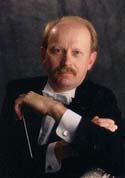
conductor3.jpgHere it is, my new Dracula Overture. People have had emotional experiences listening to it. I wrote this for the Skagit Valley College Theater Department’s presentation of Bram Stoker’s Dracula at McIntyre Hall (Mount Vernnon, WA) – February 2007.

UPDATE – Check out the Dracula Overture Remix Competition!

I was asked to write music for the show less than 48 hours before it opened. Understandably many of the music cues were added on subsequent shows. This is the mix used on the closing show, February 18, 2007.

Dracula Overture by Conrad Askland – MP3

ABOUT THIS PIECE
It’s pretty dang creepy. It’s an overture for Dracula, it should be. I did a rough sketch of it and got positive feedback from the cast so I did a quick orchestration and added in female vocals to round it out. Dracula’s castle is located in the Carpathian mountains – the cast jokingly refer to this song as the “Carpathian National Anthem”.

One thing I like about the intent of this piece – it sobers up the audience for the mood of the play very quickly. Interesting to me, when I first did a remix with the female vocals I brought all of the vocals down in the mix. It didn’t have the same effect, didn’t feel like the audience was in the mood of the production. I brought the vocals back up and it seemed to do the trick.

The heavy chant is derivative of the Rite of Spring by Igor Stravinsky. I often pull ideas from the Rite of Spring when I’m working on darker pieces. Why? The Rite of Spring pretty much freaks me out. It should be noted that the Rite of Spring was dedicated by Igor Stravinsky to the Glory of God, he had a religious conversion late in life. But when Rite of Spring was first premiered it caused riots. The music is dark and is often used as a template for suspense and horror soundtracks. The theme of Rite of Spring is based on pagan dance.

Several people have asked me what language is being sung on my Dracula Overture. It’s just words I made up using percussive consonants and quasi Latin. I wanted to allude to Dracula and the struggle against good and the power of the crucifix. So I came up with the word “Drahko” to phonetically represent Dracula and the Latin “Christo” with an “o” on the end. There is also the word “Creya”, an allusion to the Creed and the Spanish “creer” (to believe). The end result should be nice percussive sounds that have the illusion of being Eastern European – and a little quasi Latin as a secondary layer of meaning for those familiar with Latin and the Mass. The most difficult part was to quickly invent words that did not remind people of English words. The intent was to create the feeling that a chorus from ancient times was singing.

Dracula is indeed a story of redemption. In this Steven Deitz version of Dracula, there is no cliff hanger at the end. There is no scene that says “Hey, Dracula might still be out there.” Dracula and his minions are completely destroyed by the power of faith in the cross, and the bravery that only love can fuel.

And I say all that partly as a pre-emptive excuse. It was my intent to write a dark piece, but the finished product is more ghastly than I had anticipated. This one time, I slightly regret having acheived my goal. My regret lies in this: my songs of redemption that give the whole production final repose and balance to faith have not been orchestrated. So listening to t he overture by itself is like swallowing a cup of salt….when it should be mixed in with the full meal. It does not make sense to me to orchestrate them now unless preparing a new production.

Perhaps there is an angel out there who will commission me to complete the entire Dracula as a full opera as it should be. I am well aware many have tried on this plot and failed, but those people were not me. 🙂

Lyrics Phonetically
Drah-koh Deh Soh Lay Kree Vah
Eesteh Pray-ah-vah Kree-stoh
Say-yah Mee-ah-stoh Ah-krah Pree-ay-too-ah
Loh-krah Pray-ah-soh-lah-pay
Tay-ah Say Pray-goo-lah-tay
Vee-ah Pray-ah-toe-fay-ah Drah-koh-say-lah
Drah-koh Say-lah

Lyrics as Language
Drako De So Le Kriva
Iste Preava Kristo
Saya Miasto Akra Preatua
Lokra Preasolappe
Tea Se Pregulate
Via Preatofea Drako Se La
Drako Creya