My notes on Pie Jesu by Andrew Lloyd Webber in preparation for performance. Diction, blending, historical backdrop and my interpretation of blending pipe organ, piano, choir and soloists for performing this piece reverently in a worship setting.
Pie Jesu is a motet that is a part of some composers’ musical settings of the Requiem Mass
The words combine paraphrases of the final verse of the thirteenth-century poem Dies Irae and the seventh-century Agnus Dei:
Pie Jesu Domine, dona eis requiem. Dona eis requiem sempiternam.
(“O sweet Lord Jesus, grant them rest; grant them everlasting rest.”)
The Pie Jesu by Andrew Lloyd Webber I am preparing is scored for soprano soloist, boy soprano soloist, SATB choir and organ. For organ stops we are using flute and string registers with a full, flutey pedal. Not completely liking solo organ, and not completely liking the arrangement on piano I have added an improvised accompaniament to the organ in the French Impressionistic style of Erik Satie. (Ala “Gymnopedies”). I have also wanted triangle but was vetoed by my choir, who felt a triangle was a little schmaltzy (we just finished our Advent season and perhaps used the Triangle one too many times!)
To me the boy soprano is the crucial player in this arrangement. I have worked with our boy soprano soloist on keeping an even dark pronunciation, to project through the sanctuary ran the piece a good 20 times with the soprano so he could get used to keeping his notes solid while standing next to a seasoned soprano vocalist. The choir is blended with a light airy sound to match the organ. The end result is a deep breathy pad sound of organ and choir, strong high treble duet sequences with the soprano and boy soprano duet, and I have added my piano interpretation to add movement to the organ pads and to add nuance between vocal passages.
During soloist passages I prefer to let the soloists take the reign of the phrase tempo, I lock things back down at the entrance of the choir. I like this piece slow, slower than Andante. Around 40bpm (Yes, forty beats ber minute). Sub-dividing the eight notes is important to keep the groove flowing, and my additional piano part added sixteenth notes in parts to help the movement not seem so much like a dirge.
Pronunciation: I don’t know how accurate it is, but I don’t care for a hard “g” in Agnus Dei; I prefer a Spanish “n” as in “onion”. It also brings me great pain to here “Dei” pronounced “Day-ee”, since we are not singing Old MacDonald had a farm. Prefer to here “deh-ee”, a “deh” as in “debt” or “death”. So final pronuncation is “Ah-nyoos Deh-ee”. Same approach to “Pie”, I try to avoid “pee-ay”; that “ay” sound is so ugly in the English language. Try for more of “Pee-yeh” with a dark treatment to “yeh”. Stay dark when singing Latin. To me that’s a major key to choir blending. Just one voice reaching for those midwestern “ays” can ruin the blend, so be a taskmaster in this area.
The end result? I am proud to say I am having trouble getting my choir to come in on their entrances because they get so lost in the beauty of the sound. I hold no grudge, this piece is THAT beautiful. A friend played me the Pie Jesu version with Sarah Brightman (I’m told that was the version I heard) and although her voice is second to none, the arrangement had such a large swell with rising strings and cybmal crash in the middle that I was jarred back to the reality that I was listening to a piece by a theater composer. I don’t think this piece needs the added drama. Particularly if performed in a worship setting I feel that an understated performance will have a powerful effect on your congregation.
I have been told the lyrics are a prayer of rest for those fallen in war. I don’t know how accurate that is, but the lyrics ARE from the Dies Irae. This is a poem of the end of times spiritual warfare, so to call it a song for soldiers is not stretching too far. I like the idea that this song is for eternal rest to those who have fallen in battle and I think the performance notes written here will do that concept an optimum of justice.
USE IN CATHOLIC LITURGY:
Those familiar with musical settings of the Requiem Mass—such as those by Mozart or Verdi—will be aware of the important place of the Dies Iræ in the liturgy. Nevertheless it fell foul of the preferences of the “Consilium for the Implementation of the Constitution on the Liturgy”—the Vatican body charged with implementing (and indeed drafting) the reforms to the Catholic Liturgy ordered by the Second Vatican Council. The architect of these reforms, Archbishop Annibale Bugnini, explains the mind of the members of the Consilium:
[T]hey got rid of texts that smacked of a negative spirituality inherited from the Middle Ages. Thus they removed such familiar and even beloved texts as the Libera me, Domine, the Dies Iræ, and others that overemphasized judgment, fear, and despair. These they replaced with texts urging Christian hope and giving more effective expression to faith in the resurrection
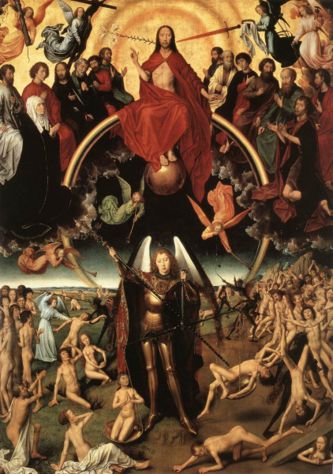
DIES IRAE means DAY OF WRATH
The Day of Judgement from the centre panel of the Memling Triptych in Gdańsk.
(Click for full resolution)
PIE JESU BY ANDREW LLOYD WEBBER
The Pie Jesu from the Requiem by Lloyd Webber was originally performed by Sarah Brightman, who has performed it many times throughout her career; and has rerecorded the track for her Classics album in 2001. Charlotte Church has also recorded it on her best-selling debut album, Voice of an Angel. The Andrew Lloyd Webber version has also now been performed by Angelis, a group of young choir children.
David McCarthy is a former student of the Ramtha School of Enlightenment and a friend of mine. He has helped create and launch a website so former Ramtha students can share their experiences. The website is located at http://www.enlightenmefree.com. This is a website primarily for ex-Ramtha students, family and those that have questions.
Ramtha, aka JZ Knight, was featured in the movie “What The Bleep” and is a reputed 35,000 year old channeled spirit from Atlantis. Many people have followed her teachings and attended seminars at her compound in Yelm, WA.
How does an intelligent and studied person end up in an organization like this? That is part of what David McCarthy wants to shed light on. You can also find a lot of skeptic articles about Ramtha at one of my favorite websites: The James Randi Educational Foundation.
David has gone through a lot to unravel the web weaved while in Ramtha and I applaude him for his courage and dedication to this effort. In an age where it’s so popular to have an open mind, it’s good to remember the mind should not be SO open that the brain falls out.
When you get your mind back it’s a wonderful thing. A mind is a terrible thing to waste, especially on pseudo-science.
*************
Getting Sprung from the Snare
Leaving a group such as this is usually not easy. Why? Because there are “costs” associated with leaving. One can look at themselves and evaluate the mental, emotional, physical and spiritual costs of leaving. They face issues such as these and before actual leaving, a person may cling to the group and play mind games with themselves (defense mechanisms) to keep themselves from having to deal with the effects of leaving. One may justify behaviors to themselves to stay in the group, though they know they need to get out. It’s necessary to face the emotional cost of exiting such a group, such as leaving friends, who will probably abandon you. Facing the psychological and emotional issues of leaving; shame, depression, isolation, sadness, guilt, anger, abandonment, betrayal, confusion, lost self-esteem. Physically, it’s not unheard of for people to delay leaving a group even when they know it’s over, because of the emotional impact of moving on.
* “People leave cults for a variety of reasons. After becoming aware of hypocrisy and/or corruption within the group, converts who have maintained an element of independence and some connection with their old values may simply walk out disillusioned. Other members may leave because they have become weary of a routine of proselytizing and fund-raising. Sometimes even the most dedicated members may feel so inadequate in the face of the cult’s demands that they walk away, not because they have stopped believing, but because they feel like abject failures. Still others may renounce the cult after reconnecting to old values, goals, interests, or relationships, resulting from visits with parents, talks with ex-members, or counseling.
Persons who consider leaving a group such as this, are usually pressured to stay. Some ex-members say that they spent months, even years, trying to garner the strength to walk out. Some felt so intimidated that they departed secretly.
Although most group members eventually walk out on their own, parental alarm should not be discounted. First, many, if not most, who leave cults on their own are psychologically harmed, often in ways which they do not understand. Second, some cultists never leave, and some of these are severely harmed. And third, there is no way to predict who will leave, who won’t leave, or who will be harmed.”
“There are more things in heaven and earth, Horatio, Than are dreamt of in your philosophy.”
–From Hamlet (I, v, 166-167)
After a person has left a group they go through their personal recovery process. This process includes healing from emotional, psychological, spiritual, and perhaps physical trauma. While each person’s story is somewhat different there are phases that people go through while moving on. Ex-group members may find help in talking to others, educating themselves about similar types of groups, and eventually re-adapting to society. The following information is a summary by Margaret Thaler Singer about group recovery processes. Gift yourself with the time it takes to read through all of this material.
After exiting a cult, an individual may experience a period of intense and often conflicting emotions. She or he may feel relief to be out of the group, but also may feel grief over the loss of positive elements in the cult, such as friendships, a sense of belonging or the feeling of personal worth generated by the group’s stated ideals or mission. The emotional upheaval of the period is often characterized by “post-cult trauma syndrome”:
spontaneous crying
sense of loss
depression & suicidal thoughts
fear that not obeying the cult’s wishes will result in God’s wrath or loss of salvation
alienation from family, friends
sense of isolation, loneliness due to being surrounded by people who have no basis for understanding cult life
fear of evil spirits taking over one’s life outside the cult
scrupulosity, excessive rigidity about rules of minor importance
panic disproportionate to one’s circumstances
fear of going insane
confusion about right and wrong
sexual conflicts
unwarranted guilt
The period of exiting from a cult is usually a traumatic experience and, like any great change in a person’s life, involves passing through stages of accommodation to the change:
Disbelief/denial: “This can’t be happening. It couldn’t have been that bad.”
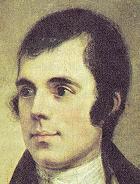
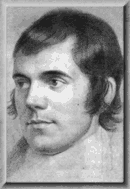
I am preparing music presentations for a local Robert Burns dinner. It is a long tradition of poetry and art in tribute to the Bard of Scotland. I like to research everything I do, so here is information I’ve found along the way.
Robert Burns (January 25, 1759 – July 21, 1796) was a poet and a lyricist. He is widely regarded as the national poet of Scotland, and is the best-known of the poets who have written in the Scots language, although much of his writing is also in English and a ‘light’ Scots dialect which would have been accessible to a wider audience than simply Scottish people. At various times in his career, he wrote in English, and in these pieces, his political or civil commentary is often at its most blunt.
Robert Burns wrote the poem Auld Lang Syne which we still sing today.
Visit the Official Robert Burns website with information about his literary works, Scottish song lyrics and how to host a Robert Burns dinner. Also visit the Wikipedia Robert Burns page. Also the Robert Burns Club World Federation. Wikipedia details on a Burns Supper.
A Burns Supper Guide
from www.RobertBurns.org The annual celebratory tribute to the life, works and spirit of the great Scottish poet, Robert Burns (1759-1796). Celebrated on, or about, the Bard’s birthday, January 25th, Burns Suppers range from stentoriously formal gatherings of esthetes and scholars to uproariously informal rave-ups of drunkards and louts. Most Burns Suppers fall in the middle of this range, and adhere, more or less, to some sort of time honoured form which includes the eating of a traditional Scottish meal, the drinking of Scotch whisky, and the recitation of works by, about, and in the spirit of the Bard.
Every Burns Supper has its own special form and flavour, though there are probably more similarities than differences among these gastro-literary affairs. Individual tastes and talents will determine the character of your Burns Supper. Some celebrants may contribute the composition of original songs or poems; some may excel at giving toasts or reciting verse; while others may be captivating storytellers. A particular group of celebrants will, over time, develop a unique group character which will distinguish their Burns Supper celebration from every other.
Our core group has been meeting for 14 years. We started off on a whim, without any notion of traditional form, other than the idea that we would eat haggis, read Burns, and drink whisky (not necessarily in that order). An itinerary evolved that has lots of traditional elements, but leaves room for personal or topical additions. Feel free to add a few unique conventions of your own.
With a little bit of planning anyone (well, almost anyone) can enjoy a Burns Night celebration. All that’s needed is a place to gather (gracious host), plenty of haggis and neeps to go around (splendid chef), a master of ceremonies (foolhardy chairman), friendly celebrants (you and your drouthy cronies), and good Scotch drink to keep you warm (BYOB). With these ingredients, at least a few celebrants will be able to make prattling fools of themselves, trying to do justice to the words and spirit of Robert Burns. And if everyone brings along a wee dram and a bit of poetry, prose or song then each, in turn, may become an object of mirth and amusement to the gathered throng. Be prepared to enjoy yourself beyond all expectation. With good cheer and gay company we all may, in short, be able to ring in the Bard’s birthday fou rarely.
I’ve found that most people, although they may be unaware of it, love to attend Burns Suppers. They may feel a little intimidated at the idea of attending a participatory event, but are attracted by the idea of a ribald literary soiree. (They may perceive a Burns Supper to be some sort of droll intellectual exercise – it has hip cachet and doesn’t sound too threatening.) These people are often wonderfully appreciative guests and end up having a great time. And therein lies a dilemma for all Burns Supper organizers: Motivating guests to be active participants, rather than passive appreciators. Everyone should feel comfortable taking part with verse, anecdote or song, but they may need a little help and encouragement. So as a Burns Supper chairman it is highly recommended that you come prepared with plenty of literary ammunition with which to arm any unprepared, or reluctant, celebrants. It helps if you know your guests and can match them with a suitable reading. Better still, you may be able to gently motivate them, in advance, by including an informal listing of sources along with your charming (I’m sure) Burns Supper invitation. Hopefully that, along with the good vibes and good whisky, will be all the encouragement anyone will need to lower their inhibitions to a level that Burns, himself, would appreciate.
Four samples of poems by Robert Burns:
To a Mouse
(Whilst ploughing on a November day, Burns ruined the nest of a field mouse. He ponders why the creature runs away in such terror)
Oh, tiny timorous forlorn beast,
Oh why the panic in your breast ?
You need not dart away in haste
To some corn-rick
I’d never run and chase thee,
With murdering stick.
I’m truly sorry man’s dominion
Has broken nature’s social union,
And justifies that ill opinion
Which makes thee startle
At me, thy poor earth-born companion,
And fellow mortal.
I do not doubt you have to thieve;
What then? Poor beastie you must live;
One ear of corn that’s scarcely missed
Is small enough:
I’ll share with you all this year’s grist,
Without rebuff.
Thy wee bit housie too in ruin,
Its fragile walls the winds have strewn,
And you’ve nothing new to build a new one,
Of grasses green;
And bleak December winds ensuing,
Both cold and keen.
You saw the fields laid bare and waste,
And weary winter coming fast,
And cosy there beneath the blast,
Thou thought to dwell,
Till crash; the cruel ploughman crushed
Thy little cell.
Your wee bit heap of leaves and stubble,
Had cost thee many a weary nibble.
Now you’re turned out for all thy trouble
Of house and home
To bear the winter’s sleety drizzle,
And hoar frost cold.
But, mousie, thou art not alane,
In proving foresight may be in vain,
The best laid schemes of mice and men,
Go oft astray,
And leave us nought but grief and pain,
To rend our day.
Still thou art blessed, compared with me!
The present only touches thee,
But, oh, I backward cast my eye
On prospects drear,
And forward, though I cannot see,
I guess and fear.
The Banks of Doon
(This song tells of a tragic love affair – not one of the poet’s. A respected young lady of rank had borne a child without the sanction of the Church; forsaken, she died of remorse)
Ye banks and braes of bonny Doon,
How can ye bloom so fresh and fair,
How can ye chant, ye little birds,
While I’m so weary, full of care ?
You’ll break my heart thou warbling bird
That flitters through the flowering thorn,
You remind me of departed joys,
Departed – never to return.
You’ll break my heart, thou bonny bird,
That sings beside thy mate,
For so I sat, and so I sang,
But knew not of my fate.
Oft did we roam by bonny Doon,
To see the rose and woodbine twine,
Where every bird sang of it’s love,
And fondly so did I for mine.
With lightsome heart I pulled a rose,
So sweet upon it’s thorny tree,
But my false lover stole my rose,
And ah! He left the thorn with me.
With lightsome heart I pulled a rose,
Upon a morn in June,
And so I flowered in the morn,
And so was ruined by noon.
To a Haggis
(Haggis is a wholesome savoury pudding, a mixture of mutton and offal. It is boiled and presented at table in a sheep’s stomach)
All hail your honest rounded face,
Great chieftain of the pudding race;
Above them all you take your place,
Beef, tripe, or lamb:
You’re worthy of a grace
As long as my arm.
The groaning trencher there you fill,
Your sides are like a distant hill
Your pin would help to mend a mill,
In time of need,
While through your pores the dews distil,
Like amber bead.
His knife the rustic goodman wipes,
To cut you through with all his might,
Revealing your gushing entrails bright,
Like any ditch;
And then, what a glorious sight,
Warm, welcome, rich.
Then plate for plate they stretch and strive,
Devil take the hindmost, on they drive,
Till all the bloated stomachs by and by,
Are tight as drums.
The rustic goodman with a sigh,
His thanks he hums.
Let them that o’er his French ragout,
Or hotchpotch fit only for a sow,
Or fricassee that’ll make you spew,
And with no wonder;
Look down with sneering scornful view,
On such a dinner.
Poor devil, see him eat his trash,
As feckless as a withered rush,
His spindly legs and good whip-lash,
His little feet
Through floods or over fields to dash,
O how unfit.
But, mark the rustic, haggis-fed;
The trembling earth resounds his tread,
Grasp in his ample hands a flail
He’ll make it whistle,
Stout legs and arms that never fail,
Proud as the thistle.
You powers that make mankind your care,
And dish them out their bill of fare.
Old Scotland wants no stinking ware,
That slops in dishes;
But if you grant her grateful prayer,
Give her a haggis.
Bess and Her Spinning Wheel
(Sweet are the thoughts that savour of content)
I’m happy with my spinning wheel,
And happy with my wool to reel,
From head to toes it clothes me fine,
And wraps so softly me and mine.
I settled down to sing and spin,
While low descends the summer sun,
Blest with content, and milk and meal,
I’m happy with my spinning wheel.
On every hand the brooklets wend,
Up to my cottage by the bend,
The scented birch and hawthorne white,
Across the pool their arms unite,
Alike to screen the birdie’s nest,
And little fishes cooler rest:
The sun shines kindly where I dwell,
Where smoothly turns my spinning wheel.
On Lofty oaks the pigeons croon,
And echo out their doleful tune;
The linnets in the bushes raise
Sweet songs that rival other lays.
The crakes among the clover run,
The partridge whirring in the sun,
The swallows swooping for their meal,
Amuse me at my spinning wheel.
With small to sell and less to buy,
Above distress, below envy,
Oh who would leave this humble state,
For all the pride of all the great,
Amid their flaring, idle toys,
Amid their cumbrous noisy joys ?
Can they the peace and pleasure feel
Of Bessie at her spinning wheel ?
A RED, RED ROSE MP3 My Love Is Like a Red, Red Rose
O, my Luve’s like a red, red rose,
That’s newly sprung in June.
O, my Luve’s like a melodie
That’s sweetly play’d in tune.
As fair as thou, my bonnie lass,
So deep in luve am I;
And I will love thee still, my dear,
Till a’ the seas gang dry.
Till a’ the seas gang dry, my dear,
And the rocks melt wi’ the sun:
I will love thess till, my dear,
While the sands o’ life shall run:
And fare thee well, my only luve!
And fare thee weel, a while!
And I will come again, my luve,
Tho’ it ware ten thousand mile.
UP IN THE MORNING EARLY
1788
Type: Poem
Cauld blaws the wind frae east to west,
The drift is driving sairly;
Sae loud and shill’s I hear the blast-
I’m sure it’s winter fairly.
Chorus.-Up in the morning’s no for me,
Up in the morning early;
When a’ the hills are covered wi’ snaw,
I’m sure it’s winter fairly.
The birds sit chittering in the thorn,
A’ day they fare but sparely;
And lang’s the night frae e’en to morn-
I’m sure it’s winter fairly.
Up in the morning’s, &c.
The Song Of Death
Scene-A Field of Battle. Time of the day-evening. The wounded and dying of the victorious army are supposed to join in the following song.
1791
Type: Song
Tune: Oran an aoig. MP3 Song of Death Melody
Farewell, thou fair day, thou green earth, and ye skies,
Now gay with the broad setting sun;
Farewell, loves and friendships, ye dear tender ties,
Our race of existence is run!
Thou grim King of Terrors; thou Life’s gloomy foe!
Go, frighten the coward and slave;
Go, teach them to tremble, fell tyrant! but know
No terrors hast thou to the brave!
Thou strik’st the dull peasant-he sinks in the dark,
Nor saves e’en the wreck of a name;
Thou strik’st the young hero-a glorious mark;
He falls in the blaze of his fame!
In the field of proud honour-our swords in our hands,
Our King and our country to save;
While victory shines on Life’s last ebbing sands, –
O! who would not die with the brave!
The Soldier’s Return
1793
Type: Song
Tune: The Mill, mill, O.
When wild war’s deadly blast was blawn,
And gentle peace returning,
Wi’ mony a sweet babe fatherless,
And mony a widow mourning;
I left the lines and tented field,
Where lang I’d been a lodger,
My humble knapsack a’ my wealth,
A poor and honest sodger.
A leal, light heart was in my breast,
My hand unstain’d wi’ plunder;
And for fair Scotia hame again,
I cheery on did wander:
I thought upon the banks o’ Coil,
I thought upon my Nancy,
I thought upon the witching smile
That caught my youthful fancy.
At length I reach’d the bonie glen,
Where early life I sported;
I pass’d the mill and trysting thorn,
Where Nancy aft I courted:
Wha spied I but my ain dear maid,
Down by her mother’s dwelling!
And turn’d me round to hide the flood
That in my een was swelling.
Wi’ alter’d voice, quoth I, “Sweet lass,
Sweet as yon hawthorn’s blossom,
O! happy, happy may he be,
That’s dearest to thy bosom:
My purse is light, I’ve far to gang,
And fain would be thy lodger;
I’ve serv’d my king and country lang-
Take pity on a sodger.”
Sae wistfully she gaz’d on me,
And lovelier was than ever;
Quo’ she, “A sodger ance I lo’ed,
Forget him shall I never:
Our humble cot, and hamely fare,
Ye freely shall partake it;
That gallant badge-the dear cockade,
Ye’re welcome for the sake o’t.”
She gaz’d-she redden’d like a rose –
Syne pale like only lily;
She sank within my arms, and cried,
“Art thou my ain dear Willie?”
“By him who made yon sun and sky!
By whom true love’s regarded,
I am the man; and thus may still
True lovers be rewarded.
“The wars are o’er, and I’m come hame,
And find thee still true-hearted;
Tho’ poor in gear, we’re rich in love,
And mair we’se ne’er be parted.”
Quo’ she, “My grandsire left me gowd,
A mailen plenish’d fairly;
And come, my faithfu’ sodger lad,
Thou’rt welcome to it dearly!”
For gold the merchant ploughs the main,
The farmer ploughs the manor;
But glory is the sodger’s prize,
The sodgerpppp’s wealth is honor:
The brave poor sodger ne’er despise,
Nor count him as a stranger;
Remember he’s his country’s stay,
In day and hour of danger.
Versicles, A.D. 1793
The Henpecked Husband
1788
Type: Poem
Curs’d be the man, the poorest wretch in life,
The crouching vassal to a tyrant wife!
Who has no will but by her high permission,
Who has not sixpence but in her possession;
Who must to he, his dear friend’s secrets tell,
Who dreads a curtain lecture worse than hell.
Were such the wife had fallen to my part,
I’d break her spirit or I’d break her heart;
I’d charm her with the magic of a switch,
I’d kiss her maids, and kick the perverse bitch.
The Fall Of The Leaf
1788
Type: Poem
The lazy mist hangs from the brow of the hill,
Concealing the course of the dark-winding rill;
How languid the scenes, late so sprightly, appear!
As Autumn to Winter resigns the pale year.
The forests are leafless, the meadows are brown,
And all the gay foppery of summer is flown:
Apart let me wander, apart let me muse,
How quick Time is flying, how keen Fate pursues!
How long I have liv’d-but how much liv’d in vain,
How little of life’s scanty span may remain,
What aspects old Time in his progress has worn,
What ties cruel Fate, in my bosom has torn.
How foolish, or worse, till our summit is gain’d!
And downward, how weaken’d, how darken’d, how pain’d!
Life is not worth having with all it can give-
For something beyond it poor man sure must live.
Remorse
Fragment
1784
Type: Poem
Of all the numerous ills that hurt our peace,
That press the soul, or wring the mind with anguish
Beyond comparison the worst are those
By our own folly, or our guilt brought on:
In ev’ry other circumstance, the mind
Has this to say, “It was no deed of mine:”
But, when to all the evil of misfortune
This sting is added, “Blame thy foolish self!”
Or worser far, the pangs of keen remorse,
The torturing, gnawing consciousness of guilt-
Of guilt, perhaps, when we’ve involved others,
The young, the innocent, who fondly lov’d us;
Nay more, that very love their cause of ruin!
O burning hell! in all thy store of torments
There’s not a keener lash!
Lives there a man so firm, who, while his heart
Feels all the bitter horrors of his crime,
Can reason down its agonizing throbs;
And, after proper purpose of amendment,
Can firmly force his jarring thoughts to peace?
O happy, happy, enviable man!
O glorious magnanimity of soul!
1782
Type: Song
O raging Fortune’s withering blast
Has laid my leaf full low, O!
O raging Fortune’s withering blast
Has laid my leaf full low, O!
My stem was fair, my bud was green,
My blossom sweet did blow, O!
The dew fell fresh, the sun rose mild,
And made my branches grow, O!
But luckless Fortune’s northern storms
Laid a’ my blossoms low, O!
But luckless Fortune’s northern storms
Laid a’ my blossoms low, O!
POLITICS
1793
Type: Poem
In Politics if thou would’st mix,
And mean thy fortunes be;
Bear this in mind,-be deaf and blind,
Let great folk hear and see.
On A Suicide
1794
Type: Poem
Earth’d up, here lies an imp o’ hell,
Planted by Satan’s dibble;
Poor silly wretch, he’s damned himsel’,
To save the Lord the trouble.
No Churchman Am I
1782
Type: Song
Tune: Prepare, my dear Brethren, to the tavern let’s fly.
No churchman am I for to rail and to write,
No statesman nor soldier to plot or to fight,
No sly man of business contriving a snare,
For a big-belly’d bottle’s the whole of my care.
The peer I don’t envy, I give him his bow;
I scorn not the peasant, though ever so low;
But a club of good fellows, like those that are here,
And a bottle like this, are my glory and care.
Here passes the squire on his brother-his horse;
There centum per centum, the cit with his purse;
But see you the Crown how it waves in the air?
There a big-belly’d bottle still eases my care.
The wife of my bosom, alas! she did die;
for sweet consolation to church I did fly;
I found that old Solomon proved it fair,
That a big-belly’d bottle’s a cure for all care.
I once was persuaded a venture to make;
A letter inform’d me that all was to wreck;
But the pursy old landlord just waddl’d upstairs,
With a glorious bottle that ended my cares.
“Life’s cares they are comforts”-a maxim laid down
By the Bard, what d’ye call him, that wore the black gown;
And faith I agree with th’ old prig to a hair,
For a big-belly’d bottle’s a heav’n of a care.
Love For Love
1792
Type: Poem
Ithers seek they ken na what,
Features, carriage, and a’ that;
Gie me love in her I court,
Love to love maks a’ the sport.
Let love sparkle in her e’e;
Let her lo’e nae man but me;
That’s the tocher-gude I prize,
There the luver’s treasure lies.
Wow, there’s a lot coming down the pike in 2007. Here are things I’m involved in you can pick and choose from if they catch your interest. Contact me if you need more info or follow links.
Disney’s High School Musical – Theater Arts Guild – Already cast – Openings for assistant, stage crew, musicians.
McIntyre Hall March-April 2007
Scottish Choir for Robert Burns Dinner – Contact Me – All Scottish music. SATB fine choral music. All welcome to join.
Lincoln Theater Robert Burns Dinner Jan 20th 8pm – Rehearsals 7-9:30 on 1/7, 1/14 and 1/19/2007 at Mount Vernon Presbyterian Church. Sponsored by Celtic Arts Foundation
Mount Vernon Presbyterian Chancel Choir – Contact Me – Rehearsals every Wednesday 6-8pm at Mount Vernon Presbyterian Church. We sing for Sunday services at MV Pres; a mix of classical and chamber music to contemporary Christian and gospel music. A fun blend with a little something for everyone. I do ear training and music reading segments at the beginning of every rehearsal so you can learn as you go along if you don’t read music. Open to the public, all levels of ability welcome. Mount Vernon Presbyterian Church is located on 15th and Broadway across from Skagit Hospital.
Brigadoon – Lyric Light Opera of the Northwest – Open auditions upcoming, check website.
2007 Performances – McIntyre Hall, Mount Vernon, WA July 13-15, 20-22, 27-29
Kirkland Performance Center, Kirkland, WA September 7-9, 14-16
Fri./Sat. 7:30pm, Sun 2pm – for both venues.
Rocky Horror Show – Theater Arts Guild – Auditions after April 2007, check website for dates
Dracula – Skagit Valley College – Already Cast, openings for stage crew, follow link
McIntyre Hall – Feb 9, 10, 16, 17 – 7:30PM; Feb 11, 18 – 2:00PM — McIntyre Hall
Charlie and the Chocolate Factory – Meta Performing Arts – Auditions January 30-31 2007, visit website
Lincoln Theater, May 2-11, 2007
Personal Assistant – I need a personal assistant. 10-20 hours a week paid position, hours flexible. All tasks trainable. Typing skills and self-motivated.
2006 was sweet, a total blast. Thank you to all for a great ride this past year. I have a multitude of devious projects in the works so watch out for 2007.
And for my last post of 2006, my new favorite forum graphic:
Saddam executed. What a sobering day this is. I’m a musician and have little taste for politics; so I have no comment on right or wrong, international justice or our current involvement in Iraq. Who cares what an artist thinks in a world of politics anyway. My profession is the one that paints pictures for the ears. That has nothing to do with the real world or it’s events.
But here’s what one artist, one small feeble mind, has felt in the last 24 hours. Who cares. Sometimes I think the purpose of the arts is to make life bearable. The creation of magic that keeps us inspired to trudge on, to lift our eyes to a higher place. Theology being the perfect match for music, both with the same goals to reach to our depths. Then when life is taken away, the real world futility of the arts is heir apparent.
Gallows, thick rope, men in black hoods. A cross between the French Revolution and a Clint Eastwood western. And there’s the bad guy. So why aren’t I happy? Why do I feel like crying? He’s a bad man, I don’t even know this guy.
Have you imagined you were him and what it was like? I have. Several dozen times. Each time glad that it’s role playing, that it’s not real for me. But it is for him.
Saddam executed. My biggest concern this last week was working out some software bugs and a nagging regret that I didn’t cut down my own Christmas tree this year. Saddam executed.
I heard on Thursday that he would be executed soon. Executed? I thought they were still in trials and execution would be years from now. I’m used to prisoners being on death row for twenty years. No, surely something will intervene.
I hear Friday afternoon that Saddam Hussein will be executed within hours, roughly 7pm Friday my time. It’s about 3pm when I hear the news. The first thing I do is imagine that I am him. What would I be thinking. All this fight, all this time, all this drama – and now it’s a cold and empty feeling.
What can I do? It is what it is. Will it hurt? How will I act? What will my last words be. Do I even care? I’ve met with my family and that’s all done. The world will think what it will and I can have no control over that now. I have no one to have power over now, just me.
Cold concrete and echoing murmurs down the hall. The distant look in people’s eyes. Some with hatred, some with pride, some with compassion. It’s not really my concern, but I look for just one pair of eyes that understands. My concepts of heaven and hell seem like theological grade school games now, religion’s Rubik’s cube for the living. I’ll know soon enough, but now I’m well aware that it may just be a thing made by men.
Life was good overall, I made my mark. History will know me. Maybe I could have gone out a little bigger. Maybe I should have gone down in the streets of Tikrit or Baghdad. That spider hole I hid in was a mistake, I should have stood tall been a martyr. Who cares. It will be what it is now. The world and it’s trivial pursuits are gone. The things that concern you now are no concern of mine. I will be gone, you will go on. Eventually you will be as me so it’s all the same.
Some will rise up, maybe. It’s not my fight anymore.
*******
I received this prayer request today from my prayer request forum at Christian-Prayers.com today (mispellings are part of the original post):
To whom it may concern
To start I am not a support of this man and his work – but as a fellow human being and sinner – not to his extent but a sinner none the less. I was going to post this but decied not to as to much contraversy of the life and effect of this man, I ask that a pray be said for the soul of Saddam Hussein. I am Catholic and I know he will probley not make it to heaven or
will suffer much, and many peole will say that is a good thing, by I ask that a pray be said for him, his family, that nation, his victoms and their families, and the world as what he had dobne has effected the lives of many. I had just loged onto the internet and that was the headline – that they had hung him. I did not know a desision was made regarding his punishment. I felt a pain in my heart for him and all that has rooted from his deeds – knowing that his death will not resolve all the problems that stemed from him. So I as that a prayer of mercy, healing, and forgivness be said for
all involved.
If you have any comments please feel free to contact me.
**************
That was the post. Is it right, wrong? I don’t know. I do know that I find myself unable to be immersed in the rapturous joy that some are feeling at the news. I’ve seen the complete execution video on Google video. It struck me as very pedestrian. Not dramatic, not a world ruler being dethroned. Just some guy. Some in the room tried to make it dramatic with shouting before hand and afterwards. But to Saddam it appeared just to be a thing. It is what it is.
Now if they had hired me as MD (Musical Director) on this gig, I could have showed them a REAL execution. Of course there would be snare drums rolling and large kettle drums. Nice ominous cellos and basses complete with an SATB choir joining in a haunting Requiem. We would have timed the finale perfectly for a great crescendo, full orchestra hit, then just the high strings sustaining a single note while Saddam said his last words. Our strings would have plunged and kettle drums roared in perfect time with the drop of the gallows. Dance music and showgirls for the dancing segment, then a compelling romantic theme for the panoramic sweep of the body. Let’s end with a shot of the sky with sun breaking through the clouds and then the full main theme with brass and soaring strings.
Of course I’m being an ass. It wasn’t that. It was boring. It was pedestrian. It lacked pathos. My official review for the Saddam execution is a thumbs down. My point? The drama and pathos in an event is what we cloak it in. The events themselves contain nothing.
Our concepts of heaven and hell do much to bring ourselves solace over the actions of others. A final judgement that awaits the wicked. This seems to me very much to be an invention of the living to make life bearable. If you believe in those absolutes then you have to do nothing to make this world better, it will all be sorted out in the end.
But if you can entertain the thought for an instant that these absolutes may not necessarily be so, then you may be filled with a renewed drive to do what you can NOW to help out the person next to you. Maybe the execution of Saddam is part of that, man’s laws making things better now. Has it?
We have this intoxicating drive to make our lives something grand so that at the final curtain call we have something to show. Our final death. Something dramatic, the weeping, the accomplishments, the length of our resume. But maybe it is just a thing so everyday like brushing our teeth. And maybe the final tally of our life’s events does not happen in the way we expect.
So hug your family, keep your friends close and look what you can do NOW to help. Help what? That’s up to you. But do it now. Don’t wait. Life may fizzle and be a nothing. Let the drama unfold while you can see it.
And if faith draws you. Use that to harness yourself and enjoy the power of humility. Intellectualism is not the opposite of faith, the opposite of faith is hubris. It will take ten thousand to undo the pain that Saddam has created, but undone it will be. Not through his death, but through our living with better intentions.
Current new installations of OSCommerce require that global variables be turned “on” for the server. That feature has been deprecated on most servers for security reasons. The OSC gzip file contains an .htaccess file with a rewrite fix that is commented out. If you need global variables turned “on” then you need to UN-comment those commands in the .htaccess file for your install to work properly. It is a short .htaccess file and the commands are at the end.
Using .htaccess to override a deprecated server setting? That’s a big red flag to me.
The problem is that global variables turned “on” were deprecated for a reason, and only older software platforms still use it. For detailed information visit this University of Washington article on php.ini and global variables.
The breakups and offshoots of development teams have left many source software users high and dry, constantly tempted to follow a branch that is the latest hot update.
OSC has not been active with software updates. The 3.0 release has been in Beta for quite a while, like a year and a half or more. If you do a Google you will see many discussions that consider it dead. I’ve used OsCommerce extensively in the past, and also made the mistake of following a branch called OSMAX. The problem with that branch is future support was limited to those that hosted with the branch creators. This goes against the whole concept of open source, and the same scenario is seen over and over again where open source developers break out on their own with a branch to monetize on the software platform.
There are many examples of software branches that attempt, sometimes succesfully, to take over the market of the original platform. Mambo to Joomla, PHPBB to CRELoaded, OsCommerce to ZenCart, etc. It makes the job of network admins sometimes seem like sitting at the craps table, just hoping you’re betting on the right line. Maybe that’s the reason to stick with paid software support instead of open source. But isn’t the root concept of open source exciting? That we all share as a community, taking and giving back as we can. A great testament to the web’s interactive sharing.
My site is a bit like that, as yours probably is too. We use so many features and software for free, then when something hits our area of expertise, we do what we can to give back. From what I’ve read, most of the software developers that break away on their own branch do so because of disagreements with the original software team. Google the word “draconian open source” to see some interesting discussions.
So in the midst of choosing software I am directly affected by the infighting of these different teams. The very nature of open source that is so full of creativity and generosity is also hampered by the weakness of being human. As an admin all I want is the teams to keep developing so I’m not totally screwed with my network development.
Maybe it’s just the nature of the beast: Software is eventually deprecated. When I think about all the hours spent developing websites, then years later having to scratch and overhaul the whole thing, it makes me a bit ill.
If you’ve been involved in software for a long time I’d be interested in your thoughts on the life cycle of it.
*Note – PhpBB 3.0 Olympus has been released since this post. Please leave comments below on your thoughts about the update. Thanks!*
We’re all waiting patiently for the PHPBB 3.0 “Olympus” release which is currently in Beta4 release since November 2006. I think I’m not alone in hoping it would be released by Christmas 2006 but understand it will be released when it’s released. PHPBB got a bad rep in the past for it’s numerous security flaws which in part is just the nature of open source software.
It has tied my hands a bit in preparing to integrate ecommerce, CMS and other features with my forums. I don’t want to get too heavy into mods that won’t work with PHPBB3. In the current PHPBB 2.0.22 update there are some issues with AOL browsers and sessions. I’ve kept mods to a minimum for an easy transition, but it’s been frustrating� not to be able to update and customize layouts, games, cash mods and all the fun stuff for phpbb. So like the rest of you, I’m waiting…
You’ve probably noticed most of the SERP’s show Invision and VBulletin results when you’re searching for info on Google. You’ve maybe also noticed how many websites have gone to subdomains for their forums, as in forum.website.com – I have VBulletin running on one of my forums and it is very confusing for me. I guess just because I’ve been running phpbb for so many years. If VBulletin and Invision were intuitive on the backend I would probably jump ship to those formats even with the cost involved. But I’m hoping PHPBB3 raises the bar with it’s software release and that the transition is smooth.
When are you going to update to PHPBB3? On the gold release? After a couple updates? Tough decisions. I know many admins are going to just stick with PHPBB2. For me, I’m going to update to PHPBB3 and focus on customizing each community to accent it’s individuality, and slowly add in elements that in time will further� accent the independece of each site.