Q and A – How Do I Become a Music Producer?

Hello Conrad,

My name is SImeon *. I currently study piano and can play a variety
of instruments. I would like to ask you first off, how do i become a
producer of music. I would really like to know what are some of the jobs
that you have to do as a producer. Is it necessary to have contacts in the
music industry, and how exactly do i get about getting these contacts.

Thanks

SImeon *

***********************

Hi SImeon,

I’ll go in a little detail here, but need to tell you first off I might not be the best person to ask. My past experience tells me people don’t usually want to hear what I have to say…..in other words, they don’t like the answer.

First of all, to be a music producer…..you just need to produce music. I’m not being a smart alec here. Most people starting out waste their time worrying about contacts instead of focusing on the art, improving their skills, etc. The only way you do that is by doing it. As you go along, each project will teach you something.

DO EVERYTHING – DON’T JUDGE
When I was 21 I was playing piano in a mall 30 hours a week. It was an absolutely humiliating job, but I had to eat and was bound and determined I would only do music jobs. A customer came up and asked me to play Crazy, the country standard by Willie Nelson made famous by Patsy Cline. I was deeply offended they would even think of asking a classical musician to play country. My response was, “M’am, I play MUSIC.” I was dead serious at the time. In my mind country was not music. Well over the next ten years I played a lot of country music for a living, learned to appreciate how intricate it really is when it’s done WELL. And later even played the Grand ‘Ol Opry on national tv.

Now when it comes to the studio, I know a wide variety of country music styles and techniques which are used a LOT in the studio. You’d be very surprised how much it’s used on all sorts of soundtracks. I think of that story anytime I’m quick to judge a style as “not being music” – it usually is a sign that I don’t really understand the subtle nuances of the style. Be open minded.

DON’T BE AFRAID TO ASK
Know what I learned just this week? I learned that cellos have mutes. I never knew that before. Maybe everyone else does, but I didn’t. So I had the cello player perform several times for me with and without the mute so I could tune my ears to the difference. I also learned a flute has two different places that can be adjusted to set the overall pitch. These are things I would not have learned if I hadn’t asked. I asked these questions in front of my orchestra. I’m not embarrassed to ask about what I don’t know about, and have found that people do not judge you for not knowing. In fact people are excited to share their niche knowledge with you. When I was younger I would be more hesitant to ask, that it might be a sign that I didn’t know something. OF COURSE IT IS! Learn from everyone around you.

THEORY
Unless you’re going to do sampled hip hop or cut n paste productions, you need a good base in music theory. Learn all your major/minor scales and chords – and learn them so you don’t even have to think about it. At least learn everything up to 9th chords so you can do them in your sleep, I have to admit I still have to think about 11th and 13th chords sometimes depending on the voicing.

Why are scales and chords important? You’re conducting an orchestra and you hear the chord out of tune, you should be able to notice it’s the third that’s out of tune and be able to pick out the instrument too. This needs to be done fast, second nature. You get better by doing it. Aren’t working with orchestras? Same thing applies to a punk band: Let’s say you’re producing a punk band and one of the guitar strings is out of tune in a way that’s not “cool” (many times being a little out of tune on indie guitar stuff can be very cool) – You should be able to tell the player which string he needs to fix, whether it’s sharp or flat, and when your ears get really tuned in maybe you can tell him by about how much (your third string is 20 cents sharp, or tell him just to raise it a pinch). How do you know it’s the third string? You should know the strings on a guitar. Another thing you’ll just pick up as you produce projects.

START PRODUCING
You might be too young to know who Carol Burnett was, but her advice way back to starting artists was to book yourself solid round the clock with work regardless of whether it paid or not. Then once you’re booked up start replacing the free work with paid work as you go along. It really works. Of course you have to have a real passion for it to pull that off. But if you don’t have a passion for it then do something else. My motto for YEARS was “music or death”, and I meant that quite literally. As I’ve gotten older I see life a little broader now, but not much. 🙂

STAY AWAY FROM PROSPECT PROJECTS
My advice is to stay away from people that put a big carrot in front of you and talk big money. In my experience they NEVER come through. I’ve done big money projects, but they were always ready to move, none of this dragging it out for months stuff. Now if YOU want to back a project on your own terms that’s a different story. A good friend of mine from high school backed a little Seattle band several years ago with a goofy name. In fact about 5 years ago he emailed me wondering how I had done so much. Well times turned the tables on us – I’m currently trying to re-establish my record label and the band he backed became a cash cow for him – band’s name is Deathcab for Cutie. (Needless to say he doesn’t have time to return my emails now!)

JOBS TO DO AS PRODUCER
In my book, a music producer “produces results” – that’s what “producer” means to me. Whatever it takes to get ‘er done. You may have to pull from ridiculous sources, and of course you will have to be able to negotiate the rocky waters of artist personalites and temperaments. ALWAYS listen to what the client wants – it doesn’t matter if you are “right”, it matters what the client likes. They are paying (if it’s a job for a client). Clients will demand the impossible, and that’s when it gets fun because you have to learn new things whether you like it or not. As a producer you should understand acoustics, audio engineering, music theory, music performance, copyright law and have a general knowledge of the workings of any instrument, mic or audio unit you are using.
THE ABSTRACT PART
People have to like what you produce, at least the people paying the bills have to like it. When I started out it seemed like people rarely liked what I did, or I got lukewarm responses. It made me really mad, and each project I would work harder and harder on it. Now when I do projects it’s very, very rare people don’t like what I do – in fact I can’t recall right now when someone DIDN’T like something I did. I don’t know what changed, the whole time I was doing my best. Maybe I got better, maybe I “sold out” and tuned my ears to the general public, maybe I got better at reading clients for what they wanted. In any case, it’s experience – and as your experience grows you create your reputation. People want to know when they come to you that they will get what they want, and that should directly reflect in the amount of money you can command for your services too. Focus on the art, not the money – and the rest should follow. (I think…….)

DONT TAKE WHAT YOU CANNOT DO
Make sure you and the client have a clear understanding of what is expected, and don’t oversell yourself into something you cannot do. At some point you will have to deliver. This is also part of creating your reputation, before you accept a job make sure you’ve laid out all the necessary details of the project and if possible get it in writing.

Now go start producing…… 🙂
Conrad
Skagit Herald: Shooting for the perfect show

Story by BEVERLY CRICHFIELD / Photos by FRANK VARGA

New theatre company makes big debut with classic musical

MOUNT VERNON — Who was the real Annie Oakley?

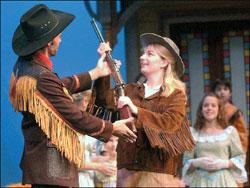
agyg2.jpg Lyrica Mueller is having a tough time combining aspects of the real Quaker sharpshooter from the late 1800s with the wide-eyed, perky stage persona conveyed in Irving Berlin’s colorful musical “Annie Get Your Gun.�

“She was kind of shy and quiet, but she was a strong, independent woman,� Mueller said, while gluing a piece of ribbon to a blouse she plans to wear during Lyric Light Opera’s production of “Annie Get Your Gun,� set to open Friday night at McIntyre Hall.

Mueller, a veteran of the stage and a musician, has been reading Oakley’s memoirs and any other information about the orphaned girl named Pheobe Ann Moses, who made her way from a life of abuse and poverty to working with the famous Buffalo Bill Wild West Show as a sharpshooting entertainer.

While Oakley, nicknamed “Little Sure Shot,� was considered a woman light years ahead of her time, she also was a surprisingly modest woman who marched to promote Victorian-era morals. The paradox is intriguing to Mueller.“I want to respect the woman as she was,� Mueller said, thoughtfully. “She was a great combination of a modern-day feminist, but she was a very Victorian woman.�

agyg1.jpg Mueller and the rest of the 30-member cast spent Monday evening getting familiar with the elaborate set of the show that runs July 14-30 at McIntyre Hall.

“Annie Get Your Gun� is the first production of the newly formed Lyric Light Opera of the Northwest. Former Northwest Civic Light Opera partner Barbara Mueller founded the new theatre company after Northwest Civic Light Opera dissolved in February. It had been operating just two years before it folded.

Barbara Mueller, director of the show, said she wanted to create a theatre company that would not only produce high-quality, family oriented entertainment, but also provide budding actors a place to learn the ins and outs of theatre — from the sound, lights and sets to music, dancing and portraying characters of all kinds.

“I believe that theater affects the people on the stage so very much,� Mueller said. “We can make such a difference in a person’s life by taking them through the process of a show.�

Mueller didn’t spare expense or energy for “Annie.� The production, which includes colorful Western-style sets from the Utah Festival Opera Company, a large cast of all ages, elaborate costumes, marketing, a 15-piece orchestra and booking of McIntyre Hall, is expected to cost about $75,000.

Mueller said the biggest challenge so far has been coming up with money for the show and other expenses, and bringing in experienced volunteers to produce and act in the shows.

But many actors from the Northwest Civic Light Opera followed Mueller to work with her new theatre company.

Rick Shallow of Camano Island had portrayed Von Schreiber in the Northwest Civic Light Opera’s 2005 production of “The Sound of Music.� In “Annie,’ he’s playing the worldly wise icon of American entertainment, Buffalo Bill Cody, who operated the famous “Buffalo Bill’s Wild West Show� in the later half of the 1800s.

“Buffalo Bill was America’s first superstar,� Shallow said, after rehearsing possibly one of the best known tunes from a musical, “There’s No Business Like Show Business.� But Buffalo Bill also was the glue that held the entertainers together, Shallow added. They looked up to him and admired him. He treated them well, and reportedly even paid the women and men performers equally for their work.

While reading up on Buffalo Bill in history books and on the Internet, Shallow discovered that Bill had been in the 3rd Cavalry Regiment — the same regiment that his son is now serving in, although it’s now called the 3rd Armored Cavalry Regiment.

Shallow’s son helped outfit him with an authentic old-style cavalry hat, sword and spurs.

While Shallow said portraying Bill isn’t a challenge, Sarah Simmons of Burlington had to look for just the right inspiration for her jealous and insecure character, Dolly Tate.

Dolly was set to be the big female sharpshooter of the Wild West show until Annie came along, said Simmons, whose resume includes many performances with the local Theatre Arts Guild. So Dolly tries to undermine Annie whenever she can, Simmons said.

“I’ve been thinking about how to make her likable,� Simmons said, laughing. “I think of Karen Walker on ‘Will and Grace.’ Yeah, she’s scheming and mean and a lush, but she’s fun.�

And fun is what the show is about, said producer Leslie Asplund.

“It’s a very joyous, sweet, simple show,� Asplund said. “For our first show, we wanted to do something that celebrates love and humility, and this was it.�

WHAT Lyric Light Opera of the Northwest’s production of the Irving Berlin classic musical “Annie Get Your Gun.�

WHEN 7:30 p.m. Fridays and Saturdays, July 14-15, 21-22, 28-29; 2 p.m. Sundays, July 16 and 23.

WHERE McIntyre Hall, 2501 E. College Way, Mount Vernon

COST $20-$30

How To Make Music Groups Sound Good

How do you make amateur musicians sound good? I really don’t think I know. But I consistently get feedback about how good my groups sound, so I’ll concede that maybe there’s something I’m doing that’s working and try to detail that here. My personal disclaimer is that I never ever say “I know what I’m doing”…..but as luck would have it things usually work well when I’m involved in it. So I’ll humbly use that as a starting point. This was an email I received today from one of the directors of the current show I am working on. I consider them VERY picky and sparing with their compliments, so this note means a lot to me:

“And I think it is so amazing to note that when you look into the pit you see mostly kids! What a great opportunity for them. And what a testament of your skill to pull them together in the terrific way you have. Thank you from the bottom of my heart–you are doing a spectacular job!!!”

So how do you make mediocre groups sound good? Again, I don’t know…..but here’s what I do:

FIGHT FOR YOUR MUSICIANS
You need to fight for your musicians. If it’s a paid gig, you should negotiate as much money as possible for them. If you’re the conductor or group leader you are the only representative they have. They need to know you are looking out for them. I personally don’t make a big deal about this, but it is noticeable here and there and the musicians pick up on it over time. Mentally the musicians need to know you are on their side. Another reason I fight for the best money I can for my paid musicians is that I expect a lot from them and consider myself pretty demanding, so it’s only fair they be compensated for the bar I expect them to hit.

STRONG RHYTHM SECTION
Years of working in club bands taught me you can never be better than your rhythm section. If you are doing musical theatre chances are you have a rhythm section, and they HAVE to be fantastic. There is no way around it. Especially the drums have to already be in the pocket, and I need to have a repoire with them where they can change grooves to a subtle change of how I snap my fingers or hum a melody line. The latest show I waited til the very last minute for my rhythm section because no one that auditioned was giving me what I needed. I feel VERY lucky every time I score a strong rhythm section. And I kiss their butts too, they are the lifeline of the whole group. And a good drummer will usually save me from a sloppy cue. I keep my drummers dead center so we have eye contact at all times. And I train with them so they see my signals for slowing or speeding the beat around. Absolutely essential.

PAIRING PLAYERS
If you have an inexperienced player, try your best to pair them with an experienced player. The lesser player will usually rise to the bar of the better player. In one show I worked on, a particular player was not giving me the sound I needed so I actually paid out of pocket to get a pro player to play with them for some shows. Sure enough, the less experienced player started to sound more like the seasoned player within a couple shows. They just needed to HEAR what a good player does so they have something to emulate. I remember very well being in high school band and often times not having a good “bar” to listen to. Everyone wants to do well, they just need to know what “well” sounds like. When the pro player left, the unseasoned player now sounds more like the pro. I’m happy, the pro was happy to help and the student player now has experienced the thrill of success.

CUT WHAT DOESN’T WORK
I tell players that I don’t have to hear everything, I just don’t want to hear anything bad. I lean hard on players to learn their parts, but when it gets close to showtime I am quick to cut specific instrument parts that don’t sound good. I’m sure many people would disagree with this approach, but it’s not the players fault they can’t play it, it’s my fault for hiring them.

CUT PLAYERS EARLY IF NEEDED AND APPLY PRESSURE
I apply pressure early on in practices that parts need to be at a certain caliber, and that players who don’t reach that will be cut. I’ve since learned more diplomatic ways of wording this, but players need to know the pressure is on. My experience has been that most players don’t really study their parts “hardcore” before the first practice. In my mind, I expect all parts should be in place by the third practice. In the second practice I let players know they will be cut if it’s not in place by the third practice. And this is important: I follow through on that. This applies more to paid gigs. If I’m going to fight for player pay on their behalf, then I need to get what I need in return: exceptional sound. I usually expect a 10% drop in the first weeks of rehearsal, in my mind this is an insurance policy against things going wrong at shows. For those that make it through “boot camp”, once the shows start and things sound great, they will see it different over time that you leaned on them hard. They will appreciate the good sound that all are enjoying…..at least…..that’s the idea.

LOOK FOR NEEDS NOT BEING MET
You may have niche information or ways to help your players that they would never think of. You may have contacts, techniques or something they need to perform better. Keep an eye out for this. Playing music is about human connections and it’s important to help your players as much as you can….may even be out of the arena of music.

LEARN ABOUT YOUR PLAYERS INSTRUMENTS
Ask your players questions about instruments you don’t understand. Knowing more about the instrument, or at least knowing how THEY see the instrument can be of great help in the future. There may be a technical element you are unaware of that will help you in directing that player.

KNOW PLAYER LIMITS
You hired the players, now you need to work within that decision (if a player hasn’t been cut). There are times when I just know that I’m getting absolutely all I can out of a player. All I’m going to get beyond that is arguments and bad feelings. Know when to let go. Ironically, many players where I “let go” because I know it’s not in them, they think they are doing better because I’m not harping on them anymore. That’s fine to let them think that. Make a note for the next show and move on. No one wants to play poorly, but everyone is at their own experience level.

BENEVOLENT DICTATOR VS. THE SINGLE DEMIGOD
Be very aware that as director you are not the Demigod of the group. You are simply the conduit to interpreting the music. It’s not what “you” as the director wants, it’s what “we” as the group wants. Try to keep things in a team reference. You want the group to sound good, the group wants to sound good – that’s not the problem. The problem is GETTING there, and somehow you were chosen to do that. So get there as best you can, and view it as a team effort along the way. This is an area I always have to work on, as my natural tendency is to be very short and abrupt.

NOT WORKING? OPEN A DIFFERENT DOOR
One definition of insanity is doing the same action over and over but expecting different results each time. If something isn’t working, change it. At least you know what you’re doing isn’t working, so doing ANYTHING different is at least a better chance of success. If it’s your tenth time explaining the same thing to a player, then word it a different way. Use a different metaphor, different imagery. Again, something I’m still working on.

IF IT’S GOOD – GIVE IT TO THE PLAYERS
My personal credo is that if it sounds bad, it’s my fault. If it sounds good, it’s because the players took it there. You cannot sound good without the players getting it their. They don’t have to like you, but they have to want to do their best for you. If the group sounds excellent, give up the attention to the players, they deserve it. So those are just my thoughts right now. Maybe I’ll think it all opposite a year from now. Hope this helps someone.

Conrad
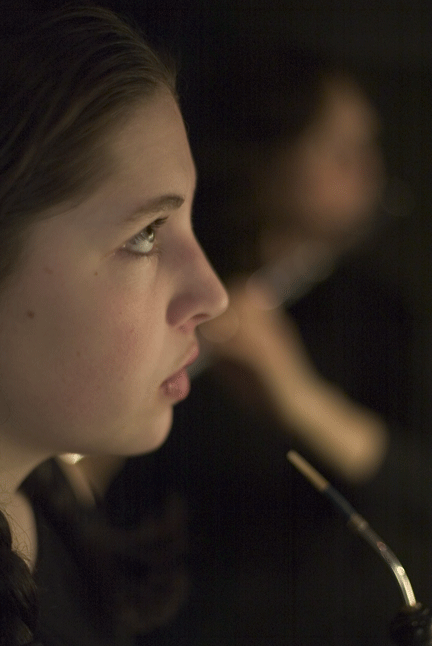
Lil Abner Musical – 2006 Loggerodeo with Talisman Productions

Li’l Abner the Musical – An original musical comedy presented by 2006 Loggerodeo, Talisman Productions and Skagit Community Art Theatre.
Lil Abner written by Norman Panama and Melvin Frank. Lyrics and Music by Johnny Mercer and Gene DePaul. Based on characters created by Al Capp, presented through permission of Tams-Whitmark, Co.

Show ran June 3-July 1 in Sedro-Woolley Washington.
BEHIND THE SCENES:
Executive Producer and Director – Bruce Weech
Producer – Susan Herrick
Assistant Director – Nan Hough
Choreographer – Donna Carrol
Musical Director – Kelly Siebecke
Stage Director – Siobhan Rooney
Assistant Stage Director – Anthony Irby
Stage Crew – Damine Rocha, Daniel Claverie
Costumes – Gaye Epst
Make-up – Mary Bingham
Set Design – Talisman Productions
Props – Deanna Ray Ensley
Lighting Design – Talisman Productions
Lighting Technicians – Paul Thelen
Sound Manager – Jerry Fortier
Graphic Artist – Karen Bakke
Master Carpenter – Phil Brown
Scene Painters – Karen Bakke, Kathy Brackett, Dorothy Peth, Karen Gardiner-Brown
Publicist – Nan Hough, Cat Folks
House Manager – Robyn Hough
Photographer – Lindsey Bowen
Production Assistant – Terry Graff

MUSIC
Keyboards/Synthesizer – Kelly Siebecke
Bass – Nathan McCartney
Piano – Kenneth Walker
Drums and Percussion – Dean Bunnell
Guitar – Jack Mattingly
Trumpet – Malcolm Peterson
Trombone – Brian Bernethy

THE CAST
Abner Yokum – Daniel Segars
Daisy Mae Scragg – Amanda McDaniel
Mammy Yokum – Linda Sturza
Pappy Yokum – Bruce Weech
Romeo Scragg – Nate Young
Clem Scragg – Dave Mumford
Earthquake McGoon – Lonny Graff
Hairless Joe – Don Wilcutts
Moonbean McSwine – Suzann McLamb
Marryin’ Sam – James Lindsey
Mayor Dan’l Dawgmeat – Greg Kirkpatrick
Senator Jacqueline Phogbound – Wendy Bell
Dr. Rasmussen T. Finsdale – Schad Russell
Dr. Smithborn – Susan Herrick
Dr. Krogmeyer – Margie Webster
Cecily Softwick – Anna Martin
General Bullmoose – Alec McDougall
Available Jones – Nick Martin
Stupefyin’ Jones – Crystal McCaslin
Evil Eye Fleagle – Nello Bottari
Appassionata Von Climax – Rebecca Heilig
Colonel – Joseph Sumroll
Hank – Brad Graff
Zeke – Anthony Irby
Rufe – Daniel Claverie
Bonnie – Cathy Adelman
Hope – Mary Franks
Dee Dee – Christina Franks
Lillian – Ashley Bre’Anne Christoferson
Scarlett – Ariana Martin
Fiona Scragg – Rachel Kirkpatrick
Iris – Dayna Sumrall
Flower Scragg – Kaylee Smith
Jed – Sean Weech

Ave Maria lyrics – Franz Schubert

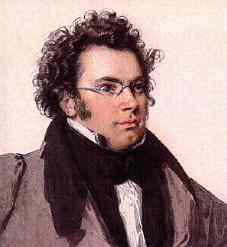
schubertx.jpg

I was preparing Ave Maria for a church service and thought this info might be useful for other musicians. Franz Schubert’s “Ave Maria” was originally a prayer from a frightened girl and called “Ellen’s Song III” and not intended for liturgical services. However, the music was instantly inspirational to listeners, so Latin text was substituted in time to make it suitable for church services.
The original lyrics were in English, a poem called “Lady of the Lake” by Sir Walter Scott (1771-1832). The original English was translated into German by Adam Storck D 839 (Spring 1825) First Published in 1826 as Op. 52, No. 6. – It was the German words that Schubert used for his original. Later the Ellen’s Song III (Ave Maria as we know it today) had the latin text forced on it, which works ok in most parts, with a couple unnatural places. Like most of Schubert’s lieder (like Die Schonemullerin), this German lieder was originally scored for just piano and voice.
ABOUT SCHUBERT’S AVE MARIA:
The Ave Maria was composed in about 1825 by Franz Schubert (1797-1828) when he was twenty-eight years old and filled with devotion to the Blessed Virgin Mary. It was written for voice and piano and first Published in 1826 as Op 52 no 6. The words most commonly used with Schubert’s music are not the words that the composer originally set to music. Franz Schubert actually wrote the music for an excerpt from the poem “The Lady of the Lake” by Sir Walter Scott (1771-1832), which was translated into German by Adam Storck. Schubert called his piece Ellens dritter Gesang (Ellen’s third song). In this particular excerpt from the poem the heroine, Ellen Douglas, is in hiding and prays to the Virgin Mary. A letter from Schubert to his father and step-mother refers to his music to Ave Maria:“My new songs from Scott’s Lady of the Lake especially had much success. They also wondered greatly at my piety, which I expressed in a hymn to the Holy Virgin and which, it appears, grips every soul and turns it to devotion.”

Ellens Gesang III (Ellen’s Song III [Ave Maria]) Sir Walter Scott (1771-1832)
Translated by Adam Storck D 839 (Spring 1825) First Published in 1826 as Op. 52, No. 6.

Storck’s translation as set by Schubert
&
Walter Scott’s Original from “The Lady of the Lake”

Ave Maria! Jungfrau mild,
Erhöre einer Jungfrau Flehen,
Aus diesem Felsen starr und wild
Soll mein Gebet zu dir hinwehen.
Wir schlafen sicher bis zum Morgen,
Ob Menschen noch so grausam sind.
O Jungfrau, sieh der Jungfrau Sorgen,
O Mutter, hör ein bittend Kind!

Ave Maria! Ave Maria! maiden mild!
Listen to a maiden’s prayer!
Thou canst hear though from the wild,
Thou canst save amid despair.
Safe may we sleep beneath thy care,
Though banish’d, outcast and reviled –
Maiden! hear a maiden’s prayer;
Mother, hear a suppliant child!

Ave Maria!
Ave Maria! Unbefleckt!
Wenn wir auf diesen Fels hinsinken
Zum Schlaf, und uns dein Schutz bedeckt
Wird weich der harte Fels uns dünken.
Du lächelst, Rosendüfte wehen
In dieser dumpfen Felsenkluft,
O Mutter, höre Kindes Flehen,
O Jungfrau, eine Jungfrau ruft!

Ave Maria! Ave Maria! undefiled!
The flinty couch we now must share
Shall seem this down of eider piled,
If thy protection hover there.
The murky cavern’s heavy air
Shall breathe of balm if thou hast smiled;
Then, Maiden! hear a maiden’s prayer;
Mother, list a suppliant child!

Ave Maria!
Ave Maria! Reine Magd!
Der Erde und der Luft Dämonen,
Von deines Auges Huld verjagt,
Sie können hier nicht bei uns wohnen,
Wir woll’n uns still dem Schicksal beugen,
Da uns dein heil’ger Trost anweht;
Der Jungfrau wolle hold dich neigen,
Dem Kind, das für den Vater fleht.

Ave Maria! Ave Maria! stainless styled!
Foul demons of the earth and air,
From this their wonted haunt exiled,
Shall flee before thy presence fair.
We bow us to our lot of care,
Beneath thy guidence reconciled;
Hear for a maid a maiden’s prayer,
And for a father hear a child!
Ave Maria!

The German text that Schubert set to music is not a perfect translation, but a fairly close one. The Lied may have first been performed at the home of Sophie Weissenwolff (1794-1847), who made it clear that she would like the dedication, and she received it. Countess Weissenwolff subsequently became known as “the lady of the lake.”

*****************

AVE MARIA LATIN TEXT

Ave Maria Prayer : The Latin text of the Ave Maria prayer
set to the music by Franz Schubert Ave Maria Gratia plena

LATIN TEXT FIRST VERSE:
Ave Maria, gratia plena, Dominus tecum;
benedicta tu in mulieribus,
et benedictus fructus ventris tui, Jesus [Christus].
Sancta Maria, Mater Dei,
ora pro nobis peccatoribus,
nunc et in hora mortis nostrae. Amen.

LATIN-ENGLISH TRANSLATION – 1st Verse
Ave Maria, gratia plena, Dominus tecum;
benedicta tu in mulieribus,
et benedictus fructus ventris tui, Jesus [Christus].
Sancta Maria, Mater Dei,
ora pro nobis peccatoribus,
nunc et in hora mortis nostrae. Amen.

***********************************

Hail Mary, full of grace, the Lord is with thee;
blessed art thou among women,
and blessed is the fruit of thy womb, Jesus
[Christ].
Holy Mary, Mother of God,
pray for us sinners,
now and at the hour of our death. Amen.

Maria Gratia plena
Maria Gratia plena
Ave, ave dominus
Dominus tecum

Benedicta tu in mulieribus
Et benedictus
Et benedictus fructus ventris
Ventris tui Jesus

Ave Maria
Ave Maria Mater dei
Ora pro nobis pecatoribus
Ora, ora pro nobis
Ora ora pro nobis pecatoribus

Nunc et in hora mortis
In hora mortis, mortis nostrae
In hora mortis nostrae
Ave Maria!

*********************
Here is an introduction to the piece you might use in a church service:

In 1825 a young composer wrote a song called “Ellen’s Song Number Three”. The song was a prayer to Mary and so well received, the young composer wrote to his parents:

“My new songs…..especially had much success. They also wondered greatly at my piety, which I expressed in a hymn to the Holy Virgin and which, it appears, grips every soul and turns it to devotion.â€?

The composer died young at the age of 31. After his death Latin lyrics were replaced on the song for performance in a liturgical setting. The composer’s name was Franz Schubert, and “Ellen’s Song Number Three” is known to us today as “Ave Maria”.

The Latin translated reads as follows:
Hail Mary, full of grace, the Lord is with thee;
blessed art thou among women,
and blessed is the fruit of thy womb, Jesus [Christ].
Holy Mary, Mother of God,
pray for us sinners,
now and at the hour of our death. Amen.

UPDATE 02/07 – Have questions about playing the Ave Maria during a Catholic wedding, church service or Mass? Read more info about Ave Maria in Catholic Mass and church services.

Lost JS Bach Piece Performed by Kiwanis

Johann-Sebastian-Bach-New-PieceIn October of 1713, Johann Sebastian Bach worked as court organist to Duke Wilhelm Ernst of Saxony-Weimar. With money scarce and little to give but his talents, the 28-year-old composer wrote an aria for his patriarch’s birthday. The Duke put the piece in a box – where it stayed, never to be played nor heard.

Nearly 300 years later, however, a Harvard University doctoral student happened upon the aria while examining some documents saved from a fire at the Anna Amalia Library in Weimar, Germany.

The Bach Archive Foundation was alerted to the findings, and the piece was sent to them for authentication. In June of 2005, the composition was confirmed, and it was decided to release the music to the general public.

Officials from the Anna Amalia Library contacted the foundation, however, and requested they not play the aria – so the world premier could be held at the re-opening of the library. The foundation agreed, but at the re-opening, musicians performed only half of the piece.

When Lynn Sampson, singer, trumpet player and member of the Kiwanis Club of Modesto, California, heard of the aria, he promptly contacted the publishing company in Germany in an attempt to obtain a copy of the music.

“We saw a newspaper article about it,” says Lynn. “I stayed up until two in the morning to call Germany to talk to some people about the piece.”

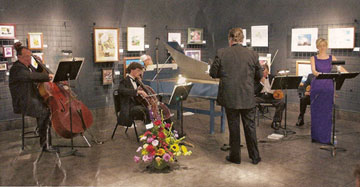
After several calls and scheduling, the publishing company agreed to send the music to the club, which in cooperation with the opera singers in Modesto, staged the world premier of the entire piece before a standing-room-only crowd September 7, 2005.

More than US $10,000 was raised to support the event. Kiwanians knocked on doors and explained what they were trying to do. A graphic designer offered to help with the programs for the event, and a printer in Modesto produced them at no cost. Modesto Junior College donated a harpsichord for the performance.

Song Placed in Movie: Alien Secrets

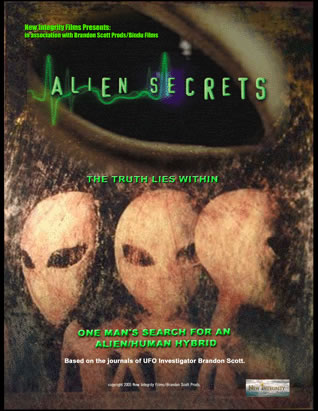
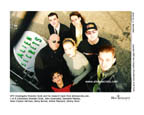
asposter1.jpgSean Clavin emailed me tonight to let me know we have a song placed in a movie. Very cool. The song is “Seven Year Sleep” written in 2000 by Gailyn Addis, Sean Clavin and Conrad Askland (that’s me). It’s an independent film called Alien Secrets. Here’s the movie website if you feel like reading about wacky crazy stuff:
ALIEN SECRETS MUSIC ARTISTS

Gailyn Addis who performs the song is an incredibly gifted songwriter, performer and all around ultra cool person. I met Gailyn Addis back in 1994 when I was musical director for Hollywood Superstars and we did a bunch of fun tours together including Japan, Las Vegas and Reno. I don’t know how many songs we wrote together, probably a couple dozen. She’s written many books and was a tech consultant for Bridgette Fonda on the movie……um……it was about Elvis. I was an keyboard player in the movie too but my scene got cut, I think Gailyn didn’t get screen credit either. Oh well, that’s showbiz. Back on topic….

.
Sean Clavin I met back around 1990 when we both worked for the same music store, Tom’s Music down in Victorville, CA. Later we played together in Roy Rogers Jr. ‘s band and also with a country cover band that played the San Bernardino and Los Angeles country circuit. He played guitar on TONS of songs with me in the studio for Road Records. Over the years he probably cut tracks for me on at least a hundred songs. He was my #1 pick as a studio guitarist because he was so easy to work with and had such a mastery of a wide range of styles. Ok, he was also one of the few people to put up with my “Conradized” studio charts. I chart real fast in the studio and the manuscripts tend to be a wee bit cryptic. Sean might word it a bit different. 🙂

Might make a good double header with Alien Autopsy.
“Seven Year Sleep�
Performed by Gailyn Addis
Written by Gailyn Addis, Conrad Askland,
Sean Clavin copyright 2000
Visit Sean Clavin and the Roy Rogers Jr. Band
Visit vocalist and songwriter Gailyn Addis

******************

ebe_Alien_Secrets_solo.jpg“Alien Secrets”
Wins EBE Award
Best Feature Film- UFO or Related Theme at
The 15th International UFO Congress
and Film Festival 2006

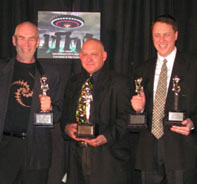
Brandon Scott receives the EBE AWARD
Best Feature Film -“Alien Secrets”

March 4th 2006 Laughlin Nevada

The EBE winner for the Best Feature Film was awarded to the film “Alien Secrets” Directed by J.J. Barmettler and Produced by Barmettler , Brandon Scott and Richard Smith.

The highlight of this week long event culminated with the The International UFO Congress Film Festival screening the best features, documentaries and short films dealing with UFO related subject matter. This festival recognizes filmmakers with the coveted EBE Award.

A melting pot of experts and panelists from all over the world convene to meld minds and share the latest discoveries in UFO and paranormal activity, at this years International UFO Congress 15th annual event held at The Flamingo Resort and Casino in Laughlin, Nevada.

The week long conference (Feb. 26-March 4, 2006) hosted presentations by renown authors, researchers, experts, journalists, scientists, and UFO investigators from all over the world.

ebe_award_winners-CR.jpgLectures and seminars attracted hundreds of researchers and enthusiasts from the United States, England, Japan, Germany, South America,South Africa, and many other countries. Some of the speakers included authors Budd Hopkins, Dr. David Jacobs and crop circle expert Colin Andrews, journalist George Knapp, Mexican journalists and UFO investigators Jaime Massaun and Santiago Yturria Garza, Film Producer and author Paul Davids, Haktan Akdogan from Turkey,Terje Toftenes from Sandvika and A.J. Gevaerd from Brazil.

Hundreds of attendees showed up to experience the film Alien Secrets.
“We are so glad this film was made,� commented Michael, one of the UFO researchers. “ This film is a perfect way for delivering this sensitive information in a entertaining way�.

“ It’s a story that has to be told,� commented a husband and wife team , both who are UFO researchers; “ So many of us go through the same experiences as the character Brandon Scott portrayed the movie,so we really identified with that.�.

“ I am glad they didn’t make fun of usâ€? shared a young woman and UFO abductee “ It was funny in many parts and yet it was serious about the messageâ€? .

Another enthusiast was eager to share this with his wife and kids. “ I can’t wait to show it to my family� he said, “ I can never sit them down to watch a documentary on UFOs, this movie is fun and so entertaining, I think this will help them get exposed to the facts about this phenomena and it’s a great story to boot.�.

After presenting the Award, Bob Brown, founder of the International UFO Congress, commented to the attendees,
�I really enjoyed the film , I got it, I think most of you out here will… It has humor so we can laugh at ourselves. Very nicely done.�

Best Feature Film- UFO or Related Themeresearchers1.jpg

ALIEN SECRETS” THEY’RE HERE AND LIVING AMONG US!! Filmmaker J J Barmettler and controversial UFO Investigator Brandon Scott have captured the UFO subculture from the inside out, working with 43 artists, 23 abductees, 30 experts and 200 eye witnesses who have all had experiences in the chilling UFO/Alien Phenomenon. Their discovery proves that there is a hidden generation of alien/human hybrids living among us. In the process of the investigation a female hybrid speaks out for the first time ever on film. This “hybrid” narrative/documentary film weaves story and fact in an epic portrayal of one man’s fight for free will and his drive to save humanity. With over twenty original songs, real UFO footage and a daring subject matter, this provocative film is sure to be a cult sensation.

Forum Server II Opening Mid-June 2006

We will be opening a second forum server that should be active mid-June 2006. This will be a near completion of bringing all our discussion communities back online. This network will run discussion communities on topics of music, religion, science and sports. If your favorite forum isn’t running now, chances are it will be on our new second server, with the exception of some niche music and health related forums.
Our Forum I server came back online in March 2006. A big thanks to our community members on the Forum I network that have helped us along the way.

Archie Drake, Seattle Opera bass-baritone, dead at 81

May 27, 2006
Skagit Valley Herald
Associated Press

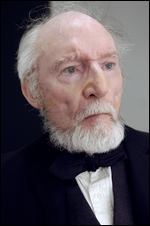
archie_drake.jpgSeattle – Archie Drake, a Seattle Opera bass and baritone who also sang at other operas in the West, is dead at 81 from a heart attack following his last performance.

Drake, who came from the same English family that includes Sir Francis Drake, collapsed at the door of his apartment Saturday night after the company’s last performance of Verdi’s “Macbeth” and died Wednesday, opera officials confirmed to The Seattle Times and Seattle Post-Intelligencer.

“For me, opera is basically an exploration of the human spirit,” Drake told Seattle Opera Magazine in 2001. “It can take you further into emotions and feelings and concepts and understandings and divining than any other way.”

Known for never missing a performance, Drake appeared in more than 1,000 performances and sang 109 roles for the Seattle Opera and also performed with the Houston Grand Opera, Arizona Opera and Portland (Ore.) Opera.

******************************************

226archie_drake.JPGWhat sad news this is to the Seattle music scene. Archie Drake was one of the people I looked up to as a child. One of those people that was a role model to me of how music was supposed to be. He was extremely serious, and playful at the same time. He took time to talk with the kids he worked with, and treated them as equals.

Archie Drake performed the part of one of the kings in Amahl and the Night Visitor back in 1979. I performed the part of Amahl. A couple years before that I was in the Seattle Opera performances of Carmen, Boris Gudonov and Tosca. Archie was in Tosca with us, in fact he played the part that oversaw the boychoir in the opera. It was very fun.

Archie probably would not have remembered me. I’m just one of many lives that he touched with his passion for the arts. I had kept up with many of his performances even while I was in California. The sad part is now that I’m settled back in the Seattle area I had planned on catching one of Archie’s performances. I didn’t think that time was ticking. There’s a lesson in that for me. There’s a few other people I was going to catch up with too, so I think I’ll get right on that.

Thank you Archie. Heaven’s choir sounds a little more beautiful today…..

AIDA – Band and Pit Photos

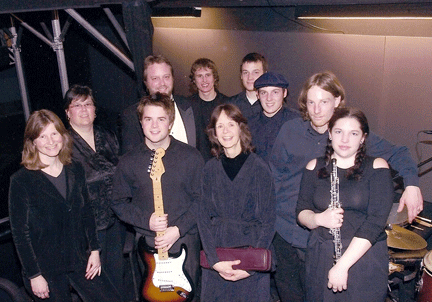
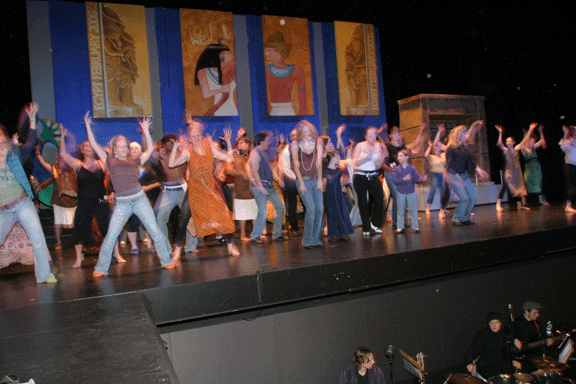
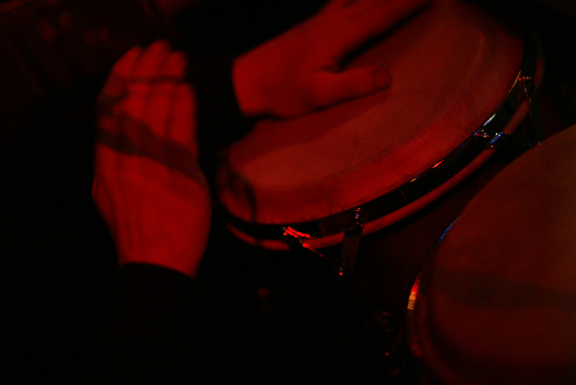
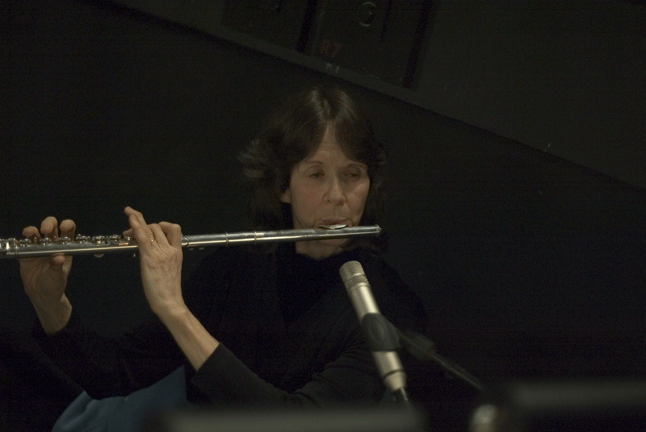
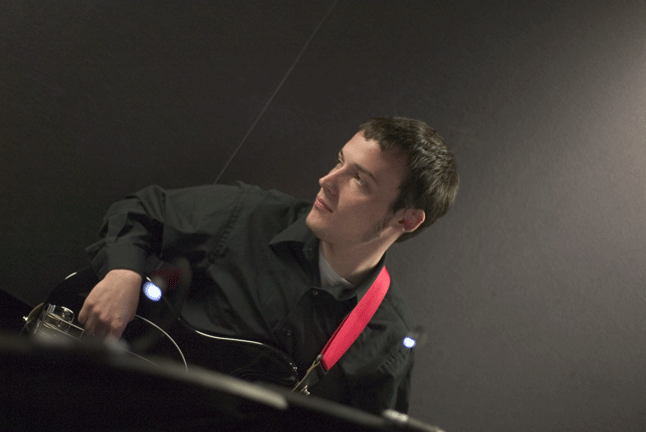
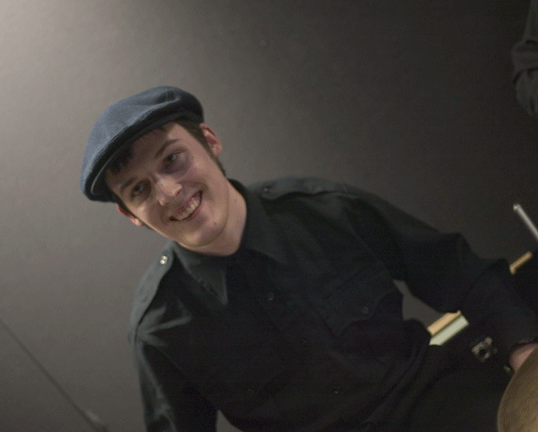
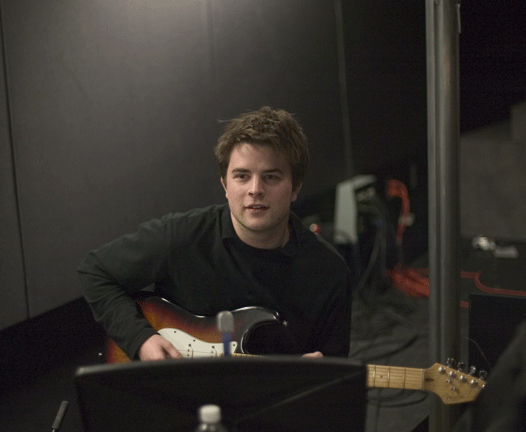
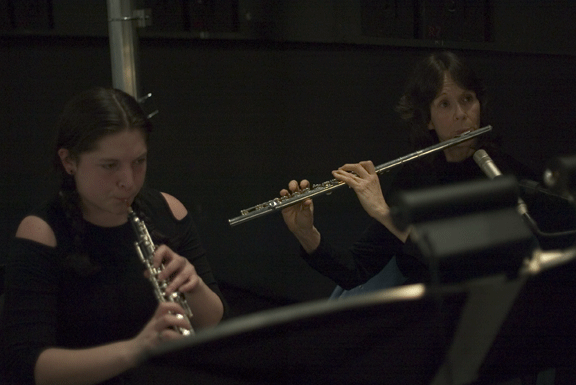
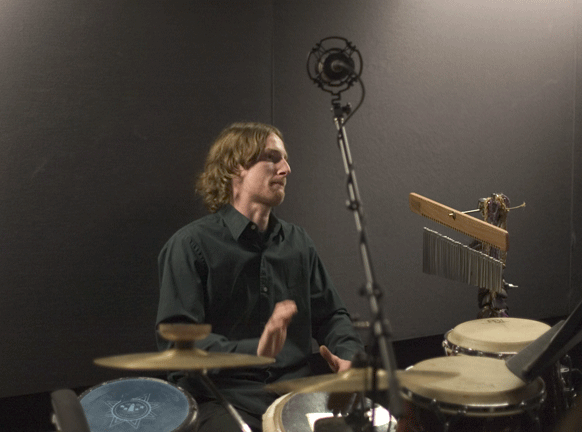
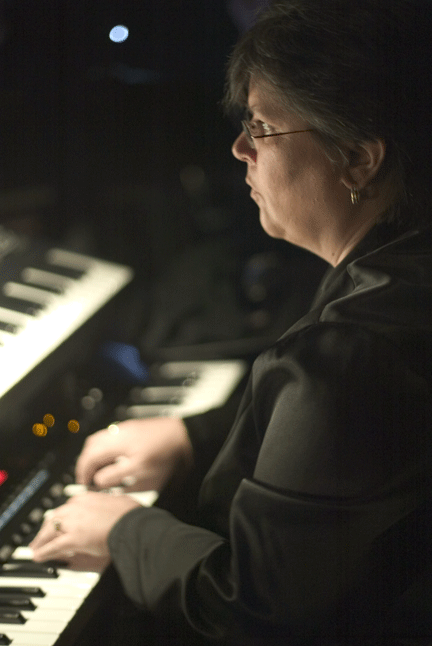
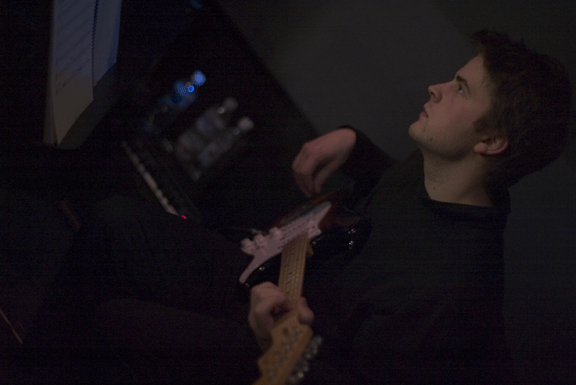
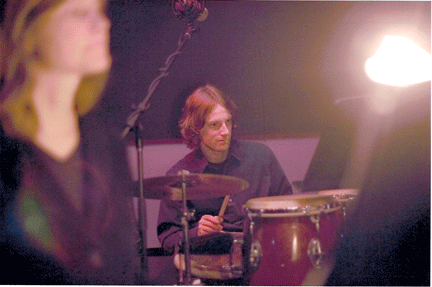
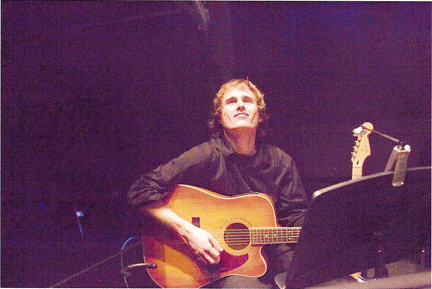
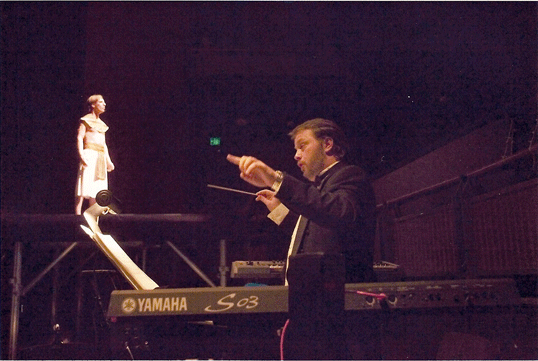
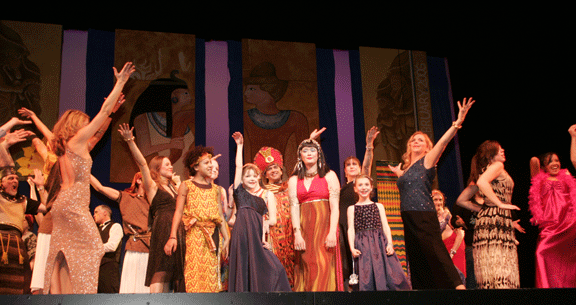
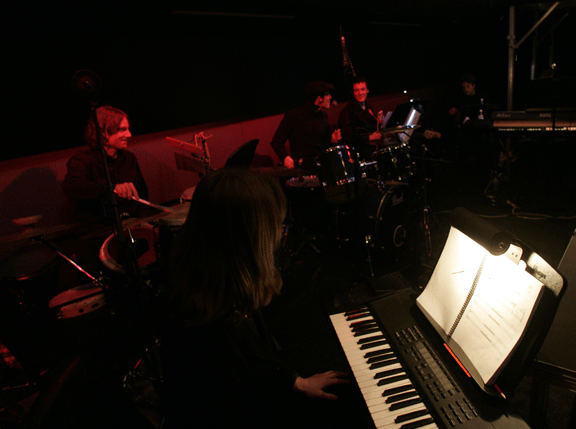
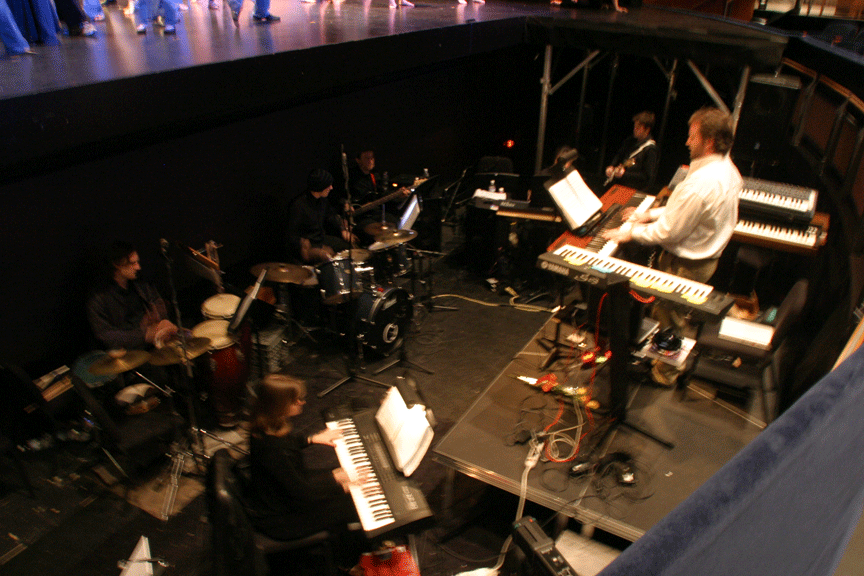
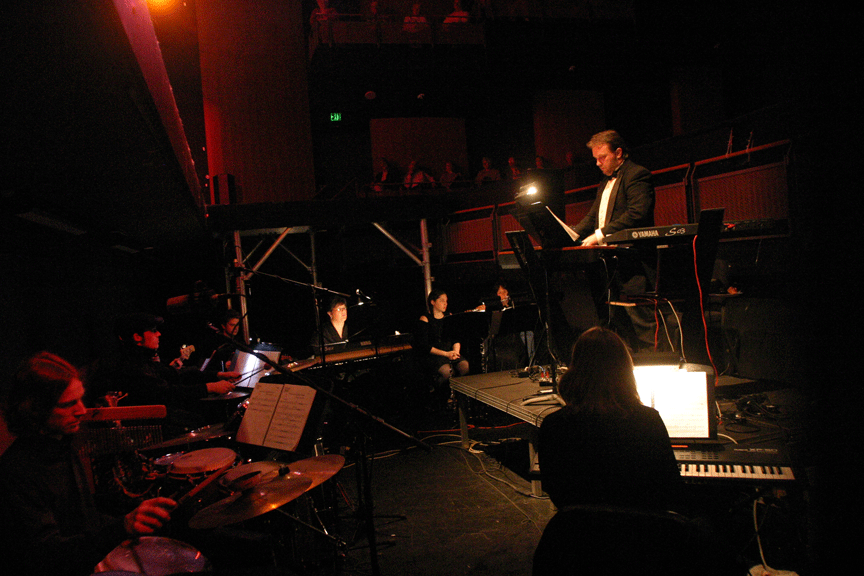
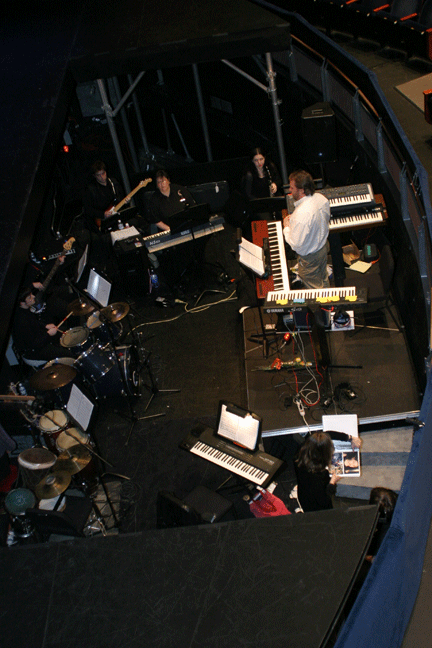
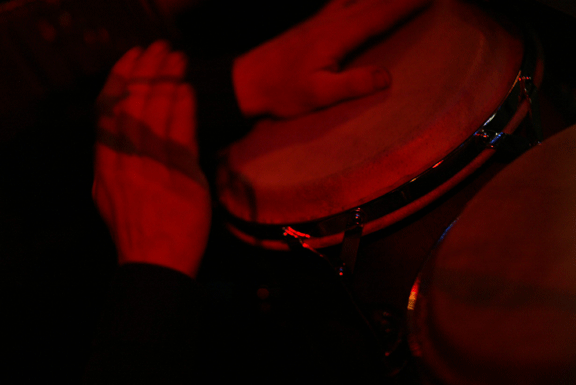
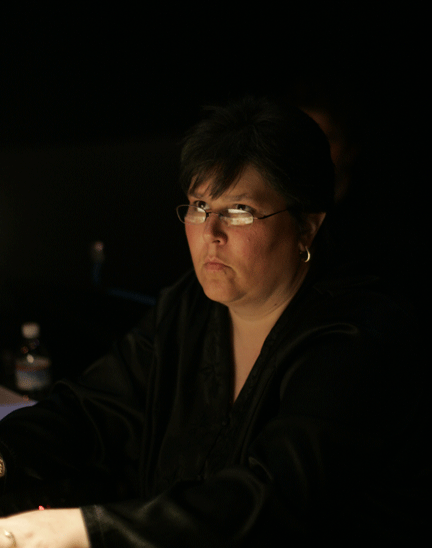
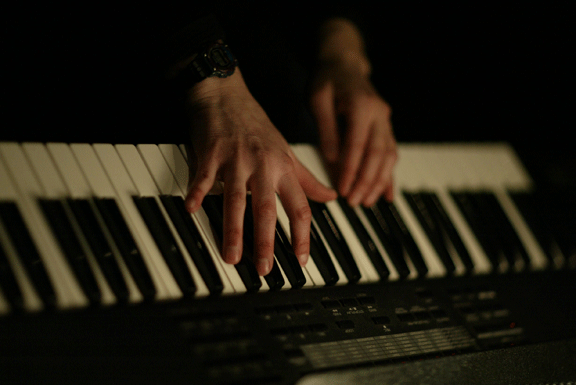
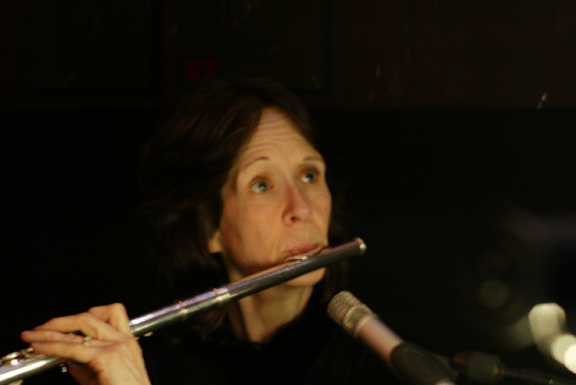
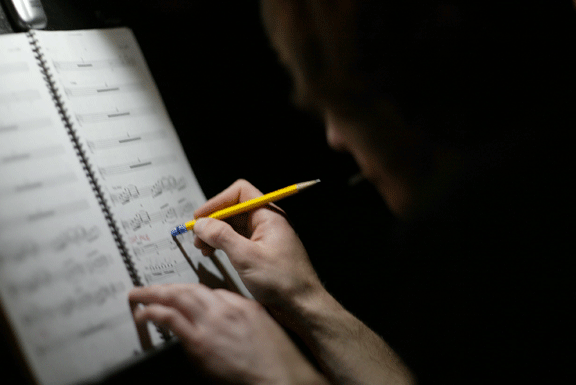
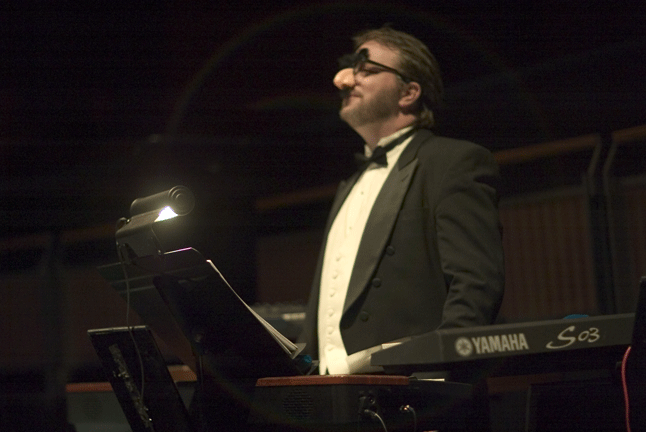
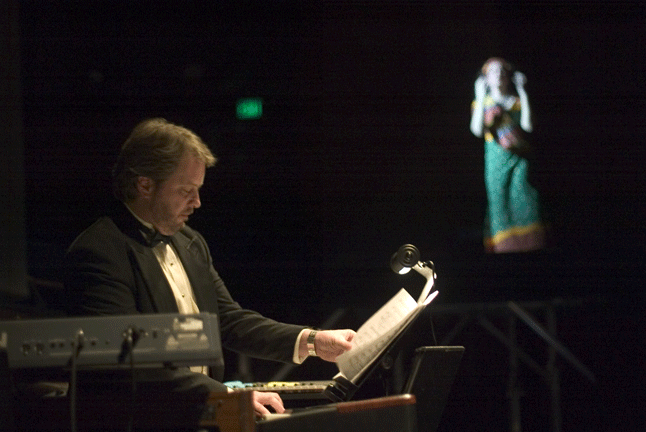
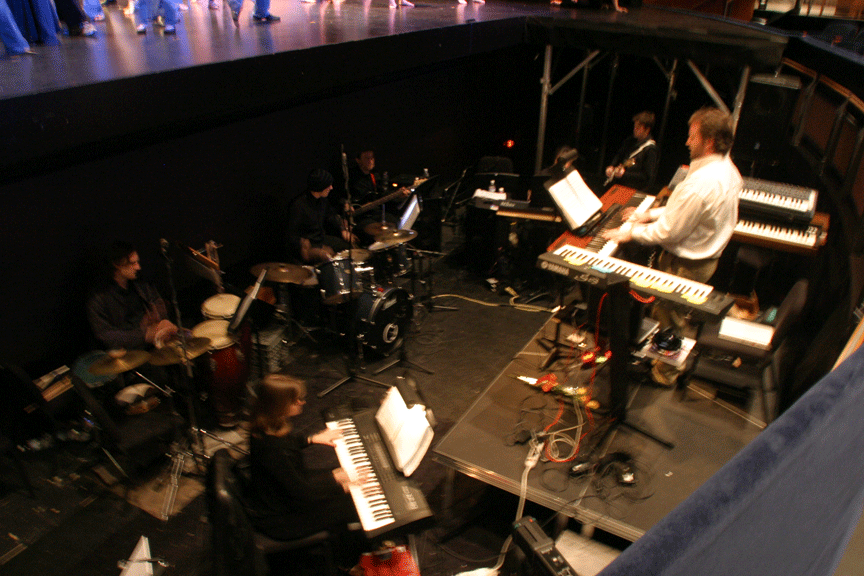
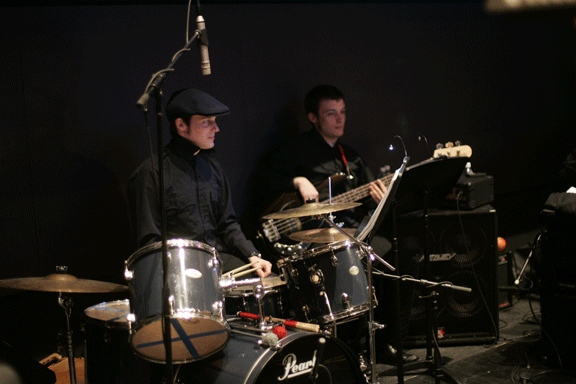
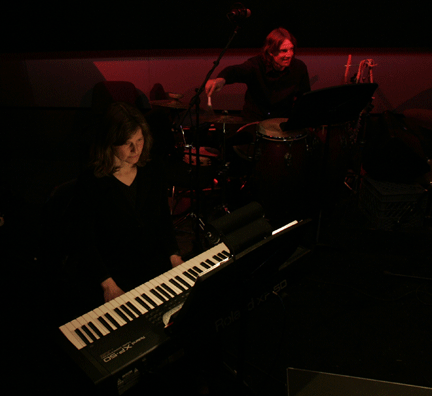
Here are some pictures of the band and pit from our performance of Elton John’s AIDA at McIntyre Hall (Mount Vernon, WA) in April 2006. Band members please e-mail me your mailing info and I’ll send you the full DVD of band pics. There is also a full DVD of cast and stage pics but I don’t have a copy of that.

This production of AIDA was produced by the Theatre Arts Guild of Skagit County. Directed by Jane Skinner and Produced by Roger Ragusa. This band kicked butt. Thank you all for a fantastic show and incredible music. I’m still hearing compliments about how well you all did. I’ll be sending you all an email shortly about upcoming shows as well.

AIDA Band 2006 – McIntyre Hall
Conductor, Keyboard 1 – Conrad Askland
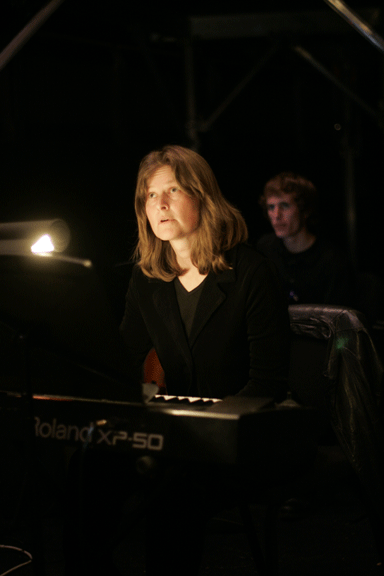
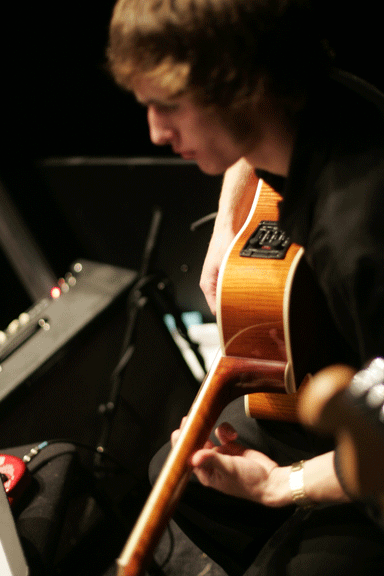
Drums – David Bridgman
Bass – Peter Bridgman
Percussion – Coulby Styles
Kebyoard 2 – Lisa Temcov
Keyboard 3 – Kelly Siebecke
Oboe/English Horn – Rebecca Wright
Flute – Stephanie Bethea
Guitar 1 – Chris Eger
Guitar 2 – Paul Dutton

aida-band.gif

aida-cast1.gif

aida-xtra13.gif

aida-xtra12.gif

aida-xtra10.gif

aida-xtra9.gif

aida-xtra8.gif

aida-xtra7.gif

aida-xtra6.gif

aida-xtra5.gif

aida-xtra4.gif

aida-xtra3.gif

aida-xtra2.gif

aida-xtra1.gif

aida-conrad11.gif

aida-cast2.gif

aida-band2.gif

aida-pit4.gif

aida-pit32.gif

aida-pit2.gif

aida-pit1.gif

aida-percussion1.gif

aida-oboe1.gif

aida-music11.gif

aida-lisa.gif

aida-keyboard4.gif

aida-keyboard3.gif

aida-keyboard1.gif

aida-guitar1.gif

aida-flute2.gif

aida-flute1.gif

aida-conrad21.gif

aida-conrad1.gif

aida-pit31.gif

aida-bridgman3.gif

aida-bridgman2.gif

aida-bridgman1.gif

AIDA pit