Prince Halts Music for Bible Study

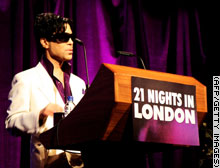
prince.jpg LONDON, England (Reuters) — U.S. rock star Prince will play 21 concerts in London later this year and plans to take time off music to study the Bible, he announced on Tuesday.

The innovative funk artist, who created such groundbreaking works as 1984’s “Purple Rain” and 1987’s “Sign O’ The Times” and sold an estimated 80 million albums, made a brief appearance in the city to announce the gigs, beginning August 1.

Outside Organisation, a PR company helping to publicize the tour, said in a statement that Prince would be performing his greatest hits “for the very last time”, but the artist did not confirm the claim.

Wearing dark shades, a high-collared purple shirt and cream suit, Prince explained why his only appearances in Europe this year would take place in London.

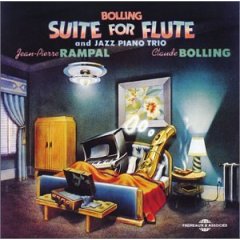
Claude Bolling Suite for Flute and Jazz Piano

bolling-suite-flute.jpg

  • WHAT – Claude Bolling Suite for Flute and Jazz Piano
  • WHEN – Sunday May 6th, 7:30pm
  • WHERE – Brechemin Hall, University of Washington Music Building
  • WHO – Stephanie Bethea Doctoral Lecture Recital
  • Conrad Askland – jazz piano
    Bryan Atterbury – drums
    Toni Rush – bass
    Ben Bethea – oboe
    Jim Gaudette – french horn
    Eric Frankenfield – violin
    Jane Frankenfield – viola
    Abby Frankenfield – cello
    Roupen Shakarian – conductor

    FLUTE RECITAL PROGRAM

    Syrinx – Claude Debussy (1913)

    Claude Bolling Jazz Suite Movements:
    1. Baroque And Blue
    2. Sentimentale
    3. Javanaise
    4. Fugace
    5. Irlandaise
    6. Versatile (With Bass Flute)
    7. Veloce

    The Great Train Race – Ian Clarke (1993)

    Concerto for Flute and Orchestra – Carl Reinecke (1908)
    Transcribed for chamber orchestra by Stephanie Bethea
    Allegro molto moderato
    Lento e mesto
    Finale; moderato

    This recital is given in partial fulfillment of the requirements for the degree of Doctor of Musical Arts. Stephanie Bethea has been a student of Felix Skrowonek, Zart Domburian-Eby, and currently Sarah Bassingthwaite.

    CONCERT NOTES:
    The recital went well last night. It was like Stephanie hand-picked all my favorite people – Jim Gaudette and Roupen were performing, and I ran into Jerome Chandler and Brittany Schmidt who I’ve worked with on shows before and are both very fun. One nice surprise was hearing Stephanie’s son Ben Bethea on oboe, he is a master of that instrument with a tone that truly has to be heard – it struck me that oboe might be my current favorite orchestral instrument, next to french horn of course. During the recital Stephanie demonstrated flutter tongueing, flute double stops and multi-note harmonics. There was a nice reception afterwards and I got to visit with everyone.

    Stephanie and I had played at my church in the morning and she did very tasty improvisations over the hymns and praise music. It also gave us a chance to get a little looser on the Claude Bolling Suite. I’d like to make a couple changes and perform the Bolling Suite local at a small place like Althea’s or The Muse with an intimate crowd. Would make a nice upper crust snobby affair. I took great liberty with the Bolling Suite and improvised quite a bit of it – from talking to people in attendance this approach seemed well received, and Stephanie said she thought it kicked a lot of fun into it.

    So at some point if I play it enough, I’ll improvise the whole suite – and then we’ll just call it a new name. 🙂

    If you can read French – visit the Claude Bolling website.

    About Claude Bolling:
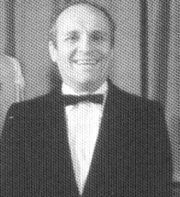
    claude-bolling.jpgClaude Bolling (born April 10, 1930), is a renowned French jazz pianist, composer, arranger, and occasional actor.

    He was born in Cannes, studied at the Nice Conservatory, then in Paris. A child prodigy, by age 14 he was playing jazz piano professionally, with Lionel Hampton, Roy Eldridge, and Kenny Clarke.

    He has written music for over one hundred films, mostly French, starting with the score for a 1957 documentary about the Cannes Film Festival, and including the films Borsalino (1970), and California Suite (1979).

    Bolling is also noted for a series of “crossover” collaborations with classical musicians. His Suite for Flute and Jazz Piano Trio with Jean-Pierre Rampal, a clever and charming mix of Baroque elegance with modern swing, has been a top seller for many years, and was followed up by other works in the same vein. It was particularly popular in the United States, and it was at the top of the hit parade for two years after its release.

    Following his work with Rampal, Bolling went on to work with many other musicians, from different genres, including Alexandre Lagoya, Pinchas Zukerman, Maurice André, and Yo-Yo Ma. He has also worked with, and performed tributes to many others, including Lionel Hampton, Duke Ellington, Stéphane Grappelli, Django Reinhardt, Oscar Peterson.

    COMMENT:
    I bought this on cassette over 20 years ago, and it continues to be #1 in my top ten list of favorite recordings. It is a perfect blend of baroque and jazz. I remember playing this in my car and my passenger was amazed at the structure of the music, particularly transitions within the pieces. I like all of Bollings series of “_____ and jazz piano” but this is the best of all. It remains fresh & creative. How could anyone not find this music compelling?

    How Do Key Signatures Work?

    In the last couple days I’ve received two requests to explain key signatures. Both people had different applications for their question, so the answer to each was different. Here I’ll explain key signatures and the most common uses for that information.

    I’m going to start with a quick cheat sheet on how to figure out key signatures. Then further below you can read the technical reasons behind what we’re doing here (if you can stay awake through it).

    Memorize
    NO key signature is key of C major. One flat (Bb) is the key of F major.

    Key Signatures – SHARPS
    Order of Sharps is: F-C-G-D-A-E-B
    Remember this by “Fat Cats Go Down And Eat Breakfast”
    To Figure Major Key: Go up 1/2 step from the last sharp and that is your key.
    Example: Key signature shows 3 sharps, they will HAVE to be F-C-G. That last sharp is G#, go up 1/2 step from G# and you have A. So three sharps is the key of A Major. This means if you play from A to A with the sharps of F, C and G – you will have a major scale. (Note: songs can also be in minor keys and other modes, explanations on that below).

    Key Signatures – FLATS
    Order of Flats is: B-E-A-D-G-C-F
    Remember this by “BEAD – Greatest Common Factor”
    To Figure Major Key: Next to the last flat is the name of key.
    Example: Key signature shows 3 flast, they will HAVE to be Bb-Eb-Ab. The NEXT TO THE LAST flat is Eb (or count three flats B-E-A, then count back one to Eb) – Your key is Eb Major.
    Note: Because one flat is Bb and there is no where to count back, you should memorize that one flat – Bb – is the key of F major. (Ok, let’s get technical, when you count down from the last flat, you are actually coming down a perfect fourth – and a perfect fourth down from Bb is F – so that’s really what’s happening).

    You Don’t Know It Until You Need to Know It
    I’ve had piano students sit in a fog when they first learn key signatures. They are in a fog until we use the information as a real application. A good way to force you to know key signatures is to transpose. Take a song and transpose it up a whole step. In order to do this, you’ll need to know what key you are in and what key you are going to. I make students do the whole process in their head so they know EXACTLY what they are going to do before they start playing. Doing it by ear does you no good for understanding the theory behind it.

    What is a Major Scale?
    If you play from C to C on a piano, that is a C Major Scale. What makes it a C Major Scale is the combination of whole steps and half steps. You’ll notice a half step between E-F and B-C – the other notes have a single black note between them which is 2 half steps – and 2 half steps is called a “whole step”.

    A “tetrachord” is the four step series of: whole – whole – half (on a piano this could be C-D-E-F – the first C-D being the first whole step). A major scale is comprised of two “tetrachords” back to back – the second tetrachord starting a whole step from the first one. In a C Major Scale the two tetrachords are C-D-E-F and G-A-B-C.

    What Is a Key Signature?
    A key signature is the listing of sharps and flats at the beginning of a music piece. These sharps and flats are to be played through the entire piece or until the key signature changes. If there are no sharps or flats at the beginning of the song, then you are usually in the key of C Major (or A minor, more on that later) – or the composer chose to write in his accidentals manually and doesn’t like using key signatures (this is more common in contemporary music, and the bane of most studied pianists).

    Why Do We Need Key Signatures?
    All that information is fine for the key of C – but if you want to play a major scale that starts on a different note you’ll need to start using sharps and flats (usually black notes on a piano) to create that same series of whole and half steps. For example: Play from F-F on all white keys. Notice how it sounds just a little odd, not quite like a major scale? That’s because the fourth step needs to be a half step, which would be Bb. So it is that in the key of F major, the key signature is Bb.

    Why Do We Need to Play in Different Keys?
    This is actually a common question, why can’t we just play everything in C Major? Aside from that idea being boorish – first think of male and female singers. They have very different ranges – so a melody that works well for a soprano might need to change to be sung by a male bass. Or instruments, an oboe concerto may need a different key than melodies played by trombone, etc. Artistically, many people claim that certain keys have certain “moods” – and many composers also believe this. For me, I think there are certain keys in different eras that are used more than others, and knowing that can help dictate your key if presented with multiple options.

    What Is a Minor Key?
    The minor scale is the scale that starts on the 6th step of the major. These keys are called “relative keys” because they share the same key signature. If you are in C Major – then the relative minor key is A minor (A is the sixth step of the key of C). Playing A to A on a piano using just white notes will give you an A Natural Minor Scale. For an A Harmonic Minor Scale, just raise the 7th step (G#). For an A Melodic Minor Scale raise the 6th and 7th steps going up (F#, G#) and leave them nature when coming down (F, G).

    If you are confused about minor scales and what I just said, don’t worry about it. The only thing to understand is that a key signature does not always mean the major key, it can also designate the relative minor. MOST music (99%) is either in the Major or the Minor (Aeolian – minor key 6th step) key. Once you’ve made the mistake several times of thinking it was the major, you’ll remember it.

    QUICK KEY SIGNATURE CHEAT TIP: Most songs begin and end on the root chord of the key. If your song starts on an A chord, there’s a good chance the song is in A Major. (Second most popular intros are on the 4 or 5 chord). So a quick scan of the first and last chord of the song may help you in determining if you are in a major or a minor key.

    How Long Does It Take a Seasoned Musician to Identify a Key Signature?
    Assuming they are used to reading scores – under three seconds. That’s including 1.5 seconds for a page turn.

    CIRCLE OF FIFTHS
    Circle of fifths is a fun thing that will really blow open your sight reading and improvisation once you understand it. My concert master actually has the circle of fifths tatooed on his arm! That’s how much fun it is. But until you get it, it’s a confusing messy thing. There are many approaches to this, but I’ll just give you what I think is most important:

    Circle of Fifths could also be called Circle of Fourths, because a Perfect 5th up is the same as a Perfect 4th down, and vice-versa. If you follow the key signatures as you add sharps or flats, you’ll notice a sequence that the keys are moving by perfect fifths – C – G – D – A – E – B – F# (Gb) – C# (Db) – G# (Ab) – D# (Eb) – Bb – F – C. Do you see it now?

    But that’s not the fun part, the fun part is seeing how this movement can work with chords as well, let’s start at B and work backwards to C. Play chords F#m – B – E7 – Am – D7 – G9 – C. Now you have a nice little jazz progression. Start noticing how many times little circle of fifth patterns are used in music. 5 to 1 is the strongest movement in music, and the 5 of 5 is the major two, the 5 of 2 is the major 6 and so on.

    Want to REALLY see the circle of fifths in action? Start sightreading through jazz standards from the 30’s and 40’s – you’ll see circle of fifths patterns all over the place. A good way to work on 9th chords to. Did jazz invent the circle of fifths. No. My FAVORITE example of circle of fifths patterns is a long descending bass section in JS Bach’s Brandenburg Concerto #3. I rip that off all the time when I’m doing classical improvisations. Classical and Baroque music uses it quite often as an “escape” to move to a new section or to return to a statement of the main theme.

    If you use all this information as you study, eventually it will become second nature. If you don’t have to use it, it will forever remain a fog. If you are a lifetime player or pro musician (more specifically if you are a music arrange or music producer), then I really think you MUST digest and internalize all of this. If you are a weekend warrior or play by ear, don’t worry about it. Just memorize the key signatures.

    I certainly am glad I don’t have to go through the pain of learning all this again. 🙂
    How the SEINFELD Theme was written

    We all know the sound. It’s that quirky slapped bass that opens while Jerry Seinfeld does his comedic monologue, and then hilarity ensues. The little ditty was written by Jonathan Wolf. When hired for the job he listened to Jerry’s stand-up and found a sort of melody and rhythm to his delivery. Knowing that he couldn’t actually write a melodic theme over the monologue, he sort of timed it instead. The tempo, about 110, became the basis for a simple slapped bass line. With Jerry in studio, he recorded the line while Jerry did his thing. And that has become the popular and recognizable Seinfeld theme.

    From the bass guitar forum at BassDogs.com

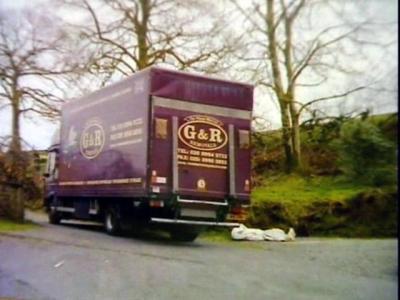
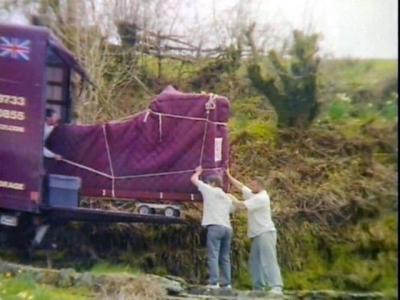
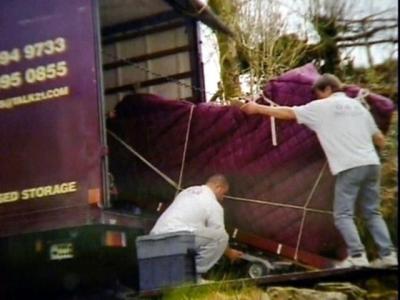
    Movers Drop $88,000 Bosendorfer Piano

    bosendorfer-piano.jpg

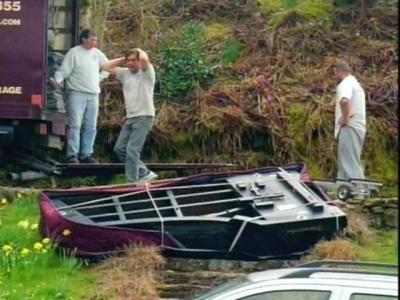
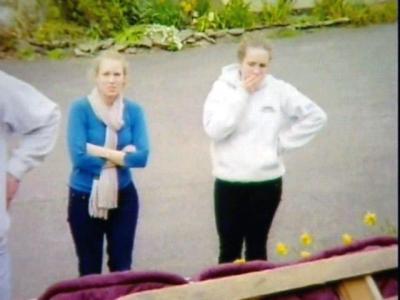
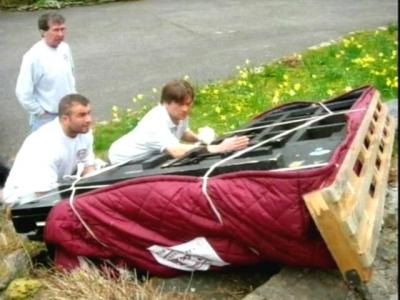
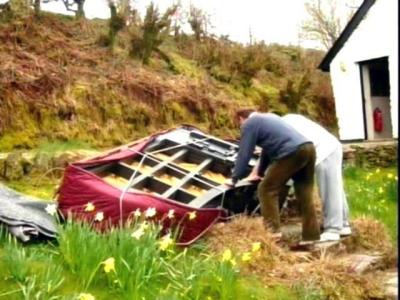
    “Hold on kiddies, this is going to be a bumpy ride!” Movers dropped an $88,000 concert grand piano from a truck in England, and the whole thing was caught on camera. Here are pictures of the unfortunate event. I’m sure glad I wasn’t the one that dropped Bosendorfer on the ground, but at least I can giggle a little at the photos here.

    Moving a piano is all about leverage and balance. I’ve seen a single expert dismantle and move a baby grand piano by themselves. I remember many moons ago having to deliver pianos when I worked sales in a piano showroom. It sure isn’t easy if you don’t have it down to a perfected system.

    My favorite picture is the fourth one where the guy has his hands over his head as the shock of what just happened hits him.

    bp-drop-1.jpg

    The half-ton instrument was dropped as it was being brought into the home of the organizers of an annual music festival in Devon, England.

    bp-drop-2.jpg

    The famed Bosendorfers piano was purchased at an auction for 45,000 British pounds, or just over $88,000.

    bp-drop-3.jpg

    A couple had spent two years raising the money for the piano, which was to be the highlight of this year’s music festival.

    bp-drop-4.jpg

    It was insured for $50,000. It was sent to London, where experts were assessing the damage.

    bp-drop-5.jpg


    The owner of the piano, who never got to play a note, said it’s unlikely it will ever be the same.

    bp-drop-6.jpg
    The Bosendorfer is considered to be the Stradivarius of the piano world.

    bp-drop-8.jpg

    In this last photo it looks like the piano movers who dropped the piano got confused and are trying to plant the Bosendorfer in the ground. Which begs the question: What kind of fertilizer would you use to grow a piano?

    Don LaFontaine – Movie Trailer Voice Overdubs

    don-lafontaine.jpg Don LaFontaine is that cool gravelly bass voice you hear on all the movie trailers. The voice that says something like “In a world where boredom ruled the day….SOMEONE had an idea….” – or fill in your own catch phrase.

    Don has been recording overdubs for movie trailers for several decades now. Any of us that go to movie theaters and see the motion picture trailers have his voice firmly engrained in our head.

    Many YouTube trailer spoofs try to copy his vocal sound for their trailer overdubbing, to give it that real “Hollywood” feel. Congratulations to Mr. LaFontaine on a great career, and thank you for making those movie trailers entertaining.

    Keytar Photos

    askland-keytar-kids-optim.jpg

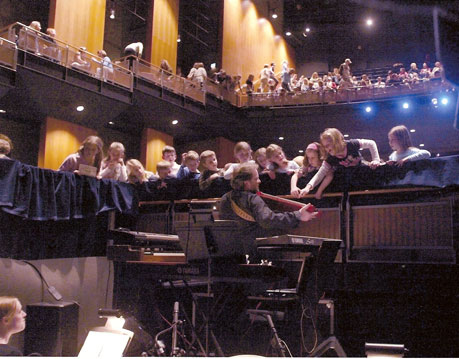
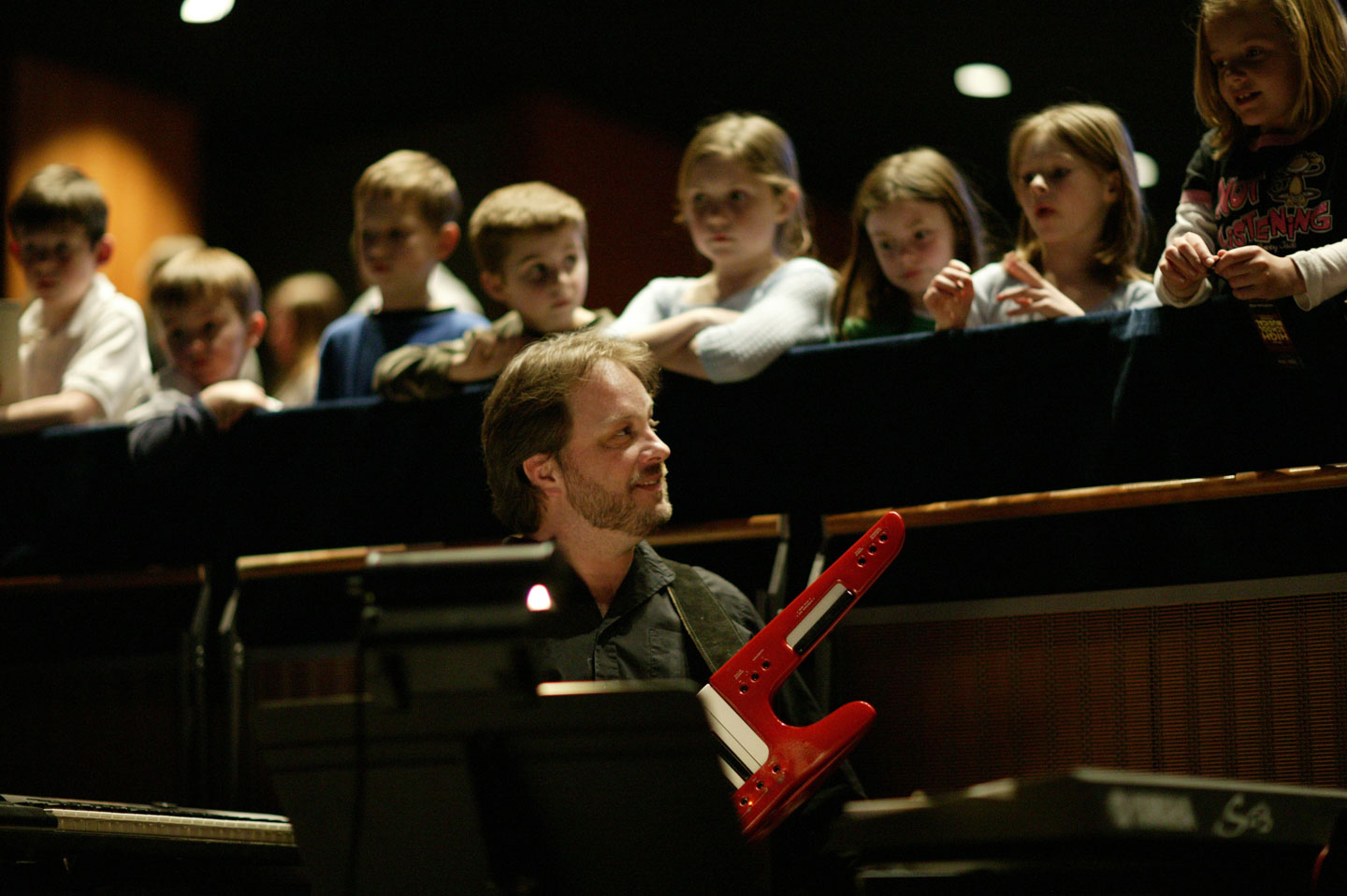
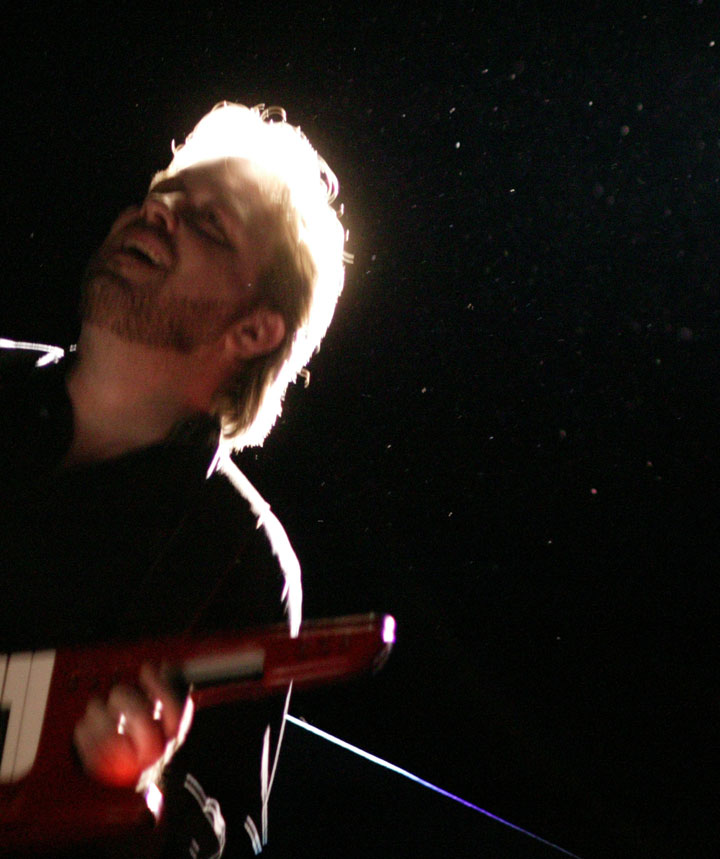
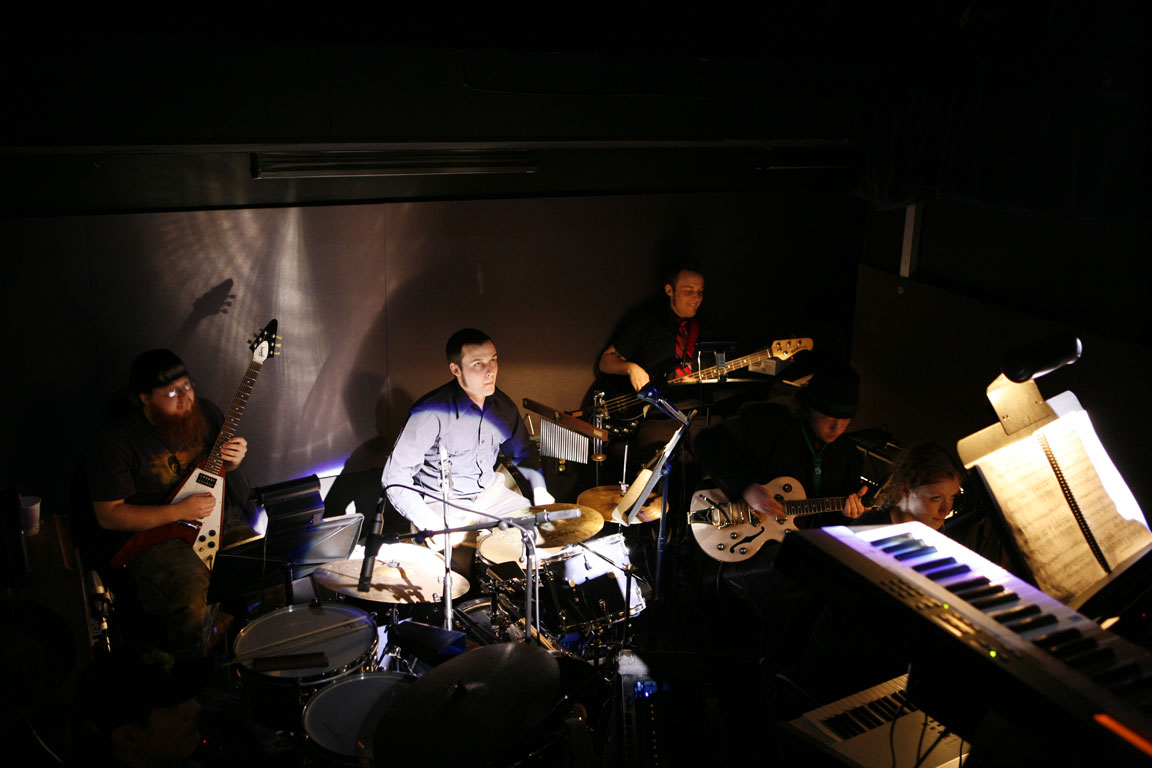
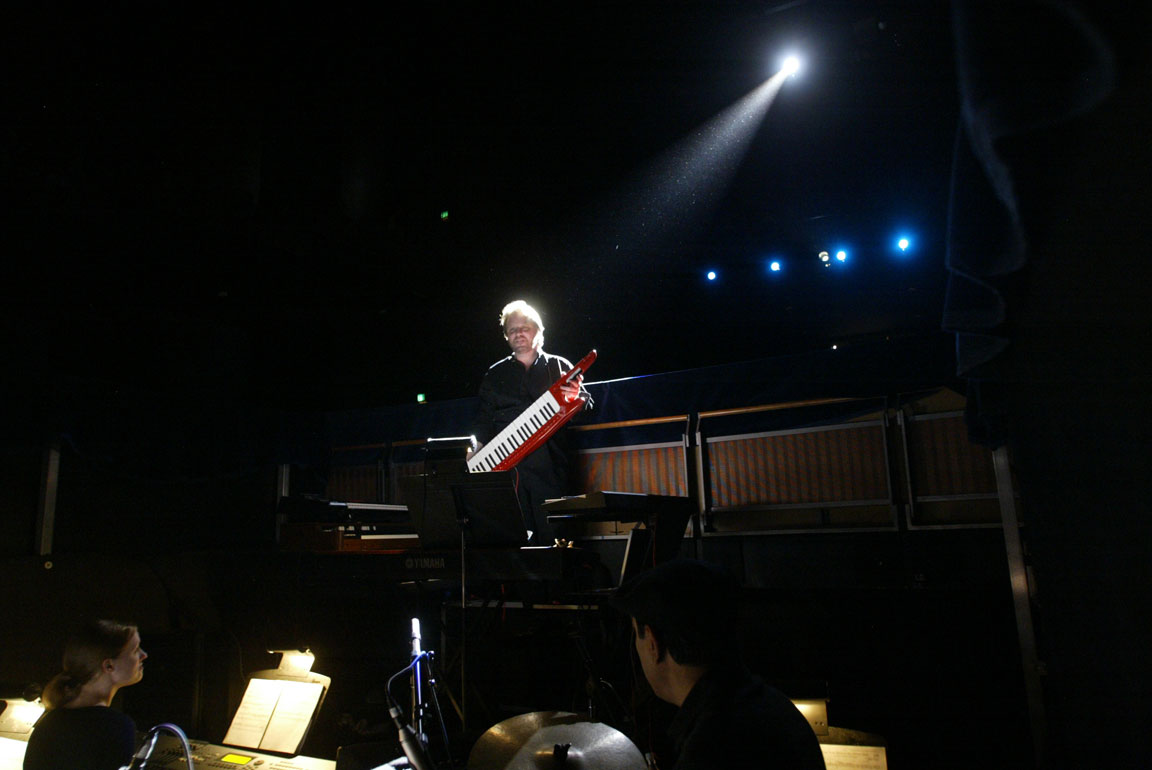
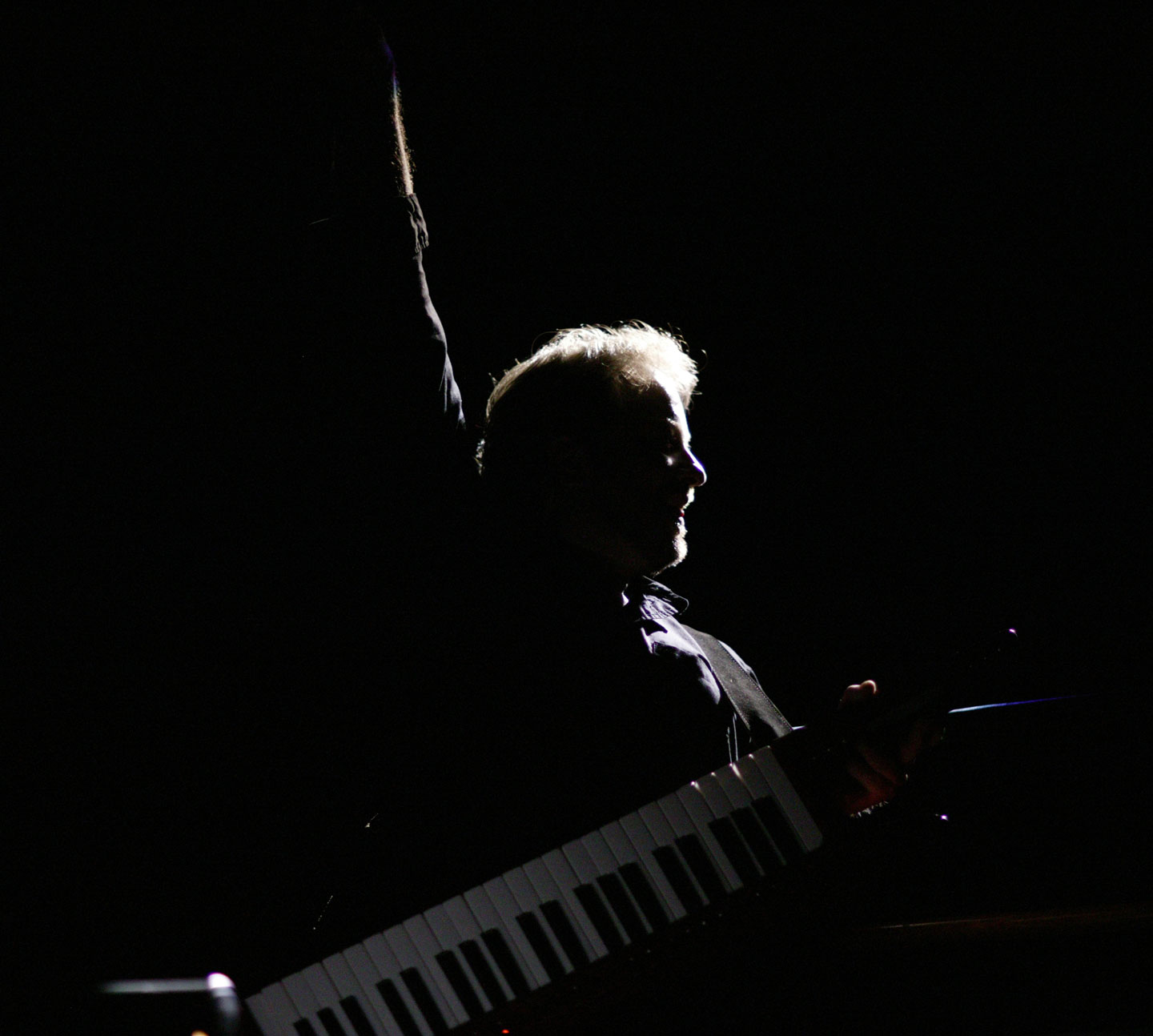
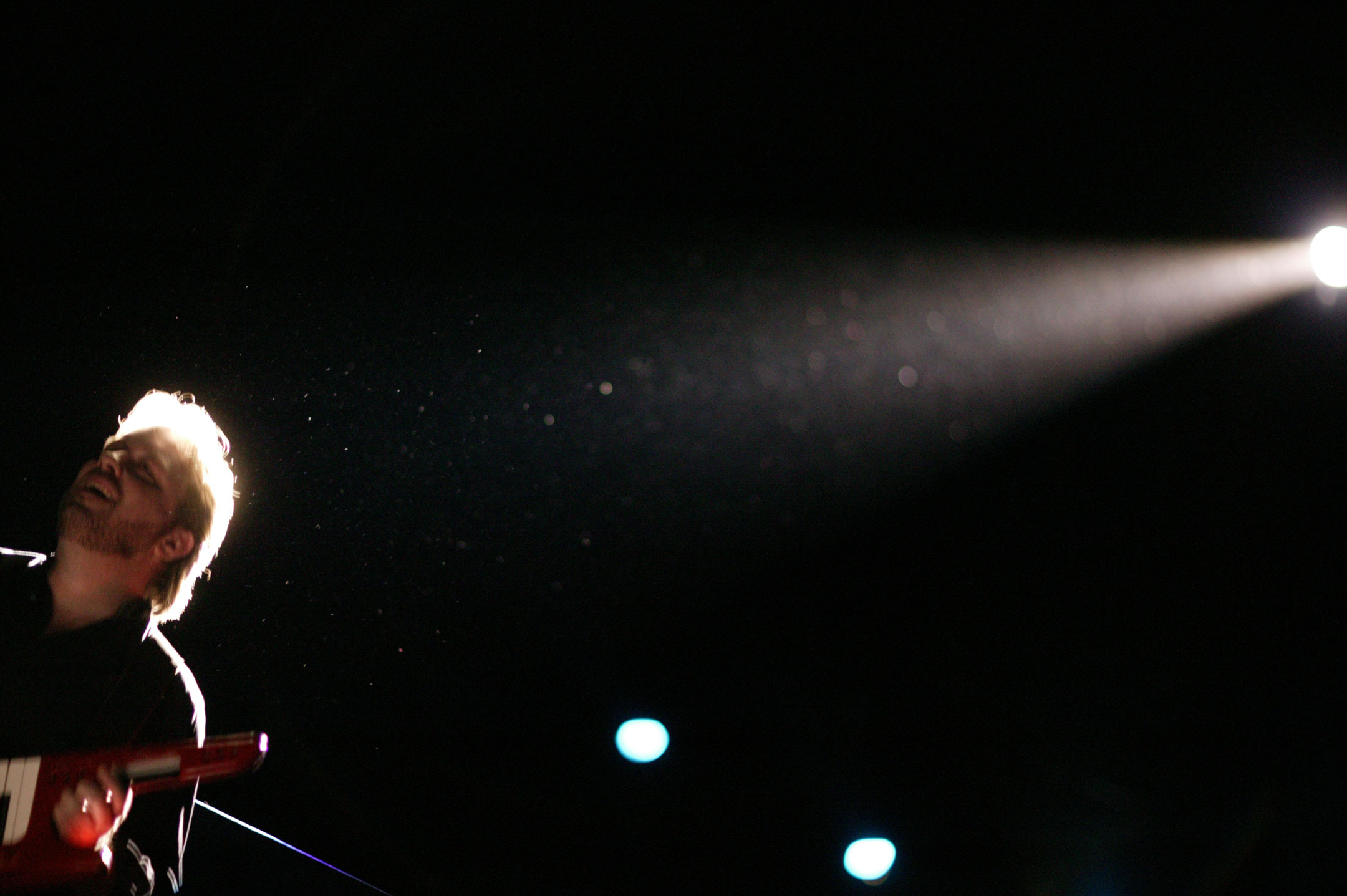
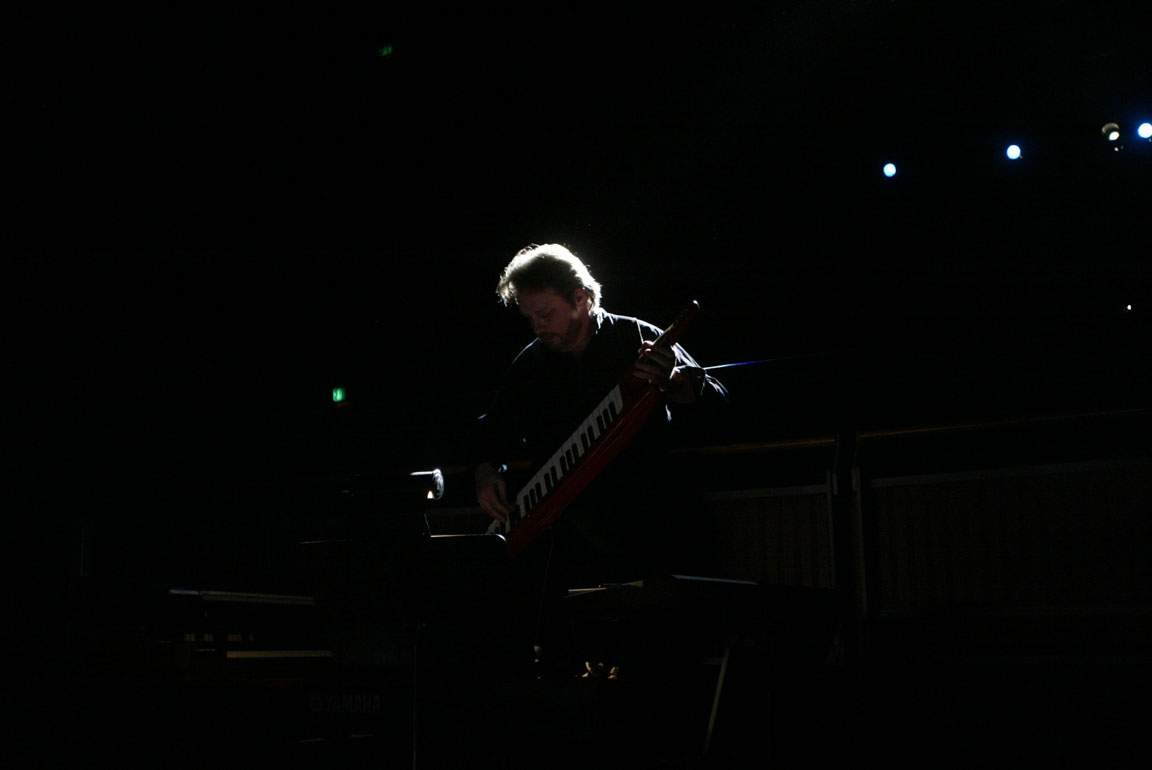
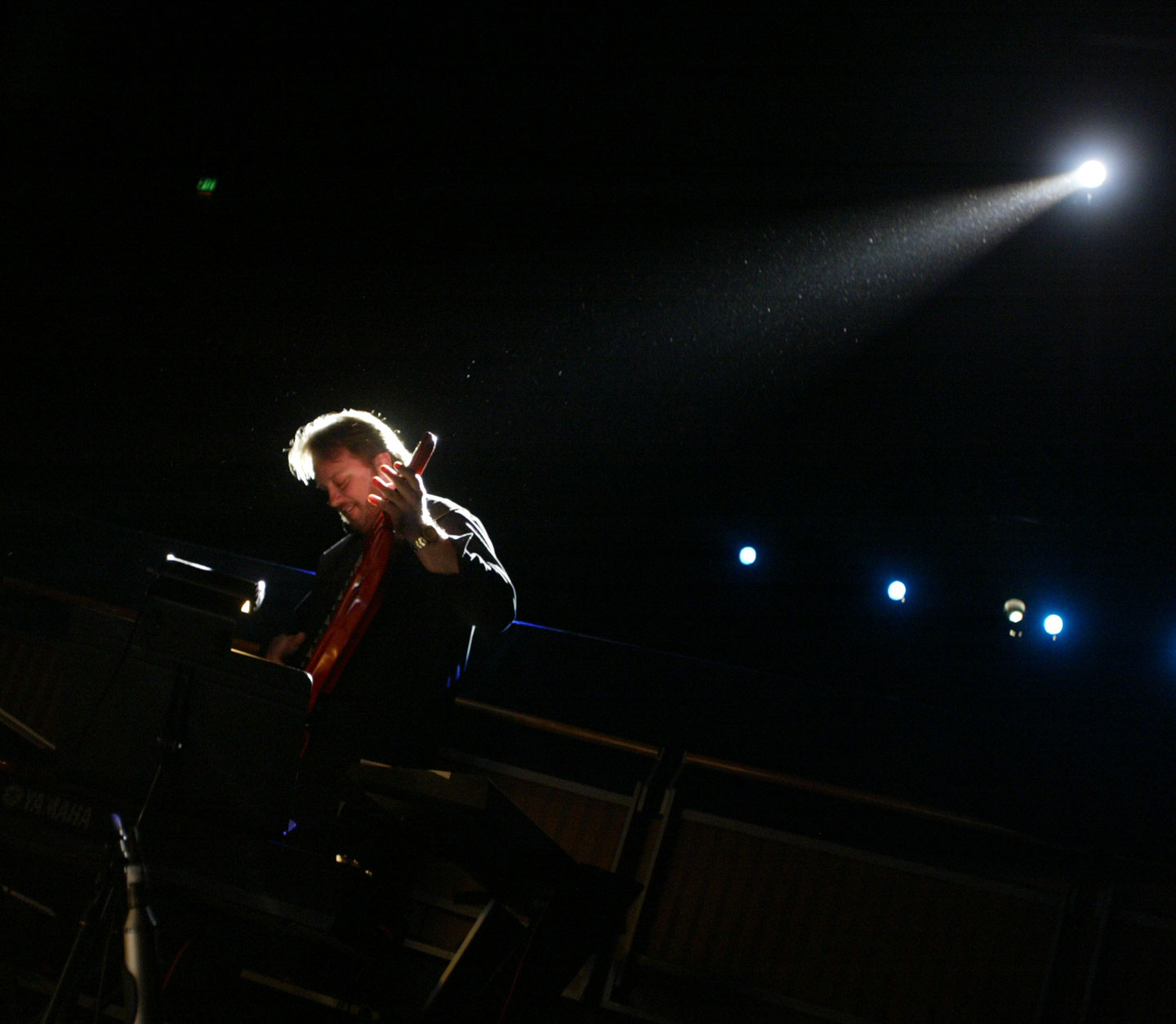
    Thanks to Gary Brown for these photos from our half time show for Disney’s High School Musical. I ham it up by playing a Roland Keytar through a JP8000 synth. The best part is at intermission when the kids come down to the pit to see all the musicians. On some shows I’ve let the kids each take turns playing my Keytar. They start by asking “What’s that?” and I say “It’s a keytar!” – then they say “What’s a keytar?” and I say “It’s a keyboard that wants to be a guitar!” – and the great thing about kids is: That’s a perfect reasonable explanation to them and they accept that. I’m sure it makes it more fun for them to watch the half time show after they’ve seen the keytar up close and played it themselves.

    Audiences have been really fantastic for this run. They are very enthusiastic to jam with the band by clapping and singing along to our jams. Each show’s jam is a little bit different – and I know each night how much the crowd enjoyed it by their lion-like screams and yells when we’re done. Life is good.

    The keytar I use is the Roland AX-1 – I used this for a couple shows when I toured with Freddy Fender but he didn’t care for it much – “Dude, why do you have to play so many notes?” – I don’t think he ever heard of Keith Emerson.

    It was really fun to dust off my keytar for this show. Disneys High School Musical is very “bubble-gummy” – and the keytar came to mind as the perfect complement to the show. Opening night I picked it up out of storage and we worked up a jam with the band.

    I predict the keytar will be the new secret weapon of the Vikings when they regroup and once again being their world domination.

    HISTORY OF THE KEYTAR

    A keytar is a keyboard or synthesizer worn around the neck and shoulders, similar to a guitar. The word “keytar” is a portmanteau of “keyboard” and “guitar”. Keytars allow players a greater range of movement, compared to conventional keyboards, which are placed on stands.

    Originally the creation of guitarist Steve Masakowski, the keytar was commercially introduced in 1978 as the Moog Liberation. The first Liberation owner (#1001) was Spyro Gyra keyboardist Tom Schuman (with numbers 1002, 1003, and 1004 owned by the band Devo).

    Perhaps one of the earliest printed use of the term “Keytar” was circa 1980 in an interview of Jeffrey Abbott (owner of Moog Liberation #1005) by Tom Lounges of Illianabeat magazine (now Midwest BEAT Magazine)

    The keytar was made popular in the 1980s by hair bands, as well as synthpop and New Wave groups. Changing trends in music diminished the keytar’s popularity shortly thereafter. The keytar has enjoyed new visibility due in part to software innovations from companies like Musiclab (RealGuitar), UltimateSoundBank (PlugSound) and the Williams (Keytar V-1).

    THE ROLAND AX-1

    The Roland AX-1 is a keytar (a shoulder-held clavier keyboard worn like a guitar) that does not produce its own sounds but controls other devices (such as keyboards, sound modules, and samplers) via MIDI.

    Henrik Klingenberg of metal band Sonata Arctica played an AX-1 before upgrading to a Roland AX-7.

    More recently, Jake Hallman, pianist for Eric Lee Beddingfield and County Line was seen playing an AX-1 at several live shows, a rarity in country/Southern rock music.French Maestro Jean-Michel Jarre has used the AX-1 Both a Black(with customised lower Octave having reversed colour keys)and also the Red Version during his Europe in concert tour back in 1993

    Imogen Heap formerly of British pop duo Frou Frou sported an AX-1 while touring with Frou Frou and on her solo tours.

    ALTERNATE NAMES FOR A KEYTAR

    * keyboard guitar
    * Synth-Axe
    * remote keyboard
    * portable keyboard
    * belly-synth
    * synth guitar (not to be confused with MIDI Guitar)
    * master keyboard (as most were used as MIDI controllers)
    * electroponce
    * Schmidtkeytar
    * Kaytar
    * Piano guitar (in french Canada)

    conrad-with-kids.jpg

    conrad-keytar7-use.jpg

    conrad-keytar8.jpg

    pit6.jpg

    Peter Bridgman – Bass Guitar

    peter-bridgman.jpg

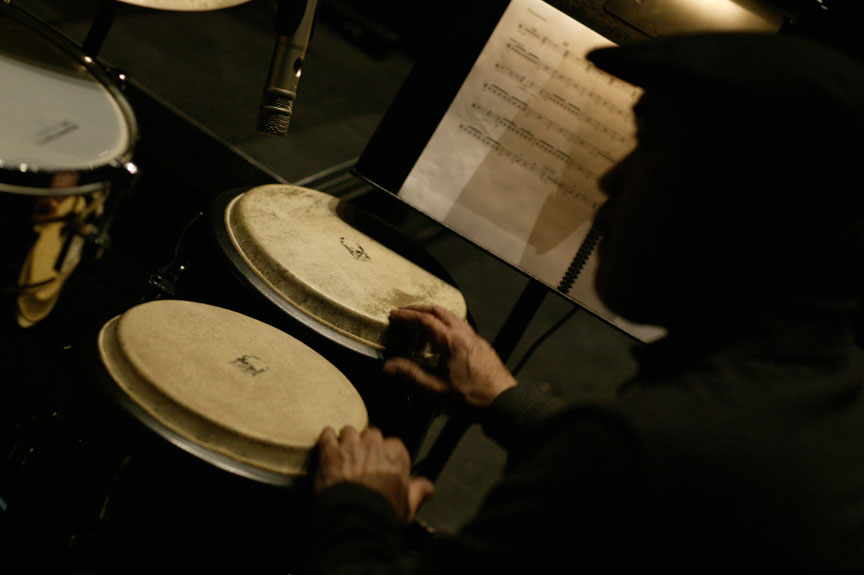
    Oscar De La Rosa – Percussion

    oscar-de-la-rosa8.jpg

    Luke Hansen – Guitar

    luke-hansen.jpg

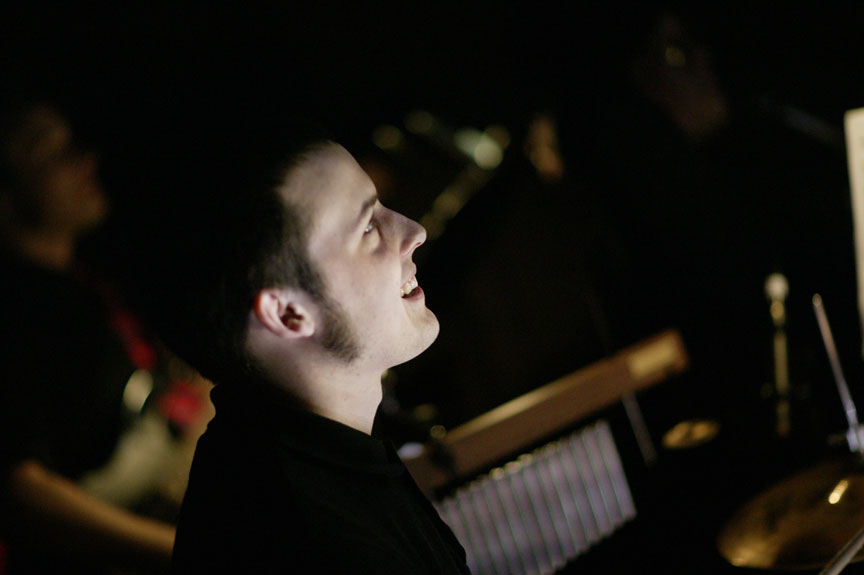
    David Bridgman – Drums

    david-bridgman8.jpg

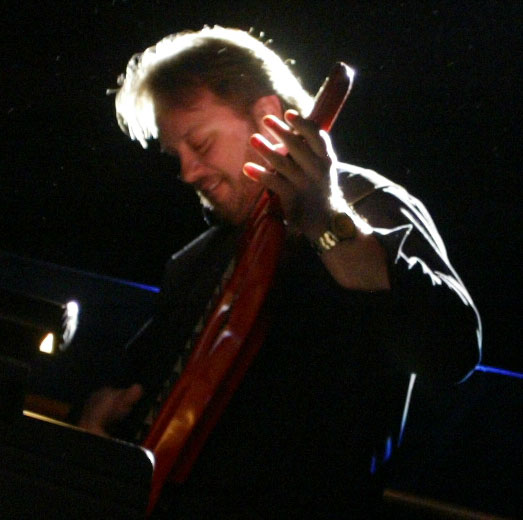
    More pics of Conrad with his Keytar

    conrad-pit.jpg

    conrad-keytar6.jpg

    conrad-keytar5.jpg

    conrad-keytar4.jpg

    conrad-keytar3.jpg

    conrad-keytar2.jpg

    conrad-keytar.jpg

    conrad-avatar-keytar2.jpg

    avatar-keytar-askland-frm.jpg

    Brianne Weaver – Keyboards

    brianne-weaver8.jpg

    conrad-wpress-pic.jpg

    avatar-conrad-keytar25.jpg

    avatar24.jpg

    Con Anima Vocal Group – St. Petersburg, Russia

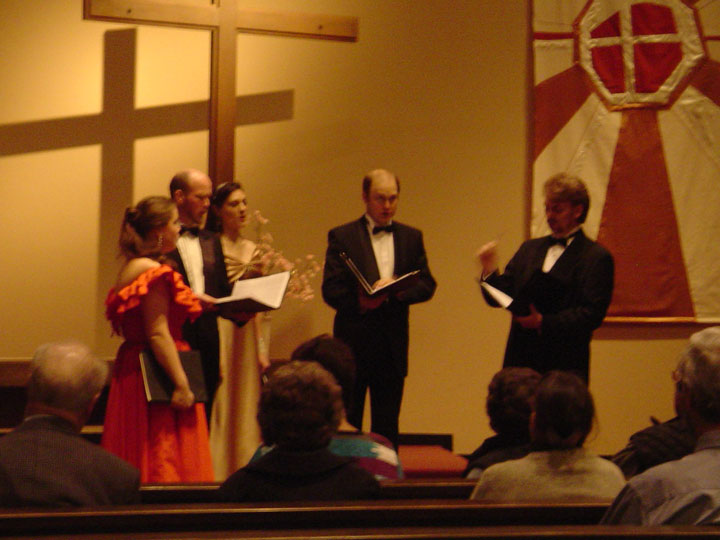
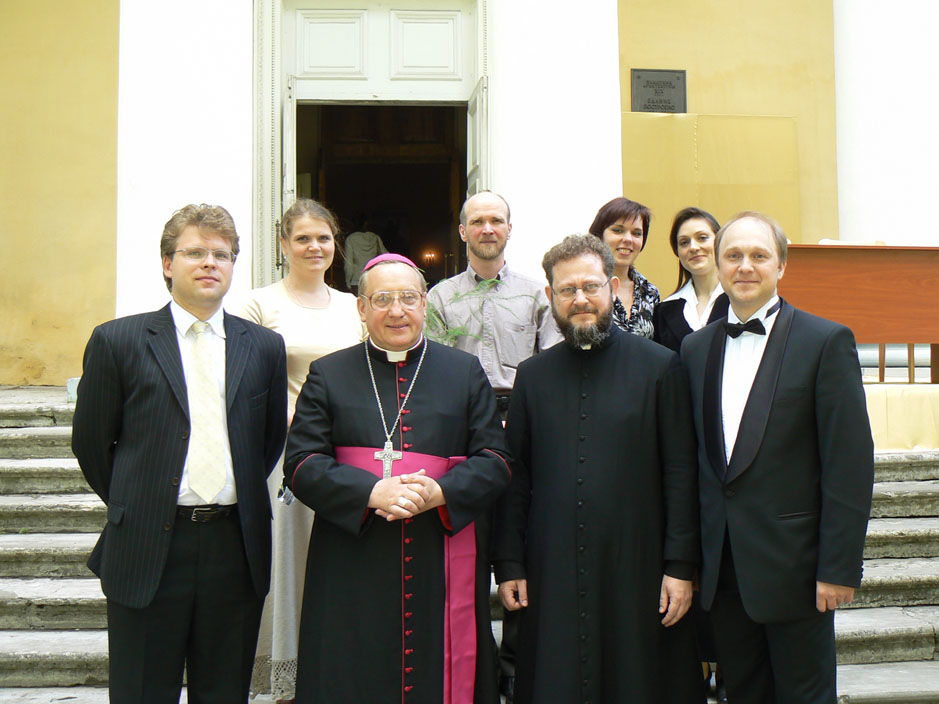
    con-anima5.jpgCon Anima is a small ensemble of operatic vocalists from St. Petersburg, Russia. Small in number, but by no means small in sound or passion. They performed recently at my church, Mount Vernon Presbyterian Church. I could not find reviews of them online so I wanted to let you know what they are like as you consider going to one of their concerts or having them perform at your church. (Short read: They are fantastic!)

    I knew that they were from St. Petersburg, that they had all graduated from the St. Petersburg Conservatory and that they were Russian Orthodox. My guess was that this was going to be very heavy, intense music – very dark and compelling to Western US ears. And it was exactly that. Con Anima has a sound that takes you on a ride through the centuries, a timeless sound.

    bass.jpg

    Visit their website at Con-Anima.spb.ru and you listen to a Con Anima Vocal Sample. Their sound is even more compelling when heard live. This is a group that I don’t think any recording will ever do it justice – It’s a visual and auditory combination that will lift your mind to new heights and inspire the depths of your sould.

    con-anima3.jpg

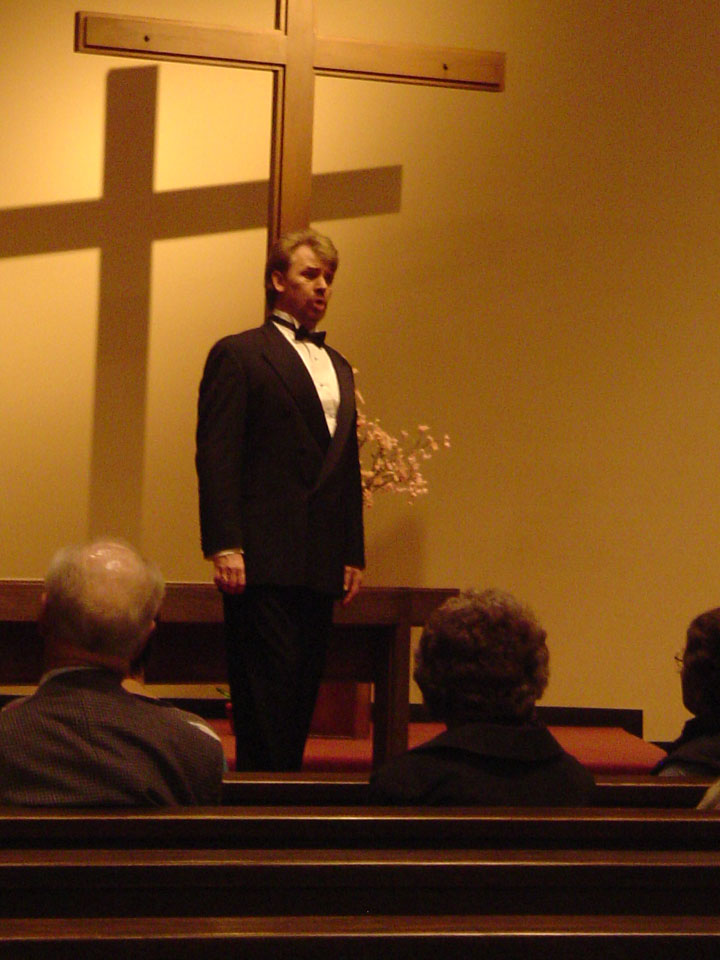
    For our performance we only used a mic for song introductions – no sound reinforcement is really needed for this group if you have a good acoustic environment. The bass vocalist alone has more vocal power than most entire church choirs. They are accustomed to filling opera stages with sound and when you get five of them toghther, well, It’s Big!

    ca-male-vox.jpg

    They gave a one hour concert with a combination of Russian sacred favorites, and also a mix of Russian “gospel” and classical music. The first half was a capella and the second half a refreshing mix of piano accompaniament, solos and duets.

    Con Anima does well at presenting a faith-based concert that would be equally comfortable for any denomination to experience. The power of their delivery speaks for itself with obvious dedication to the spiritual drive behind their music.

    ca-fem-vox.jpg

    If you like early music, chamber music, Russian music or music with conviction – you will love Con Anima. In all honesty, unless you were born under a rock you will absolutely love Con Anima.

    Are Lyrics and Melody Equal Partners?

    DEPARTMENT OF PSYCHOLOGY, AMERICAN UNIVERSITY, WASHINGTON, DC

    Abstract by S. Omar Ali and Zehra F. Peynircioglu

    We explored the role of lyrics and melodies in conveying emotions in songs. Participants rated the intensity of four types of emotions in instrumental music or the same music paired with lyrics. Melodies and lyrics conveyed the same intended emotion in Experiments 1 and 3 but were mismatched in Experiments 2 and 4. The major findings in Experiments 1 and 2 were that lyrics detracted from the emotion in happy and calm music (positive emotions), but enhanced the emotion in sad and angry music (negative emotions). In all cases, melodies of songs were more dominant than the lyrics in eliciting emotions. In addition, in Experiments 3 and 4, the emotion in the songs appeared to transfer, simply by association, to pictures of common objects arbitrarily paired with the songs.

    “In all cases, melodies of songs were more dominant than the lyrics in eliciting emotions.”

    Would you rather hear weak lyrics with a strong melody or strong lyrics with a weak melody? Or is it all about context and dependent on the presentation?

    This test was probably too small to extract any solid information, but the line about melodies being more dominant than lyrics jumped out at me. Surely in styles like Country music it’s true that lyrics are king. It’s a storytelling genre. And there are many contemporary styles where it’s very fashionable to have the same I-V-vi-IV progression droning over new lyrics. It works, and it’s used in most styles of music including contemporary worship.

    But can you remember when you first heard your favorite melody? The power it had, it held you in it’s grasp and charmed you. I know a very fine orchestra conductor, Roupen Shakarian, who has said the draw of the melodies in Bach’s Fugue in G minor was what drew him into a music profession. I had the same experience with the same song, ironically (though I had never thought about it until I heard that from Roupen, so maybe I’m making it up.) Point is, the power of a melody can change a life.

    Can we say the same about lyrics? My experience is there are those that listen primarily to lyrics and those that focus on melodies and music. I am one that listens to music. Most of my favorite songs I could not tell you more than a couple of the lyrics. Often, I’m amazed to find out later that the lyrics of a song I like are actually very good. Maybe I miss out on the experience as a whole by focusing just on the music. But it’s not something I control, it’s just the way I’m wired.

    Do you listen to lyrics or music, or both in tandem? And what was the song that changed you or spoke to the depths of your soul?

    What Does Classically Trained Mean?

    “Little Johnny is classically trained” – translation is: “Little Johnny can read music.” Or this one, “My Aunt Thelma was a concert pianist” – translation is “My Aunt Thelma can play Chopin and gave a concert once which I wasn’t actually at.”

    “Classically trained” and “Concert pianist” are two terms I hear quite a bit, and I wonder what they really mean. To me, the phrase “classically trained” should mean that you did a lengthy apprenticeship with a full time performer. And the phrase “concert pianist” should mean you made your sole living for several years giving concerts of classical music.

    More important than being classically trained is if you can SOUND like you were classically trained. Not including vocals, it seems to me that classical training is about understanding the theory, execution, nuance and historical style of what you are playing.

    For instance, if I have a piano student studying a piece by Bach; the first step is for us to uncover how Bach would have performed the piece in his time. We take great care to do research on tempos and embellishments. Thanks to the internet we can usually get some gratis audio samples so we can also hear how a top pro would approach the piece. Our first approach is replication, to be a historical jukebox and copy what has been.

    Then we throw that all out the window and let imagination dictate all the different possibilities the student can create to alter the piece. That is the magic of personal expression and the “road less traveled” to finding your true personal voice of expression.

    In my own studies this phrase was instilled in me: “You must learn the rules before you can break them.” I add to that, telling students: “You must learn the rules before you can break them. But once you have learned them, you have earned the artistic license to take any direction you like.” To me this is the perfect synthesis of dedicated research that honors music history and intention, while giving the full reigns of creativity to the performer.

    “Classical music” is a diluted term. It actually refers to a fairly short segment of music history, with specifically Beethoven as it’s champion. Mozart was not of the Classical music era, nor was Bach, or Stravinsky, or Gershwin, or Buxtehude…. We have enough time in modern music history behind us that to play “Classical music” specifically from that era is actually limiting. There are many more styles that are just as appropriate for sophisticated expression of the human condition. (My favorite, as all my friends know, is Baroque music, specifically Bach.)

    I hear an insincerity in the term “Classically trained”; a detachment from anything that is really relevant. The same feeling I get when I hear “Are you religious?”. Show us how “classically trained” you are by the level of your performance, and show us how “religious” you are by how you live your life. Move us with your notes and then we may want to know how you do it, inspire us with the living of your life and we may want to know how you got to be that way. The proof is in the pudding.

    There is no real soul searching drive to creating music if you cannot make the listener dream louder, laugh, cry, question themselves, feel sure about themselves……SOMETHING beyond the pedestrian idleness like sitting in front of a t.v.

    Learn all you can, express each note as if it were your last, research the style and let your creativity take you to places no one has been before. And when they ask you if you’re Classically trained, you can say: “I don’t know about that, but I play it damn good.”