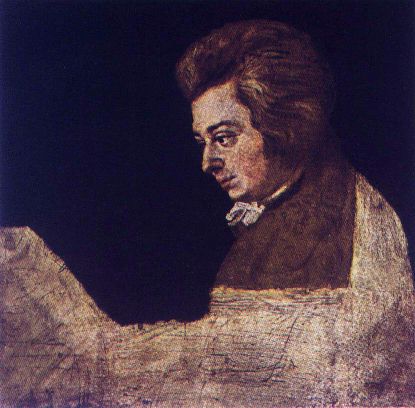
Ave Verum Corpus – W.A. Mozart

mozart_1.jpgAve Verum Corpus by W.A. Mozart – MP3 Sample, Free Sheet Music Download and History. Motet in D, “Ave verum Corpus” (K. 618) – Composed in June 1791 by W.A. Mozart. He would die on December 5, 1791.

1 – Sheet Music Download for Mozart’s AVE VERUM CORPUS

2 – MP3 Audio File of AVE VERUM CORPUS

3 – MP3 of William Byrd’s AVE VERUM CORPUS

While working on this post I have listened to Mozart’s Ave Verum Corpus about a dozen times. I have heard this piece hundreds of times in my life, and each time it becomes a little more beautiful to me. It is my absolute most favorite piece ever written. If I could only listen to one musical work for the rest of my life, this would be it (and I would have few complaints about that!).

httpv://www.youtube.com/watch?v=6TfAyX8l5-g
Enjoy the free sheet music download of Ave Verum Corpus. It also includes the middle two bar interlude which to my ears is correct (some editions only have a bass continuo line).

I sang this piece as a boy soprano with the Northwest Boychoir in Seattle, WA. This Sunday I am leading our church choir in Ave Verum Corpus for our service. At our rehearsal tonight (somewhere in the Bible it must be written that church choir rehearsals have to be on Wednesday nights!) the choir was so absolutely beautiful in their final run through I was nearly brought to tears. I would not let them sing anything after that – why? There is nowhere to go after hearing Ave Verum Corpus sung well. It is THAT powerful.

At a glance I can see the theory of the piece easy enough – but when coupled with a reverence for the text; I know of no piece more powerful than this. To say “his side was pierced and out flowed blood and water” in one line, and a few paces later to say “to give us a foretaste of death”, or more properly “to give us an examination of the death experience” – AND THEN to know that WA Mozart wrote this piece within six months of his own death. Let this settle on you for a bit.

When all things are stripped away and we are at our core, we have the beauty of our relationships and the base denial and unbelief of our own eventual death. Which of us can truly accept and admit our own pending death? Not in passing, but to absorb that thought. I actually think it is beyond the scope of our imagination. But we have a composer like WA Mozart who can create a piece so powerful and solemn that we are humbled to our knees to accept the fact – and perhaps to bend our thoughts to the sublime mystery of Christ’s crucifixion.

Working with our choir has given me a rebirthed passion for this piece. In rehearsal we are able to think about the slow passing of each line of text, and how we want to express each syllable, word and phrase. It is how I think a sculpture must feel – slowly chipping away til the art takes form.

And as our church choir works on each minute detail to make this piece our best, as countless choirs have also done on this piece for two centuries; I start to smile as I realize this is our worship, the musician’s time to worship, the way we relate to the mystery of the Trinity and our mortal coil – our worship takes place between the notes as we practice and work. It is delicate as a flower.

HISTORY OF AVE VERUM CORPUS
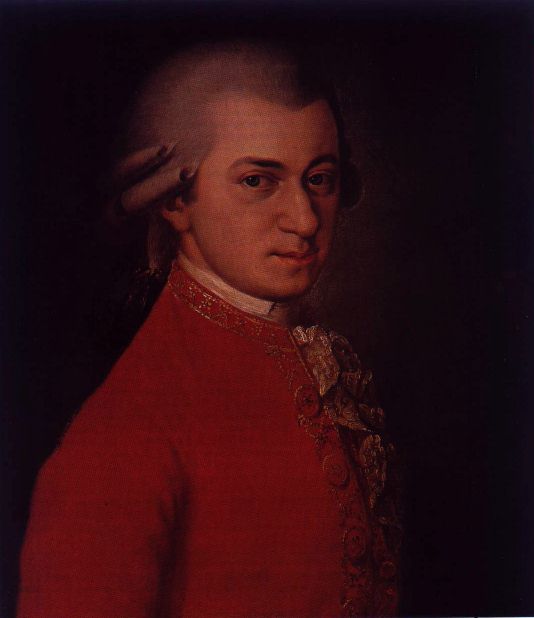
mozart_2.jpgAve verum corpus is a short Eucharistic hymn dating from the 14th century and attributed to Pope Innocent VI (d. 1362), which has been set to music by various composers. During the Middle Ages it was sung at the elevation of the host during the consecration. It was also used frequently during Benediction of the Blessed Sacrament.

The hymn’s title means “Hail, true body”, and is based on a poem deriving from a 14th-century manuscript from the Abbey of Reichenau, Lake Constance. The poem is a meditation on the Catholic belief in Jesus’s Real Presence in the sacrament of the Eucharist, and ties it to Catholic ideas on the redemptive meaning of suffering in the life of all believers.

AVE VERUM CORPUS by W.A. MOZART
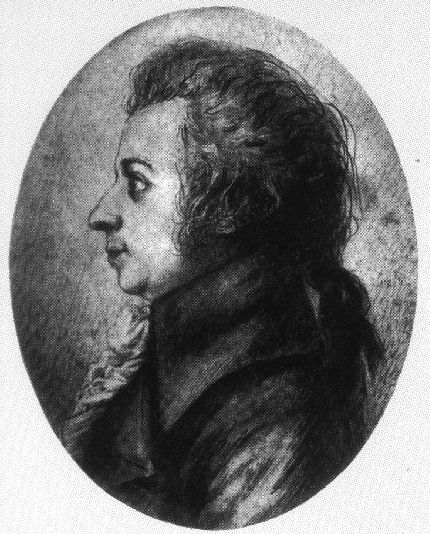
mozart_3.jpgIn April of 1791, Leopold Hofmann, who was Kapellmeister at St. Stephen’s Cathedral in Vienna, fell gravely ill. Mozart, who had never been an avid composer of sacred music, nonetheless saw an opportunity to enhance his income, and maneuvered to succeed Hofmann. Towards this end, he turned his attentions again to sacred music, culminating ultimately with his Requiem. (As it happens, Hofmann survived Mozart, and died in 1793.)

Mozart set the Eucharistic hymn Ave verum corpus in June 1791. This setting was dedicated to his friend, Anton Stoll, who was chorus master of the parish church in Baden, and it was first performed in Baden at the Feast of Corpus Christi.

It is possible that Mozart set this hymn, mindful of the Imperial ban on elaborate concerted music, or it is possible that he was working with the limitations of Stoll’s choir. One way or another, his setting is remarkable for its compact simplicity. There are a mere forty-six bars of music, with orchestral writing that serves to provide introduction, transition, and ending, and double the choral parts. The choral setting is simplicity itself, with the choir mostly singing the same text at the same time. This direct approach would suited a reform-minded Austria where textual clarity and brevity were all-important in church music.

Mozart’s setting is far from pedestrian or undistinguished. (It actually isn’t even complete; the text below includes the last two verses, which Mozart omitted from his setting.) There is an unusual modulation from D major to F major at the text, “whose side was pierced, whence flowed water and blood,”, and the simplicity is the sort that Artur Schnabel famously described as too simple for children and too difficult for adults (after all, simple music like this exposes any lapses of rhythm, intonation, or ensemble). And the music seems to encompass a universe of feeling in forty-six short bars.

Ave Verum Corpus – W.A. Mozart
Latin Text and English Translation
Ave / verum / Corpus, natum / de / Maria / Virgine:
Hail / true / Body / born / of / Mary / Virgin,

Vere / passum, / immolatum / in / cruce / pro / homine:
truly / suffered / was sacrificed / on / cross / for / mankind

Cujus / latus / perforatum, / unda / fluxit / et / sanguine:
Whose / side / was pierced / from where or water / flowed / and / blood

Esto / nobis / praegustatum / in / mortis / examine.
Be / for us / foretaste / in / of death / testing

PARAPHRASED ENGLISH TRANSLATION

Hail, true Body, born of the Virgin Mary,
who has truly suffered, and was sacrificed on the cross for mankind,
whose side was pierced, whence flowed water and blood,
Be for us a foretaste of heaven, during our final trial.

SINGING IN LATIN VS. ENGLISH

Latin and English are very different languages. Latin has fewer words which are often longer, due to the varied endings. Because the part that the word plays depends on its ending rather than its position in the sentence, word order is flexible. The poetry of Latin derives from the position and the rhythm of the words. For example, “Stabat mater dolorosa” and “Mater dolorosa stabat” both mean “the sorrowful mother was standing”, but the former emphases the standing because that word comes first. In English there is a greater choice of words but their order is fixed within the sentence, and the poetry derives more from the choice and rhyme of words.

Latin anthems are printed with an alternative English translation below the Latin words, with the same number of syllables and often in rhyming couplets. Unfortunately the English words cannot correspond exactly to their equivalent in Latin. When composers set Latin texts to music they emphasize crucial words or phrases, by repeating them, having suspensions, changing the harmony, or other musical devices. When sung in English, these devices often emphasize the wrong words and so the musical sense is lost. Moreover, because of trying to shoehorn the Latin into foursquare rhyming couplets, the effect in English often borders on doggerel. At St Peter’s, when the choir sings the anthem in Latin we have tended to print this English verse in the service sheet rather than the Latin text.

Church Service Music Copyright License Information

Disclaimer: Research for yourself the legal aspects of what’s posted here. This is for general church copyright license information and copyright law changes.

QUICK READ:

  • Performing music in regularly scheduled church worship services is exempt from copyright fees and licenses. Note: This does NOT include recordings or printing, only performance during regularly scheduled worship service.
  • Printing Lyrics in Service Bulletins – Get a CCLI.com account
  • BMI License – No need for worship services, regular service exempt.
  • Recording Music CD’s or Church Services – Churchca.com
  • Presbyterian Church USA Copyright Information Page
  • PERFORMING MUSIC IN CHURCH SERVICES

    Music performed in church services is exempt from copyright license and royalties. In other words, you can perform what you want during church services. This only applies to the regularly scheduled church service and does not apply to any special concerts, presentations or ticketed events.

    From PCUSA.org – For churches, the majority of questions involve copying music from hymnals or sheet music and taping services for shut-ins. The Religious Services Exemption contained in the U.S. copyright law exempts from copyright infringement performance of nondramatic literary or musical works or of dramatico-musical works of a religious nature, in the course of services at a place of worship or other religious assembly. This exemption does not extend to copying the music or to audio or video taping of the performance.

    PRINTING LYRICS OR PROJECTING LYRICS

    You need permission to print song lyrics in your bulletin or to project them on a screen. CCLI.com provides clearance for a large catalog of Christian praise music. They only provide clearance for printing lyrics in bulletings or screen projection of lyrics. They do NOT cover selling recorded copies of the church service. Current fees for congregations up to 250 attendance is under $300 per year. I use this service at my church. Their website is setup well with easy access to lyrics, audio samples and sheet music you can transpose to different keys and print online. They cover mainly contemporary worship music but also have lyrics to many traditional gospel and hymn type songs. I highly recommend CCLI for any music director performing contemporary Christian worship music in their service.

    CHURCH ONLINE PODCASTS AND CD RECORDINGS

    The Church Copyright Administration at http://www.churchca.com is a new partnership with BMI. They charge a monthly or yearly administration fee (starting at $100 per month) to administer rights for podcasts and CD recordings. They have a tiered membership plan depending on your podcast and recording activity. My understanding is the yearly fee only covers administration. From your online member panel you fill in the songs you want to record or podcast, then CCA will find out the copyright and license payment info for you and bill accordingly. This was launched in October 2006 and time will tell how successful this partnership with BMI is. Currently at BMI.com there is no classification for a church license. Their referral is to the CCA site listed above. My understanding is that CCA only covers recordings because according to copyright law there is no BMI fees needed for regular church services (regular scheduled worship services are excluded from copyright payments, ie: free to perform).

    COPYRIGHT FAIR USE ACT
    Portions of a work may be copied if used in the course of teaching or instruction. There is no set number of seconds or lines that is designated as a definitive “fair use”. It is a matter the courts would decide, not the US Copyright Office, as to whether a piece was used as a small part of a greater whole for the purpose of education. Visit the US Copyright Fair Use page. Practicial church application of this would be using a small audio sample, portion of lyrics or photo in the course of a larger educational presentation.
    RELATED COPYRIGHT ARTICLES and WEBSITES

  • BMI and CCA Partnership
  • Church Music Publishers Association
  • United States Copyright Office
  • Augsburg Fortress Copyrights and Permissions
  • Motion Picture Licensing Corporation
  • Ave Maria by JS Bach

    1760-08-wdheq-if-300.jpgI received a note saying someone was desperately trying to find history of the JS Bach “Ave Maria” and was not finding anything online.

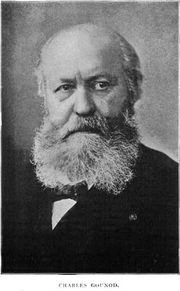
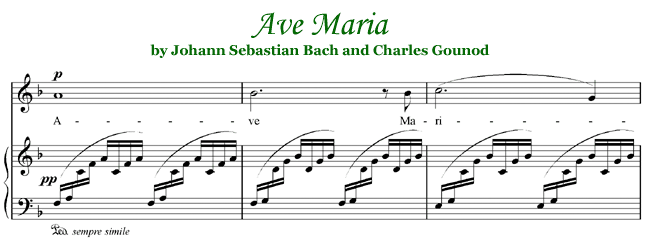
    Bach never wrote the Ave Maria. Aha! It was Gounod that took a prelude by JS Bach, and then put a melody on top with lyrics to the Ave Maria.

    JS Bach was an unwitting partner in the collaboration. Charles Gounod was a French composer who lived from 1818-1883. Read the Wikipedia Page on Charles Gounod. So google “Gounod Ave Maria” and you’ll find it readily available from most sheet music suppliers.
    Here’s a bit of the music to refresh your memory:

    bagoavma-excerpt.gif

    Photo of composer Charles Gonoud

    180px-charles_gounod.jpg

    Musical settings of the Ave Maria

    The Ave Maria has been set to music numerous times. Among the most famous settings is the version by Charles Gounod (1859), adding melody and words to Johann Sebastian Bach’s first prelude from the Well-Tempered Clavier. Antonín Dvořák’s version was composed in 1877. Another setting of Ave Maria was written by Giuseppe Verdi for his 1887 opera Otello. Russian composer César Cui, who was raised Roman Catholic, set the text at least three times: as the “Ave Maria,” op. 34, for 1 or 2 women’s voices with piano or harmonium (1886), and as part of two of his operas: Le Flibustier (premiered 1894) and Mateo Falcone (1907).

    This text was also very often set by composers in the Renaissance, including Jacques Arcadelt, Josquin Desprez, Orlando di Lasso, and Giovanni Pierluigi da Palestrina. Before the Council of Trent there were actually different versions of the text, so the earlier composers in the period sometimes set different versions than the ones shown above. Josquin, for example, himself set more than one version of the Ave Maria. Here is an example of a text set by Josquin which begins with the first six words above, but continues with a poem in rhymed couplets:

    Seussical the Musical – Orchestra and Musician Notes

    Here’s music info for those producing Seussical the Musical. You might find these tips and tricks useful if you are a musical director, conductor, musician in Seussical the Musical – or if you are working with pit orchestras for musical theater productions. I think you’ll find many items here you can apply to many different stage musicals. My first involement with Seussical was for META Performing Arts in Skagit County, WA. Our performance run was November 3-12, 2006 at McIntyre Hall, Mount Vernon, WA.

    If you’re working on music for Seussical the Musical, you already know it’s a LOT of music. The longest wait between songs is about 30 seconds. The Conductor/Piano 1 score runs over 400 pages – most musicals I’ve worked on run under 200 pages. You’ve got your work cut out for you. The music is not extremely difficult, but it has a lot of textures needed to pull off the orchestration. I think the orchestration is very good, and the charts are very clean. As conductor you will notice many errors between the conductor’s score and musician scores. Double check all your numbered repeats, fermatas and pauses – they are marked erratically from score to score. I thought I had caught most of them, but in rehearsals realized I had only caught about half the errors. There are also a small number of note errors, listen carefully to your musicians to catch them. (I should have kept better notes so I could post a listing of the errors to fix).

    Here are the major problems I identified with producing the music for Seussical, and notes on how I worked around them.

    1) How do you fill out the orchestra for a local production?
    2) Will the show work with 5 or 6 musicians?
    3) How do you find woodwind players that can each double on 4-5 instruments?
    4) How do you get a professional stringe ensemble sound – without using cheezy keyboard patches or investing in a full string section?
    5) How do you teach four part harmonies to grade school children, and have them remember the enormous amount of music in this show?
    6) If using kids, how do you get the Wickershams to sound hip – the score is written for males who’s voice has already changed.
    7) What’s more important for the Cat In The Hat – vocal ability or acting ability?
    8) What to look for vocally in the different groups of Bird Girls, Who’s, Wickershams, Jungle Animals and lead characters of Mayzie, Gertrude, Sour Kangaroo, Horton the Elephant, JoJo and the General.
    9) Assming you are using a majority of children in your cast, how can they project over the orchestra?

    Answers to questions:

    1) How do you fill out the orchestra for a local production?
    I really think you need to pony up and fill out the orchestration as much as possible. Seussical is all about imagination and the different textures you orchestra brings to the show is part of pulling off that environment. I want to hear Disney, I want to hear Fantasia – that’s not going to happen with a five piece group. It will sound ok, but not inspiring. For me, I’d rather not do it unless it’s going to be ultra cool. If you’re using five or six players, then these notes won’t help you – this is about producing Seussical in a semi-pro environment (which can also mean community theater that works really, really hard!)

    2) Will the show work with 5 or 6 musicians?
    “Work”, yes – something I’d want to work on? No. Get donors, beg borrow and plead, get that orchestra filled out. I was fortunate to get a single donor to underwrite the entire orchestra. They were given prominent mention in the program.

    3) How do you find woodwind players that can each double on 4-5 instruments?
    You can’t – assuming you do not have a budget to hire session players (which really, only session or union players are going to be able to pull off all those doubles professionally) and are not near a major city with access to players like this. So split your woodwinds into as many parts as you need to cover the three parts. I found that you can skip the following parts, which are VERY small parts once the others are covered: You can cut bassoon, Flute II, clarinet II. I had players for these parts, but the parts were so small they declined to play. If you can get people for those parts great, but you probably won’t miss them.

    Here is the instrumentation that Seussical the Musical calls for:

    Bass Electric Bass
    Cello
    Drums Kit, Woodblock, Piccolo Snare, Cowbell, Timbale, Shaker, Bell Tree, Flexitone, Mark Tree, Triangle
    Guitar 1 Acoustic Guitar and Electric Guitar
    Guitar 2 Acoutic Guitar, Banjo, Electric Guitar
    Keyboard 1 (Breathy-bell Synth, Pno+Perc.E.P., Cowbell + Calliope, Pno/Rhodes, Pop Piano, Piano, Elec. Pno, Calliope, Kazoo, Cheap-sounding Piano, metal Clav, MetalClav + Calliope, Poly Synth, Stackoid, Tack Piano, Glittery Synth, Buzzy Xylo, Mysterious E.P., Sweet E.P., XyloGlock, Voices, Theremin, Shimmery Stuff, Many Flutes, Rock Piano, Clarinet)

    .
    Keyboard 2 (Breathy Pad, Bell Synth, Harpsichord, B-3, Cricket Synth, Elephant, Orch Hit, “Doing”, Psycho Strings, Tinkly Voices, Door Slam, Kalimba, Mallet Synth, Bell/Harpsi Synth, Pedal, Log Synth, Percussive B-3, Rok B-3, Calliope, Reedy Synth, Hank-y Synth, Nose Flute, Kazoo, Birdie Whistle, Tiny Synth Voice, Horn, Pig Synth, Animal Brss, Many Tubas, Bird Honk, Bird Fart, Hard Bottle Blow, AirRaid Siren, Spooky E.P., Warm E.P., Warm Voices, Celesta, Ethereal Choir, Spooky Voices, Dark Choir, Glittery Bell Synth, D-50 Stack, 80s Pad, Breathy Bell, Toy Piano, Cathedral Organ, Squishy Bass, Small Pipe Organ, Marimba, D-50 Heaven, Mello Organ, Rock Synth, Metal Clav, Hooty Synth, Clock Sound, Icy-cold Synth, Accordian, Ravenborg, Roller Rink Organ, Kazoo Brass, Cimbalum, Funky Horn, Pizzicato Strings, Sitar, Many Trombones & Horns, Buzz Brass)

    .
    Percussion (Crotales, Chimes, Glockenspiel, Xylophone, Congas, Tympani, Djembe, Siren Whistle, Shaker, Vibraslap, Tambourine, Bell Tree, Triangle, Finger Cymbals, Piatti, Sleigh Bells, Vibraphone, Suspended Cymbal, Mark Tree, Cork Pop, Temple Blocks, Samba Whistle, Ratchet, Bongos, Cowbell, Scraper, Rainstick, Marimba)

    .
    Reed 1 Soprano Saxophone, Alto Saxophone, Clarinet, Flute, Piccolo
    Reed 2 Bass Clarinet, Clarinet, Oboe, Tenor Saxphone
    Reed 3 Baritone Saxophone, Bassoon, Clarinet, Flute
    Trombone
    Trumpet 1
    Trumpet 2
    Viola
    Violin 1
    Violin 2

    *******************

    Here’s how I covered that orchestration:

    (1) Electric Bass
    (1) Cello
    (1) Drums Kit, Woodblock, Piccolo Snare, Cowbell, Timbale, Shaker, Bell Tree, Flexitone, Mark Tree, Triangle (Your drummer will need a cowbell)

    (1) Guitar 1 Acoustic Guitar and Electric Guitar
    Guitar 2 – CUT
    (1) Keyboard 1 – Piano and Hammond B3 (covered by conductor, you could also have a “piano player” cover Key I)

    (1) Keyboard 2 – Reduced patches to: Electric Piano (one aggressive, one mellow) , B3 rock, B3 mellow, Heaven Pad, Bell Synth, Calliope, Reed Synth (oboe-ish sound), Theremin (whistle with portamento), CyberBorg (dance synth patch), Spooky Voices, Tick Tock (from drumset sound bank),

    (1) Percussion – Keyboard 3 covers these mallet percussion parts from the percussion score: Chimes, Glockenspiel, Xylophone, Tympani, Vibraphone, Marimaba)
    (1) Percussion – Live percussion player covering conga, djembe and latin percussion parts.
    (1) Reed 1 – Flute, Piccolo
    (1) Reed 2 – Bass Clarinet, Clarinet, Tenor Saxophone
    (1) Reed 3 – Baritone Saxophone, Oboe (Oboe from Reed 2 part, BariSax has priority in uptempo songs, oboe has priority in ballads)
    (1) Reed 4 – Alto Saxophone (From Reed 2 score)
    CUT WOODWINDS if not available: Soprano Saxophone, Bassoon, Clarinet II, Flute II

    (1) Trombone
    (1) Trumpet 1
    (1) Trumpet 2
    Viola – CUT if not available.
    (2) Violin 1 – Combine real violin player with Keyboard 4 (Keyboard player playing Violin I part, will need to select patches that blend with live players and Violin II part)
    (2) Violin 2 – Combine real violin player with Keyboard 5 (Keyboard player playing Violine II part)

    *******

    4) How do you get a professional stringe ensemble sound – without using cheezy keyboard patches or investing in a full string section?

    By combing quality keyboard string samples with live players. The live players will provide the attack and bend that you need in the sound, the keyboard covers the fullness of the sound. I have seen Seussical performed live with a full string section (three players per part) but it still did not have the nice full sound of symphony strings. My experience has been it is very difficult to pull that sound off within budget and the pool of players available.

    5) How do you teach four part harmonies to grade school children, and have them remember the enormous amount of music in this show?

    When we had auditions, we were very careful to check for singers that could sing harmonies, and grouped them accordingly to different character types. I have the more advanced singers cover the harmony parts, and the younger singers cover the melodies. In some sections where harmonies only come in on a couple notes, I simplified into two part harmonies and eliminated some harmonies. This was dictated by our particular casting, but I would guess this to be a similiar situation for most all-kid productions.

    To learn all the music parts we broke into groups at rehearsals, many times having four different rehearsals running simultaneously. Singers were often brought in before rehearsals to work on particular ensemble parts and to reaffirm harmonies.

    Once harmonies were in place, I would omit the lead line and play harmony parts to make them more solid for singers.

    6) If using kids, how do you get the Wickershams to sound hip – the score is written for males who’s voice has already changed.

    I changed the octaves of some parts, and had Wickershams speak some of the low parts. They are just too low for young unchanged voices. We did with attitude, and the final result was very hip.
    7) What’s more important for the Cat In The Hat – vocal ability or acting ability?

    I think acting ability is more important. Many of the Cat in the Hat vocal lines can be performed as speech-sing.

    8) What to look for vocally in the different groups of Bird Girls, Who’s, Wickershams, Jungle Animals and lead characters of Mayzie, Gertrude, Sour Kangaroo, Horton the Elephant, JoJo and the General.

    I put trained vocals in the Who section, they need a very pure sound with strong harmonies. Also worked with Who’s a lot on over-enunciation to make their parts more animated. Bird Girls – need to have 3part harmonies, we used 6 bird girls so each voice doubled. Without the harmonies, the Bird Girl part doesn’t come across, needs a “Supremes” type sound. General can also be speech-sing style. Need a strong vocalist for both Mayzie and Sour Kangaroo – I don’t really see a way around this, especially the Kangaroo. Horton’s part covers such a wide range, I think you’ll find speaking some lines instead of singing will work better for this character too (for a younger voice). I have Horton under-sing a lot, seems more in character.

    9) Assming you are using a majority of children in your cast, how can they project over the orchestra?
    Picking our sound crew was our first priority. Field mics for different vocal ensembles and dedicated wireless mics for leads and supporting characters. We also put the orchestra behind the cast so the sound crew would have more control over the final volumes – the particular hall we were in has a very live orchestra pit that is hard to control. Also, because I use several keyboardists to cover parts, it’s important to have a sound crew with a good ear so they can mix the textures properly.

    Hope that helps, if you have any questions on the show or see a way something could have been improved, please post it.

    How Long Copyright Protection Endures

    How Long Copyright Protection Endures

    Works Originally Created on or after January 1, 1978

    From the United States Copyright Office – http://www.copyright.govÂ

    A work that was created (fixed in tangible form for the first time) on or after January 1, 1978, is automatically protected from the moment of its creation and is ordinarily given a term enduring for the author’s life plus an additional 70 years after the author’s death. In the case of “a joint work prepared by two or more authors who did not work for hire,” the term lasts for 70 years after the last surviving author’s death. For works made for hire, and for anonymous and pseudonymous works (unless the author’s identity is revealed in Copyright Office records), the duration of copyright will be 95 years from publication or 120 years from creation, whichever is shorter.

    Works Originally Created before January 1, 1978, But Not Published or Registered by That Date

    These works have been automatically brought under the statute and are now given federal copyright protection. The duration of copyright in these works is generally computed in the same way as for works created on or after January 1, 1978: the life-plus-70 or 95/120-year terms apply to them as well. The law provides that in no case would the term of copyright for works in this category expire before December 31, 2002, and for works published on or before December 31, 2002, the term of copyright will not expire before December 31, 2047.

    Works Originally Created and Published or Registered before January 1, 1978

    Under the law in effect before 1978, copyright was secured either on the date a work was published with a copyright notice or on the date of registration if the work was registered in unpublished form. In either case, the copyright endured for a first term of 28 years from the date it was secured. During the last (28th) year of the first term, the copyright was eligible for renewal. The Copyright Act of 1976 extended the renewal term from 28 to 47 years for copyrights that were subsisting on January 1, 1978, or for pre-1978 copyrights restored under the Uruguay Round Agreements Act (URAA), making these works eligible for a total term of protection of 75 years. Public Law 105-298, enacted on October 27, 1998, further extended the renewal term of copyrights still subsisting on that date by an additional 20 years, providing for a renewal term of 67 years and a total term of protection of 95 years.

    Public Law 102-307, enacted on June 26, 1992, amended the 1976 Copyright Act to provide for automatic renewal of the term of copyrights secured between January 1, 1964, and December 31, 1977. Although the renewal term is automatically provided, the Copyright Office does not issue a renewal certificate for these works unless a renewal application and fee are received and registered in the Copyright Office.

    Public Law 102-307 makes renewal registration optional. Thus, filing for renewal registration is no longer required to extend the original 28-year copyright term to the full 95 years. However, some benefits accrue to renewal registrations that were made during the 28th year.

    For more detailed information on renewal of copyright and the copyright term, request Circular 15, Renewal of Copyright; Circular 15a, Duration of Copyright; and Circular 15t, Extension of Copyright Terms.

    The Beatles are God-hating Communist devils?

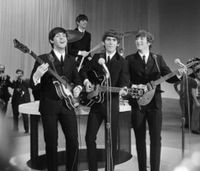
    beatles-ed-sullivan.jpgHere is info directly from the Faithful Word Baptist website. Has anyone seen the movie Footloose lately?

    The website says the Beatles are God-hating Communist devils, and it would really be best if we only sang songs in church which are 50 years old or more. That way, we know what’s tried and true.

    As I’m thinking about it, wouldn’t it be most beneficial to only stick with ideas that are 50 years old or more? Yes, I think so. This way we’ll know what to think ahead of time, why reinvent the wheel? Umm….unless you live in a time period where the wheel hasn’t been invented within the last 50 years….then you couldn’t reinvent the wheel because it wouldn’t be invented because you could only use ideas from the last 50 years…….mmmm…..now I’m getting confused here. I guess I’m thinking too much again.

    And only use the King James Version bible, that’s on the website too.

    I notice the congregation is 10 months old. Does the 50 year rule only apply to music?
    .
    A quote from the website:
    “Rock n roll music was pioneered by ungodly sinners like Little Richard, a sodomite filthy animal, and Ray Charles, a heroin addict. of rock n roll music is ungodly.”

    I am going to give this serious thought before I commit to burning my audio collection. Will some one loan me a wheelbarrow and a can of gasoline?

    So where do I stand on music and theology? Short answer: lyric content and the perception of the listener are deciding factors.

    We all fall short in our Christian faith. It would not interest me to seperate other people’s sins into categories for judgement. If a style of music is deemed inappropriate by a congregation, then that music style is not appropriate FOR THAT CONGREGATION; this does not make a statement on the inherent qualities of the music. Music does not inherently have a quality, it’s our perception of it that creates the quality. My guideline is: are the lyrics about God, for God or to God; and I would add one more: does the music spiritually feed the congregation or strenghten their walk in Christ.

    But I am always open to adjusting my opinion when I have new information to work with. I can’t imagine I would ever say that I have fully defined the nature of the arts in worship. The arts are not static, it must breathe and move – and the same I think with our Christian faith.
    *****************

    From the Faithful Word Baptist website:

    If music without drums, syncopation, or a rock beat is acceptable music, then “Yesterday”by the Beatles would be suitable for a Christian. This song has no drums, syncopation, or rock n roll beat – so what’s wrong with it? It doesn’t talk about drugs, illicit behavior, or violence – so what’s wrong with it? What’s wrong with it is the source. It was written by God-hating communist devils. Rock n roll music was pioneered by ungodly sinners like Little Richard, a sodomite filthy animal, and Ray Charles, a heroin addict. of rock n roll music is ungodly.

    Three Ways to Avoid the Wrong Music

    3) Primarily sings songs which are 50 years or older. Worldly music goes in and out of style; but the classic hymns are never out of style. The Christian Contemporary music and southern gospel music of today will not be sung 50 years from now. It will be old hat; but here we are hundreds of years later still singing “Amazing Grace”, “There is a Fountain”, “Come Thou Fount”, “The Battle Hymn of the Republic.” These are songs that have stood the test of time and which God has blessed for decades. New music is not wrong, but must be very carefully examined for the source and the quality. If we were to sing 9 out of 10 songs 50 years or older, the tenth new song should not sound out of place.

    Busta Rhymes – Background Info and Bio

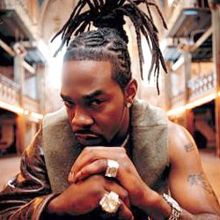
    busta_rymes.gifBusta Rhymes, aka Trevor Smith, Jr. – Visit the Official Busta Rhymes Website. Busta Rhymes is associated with Aftermath, also the current label for Bishop Lamont. I’ve worked on some of the ProTools sessions for Bishop and now have some material in the works with BR’s crew, so we’ll see what happens. In the meantime you can also visit my free hip hop battle forum at RapDogs.com – one of the net’s first public battle forums.

    I got into a little situation with a hip hop crew a while back, and it wasn’t pretty. My close friends know about it, nothing I’m going to post publicly. I said I’d never do hip hop again……but it’s just too much dang fun. And besides, how many Norwegian Protestants do you know doing hip hop? Stay tuned….

    Wikipedia Busta Rhymes Info

    busa2.jpgTrevor Tahiem Smith, Jr. (born on May 20, 1972), better known as Busta Rhymes, is an American hip hop musician and actor. Chuck D of Public Enemy gave him the name Busta Rhymes (from former NFL football player George “Buster” Rhymes) after watching him perform.

    In November of 2005, Busta Rhymes cut off his trademark dreadlocks during a photo shoot in a New York barbershop owned by producer Cory Rooney. The shop is featured on an MTV show titled The Shop. “I started growing [my hair] in December ’89. I was 17,” he said. “I signed my [record] deal and said I ain’t combing my hair no more. I don’t have to.” He says the haircut was symbolic of a change in his music and the new record deal.

    2006 has seen the release of his seventh studio album, The Big Bang. The CD became his first #1 album of his entire career. The CD sold over 209,000 copies in its first week to earn the top spot on the charts. The album also became his highest charting album in the UK, peaking at #19 there. Some of the album was leaked on the internet, and as a result several songs were left off the album and new ones added. The Big Bang featured more production by Dr. Dre than Busta’s previous releases and appearances by Raekwon and Nas. The singles that have been released from the album are, “Touch It”, “I Love My Chick”, featuring Kelis and Will.I.Am of The Black Eyed Peas, “New York Shit” featuring Swizz Beatz and “In the Ghetto”, featuring Rick James. Busta also had a stint opening for Carey’s Adventures of Mimi Tour.

    busta-safe-no-more.jpg

    busta_rymes.gif

    McIntyre Hall Sound System Overview – Mount Vernon, WA

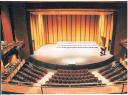
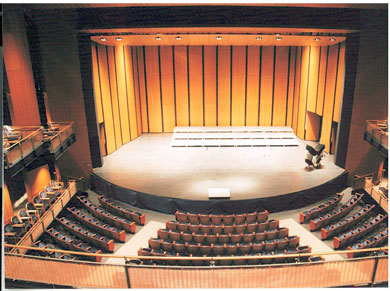
    mcintyre-hall-stage-overvie.jpgHere are notes for sound system operation at McIntyre Hall, Mount Vernon, Washington. Information correct as of October 2006. Located on the Skagit Valley College campus. McIntyre Hall, 2501 East College Way Mount Vernon, WA 98273

    McIntyre Hall has a master digital controller preinstalled in front of the main speakers. This may compress / limit end signal from mixing console. Amp room is always powered, engage the amp room with the keyed lock on the mixing room main tower.

    .
    PDF DOCUMENTS

    OWNERS MANUALS

    DIAGRAMS

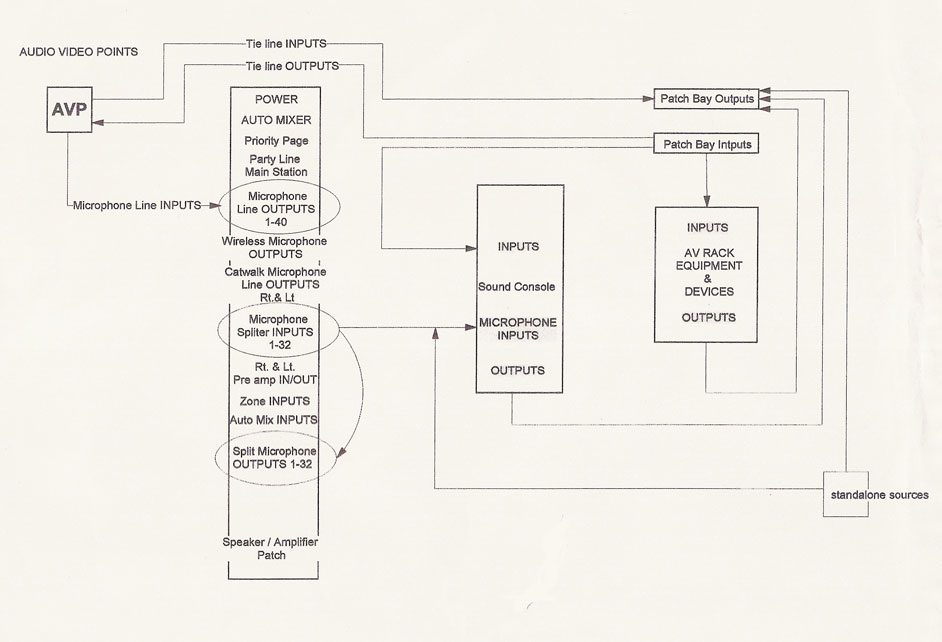
    AVP Diagram (Audio Video Points)
    Right Click – Select “View Image” for Full Size
    Printable Image
    avp-diagram.jpg

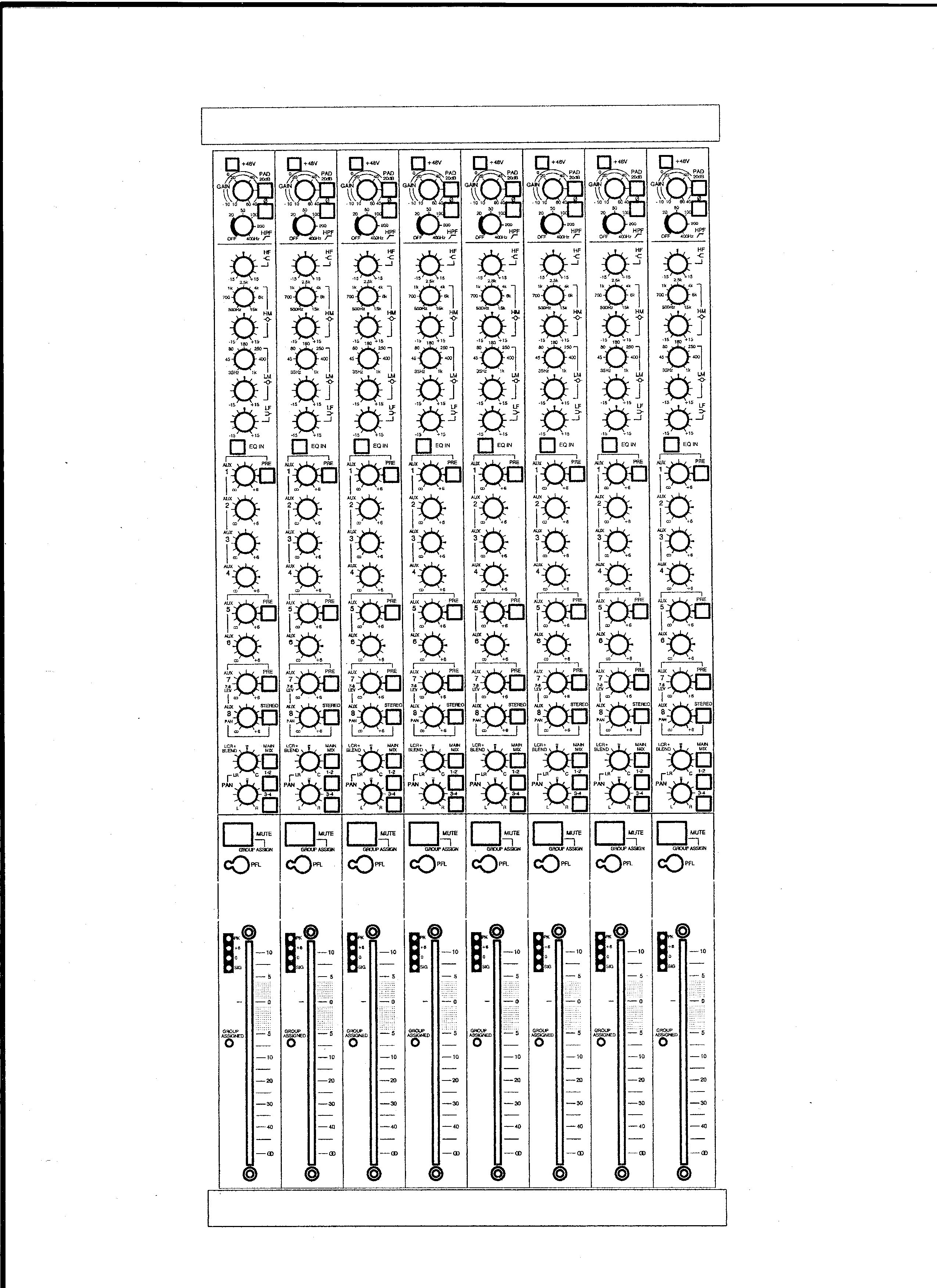
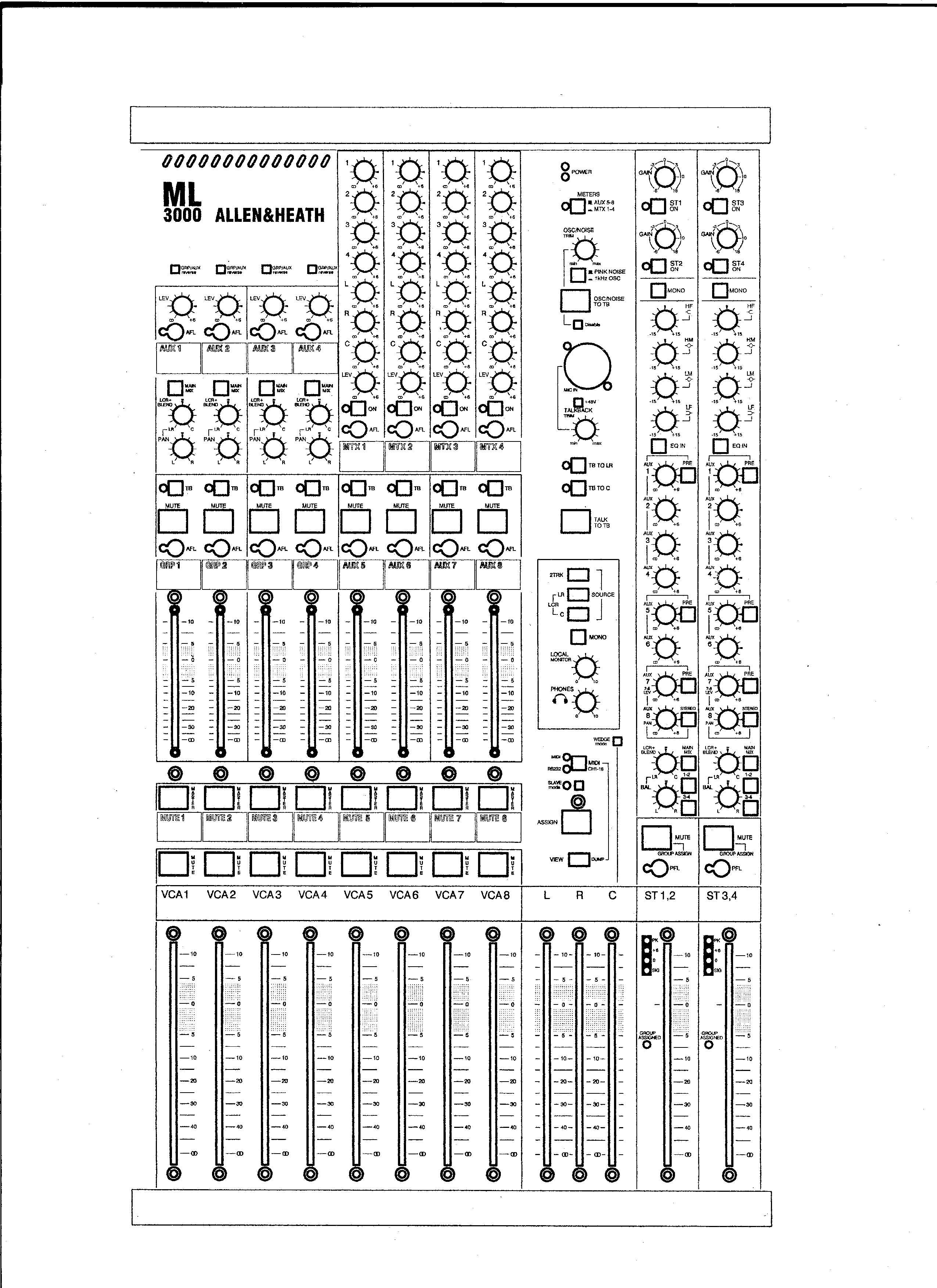
    ML-3000 Mixing Console Track Sheet
    Right Click – “View Image” for Full Size
    Printable Image

    ml3000-track-sheet.gif

    ML-3000 Mixing Console – Center Section
    Right Click – “View Image” for Full Size
    Printable Image
    ml3000-center-sheet.gif

    McIntyre Hall Full Stage View

    mcintyre-hall-stage-overvie.jpg

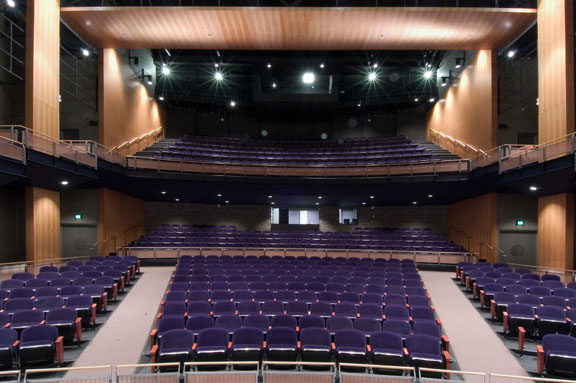
    McIntyre Hall from Stage Viewing Audience

    mcintyre-hall-from-stage.jpg

    AUDIO INVENTORY

    Mixing Console

    • Allen Heath ML3000-32

    Microphones

    • Rode NT3 – 4
    • Audix OM2 – 8
    • AKG C5900 condenser – 4
    • Audio-Technica AT4041 condenser – 2
    • Shure KSM27 condenser – 2
    • Crown PCC-160 boundary – 4
    • Shure ULX Beta 87A/WL51 lavaliere 6
    • (10 Wireless Mics total as of 10/06)

    Microphone Stands

    • AKG KM 260/1 floor stand – 6
    • AKG KM 211/1 boom – 2
    • AKG KM 211/2 boom – 2
    • AKG KM 210/6 tripod stand – 6
    • AKG KM 259 low profile tripod – 6
    • AKG KM 201 heavy duty – 4
    • AKG LGN 19 16″ gooseneck – 4

    Speakers (stage monitors)

    • Renkus-Heinz TRX121/12M

    Playback Transports

    • BurnIT CDR830 recorder 1 – 1
    • Denon DN D4000 dual CD/MP-3 – 1

    STAGE DIMENSIONS Proscenium Opening

    • Width 49′-11″
    • Height 27′-0″

    Stage Depth

    • Downstage apron edge to plaster line 4′-0″
    • Plaster line to upstage wall 36′-0″

    Stage Width

    • Stage right lock rail to stage left wall 78′-0″

    Orchestra Pit Filler

    • Front edge at center line to apron edge 12′-6″
    • Front edge at 1/4 mark to apron edge 10′-0″
    • (Front edge curves on a 34′-0″ radius

    Stage Floor

    • Masonite over (2) 3/4 plywood (1-1/2″ total) on resilient stringers and pads

    ****************************

    SPEAKER PLACEMENTS

    Catwalks

    • FX 1-2 and FX 3-4 across both catwalks

    Patchbay

    • Patchbay at mixing area is Belden Type (Type “B”) – only use balanced cables. Belden jacks look like stereo ends but the tip is smaller.

    Monitor Locations (From stage to audience perspective)
    Speakers are 8 ohm (Do no run more than 3 per amp)

    • Pit Stage Right – Channel 1-6 – Monitors 1-2
    • Pit Center – Channel 7-10 – Monitors 3-4
    • Pit Stage Left – Channel 11-16 – Monitors 5-6
    • Stage Right – Channel 17-24 – Monitors 7-8
    • Stage Left – Channel 25-32 – Monitors 9-10
    • Back Stage Right – Channel 33-36 – Monitors 11-12
    • Back Stage Left – Channel 37-40 – Monitors 13-14
    • Balcony Right – Monitors 15-16
    • Balcony Left – Monitors 17-18
    PROCEDURES

    Baffles

    • Curtains in catwalk can be drawn across sides to decrease reflection. Suggest drawing curtains for amplified shows.
    Set Up

    • House stereo mic should feed to green room and dressing rooms
    • House stereo mic should feed LISTEN wireless units for hearing impaired
    • 9v batteries on wireless mics need to be changed every night

    Paging System

    • Test paging system levels during tech week for backstage volumes
    • Line 3 is the CD recorder
    • Amp for Paging System is on bottom of rack, not in amp room.
    Power Up

    • Power up backstage rack – double check rack is in Manual Mode (Auto-mode is for 1-8 mics and bypasses mixer, usually only used for single mic performance)
    • Power up sound booth rack, mixer, wireless mics
    • LAST – Power up amps (keyed)

    Pre-Show

    • 30 minutes before show, run DVD 30 minute countdown
    • Turn Lobby TV on
    • When countdown has ended, switch to live video feed
    • Feed stereo room mic to lobby

    Intermissions

    • Play DVD countdown, start at 20 minutes (20 minute intermission)
    • 3 minutes before Act II, bring stereo house mic to lobby
    • When countdown has ended, switch to live video feed

    MIXER CHANNELS

    • Two Stereo Channels (1-2 and 3-4)
    • 7-8 For Recording
    • 31-32 Catwalk Mics

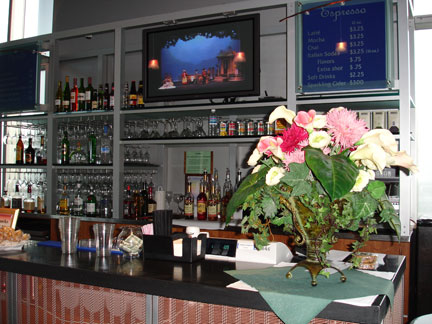
    Main Lobby – Plasma TV for Showtime Countdown and Live Video Feed

    mcintyre-refreshment-bar.jpg

    Thank you to Jerry Fortier and Stephen Craig for showing us the system! And thanks to TAG and Bruce Vilders for setting up the classes.

    The Mystery of Esteban Revealed

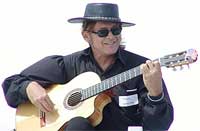
    esteban3.jpgWho is this man of mystery that has been selling acoustic guitars for years on late night infomercials? I delve deeper as investigative music reporter as a service to the public. And a little help from some members on my forums.

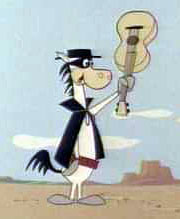
    Esteban is so muy gaucho, but in our investigative research we find some previous personalities that he seems to resemble in uncanny fashion. I present here the results of our rigorous research.

    And our favorite line from his infomercials: “And with this switch you can sound like Metallica”.

    .

    .

    hamburglar.jpg
    esteban.gif

    .

    .

    .

    .

    zuper.jpg

    esteban3.jpg

    Michael Haydn – Composer 1737-1806

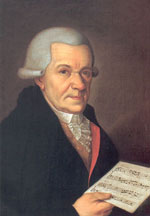
    michaelhaydn1.jpgI’ve been working with our church choir on “Sing a New Song” by Michael Haydn. It was part of the church music library and threw me a little off guard. The name was Michael Haydn, but the sound was semi-baroque – but more contemporary sounding than JS Bach. It reminded me more of the sound of Bach’s sons like CPE Bach. To my ears a kind of “baroque light” sound.

    This may seem like a small incident to you, but to me it was a big red flag. Have my ears deceived me, do I not understand Baroque music like I thought I did? It was a little too contemporary to be Baroque, and a little too Baroque to be contemporary. I had assumed Michael Haydn was a contemporary composer writing in Baroque style, but couldn’t get over how authentic some parts sounded.

    So the hunt begins – Yes, the music WAS written in the 18th century, but who in the heck is Michael Haydn. Well, I’m showing a lapse in my music knowledge when I admit that I did not know Franz Joseph Haydn had a brother who was also a composer: Michael Haydn.

    The happy ending to all this is I can rest easy my ears are still true. YES, it is music with a Baroque feel but not technically of the Baroque period (which ended in 1750), and YES it is authentic classical music – not a neo-classical re-creation. I don’t know more of his music to tell you if it’s representative of his style – but on this particular piece if I put down the composer as CPE Bach, I would be surprised if most would know the difference on hearing the piece for the first time.

    So the next interesting question is – Like Salieri may have been the great remembered composer if Mozart had not lived; Would Michael have been the great remembered composer if Franz Joseph had not lived….or did Franz Joseph’s music help preserve the longevity of brother Michael’s compositions?

    If you have the answer, I’d love for you to post it here.

    And of course the interesting comment that history has on all this. Bach’s sons music was considered “modern” in the 18th century, and JS Bach’s music sounded old fashioned to ears at that time. They called JS the “old Bach”. But to our ears today, JS Bach’s music is the one that usually moves us most, is most “authentic” – and his sons music is….well….a little more like a jingle. His sons music lacks the depth of the old master. I would guess that Michael Haydn’s music was very successful in his day, like CPE Bach – but that time has eroded his music’s power just a wee bit. I’m guessing it stands as “good” baroque music, but not masterpieces. Please correct me, just my intuitive guesses.

    Biography of Michael Haydn

    Johann Michael Haydn September 14, 1737 August 10, 1806 was an Austriancomposer, the younger brother of (Franz) Joseph Haydn.

    Michael Haydn was born in 1737 in the Austrian village of Rohrau near the Hungarian border. His father was Matthias Haydn, a wheelwright who also served as “Marktrichter”, an office akin to village mayor. Haydn’s mother, the former Maria Koller, had previously worked as a cook in the palace of Count Harrach, the presiding aristocrat of Rohrau. Neither parent could read music. However, Matthias was an enthusiastic folk musician, who during the journeyman period of his career had taught himself to play the harp.

    Michael Haydn, like his brother Joseph, was a chorister at St Stephen’s in Vienna. Shortly after leaving the choir-school, he was appointed Kapellmeister at Großwardein and later, in 1762, at Salzburg. The latter office he held for forty-three years, during which time he wrote over 360 compositions for the church and much instrumental music. He was an intimate friend of Mozart, who had a high opinion of his work, and the teacher of Carl Maria von Weber.

    Haydn’s sacred choral works are generally regarded as being his most important, including the Requiem pro defuncto Archiepiscopo Sigismundo (Requiem for the death of Archbishop Siegmund) in C minor, which has greatly influenced the Requiem by Mozart,Missa Hispanica (which he exchanged for his diploma at Stockholm), a Mass in D minor, a Lauda Sion, and a set of graduals, forty-two of which are reprinted in Anton Diabelli’s Ecciesiaslicon. He was also a prolific composer of secular music, including forty symphonies, a number of concerti and chamber music including a string quintet in C major which was once thought to have been by his brother Joseph.

    Michael Haydn was the victim of another case of posthumous mistaken identity: for many years, the piece which is now known as Michael Haydn’s Symphony No. 26 was thought to be Mozart’s Symphony No. 37 and assigned K. 444. The confusion arose because an autograph was discovered which had the opening movement of the symphony in Mozart’s hand, and the rest in somebody else’s. It is now thought that Mozart had composed a new slow opening movement for reasons unknown, but the rest of the work is known to be by Michael Haydn. The piece, which had been quite widely performed as a Mozart symphony, has been performed considerably less often since this discovery in 1907.

    Some of Haydn’s works are referred to by Perger numbers, from the thematic catalog of his works compiled by Lothar Perger in 1907.

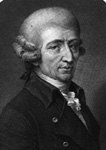
    Franz Joseph Haydn 1732-1809
    “Papa” Haydn
    fj-haydn01.jpg