Lost JS Bach Piece Performed by Kiwanis

Johann-Sebastian-Bach-New-PieceIn October of 1713, Johann Sebastian Bach worked as court organist to Duke Wilhelm Ernst of Saxony-Weimar. With money scarce and little to give but his talents, the 28-year-old composer wrote an aria for his patriarch’s birthday. The Duke put the piece in a box – where it stayed, never to be played nor heard.

Nearly 300 years later, however, a Harvard University doctoral student happened upon the aria while examining some documents saved from a fire at the Anna Amalia Library in Weimar, Germany.

The Bach Archive Foundation was alerted to the findings, and the piece was sent to them for authentication. In June of 2005, the composition was confirmed, and it was decided to release the music to the general public.

Officials from the Anna Amalia Library contacted the foundation, however, and requested they not play the aria – so the world premier could be held at the re-opening of the library. The foundation agreed, but at the re-opening, musicians performed only half of the piece.

When Lynn Sampson, singer, trumpet player and member of the Kiwanis Club of Modesto, California, heard of the aria, he promptly contacted the publishing company in Germany in an attempt to obtain a copy of the music.

“We saw a newspaper article about it,” says Lynn. “I stayed up until two in the morning to call Germany to talk to some people about the piece.”

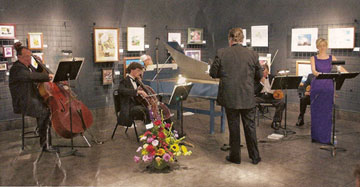
After several calls and scheduling, the publishing company agreed to send the music to the club, which in cooperation with the opera singers in Modesto, staged the world premier of the entire piece before a standing-room-only crowd September 7, 2005.

More than US $10,000 was raised to support the event. Kiwanians knocked on doors and explained what they were trying to do. A graphic designer offered to help with the programs for the event, and a printer in Modesto produced them at no cost. Modesto Junior College donated a harpsichord for the performance.

Song Placed in Movie: Alien Secrets

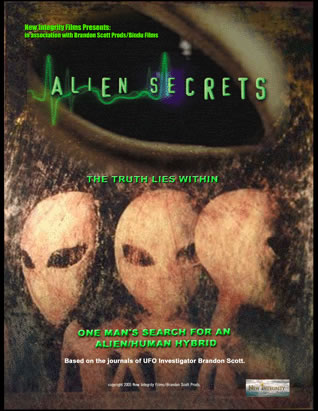
asposter1.jpgSean Clavin emailed me tonight to let me know we have a song placed in a movie. Very cool. The song is “Seven Year Sleep” written in 2000 by Gailyn Addis, Sean Clavin and Conrad Askland (that’s me). It’s an independent film called Alien Secrets. Here’s the movie website if you feel like reading about wacky crazy stuff:

ALIEN SECRETS MUSIC ARTISTS

Gailyn Addis who performs the song is an incredibly gifted songwriter, performer and all around ultra cool person. I met Gailyn Addis back in 1994 when I was musical director for Hollywood Superstars and we did a bunch of fun tours together including Japan, Las Vegas and Reno. I don’t know how many songs we wrote together, probably a couple dozen. She’s written many books and was a tech consultant for Bridgette Fonda on the movie……um……it was about Elvis. I was an keyboard player in the movie too but my scene got cut, I think Gailyn didn’t get screen credit either. Oh well, that’s showbiz. Back on topic….

.
Sean Clavin I met back around 1990 when we both worked for the same music store, Tom’s Music down in Victorville, CA. Later we played together in Roy Rogers Jr. ‘s band and also with a country cover band that played the San Bernardino and Los Angeles country circuit. He played guitar on TONS of songs with me in the studio for Road Records. Over the years he probably cut tracks for me on at least a hundred songs. He was my #1 pick as a studio guitarist because he was so easy to work with and had such a mastery of a wide range of styles. Ok, he was also one of the few people to put up with my “Conradized” studio charts. I chart real fast in the studio and the manuscripts tend to be a wee bit cryptic. Sean might word it a bit different. 🙂

Might make a good double header with Alien Autopsy.
“Seven Year Sleep�
Performed by Gailyn Addis
Written by Gailyn Addis, Conrad Askland,
Sean Clavin copyright 2000
Visit Sean Clavin and the Roy Rogers Jr. Band
Visit vocalist and songwriter Gailyn Addis

******************

ebe_Alien_Secrets_solo.jpg“Alien Secrets”
Wins EBE Award
Best Feature Film- UFO or Related Theme at
The 15th International UFO Congress
and Film Festival 2006

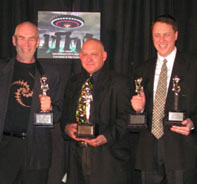
Brandon Scott receives the EBE AWARD
Best Feature Film -“Alien Secrets”

March 4th 2006 Laughlin Nevada

The EBE winner for the Best Feature Film was awarded to the film “Alien Secrets” Directed by J.J. Barmettler and Produced by Barmettler , Brandon Scott and Richard Smith.

The highlight of this week long event culminated with the The International UFO Congress Film Festival screening the best features, documentaries and short films dealing with UFO related subject matter. This festival recognizes filmmakers with the coveted EBE Award.

A melting pot of experts and panelists from all over the world convene to meld minds and share the latest discoveries in UFO and paranormal activity, at this years International UFO Congress 15th annual event held at The Flamingo Resort and Casino in Laughlin, Nevada.

The week long conference (Feb. 26-March 4, 2006) hosted presentations by renown authors, researchers, experts, journalists, scientists, and UFO investigators from all over the world.

ebe_award_winners-CR.jpgLectures and seminars attracted hundreds of researchers and enthusiasts from the United States, England, Japan, Germany, South America,South Africa, and many other countries. Some of the speakers included authors Budd Hopkins, Dr. David Jacobs and crop circle expert Colin Andrews, journalist George Knapp, Mexican journalists and UFO investigators Jaime Massaun and Santiago Yturria Garza, Film Producer and author Paul Davids, Haktan Akdogan from Turkey,Terje Toftenes from Sandvika and A.J. Gevaerd from Brazil.

Hundreds of attendees showed up to experience the film Alien Secrets.
“We are so glad this film was made,� commented Michael, one of the UFO researchers. “ This film is a perfect way for delivering this sensitive information in a entertaining way�.

“ It’s a story that has to be told,� commented a husband and wife team , both who are UFO researchers; “ So many of us go through the same experiences as the character Brandon Scott portrayed the movie,so we really identified with that.�.

“ I am glad they didn’t make fun of usâ€? shared a young woman and UFO abductee “ It was funny in many parts and yet it was serious about the messageâ€? .

Another enthusiast was eager to share this with his wife and kids. “ I can’t wait to show it to my family� he said, “ I can never sit them down to watch a documentary on UFOs, this movie is fun and so entertaining, I think this will help them get exposed to the facts about this phenomena and it’s a great story to boot.�.

After presenting the Award, Bob Brown, founder of the International UFO Congress, commented to the attendees,
�I really enjoyed the film , I got it, I think most of you out here will… It has humor so we can laugh at ourselves. Very nicely done.�

Best Feature Film- UFO or Related Themeresearchers1.jpg

ALIEN SECRETS” THEY’RE HERE AND LIVING AMONG US!! Filmmaker J J Barmettler and controversial UFO Investigator Brandon Scott have captured the UFO subculture from the inside out, working with 43 artists, 23 abductees, 30 experts and 200 eye witnesses who have all had experiences in the chilling UFO/Alien Phenomenon. Their discovery proves that there is a hidden generation of alien/human hybrids living among us. In the process of the investigation a female hybrid speaks out for the first time ever on film. This “hybrid” narrative/documentary film weaves story and fact in an epic portrayal of one man’s fight for free will and his drive to save humanity. With over twenty original songs, real UFO footage and a daring subject matter, this provocative film is sure to be a cult sensation.

Archie Drake, Seattle Opera bass-baritone, dead at 81

May 27, 2006
Skagit Valley Herald
Associated Press

archie_drake.jpgSeattle – Archie Drake, a Seattle Opera bass and baritone who also sang at other operas in the West, is dead at 81 from a heart attack following his last performance.

Drake, who came from the same English family that includes Sir Francis Drake, collapsed at the door of his apartment Saturday night after the company’s last performance of Verdi’s “Macbeth” and died Wednesday, opera officials confirmed to The Seattle Times and Seattle Post-Intelligencer.

“For me, opera is basically an exploration of the human spirit,” Drake told Seattle Opera Magazine in 2001. “It can take you further into emotions and feelings and concepts and understandings and divining than any other way.”

Known for never missing a performance, Drake appeared in more than 1,000 performances and sang 109 roles for the Seattle Opera and also performed with the Houston Grand Opera, Arizona Opera and Portland (Ore.) Opera.

******************************************

226archie_drake.JPGWhat sad news this is to the Seattle music scene. Archie Drake was one of the people I looked up to as a child. One of those people that was a role model to me of how music was supposed to be. He was extremely serious, and playful at the same time. He took time to talk with the kids he worked with, and treated them as equals.

Archie Drake performed the part of one of the kings in Amahl and the Night Visitor back in 1979. I performed the part of Amahl. A couple years before that I was in the Seattle Opera performances of Carmen, Boris Gudonov and Tosca. Archie was in Tosca with us, in fact he played the part that oversaw the boychoir in the opera. It was very fun.

Archie probably would not have remembered me. I’m just one of many lives that he touched with his passion for the arts. I had kept up with many of his performances even while I was in California. The sad part is now that I’m settled back in the Seattle area I had planned on catching one of Archie’s performances. I didn’t think that time was ticking. There’s a lesson in that for me. There’s a few other people I was going to catch up with too, so I think I’ll get right on that.

Thank you Archie. Heaven’s choir sounds a little more beautiful today…..

Martin Luther on Music

I ran across this, and it’s just too good to pass up. It is from a letter by Martin Luther of the Reformation. Parts of these can be found at http://www.thrivent.com/heritage/music/16/church.html – I consider the Thrivent Financial for Lutherans website to be a solid reference source.

The thought of the day for this is: Music is not our gift to God, but God’s gift to us. Interesting things to think about.

Here is my absolute favorite excerpt:

A person who gives this some thought and yet does not regard music as a marvelous creation of God, must be a clodhopper indeed and does not deserve to be called a human being; he should be permitted to hear nothing but the braying of asses and the grunting of hogs.

++++++++++++++++++++++++++++++++++++++++++++++++++++++++++++++

Foreword to Georg Rhau’s Collection, “Symphoniae iucundae”.

“I, Doctor Martin Luther, wish all lovers of the unshackled art of music grace and peace from God the Father and from our Lord Jesus Christ!

I truly desire that all Christians would love and regard as worthy the lovely gift of music, which is a precious, worthy, and costly treasure given to mankind by God.

The riches of music are so excellent and so precious that words fail me whenever I attempt to discuss and describe them…. In summa, next to the Word of God, the noble art of music is the greatest treasure in the world. It controls our thoughts, minds, hearts, and spirits…

Our dear fathers and prophets did not desire without reason that music be always used in the churches. Hence, we have so many songs and psalms.

This precious gift has been given to man alone that he might thereby remind himself that God has created man for the express purpose of praising and extolling God.

However, when man’s natural musical ability is whetted and polished to the extent that it becomes an art, then do we note with great surprise the great and perfect wisdom of God in music, which is, after all, His product and His gift; we marvel when we hear music in which one voice sings a simple melody, while three, four, or five other voices play and trip lustily around the voice that sings its simple melody and adorn this simple melody wonderfully with artistic musical effects, thus reminding us of a heavenly dance, where all meet in a spirit of friendliness, caress and embrace.

A person who gives this some thought and yet does not regard music as a marvelous creation of God, must be a clodhopper indeed and does not deserve to be called a human being; he should be permitted to hear nothing but the braying of asses and the grunting of hogs.”

– Martin Luther

++++++++++++++++++++++++++++++++++++++++

And one more for good measure:

I am not satisfied with him who despises music, as all fanatics do; for music is an endowment and a gift of God, not a gift of men . . . I place music next to theology and give it the highest praise.” – Martin Luther

Song Info – The Lord’s Prayer

My version of The Lord’s Prayer was originally written for Cathryn Howard and Carol Dinise for their second CD release. They are a Catholic music team and published by World Library Publications, a Catholic publishing company.

On the Dinise/Howard CD the whole song is performed first with solo female voice, then run again with full orchestration and choir. The version you hear on this page is a different mix of just the second half.

The Lord’s Prayer MP3 File

My first consideration for this piece was of course Albert Hay Malotte’s version of the Lord’s Prayer, the most famous version that most people associate with these lyrics. It was foremost in my mind not to copy any of the lines in Malotte’s, or to have any lines that could even remotely be considered “borrowed” or plagarism.

With the lyric content and the artists I was writing for, I knew it have to be reverent, but not too stiff. I intentionally kept the entire lead melody within the range of a 9th so it would be easy for other vocalists to sing down the road.

One of the elements in this piece I like best is where the choir repeats the lead melody in a sort of canon behind the lead vocal. This was a little tricky for me in some parts, kind of like a small primer for writing Bach inventions (I wouldn’t be so pompous as to say it approaches the complexity of a fugue). My favorite little moments in the piece is when the choir is echoing the lead vocal, but against different underlying chords.

This piece was composed in a traditional format – with pencil and paper at the piano. This was not a piece I could “cover up” weak writing style with production elements, nor did I want to.

Once the writing was finished, I started doing a MIDI rough draft with orchestrations. At the time I didn’t have ProTools yet, so all the tracking and arrangements were done on an 8-track 1/2 inch reel-to-reel with MIDI sync code. I had a lot of wires running to midi gear! This seems impossible to me know, but back when this was recorded I was using such a simple time code, that I could not sync up in the middle of a song. I actually had to rewind back to the beginning. I guess the good training in this is that I learned to have the parts worked out in my head before I started laying tracks.

The arrangement was laid down, a local choir was kind enough to volunteer to record the echo parts, and an opera singer I was working with at the time laid down some of the high descants you hear ala the “Star Trek” theme.

I had wanted to re-record this piece with a pop vocalist, just to see what the contrast would be with the traditional melody lines and classical style orchestration. Incidentally, my pattern for the orchestration was styled after Yanni at the Acropolis.

All the parts were laid down, but I hadn’t found my final vocalist yet. None of the studio vocalists at the time had quite the right feel for it. I just so happened I was playing with Freddy Fender in Vegas for a week at the Gold Coast casino, and had brought my recording gear with me to work during the week. I wanted these parts done right away so I went to the karaoke bar and heard an incredible vocalist doing Aaron Neville material, but this vocalist had a little more power than Neville.

I hired him to do the vocal part, which turned out to be a real fight. This version of the Lord’s Prayer had been written for a female vocal range, not male. And everything was laid down analog, I couldn’t just push a button in ProTools and transpose everything. The vocalist took the whole song UP AN OCTAVE to perform it, and I worked him very hard to get those high notes. There’s a high C at the end.

So that’s my one regret, I should have used a female vocalist on it. I would love to hear this recorded again with a real orchestra and a male/female vocalist with everything in a proper key for all. The song is in 6/8, which partly keeps it relegated to concert hall repertoire. I can’t hear it as a pop remake, etc. – and a country song it’s not. So 6/8 it stays.

I have received mixed reviews on this piece. Several people have told me directly and in no uncertain terms that they simply don’t it. Of course, I’ve also had many people say it has really moved them and they love it.

My version of the Lord’s Prayer was included on the Dinise/Howard CD, and this particular mix was included on New Faces Volume Three, a Road Records compilation CD. It was also performed at the 2004 High Desert Interfaith service with the Interfaith choir and myself at the piano. Karen Etheridge has also performed it several times, including Christmas 2004 at the Hi Desert Church of Religious Science.

Listen for yourself and let me know what you think. I believe that if it was re-recorded with a real orchestra and strong singers in a new key, it would be very well received and might even have a shot at becoming part of the regular repertoire for church’s. Of course, I’m a little biased. 🙂

I think I wrote this around 1999.

Music heads might appreciate this: In the Kurzweil PX1000 there’s that incredibly spooky patch called “Doppler Choir”. It’s one of the real standout patches of this unit. But where can you use it? It’s so bizarre. In the final few bars of this piece you’ll hear a little Doppler Choir run right before the final cadences.

The Lord’s Prayer MP3

Song Info – Honey Will You Love Me

Here’s a song I wrote that includes Freddy Fender playing on the guitar solo. Honey Will You Love Me (When There’s No Money in the Bank) is one of the few songs up to that time where I also sang the lead vocal, and one of the only tracks I don’t play on. I usually prefer to use studio vocalists as it’s always fun to see what different life they breathe into a song.

Honey Will You Love Me – MP3 File

There are some great players on this track. At the time I wrote this song I was playing with Freddy Fender of the Texas Tornados so I was lucky enough to have many of the Tornados players on this track.

.
The inspiration for this song was my personal life at the time as well as Auge Meyers. Augie also played with Freddy Fender when I did so I was able to hang with him a lot. He is the true voice of Texas music and using “spanglish” on songs. He is the writer of Hey Baby Que Paso, Guacamole and dozens of other hits. I like the driving 8th note rhythm of “Who Were You Thinking Of” by the Texas Tornados, so I used that vibe for this song. Also incorporated a little “spanglish” and kept the content ideas very simple. It was fun to rhyme “millionaire” with “ran out of beer”, etc. Part of the colloquial charm of a piece like this.

This particular piece has gotten pretty good universal feedback from people. Much of my work is in such specific genres that only people in those genres appreciate it, but this piece seems to have a crossover appeal.

The instrumental tracks were recorded in Las Vegas, NV at the Gold Coast hotel and casino while we were playing there for a week engagement with Freddy. I think drum tracks had already been laid down previously. I lived in Victorville at the time which is just about 3 hours from Vegas, so I actually took a whole truckload of my gear and set it up in the hotel room so I could work during the week. Hotel security got called at one point because of the volume, so we hauled everything down to our dressing room down by the swimming pool and I finished tracking there. Freddy was very nice to play a short solo section on the track.

During that week I got an amazing amount of tracking done. There was a pretty busy karaoke bar at the casino, and I would hire vocalists from there to lay down tracks. The vocalist for my rendition of the Lord’s Prayer was also found there – at a Las Vegas karaoke bar!

This is one song I always hoped a headline artist would pick up.

LYRICS:

Chorus
Honey will you love me when there’s no money in the bank?
Digame baby, c’mon what do you think?
Now I aint much at being elegant
So I’m just askin’ you right up front
Honey will you love me when there’s no money in the bank?

Verse
Now the chica before you, she didn’t treat me so well
Said she loved me, but she meant just for a spell
She looked at me just like a millionaire
But that all stopped when I ran out of beer
So will you say “te llamo” when there’s no money in the bank?

Chorus
Inst Solos (Accordion and Guitar)
Chorus

Agnus Dei – Classical Duet by Askland

The Agnus Dei uses the latin text from the Catholic Mass. This duet was written for Karen Etheridge and Carlotta Diggs, both from the Southern California High Desert. I wanted to write a very traditional classic-style duet that was graceful and feminine. My visual for this piece was the scene in the Shawshank Redemption where all the prisoners stop their activities to listen to the classical music played over the prison loudspeakers. That was my favorite scene in the movie, and I wanted to compose a piece that would have fit into that scene equally well.

Here is the MP3 file of the song:
Agnus Dei by Askland MP3
Here is the original latin text and it’s following english translation:

Agnus Dei, qui tolis peccata mundi,
Lamb of God, who take away sins of world,

miserere nobis.
have mercy on us.

Agnus Dei, qui tolis peccata mundi,
Lamb of God, who take away sins of world,

dona nobis pacem.
grant us peace.

Being raised Lutheran and having performed many masses by classical greats including Schubert and Mozart – the words to me are particularly powerful. If you don’t have a background listening to masses, I imagine it may not have the same effect. The different movements of the Mass contain the core theology of the Catholic and Protestant churches going back deep into the history of Western culture. And to a devout Catholic these words could not run any deeper.

To me personally the words of the Agnus Dei are triumphant. It is the proclamation and announcement of the sacrifice that broke mankind’s bondage to sin. There is also the “have mercy on us” line which could be taken as a somber plea or joyful request that is known to already be fulfilled. To round this out, I have a middle bridge section in minor that features a short solo by each vocalist which ends in a minor chord false ending on the words “dona nobis pacem” or “grant us peace”. At that point the music modulates to a new major key to reinstate the major theme, or in my mind it “morphs” from the minor to the new major key.

Just a key change? Not to me. The statement is made by each individual vocalist that the lamb of God has come to take away the sins of the world, then together in a minor key they ask “Grant us peace”. At that point when the music builds to the final theme statement, that IS the peace being granted. Of course, if you’re not hip to what the Latin text is saying, this moment would be lost on the listener. I think I acheived this effect well, you can judge for yourself by listening.

I had always planned on completing the full mass, with this being just one of the short movements in it. I did start working on the rest of the mass movements in early 2005, but a very strong change in my personal views led me to resign from the church I was working at.

To me the Mass movements only work well to a classical audience that is well versed in the meaning and history of the music and text of the mass, or to a Catholic who would naturally be acquainted with the movements and their meanings.

The three of us – Karen Etheridge, Carlotta Diggs and myself have performed this piece live around three times if my memory is correct. The piece works very well with solo piano and voices. I would define this as a “period piece”, intended to appear from a different period in history. I would place the rough stylistic date of this piece to be around 1790-1820. I think I wrote this in 2001, can’t quite remember.

So until I work at a church again that will permit a performance of the mass, or until I am commissioned to finish it, my full mass remains unfinished.

Howard Stern Show Audio Demo – Sirius Satellite Radio

I submitted an application to work for the new Howard Stern Show on Sirius Satellite Radio. The job opening said they wanted someone who could make “a fart sound like a symphony”. Ironically, I had just finished producing my dog and fart Christmas CD’s so felt I might be a good match for the job.

The demo was specifically created for the show and I had an open space of about 8 hours total to work on it. The hardest part for me was trying to guess what they were looking for because the job opening description was very short and general. I tried to put myself in the screeners chair and imagine what they would want to hear. My best guess was to make my demo sound like it was already part of Howard’s show. Because of time constraints, I didn’t have the luxury of creating lots of new music from scratch. So somehow I had to incorporate my existing audio library into this demo. Fortunately I had backed up most of my audio archives the month before so I had everything in one location to pull from.

To make the demo feel like it was actually part of Howard’s show, I found audio samples of the show online and incorporated them into the demo. As I went along, the audio samples were inserted with sometimes opposing music to give a totally different connotation to what the radio sample was expressing. Some of these I think turned out to be pretty humorous, others, well….I tried.

Note: Audio samples from the Howard Stern show used in this tutorial fall under the Fair Use copyright act.

I created a ProTools file and imported all the different audio samples from my own library that I thought might work with the demo. I laid them all out in a single track and did a quick run through to edit down the parts I thought most appropriate. Then I imported all of Howard’s audio samples into another single track side-by-side, and started listening through to parts I thought I could use for the demo. I didn’t have a lot to work with from Howard’s show, just snippets from different bits.

Overall I thought the approach seemed effective, and I really liked the interaction of Howard actually being on my demo. I FedEx’d everything to New York and had the package submitted within about 5 days of the job opening, but I never heard anything back. I can only take guesses as to why I didn’t get it and will probably never know exactly why.

Some feedback I got from friends: One said there were places it didn’t rock enough, one said it was too music orientated and should have focused more on spoken word effects and radio style promos, another said the demo was too long.

All the music clips on the demo are my own songs or projects from my studio, but I don’t think that is realized well on this demo. I tried to show diversity, and instead showed a mish-mash.

I agree with those three assessments. Maybe the demo wasn’t good enough, I’m not sure. You decide.

FAIR WARNNG: This was an audio producer demo for the Howard Stern Show. Mr. Stern is an infamous “shock jock” so there is some profanity on this demo.

Howard Stern Demo by Conrad Askland MP3

Song – Let’s Get the Party Started

Let’s Get the Party Started – MP3

“Let’s Get the Party Started” was originally written for a CD release of sports dance music. It features several studio vocalists from Road Records including Fred Reliford and Daphne. Ironically, when production started on this piece the song by Pink of the same name hadn’t been released yet. So it’s often confused with the Let’s Get the Party Started that Pink released.

Similiarly, we had a song release of “You’re the Best Lie” for recording artist Gailyn Addis several years ago – which coincided with “My Favorite Mistake” release by Sheryl Crow. With the amount of music I work on this is bound to happen. But it always gets me to thinking, what IF I was the one with a powerful label behind me and I was the one to get the push on an artist I produced. Then it would be my material that others were chasing. Well, that’s how it seems in producer dream world anyway.

Let’s Get the Party Started was the opening song for the Road Records release New Faces Volume Four produced by Conrad Askland.

How To Do a Dance Remix

How do you do a dance remix? You’ve got these way cool ideas in your head but how do you get those ideas down within the constraints of pre-recorded material? Here’s how I approached a dance remix in a tight time crunch. I can’t say it’s the “right” way to do it, but might find some helpful info for those wanting to do a dance remix of their own.

I got a call to do a remix of Chicago performed by Frank Sinatra for the 2005 Toyota National Convention in Chicago. This was to be their big opener for the convention and would be edited into video footage showcasing their new car models.

Note: This is an educational tutorial and falls under the Fair Use copyright act for using samples in an educational setting.

I agreed to do the project and sat down to execute it with these constraints:

1) I had 24 hours to deliver a finished product.
2) Only direction given was for it to be a high energy dance remix with a little bit of a rock feel.
3) Final must be around 3:30
CHECK YOUR DETAILS
First thing I always do on any project is make absolutely sure I know what’s in the clients head. It’s MY job to figure this out, not the client’s. Fortunately, when I went to get the original Sinatra audio for Chicago I spotted that there were two similiar songs with references to Chicago. There’s “Chicago” (Chicago, Chicago that toddlin’ town….) and there’s also “My Kind of Town” (Now this could only happen to a guy like me….). I assumed it was “Chicago” I was supposed to remix but I called the producer to double check. In fact what I was supposed to remix was “My Kind of Town” which he referred to as “Chicago”, but was not. Now if I had remixed the wrong song it wouldn’t have mattered for me to come back and say “but you said CHICAGO” – bottom line is I would have messed up the job and ruined a new solid business relationship. Honestly, I think this is the main reason I have a high success rate with my work, is really checking the details and finding out what’s really in the client’s head. This is always my first step in any project.

GATHER SOURCE MATERIAL
Now armed with correct info I locate the original big band arrangement of “My Kind of Town” and listen to it several times. Problem is that the Sinatra song is only about two and a half minutes and the producer wants THREE and a half minutes. So I know right away I need to insert at least a minute of extra stuff that fits the song, has a rock feel and maintains the high energy needed for the presentation.

VISUALIZE PROCESS AND OUTCOME
I know I’m going to be working with samples, need to insert high energy elements into the mix and need a final mastered version. I am very comfortable laying down MIDI tracks in ProTools and have a pretty good MIDI setup. I felt that the MIDI tracks were essential to the mix so I could lay down dedicated bass and surrounding instrument tracks to help support any direction I wanted to go that might fight the original track a bit. General idea was to build the session in protools around the original track, edit to be 3:30, fly that template into a program like ACID to quickly insert beat elements, then fly the ACID tracks back into ProTools to add dedicated MIDI instrumental parts to fill out the final production.

I always go very slow when I first start a project, thinking of all the elements and how best to proceed. If it’s a project I’ve done before then I’m right on it, but if it’s something a little new I think it through. It’s not uncommon to see me sit in a chair for quite a while on a project. This is the most helpful thing you can do for your productions and saves you SO MUCH time once you get into it. Usually freaks clients out a bit if they’re in the same room while I start. But they “get it” as the farther we get into production the faster I go. Towards the end I am absolutely blazing fast. Think of it as a sculpture – at the beginning it’s just a big block of rock. As you get farther into it, there’s more of a direction and momentum.
BUILDING THE TEMPLATE
I uploaded the Sinatra song into Pro Tools. I have the TDM version of ProTools and it’s quite a bit more hairy to build a template than in a program like ACID where you just drag and drop. The original Sinatra audio is too slow. I altered the tempo of the source material up to around 170 (this is where it “felt” good to me, though obviously not a good dance tempo, I felt it would be best at this tempo to maintain the energy, and technically no one was going to actually dance to this anyway, it’s a presentation for car dealers). Jumping the tempo up that high ended up being a good decision. I took an educated guess that the client saying “dance remix” didn’t really mean dance remix, it meant “make it really cool so all the car dealers get pumped up at the opening of our convention”.

When I changed the tempo on the audio file, I did it to the whole complete sample. Then I could start on edits from there. If you’ve ever edited a template that’s created by ear to the audio, then changed tempos, you know how time consuming it is to revert back. Actually, for me I just start over with a new template. Why is it important the audio be to a template that locks to measures and beats? I’m going to be doing lots of MIDI tracks, and I’d like them to lock to the track. Because I’m on such a tight time restraint (24 hrs), I need to be able to move very fast in final production.

I spent probably 30 minutes listening to the audio at a wide range of tempos before I decided on the final. My benchmark for the “correct” tempo was simply what “felt good” to me. Around 150 just felt too slow, and up around 180 the song to me just fell apart, wasn’t cool anymore.

With my audio track at the tempo I like, I started to line up the audio the my MIDI grids. The opening of this particular piece is like a ballad and very loose in the timing. So my beginning of the grid I used the first bars where the drums and horns enter to establish the groove. Then I would listen through with a click for where the audio was drifting from the MIDI bars in my template. When I noticed a drift I would make a slice edit and nudge the audio to correct the timing. When lining up audio samples in ProTools, I always listen at half speed and also zoom in progressively until I am at the sample level. Use ears and use eyes to line it up. Then listen again at regular speed to see if it “feels” right. I’ve used the Beat Detective plugin on ProTools before but never really got it to work properly. I guess I’m missing the boat on how it works. Lining this all up by ear was maybe not the best approach. I had a time crunch deadline and had to work fast, so that’s how I did this project. If I have a week on the project I probably would have fully investigated the beat detective options.

After getting the main body of the song lined up in the template, I went back to the loose intro and lined it up, which required considerably more edits. In fact, it wasn’t really “lined up” because it’s ad libbed with a loose timing, I just tightened it up a bit.

Looking at the final template, the song is now only about 2:15 because of the increased tempo! I need over another minute to the song. And the intro is too long and slow. I don’t think the producer will dig a long intro like that. But it NEEDS an intro, it sets up the whole vibe of the song, the whole REASON for the song. I decided to cut the intro in half, and used the lyrics that I thought best set the song up.

Now the songs even shorter, I need another 90 seconds of music and have no idea what to do. I listen through the song in my template, and where it musically makes sense to go into a new music section, I make large edits of 8 or 16 bars to leave open space for additional music. Right now I don’t know what’s going to go there, but SOMETHING has to.

Some of the best “magical” moments in audio production happen when I leave wide open blank spaces to fill up later. When the spaces are open like that, I’m more creative to use snippets, samples and musical detours for that space – because I’m not locked into anything. As it turns out, I ended up doing a whole section around samples of Frank Sinatra to create a jazz horn section breakdown, rock guitar solos and different elements using samples of the horn section.

BUILDING DRUM TRACKS
I mixed down the audio from my ProTools template – in the mix was also a metronome click to make sure the integrity of the tempo was maintained through the silent sections. I wasn’t using a sync track so a reference was essential.

The audio templated I uploaded into Sony’s ACID program, which I have unconveniently on a seperate computer. This was easy to line up within ACID. First thing is to build the drum track – don’t recall which libraries I used, just what sounded good to me. I built a pretty beefy rhythm section using multiple layers of drum samples that would build on the different sections, and break down where it felt right.

Once rhythm was in place I added in some horn lines and some light music samples that fit well. Most of my music overdubs and cymbal crashes I’m saving for the MIDI overdubs in ProTools where I have more control and can work faster. Once the parts are in place to create the shell of the whole arrangement, I mute the original Sinatra audio and create a .wav file of the Acid overdubs and fly this back into ProTools.

Hey, now it’s starting to sound like something!

MIDI OVERDUBS
Now I can work at blazing speed. Being a keyboardist, I’m VERY fast at MIDI overdubs. I forgot to mention also, I have a pretty good ear so I’m also able to hear all the chords in my head and know what will fit where without a chart. This is a nice advantage where my early piano lessons and bar gigs come in handy. For those that aren’t players, this will slow you down a bit as you’ll have to just put in parts that seem to fit without knowing the underlying theory. If you can get some theory under your belt and develop your ear training, it will be your strongest asset when working with musical tracks.

POST PRODUCTION EDITING
Now I’ve got everything in place and do final edits to take out or add a measure here and there. I take some of Sinatra’s vocals and use them as filler samples, add in some delay effects, etc.

MIXING
I do some obvious moves to the original track – I EQ out the bottom low end to get rid of the bass so I can use my own kicks and my own MIDI bassline. Usually a hard shelf rolloff below 80hz and another gradual rolloff in the 250-300hz area. Use your ears, depends on the source material and what you want to do with overdubs. EQ the sample track to bring out Frank’s vocals a bit, which is usually in the ballpark of 5khz. I like a lot of the original elements in Sinatra’s track so I bring up the high end about 1.5db around 12hz to taste.

FINAL PRODUCT FINISHED – I THOUGHT!
The final mix is emailed to the video editor in New York. Meanwhile my mother is in the hospital in critical care and I have to leave town right away. The video editor emails me that he wants rock guitars in the mix. Totally nutty guitars all over the place to hype it up. ARGHH! Oh, and he needs it within TWO HOURS.
Because I have templates created it’s actually not to big of a deal. I fly my new edited template back into ACID, insert a cacophany of obnoxious guitar tracks. I’m guessing since the editor is younger and from New York City, he probably wants something totally crazy. I was right. He absolutely loved it and the head producer loved it. Now to my ears the guitars I inserted are really loose and a bit out of place, but when I saw the final video it all made sense and fit perfectly with the footage they were working with. Incidentally I never got to see the footage before I worked on this project.

The video editor did some edits to my music to make it fit the video, and did some edits to the video to make everything work. I got to see the finished product and it was really amazing. I’m not posting the video because I don’t know if I have permission to. Too bad, the audio itself is a little interesting, but seeing the finished product was very, very cool.

So that’s how I did it. If you have tips and tricks of your own please feel free to leave notes.

Toyota Sinatra Remix MP3 File