Fly By Foy – Theatre Flight Magic

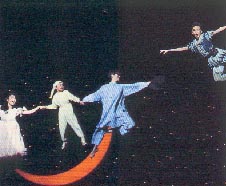
jpps.jpgHow does Peter Pan fly through the air during live theatre shows? Find out at flybyfoy.com – one of the originators for stage flight, and one of the earliest pro theatre flight crews to work on Peter Pan.

Skagit County’s Theatre Arts Guild has hired Fly By Foy to provide all flight fx for their November 2006 performances of Peter Pan at McIntyre Hall, Mount Vernon, WA.

Currently they have large touring, medium professional, church and community theatre projects going on throughout the United States. Checkout their website for more info at flybyfoy.com

In talking to other people about Foy, it would seem they are recognized as the only company in America providing special fly effects for theatre – specifically for Peter Pan and the Wizard of Oz. For the Wizard of Oz they have a dedicated ballon basket that rises up for the final scene.

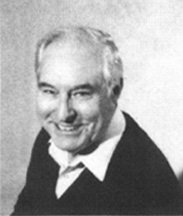
peterl.jpgThe company was started by Peter Foy. Here’s an excerpt on his background:
In 1950, a young Englishman named Peter Foy sailed from London’s West End to stage the flying for a Broadway production of Peter Pan, starring Jean Arthur and Boris Karloff. Foy’s services and the flying equipment were provided by Kirby’s Flying Ballets, a British company hired by the show’s producers after they discovered that virtually no theatrical flying had been performed in the United States for more than two decades.

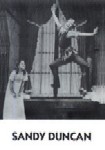
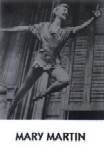
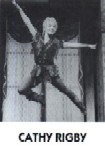
Past well known Peter Pan lead actresses include:

Sandy Duncan

sduncan1.jpg
Mary Martin

mmartin1.jpg
Jean Arthur

jearthur1.jpg
Cathy Rigby

crigby1.jpg

MVPC E-Devotion – Mount Vernon Presbyterian Church – Yes, It’s True, Life is Not Fair

MVPC E-devotion
Vol. 6, No. 14, September 21, 2006
by Steve Weber, Minister

Yes, It’s True, Life is Not Fair
Once again the world of sports is delving into the world of theology. Someone once said the game of baseball is about as close a metaphor for the spiritual life that one can hope for. It is a game played within boundaries, it has no game clock, and when the umpire says, “You’re Out!”, you’re out. And as I confessed last week, we pastor types seem to appreciate a good, slow game of baseball as much, if not more than you’re average bleacher bum.
But it is not baseball I reuminate on this day, but that other American pastime, football, and in this case, college football. Last Saturday the University of Oregon Ducks won a quacker of a game with gridiron juggernaut, Oklahoma, and the loss has not gone down easy for the Sooners. It all started (or ended) when the replay official failed to notice that an Oregon player touched the ball before it had traveled ten yards during an onside kick. The Ducks were in the midst of a comeback in the game’s closing minutes which resulted in an upset 34-33 victory over Oklahoma. The video replay revealed that Oregon did indeed touch the ball. Oregon went on to recover that onside kick, and then score the game-winning touchdown on the ensuing possession.
It’s a bummer when even the striped shirts fail to uphold the rules, ask a Seahawk fan still fuming over a certain, recent Super Bowl loss. Oklahoma is so bent out of shape by the officials’ video blunder that the university president has become involved to the degree of threatening legal action if the game is not ruled a forfeit. While it might seem a university president has other concerns more prevalent than a Saturday afternoon ball game, it is no secret that this single loss could mean huge financial losses later on down the road when it comes time to determine who plays in which prominent bowl game. If this loss means Oklahoma goes 9-2 instead of 10-1 the payoff will be noticeable in a lesser bowl invitation (Remember my first career was at the sports desk so bear with me if I regress a bit here).
So today I read this: “Maybe now those people at Oklahoma understand what I was talking about,” Texas Tech basketball coach Bobby Knight told The Oklahoman. He was referring to a basketball game a few years ago when Oklahoma benefited from a botched call against his team. Knight himself called for a forfeiture to no avail. The game stood. “Had Oklahoma forfeited that game against us like I suggested, they would have gotten far more positive publicity out of that than if they had gone to the Final Four that year. Now I guess the ‘duck’ is swimming in the other pond.”
He’s pretty clever. And he’s right. The duck swims in the other pond all the time. Credit does not always fall to those who deserve it. The promotion does not go to the disciplined, hard worker. The prized role in the school play does not always go to the talented. Good grades do not always go to the intelligent. Parents do not always spread attention and recognition the same to their children. As many times as I have stood on both sides of a games sidelines – playing and watching – there is usually someone who can’t understand how the game ended with that result.
I have never been in favor of instant video replay in sports. It has led only to the belief that every call in the game must be the correct one. So now we have games where the call itself has become as important as the sport itself. What have we lost? I believe we have lost some good theology for our lives.
Theodicy is a word in the dictionary which means the vindication of divine justice in the face of the existence of evil, or in my terms, that God has not abandoned us even when life treats us unfairly. What this means is that as human beings we will need to come to terms with suffering to some extent. There will come a day when the game ends and the scoreboard may read that we have lost. Even unfairly. What then? Sue someone, or ask the question: Who am I as a loser?”
As Helmut Thielicke wrote out of the devastation of Germany at the end of World War II: “No one will ever come to the truth and thus to a trustworthy bridge over the abyss of Nothingness who has not faced doubt, despair and shipwreck … The one who knows what faith is must also have stood beneath the baleful eye of that demonic power against which we fling our faith. Faith is either a struggle or it is nothing.”
Maybe our time and our culture needs to ask the question: What’s wrong with losing once in awhile? I once heard a coach say we learn more from a loss than a victory. Thinking back on some of the teams I’ve played on, we should be geniuses by now. But I would agree. Losing is not a loss. Only in the eyes of the world who cannot understand how losing something, even our own lives for the sake of Jesus Christ, can be anything but a foolish life strategy and we really ought to review the video tape and make it right.
How strange that when God Himself entered the human stage he would say that to really win in life we must lose ourselves for His sake. Then he allowed himself to be the ultimate loser. And he just took it. No replay. No official to overrule it. He just took the loss.
Can I? Justice is such a built-in response mechanism. Yet, the experience of living and the truth of the gospel seems to point to a life that sometimes looks like failure.
I think I’ll go play some tennis and see if I can sort all this out.
See You Sunday,
Steve Weber, pastor
Mount Vernon Presbyterian Church
Mount Vernon, Washington
360-424-7675
www.mvpres.com
* Two Sunday Morning Adult Classes – While the kids are in class, adults now have two options. “A Chosen Vessel” is a video portrayal of the life of the apostle Paul. It meets in Good Shepherd Hall. YAD is a young adult discussion class now based around the Nooma series of thought-provoking questions about the Christian life. It meets in the Calvin Conference Room. Join us for The Path, our Sunday morning education hour at 8:50 a.m. in Good Shepherd Hall.
* Small Group Leader Training – A group of leaders will begin training this Sunday and small groups will be up and running the first week of October. Have you signed up yet to be in a group this fall? Brochures are available in the church office and there is still time to register.
* Youth Groups This Sunday – Our youth program now under the direction of Andy Thor will begin this Sunday with Junior Highers from 4:30-6:30 and Senior Highers from 6 – 8 p.m.

Skye Dahlstrom – Choreographer and Singer

skye.jpgI have the honor of working with Skye Dahlstrom on the META Production of SEUSSICAL which will run at McIntyre Hall, Mount Vernon, WA the first two weeks of November 2006. Skye is the choreographer and has a great imagination for choreography and working with kids.

I first saw her work this last summer in Guys and Dolls which performed in Stanwood and the Kirkland Performance Center. She was choreographer for that show and also a lead dancer in the Havana cabaret scene. A real standout for that show was the choreography she did for the “Luck Be a Lady” dance sequence.

We all know Skye is going to do great things.

🙂

Conrad

********************

Info on Skye from the web:

Skye has been dancing since she was 2 years old, when she first saw Michael Jackson on TV. She began dancing formally at age 6 and continued to study Ballet and Jazz until she was 12. Skye has been choreographing for 6 years, beginning with routines for her cheer team at age 11.

Since then, she has choreographed for competitive cheerleading, talent shows, and school productions (2004 Stanwood High School’s Grease). She has previously taught hip hop dance at the Stanwood Sports Club, and is currently an instructor for Kid Stage in Everett.

Skye has won many awards, including 1st place at nationals in the dance division, and 1st place for choreography of her cheer team. At age 12, she took first place at the Stanwood-Camano fair lip sync impersonating Michael Jackson. Skye is currently a back up dancer for Raz B from B2k. They have performed at half time shows in Sacramento and toured of Europe in 2006.

Protecting Online Audio Download Files from Theft

audiodownloads.jpgI have made several runs at trying to setup online audio download sites and now I’m finally getting it going. It’s a little easier now than four years ago when I first wanted to do it.

But the problem I always come up to is how to protect the audio.

THE SPOILER: I have come to the conclusion that you have to overdub the sample audio with overdubs for theft protection, and I’ll explain why as we go through options here.

I’m writing this article so others have the info to reference to. I found very little when looking online. If any info is incorrect or you have more info to add, please leave a comment on this post with the info.

OPTIONS FOR PROTECTING AUDIO

  • Play lower quality fidelity for samples
  • Encode audio into a flash player
  • Pull audio into database and call via PHP
  • Use Real Audio to pull seperate play files
  • Use Quicktime so basic users can’t see source
  • Overdub audio onto samples, making the sample unuseable

1) Play lower quality fidelity for samples – This works for some applications. I know SoundDogs does this for their sound effects. Overdubs won’t work for their foley fx because the samples are so short. I have used SoundDogs a lot and think their setup is great for sound effects, but I don’t think it’s the best solution for music tracks. If you play lo fidelity clips for customers, what if your final product does not match their expectations? If you play for them what they’re going to get then you will have fewer customer complaints and/or chargebacks. Audio downloads have a high incidence of chargebacks, so showing customers exactly what they’ll be getting is a first line defense for that.

2) Encode audio into a flash player – I have spent SO many hours working with this. At one point even downloaded the Wimpy flash player. I see a LOT of sites using a flash player to hide their audio source. The problem is, you can see where the file is being pulled up from if you view the source code. If your answer to that is “Well, how many people know how to view the source code?” I think more than you think. Viewing source code is easy. I would guess the largest group of people that would want to snatch audio are younger people, and they are saavy with computers – and everyone has a friend who’s a computer geek. Viewing source code isn’t even approaching a geek thing anymore, it’s just something people know about – like popping the hood on their car. So a big NO for using a flash player as the source code will show your audio location.

3) Pull audio into database and call via PHP – This is a nice option, and I’ve seen source code of many sites doing this. For me, it’s a little out of my league to setup – so it’s not an option. Also, I’m afraid that someday my database will crash and I won’t be able to retrieve the audio. If someone reading this has an approach that normal folks can use to implement this, please let us know about it.

4) Use Real Audio to pull seperate play files – In the old days Real Audio and MP3 were going head to head. I put my money on Real Audio, thinking they would win the audio wars. I was wrong. People still have problems playing some Real Audio files, and it’s very time consuming to make the seperate .ra and .ram files needed to pull it off. Frankly, it’s a real headache in my opinion. If you have hundreds of audio files to protect, then you have hundres of .ra and .ram files to make. And then I guarantee you will get emails that some people can’t play it, so you need MP3 options too. If you have MP3, why have Real Audio too?

5) Use Quicktime so basic users can’t see source – The Pro version DOES allow viewing the source. The Pro version is not very expensive, so I imagine a lot of people have it. I don’t think this is a wise option.

6) Overdub audio onto samples, making the sample unuseable – This is my suggestion. Users can hear the actual fidelity of your sound file, and you have a seperate public audio sample you can make accessible to the public while keeping your actual clean downloads secure and protected. You can record your own overdubs, or go to a local recording studio and get it done for not much. Chances are if you have online audio samples, you probably already have the gear for audio overdubs.

Here is a sample of an audio file protected with overdubs:

MP3 Hip Hop Instrumental with Overdub Theft Protection

Notice the overdub vocal has been limited to a small audio frequency range so it doesn’t interfere to much with the listening experience of the track as a whole. I find it very easy to tune out the overdub while listening to the track. In addition, the overdub also contains information useful for customers listening.

For fast easy overdub mixing see my article on the Acoustica MP3 Mixer

I vote for overdubbing to provide audio protection to music samples. Have more info? Please leave a comment.

Review: Acoustic MP3 Audio Mixer

I’ve got a lot of gear. Nice pro high end gear like Digidesign’s Pro Tools, and lots of computers. My little office alone has five computers in it. But you’d be amazed how often I need to do something very very simple, but the high end gear slows me down.

Case in point – I have 300 audio samples that I’d like to use as audio samples for customers, but need to add overdubs for the samples so they aren’t stolen without payment. To further complicate things, I’m using these 300 tracks across 5 different websites, making a total of 1500 tracks that need to be layered with overdubs. It needs to sound good, but since it’s just streaming samples it is not critical to be audiophile quality.

Enter the Acoustic MP3 mixer. It mixes four tracks of stereo MP3 files. I love it. I’m able to click and quickly import my sample tracks and edit them to the overdub vocal. All I need is volume control to set the levels between the tracks, and a fade feature. Fade is NOT a feature on Acoustica, so my work-around was to let the overdub vocal hang on after the sample track with a plug for the hosting website.

Here’s an example of what I’m talking about to protect audio:
Rap Instrumental with Theft Protection Overdubs

For more info on Acoustic, go to the Acoustic Website and look for the “MP3 Mixer”. It’s a free 30day trial, then I think it’s $24.95 – a good square deal in my opinion.

If you want more control, then this isn’t the software for you. But if you just want to mix together some MP3’s quickly without firing up all your gear, Acoustica is a nice alternative.

WA Mozart French Horn Concertos

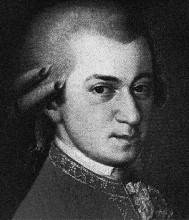
mozart.jpgThe Mozart French Horn Concertos – what awesome works they are. I am accompanying a very fine French Horn player from the local symphony this weekend. We will perform the Third French Horn Concerto. It’s interesting to be on the other side of the tracks as an accompanist. I studied the Mozart french horn concertos when I was in High School and college, especially the third concerto.

I was an ok French Horn player, not terrific. I had first chair in Jr. High and Interlake High School, but in the big scheme of things that’s not saying much. Two of my bad memories of high school are playing a wrong note on French Horn at the year’s end state competitions for band – and the band director at the time, Leo Dodd, felt really let down. He didn’t mention it, just gave me “the look”.

And at district solo competitions I performed the Third Concerto and got a “good” marking. At the time it was devastating – I had assumed it would be an excellent. And family consoled me, but I knew they didn’t understand the depth of my pain – to be “good”. Reality was I spent about two hours a week practicing the horn away from band, to be “excellent” I should have practiced ten hours – but my heart wasn’t in it. I loved the SOUND of the French Horn, the boldness of the instrument, everything about it – except practicing. And French Horn is a hideous instrument when not played well.

So now I avenge my past – the horn player I am accompanying – Jim Gaudette – is an incredible horn player with impeccable tone. He’s heard all the Barry Tuckwell recordings (in my youth Barry Tuckwell was the #1 player to fashion after). Jim will conquer my past defeats with his bold horn playing, and I will accompany him with the fire of a Viking raid.

To those listening it will just be a beautiful performance, but for me it will be making up for past blemishes I created for Mozart and the French Horn.

It’s interesting the things we remember, and the things we hold onto.

Information on the French Horn
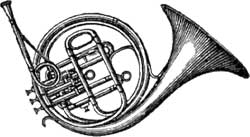
french-horn2.jpgEarly horns were much simpler than those in current use. These early horns were simply brass tubing wound a few times and flared into a larger opening at the end (called the bell of the horn). They evolved from the early hunting horns and, as such, were meant to be played while riding on a horse. The hornist would grip the horn on the piping near the mouthpiece and rest the body of the horn across his arm so that only one hand was needed to play and the other could be free to guide his steed. The only way to change the pitch was to use the natural harmonics of that particular length of tubing by changing the speed at which the lips vibrated against the mouthpiece; but by using a long tube and playing high in the harmonic series, considerable melodic variety was possible. The best-know example from this era is the Quoniam from JS Bach’s Mass in B minor.

Later, horns caught the interest of composers, and were used to invoke an outdoors feeling and the idea of the chase. Even in the time of Wolfgang Amadeus Mozart, however, the horn player (now a part of the early orchestra) still had a much simpler version of the horn; he carried with him a set of crooks, which were curved pieces of tube of different length which could be used to change the length of the horn by removing part of the tubing and inserting a different length piece.

The player now held the horn with both hands, holding the tubing near the mouthpiece with one, and putting the other into the bell, which was either rested upon the right knee of the player or the entire horn was lifted into the air. Now the pitch played could be changed in several ways. First the player could change the harmonic series which the instrument as a whole had by removing and inserting different sized crooks into the instrument, changing the length of the horn itself. Less globally, given a particular crook, the vibration of the lips could be varied in speed, thus moving to a different pitch on the given harmonic series. Finally, now that the player had his hand in the bell, the hand basically became an extension on the length of the horn, and by closing and opening the space available for air to leave the bell, he could bend the pitch to interpolate between the elements of a harmonic series. This interpolation finally made the horn a true melodic instrument, not simply limited to a harmonic series, and some of the great composers started to write concerti for this new instrument. The Mozart Horn Concerti, for example, were written for this type of horn, called the natural horn in the modern literature.

QandA: How to Become a Professional Music Producer

Hi, my name is mike and i recently moved here to costa mesa. I found your email through searching google for becoming a music producer and found your site. I had a couple of questions

I have cubase and Reason 3. I use reason to make beats. I like the production in Bone thugs n harmonys E. 1999 Eternal CD Its very clean and well rounded… Anyways, one of my problems is most of reasons sounds are not that clean or nice as most professionally done resords, like bone thugs or Dr. Dre. are thier sites that have good reason samples.A better program..??

Im serious about becomming a professional music producer / engineer for both movies and songs. I would really benefit from information on how to become a better producer from how to arrange songs to know which sounds sound best with other ones. Do you think I need to go to a school or classes or is thier any online information…I know like one trick which is when you have a slow song addind a bit of reverb to the snare to open the mix up a bit… but more tricks that help you achieve a certain sound is what im looking for. Any information is very much appreciated – mike

*********************************
Hi Mike,

Big question…….hope I can be a little help. I did production for an Aftermath artist last year, and my style is very similiar to Dr. Dre in some aspects (No, I am not saying I’m as good as Dr. Dre) – The other producer told me when Dre heard the track he said “This sounds just like what I produce, you need to bring me something I can’t already do. I’ve already got this sound.” Really bummed me out, because it was a great open door for me to get involved with Aftermath. (For the record, I think if I could have met with Dre personally I’d be working at Aftermath right now, but that’s another story. Yo Dre, you reading this? Call me) – Now if I was knee deep in Aftermath productions, I would focus on tweaking elements to distinguish my sound more, but since that’s not the case, I keep learning everything I can – and continue using my own judgement for my sound.

You mention you have one ear candy trick. You need more. How do you get them? I can tell you what I’ve done. I highly recommend the Mix Bookshelf series as a whole – great books on mic techniques for different instruments, mixing, mastering, etc. I have easily a thousand music books in different styles, study tools for mixing techniques, tutorials, videos etc on every aspect of mixing and mastering I can get. At one point I even spent six months working with the Golden Ear training method.

Any time I meet an engineer I try to learn something from them – most people are happy to share their knowledge in little bits and pieces. I don’t try to impress, I try to listen and pick up everything I can – to me that’s the secret. Walk away smarter.

I’ve also spent a lot of time listening to reference CD’s of similiar mixes to the styles I’m working on. If I’m producing a punk band, I’ll have a major commercial release of a similar punk band style to reference for my mix. This alone has been the biggest single help in my mixes. Need to listen to a MAJOR COMMERCIAL RELEASE and listen to it on the SAME SPEAKERS YOU ARE MIXING ON. This approach is helpful to learn the rules before you get your own foundation.

I’ve seen a lot of bad info online – like a mix by the numbers program. Like anything online, make sure you’re getting your info from a good solid source. MIX magazine is great, I suggest you subscribe to it. Anything MIX puts out in it’s book series or recommendations is usually rock solid.Ă‚ The more knowledge you have, the larger palette of ideas you have to pull from, the more flexibility and creativity you’ll have in the studio. Keep in mind you never arrive at a final destination in your understanding of music production – it’s a constant evolution. The day you think you’ve “arrived” – is the day to quit.

You mentioned the reverb on the snare for a ballad – it’s important to understand the reasoning behind that. A ballad typically has a lot more space in the audio spectrum – so it lends itself better to effects. There is a great book on the Art of Mixing that can show you how to visualize audio mixes as a three dimensional environment. Panning is left to right, audio frequency up to down, volume and effects is back to front and width. This concept is also very powerful in bringing a quick visualization to your mixes. When you can see the mix in you mind’s eye like this, let’s say for a ballad, then you would see there is more space to use if you want, like reverb on a snare drum. Want to kick it up a bit more? Time the reverb so the tail closes in time with the beat, and put a delay on the verb so it doesn’t wash out the snare attack.

Turn it around – see that there’s a lot of space open in your mix, and just leave it that way. Purposefully leave out effects, have the vocal bone dry. The idea to internalize is that you need to have control of where you want to go – so the snare reverb bit you brought up is something that might work on one song, but not another. Intuition and experience will dictate to you what to do.

I have 15 years working at a public commercial studio with clients of all styles and walks of life – this was a great training ground for me. A producer is not a dictator to stomp on everyone’s ideas, with paying clients you need to accomplish what they want. When you’re in this environment, you HAVE to learn to do new things. So I’d suggest you get in that environment if you can.

For music schools, real and serious music schools – I recommend North Texas State, UCLA or Berklee. For a real deal education. There are a ton of recording schools out there, but I don’t personally know a lot of people working full time from those, might exist, I just don’t know about them. But I used to have like one person a WEEK come into the studio and want a job because they just graduated from a recording engineer school. But none of them understood music. To me, a music producer at a busy project studio is worthless without an understanding of music. So that’s my next piece of advice – learn music theory. It will keep you working when other people are looking for jobs.

For clean samples, you really should get them from the actual source if you can – otherwise there are lots of great libraries out there. Sony, Big Fish, ProSessions, ACID, to name a few. When I worked with the co-producer on the Aftermath project, all his samples were directly from an MPC. Another common trick is to run directly from the unit into a high end tube mic pre to fatten the sound, even if you’re dumping directly to a digital format.

Next piece of advice, think long term in your career if you’re really serious about it. For instance, I closed my studio in California last year – but I’m taking the down time to learn more about orchestras. I’m doing a lot of conducting with orchestral and choral groups. I could cry in my beer about the studio being closed, but once it’s open again, I’ll have a whole new set of skillz conducting orchestras – so when Dr. Dre calls me to produce a hip hop album with a real orchestra I won’t just be able to say I’m ready – I WILL be ready.

Hope that helps. Keep the faith.
Vatican Fires Observatory Director

george-coyne.jpgSince 2005, the head of the Vatican Observatory has been very vocal against intelligent design, saying it belittles God. He has been fired. Only recently – in 1992 – did the Church officially announce acceptance of the findings of Galileo. Those are the facts, I’ll keep my opinions to myself. Below are links to various viewpoints on the issue, including input from James Randi and also Catholic.org
Wikipedia info on George Coyne

Intelligent Design belittles God – from Catholic.org
Excerpt:
Science is and should be seen as “completely neutral” on the issue of the theistic or atheistic implications of scientific results, says Father George V. Coyne, director of the Vatican Observatory, while noting that “science and religion are totally separate pursuits.”

Christianity is “radically creationist,” Father George V. Coyne said, but it is not best described by the “crude creationism” of the fundamental, literal, scientific interpretation of Genesis or by the Newtonian dictatorial God who makes the universe tick along like a watch. Rather, he stresses, God acts as a parent toward the universe, nurturing, encouraging and working with it.
Skeptic article by James Randi
Excerpt:
The Vatican Observatory, now under new, safer, and much more reliable direction, has an interesting history. It began as a simple observational tower erected by Pope Gregory XIII in 1578. This was the Gregory who brought about the drastic changes in the Western calendar, appropriately now named, the Gregorian Calendar. By 1800, the tower was being used for real astronomy – rather than simple positional work, and a century later it was formally established as the Vatican Observatory. The Jesuits now operate it, working both from facilities south of Rome and from the University of Arizona in Tucson.

Want to talk about it more? Join the discussion on this topic at:
Creation Talk Forum – Vatican Fires Observatory Director

Server Four Launched

My fourth server launched today, launching a secondary e-commerce network to focus specifically on audio. I’ll also be bringing back additional forum communities that were not brought back in the last two server launches.

The Server Four backend will use three different software applications for e-commerce. I don’t have any immediate plans to bolster forum-related features – the forums are running smooth and have been stable for quite a while, will leave them be until the next milestone software release (which should be by Christmas).

From the front end most communities will not notice much of a change, but our online customers will notice a whole new set of services and options when ordering online. So for me, it means the freedom to continue pursuing music endeavors full time while the backend of the empire provides all those boring, tedious things needed in life, like food.

I used to say “the empire” would never reach the height of it’s former glory. I do not currently share that opinion anymore.

🙂