

Ginger or MaryAnn?
Ginger or MaryAnn?

Chicken Stir Fry. More easy recipes that even Norwegian guys can be smart enough to make. Takes under ten minutes and super yummy.
DIRECTIONS
1. Prepare rice. Put equal parts water and rice in a pan with a little butter and salt. Once water begins to boil remove from heat and cover. Let it sit while you make the rest.
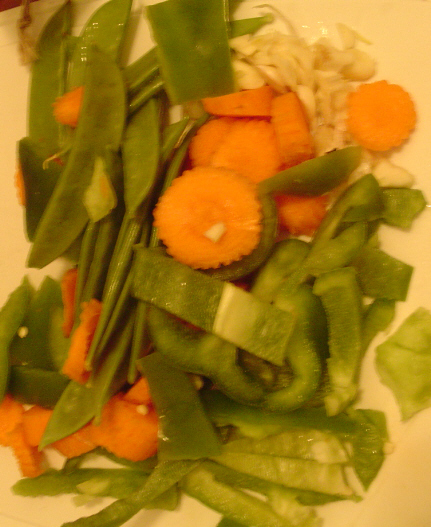
2. Cut vegetables. Any vegetables you like. I used beans in the pod, green peppers, a couple clovers of garlic and diced carrots.
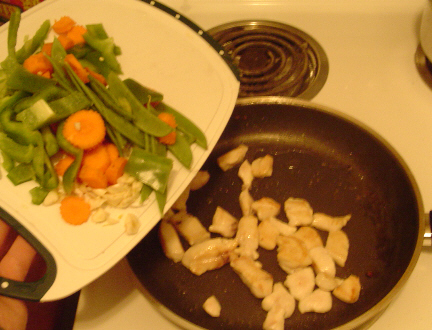
3. Warm pan with oil or butter and start cooking your diced chicken. When you flip the chicken pieces over, then start adding your vegetables. Add soy sauce, salt and pepper to taste.
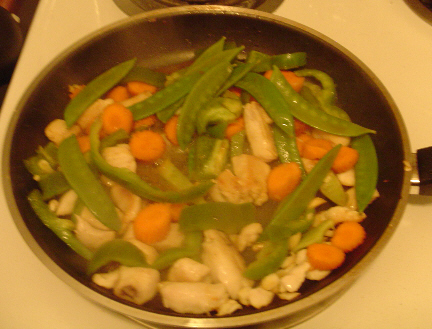
4. Take your finished rice and put it on the place. Finish mixing the vegetables and chicken and put on top of the rice. Top with soy sauce and nuts of choice. I used peanuts and it was AWESOME.
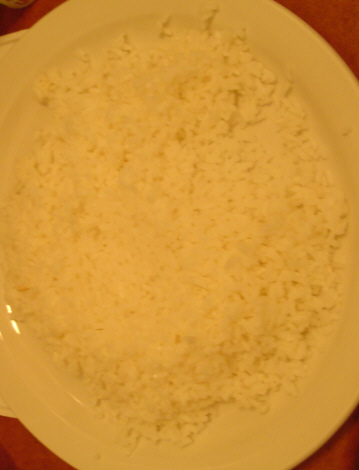
This meal was so good I couldn’t believe it was healthy. Maybe I’ll find out it wasn’t, but it LOOKED healthy and tasted as good as any junk food. Guaranteed to make guys happy, even dense Scandinavians who don’t know how to cook.

I know I’m starting slow on this cooking stuff but cut me some slack. I cannot believe how much fun this is! There are a lot of fancy ways I found to make corn, but I’m not fancy so here’s the ultimate bachelor recipe for cooking corn
DIRECTIONS TO BOIL CORN
1) Put corn in kettle of water and boil 1-10 minutes. The longer you boil, the softer it is. I boiled my corn for two minutes and then let it sit. Put butter on it and it tasted good to me. What guy doesn’t love that simple recipe?
That’s it. Chow down. Or read on for a more exquisite approach.

Now I also found that people added milk to the water when boiling corn. From what I read, once you try this you’ll never go back to just water again. So here’s a fancier recipe for the more adventurous type:
Ingredients
6-8 ears corn , husks and silk removed
1 cup milk
1/4 cup whipping cream , unwhipped (or use 1-1/4 cups milk, the cream is better to use)
3 teaspoons salt (or to taste)
6 tablespoons sugar (can use more sugar)
1/4 cup butter (you can use up to 1/2 cup butter)
Directions
1. Fill a large stock pot (about an 8-quart) half full with water.
2. Add in the milk, cream, salt, sugar and butter
3. Bring to a boil, then add in the corn cobs
4. Reduce heat to a simmer and allow corn to cook for 8-12 minutes or until tender, depending on size of corn try not to over cook the corn as it will become tough.
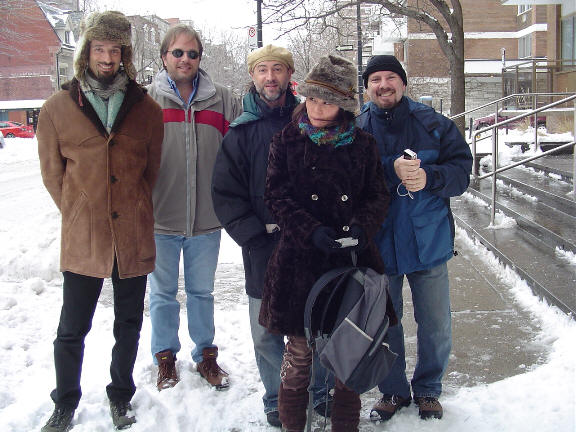
Greetings from the Cirque Du Soleil band (Macau I) in Montreal, Canada. This is just part of the band. From left is Olivier Milchberg, Conrad Askland, Darrin Johnson, Rose Winebrenner and Steve Bach.
Some people have asked where the players are from. Musicians are from the US (Mount Vernon, WA – Denver, CO – Chicago, IL – New York City and Branson, MO), France, Sweden, Australia and Armenia.
We’re fffffffffffffffffffrrrrrrrreeezing up here. Please send Lutefisk and Lefse. (The Lefse won’t keep me warm, I just want some.)
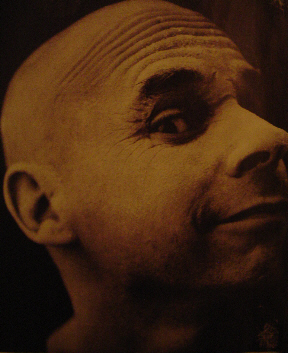
Guy Laliberté (born September 2, 1959 in Quebec City, Quebec, Canada) is the founder and chief executive officer of Cirque du Soleil. Starting out as an accordion player, stiltwalker and fire-eater; Laliberté created his circus which is a synthesis of all circus styles around the world. In 2006, this 95% share holder of the 1.2 billion dollar Cirque Du Soleil was named the Ernst & Young Entrepreneur of the Year.
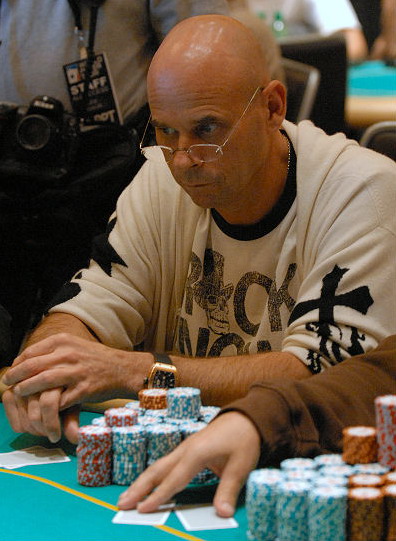
(In April 2007, Laliberté finished fourth in the World Poker Tour Season Five event at Bellagio in Las Vegas. Laliberté also played on GSN’s High Stakes Poker Season 4 show.)
By the time he was sixteen, he had decided to pursue a career in the performing arts after producing several high school events. After graduating, he became involved with a folk music group called “La Grande Gueule”, playing the accordion and harmonica. His work on the folk music scene was what introduced him the art of street performance.
After quitting college, Laliberté toured Europe as a folk musician and busker. He had learned the art of fire breathing by the time he returned home to Canada in 1979. Although he became employed at a hydroelectric power plant in James Bay, his job ended after only three days due to a labor strike. Supporting himself off of his unemployment insurance, he decided not to look for another job. Instead, he joined the stilt-walking troupe “Les Echassiers De Baie-Saint-Paul” that was led by Gilles Ste-Croix. Shortly afterward, Laliberté and Ste-Croix organized a summer fair in Baie-Saint-Paul with the help of Laliberté’s soon-to-be business partner Daniel Gauthier.
This festival, called the “La FÄ“te Foraine”, first took place in July of 1982 touring Quebec. Ironically, the event was barred from its host town shortly thereafter because of complaints by local citizens. Laliberté managed and produced the fair over the next couple years, nurturing it into a moderate financial success. But it was during 1983 that the government of Quebec gave him a 1.5 million dollar grant to host a production the following year as part of Quebec’s 450th anniversary celebration of the French explorer Jacques Cartier’s discovery of Canada. Laliberté named his creation “Le Grand Tour du Cirque Du Soleil.”
The celebration turned out to be a critical and commercial success. Although the first tour of Cirque only netted a forty-thousand dollar profit, it allowed him to sign almost 1.5 million dollars in contracts. They had been performing exclusively for Canadian audiences until 1987 when Laliberté risked everything and took his circus to the Los Angeles Arts Festival. It cost the production’s entire cash reserve to make the move. Had it not been successful, he would not have had the money to move the troupe back home to Quebec.

Bistro a JoJo. Le Temple du Blues a Montreal. I listened to Carl Tremblay and friends live at Bistro a JoJo last weekend and it really rocked. 3am rolled around really fast and I didn’t want them to stop. Smoking guitar player ala Stevie Ray Vaughan, a Hammond B3 player they nickname “Animal” for good reason, rock solid drums and a bass player that rocked like Tower of Power. Carl Tremblay led them through great arrangements. Everything had a southern rock feel.
I got to meet Carl but he speaks French and I don’t know any – but he thumped his fist on his heart when I told him the name of the friend that sent me to the club to hear him. That’s good enough for me.
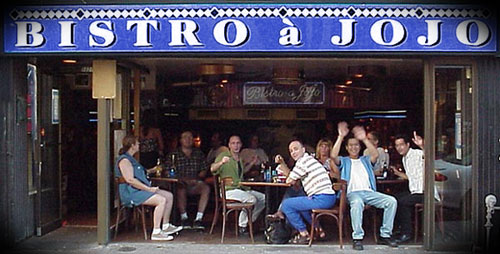
Visit the Bistro a JoJo website at http://www.bistroajojo.com.
About the Bistro a JoJo in Francais:
Le Bistro à JoJo,
a été fondé le 2 août 1975 par Joe Lévis le propriétaire du fameux restaurant le Saint Malo situé en face du Théâtre Saint-Denis. . Il raconta qu’à l’époque il a dû ouvrir un endroit pas loin de son restaurant pour transférer sa clientèle grandissante qui y venait seulement pour boire un verre et ça durait souvent tout l’après-midi. C’est alors que Joe Lévis, surnommé JoJo, acheta une bâtisse à quelques pieds de son resto, où il y avait au sous-sol une petite librairie qu’il transforma vite en un bar très chaleureux situé au 1627 Saint-Denis appelé le Bistro à JoJo.
Après deux ans d’existence, soit en 1977, Joe Lévis (JoJo) vend l’immeuble à des actionnaires indépendants et le fond de commerce à Marc Botrel un Breton et François Tavernier un Belge, deux associés européens d’origine. Ils ont tenu le Bistro pendant 19 ans. Ce sont eux, avec la complicité de Jean Millaire, qui ont eu l’ idée de faire des spectacles de Blues au Bistro et ce fut le Johnny Blue Band qui a eu l’honneur d’ être le premier « Band » officiel à jouer pendant 2 ans à tous les lundis de 1985 et 1986 au Bistro. Ce fut le début d’une vocation musicale qui n’a jamais depuis, cessé de grandir. Mais à un moment donné les tensions montent entre les deux associés de longue date et le Bistro ferme ses portes en octobre 1996 après 21 ans de travail acharné
Pendant 2 mois le local du Bistro était à louer et les clients et artistes disaient que c’était comme passer devant un salon funéraire. La rue Saint Denis venait de perdre son institution Blues de 21 ans d’existence. C’était inconcevable de laisser un tel endroit changer de vocation
Et c’est là que je (Francis Chamberland) commence les négociations avec le propriétaire de l’immeuble qui était déjà en négociation pour louer le local à la chaîne de restaurant Dairy Queen. Mais j’arrive rapidement à une entente et achète le fond de commerce, et tous les équipements sur place, avec mes associés de l’époque, Carl Sprat et Élie Sabbath. C’est alors que nous ouvrons officiellement les portes du Bistro à JoJo dans un temps record après 2 semaines de travail acharné, le 16 décembre 1996. C’est Jimmy James qui fut le premier «Band» à jouer sur la nouvelle scène et un tout nouveau système de son. Ce soir là , le Bistro était plein à craquer, c’était très encourageant pour l’hiver qui s’installait, mais tout n’était pas si facile entre les associés pour les idées futures du Bistro. L’association ne dure pas longtemps avec Carl Sprat qui se retire en mars 1997 après 3 mois et par la suite Élie Sabbath me vend ses parts. Je deviens alors le seul et unique propriétaire après 10 mois d’association, soit le 15 octobre 1997.
J’ai su conserver l’ancien décor, mais en améliorant seulement les points faibles du Bistro. J’ai conservé intégralement le fameux bar original construit par Joe Lévis lui-même et beaucoup d’autres objets originaux s`y trouvent encore. Le décor intérieur et toutes les améliorations apportées, soit, le système de son, la scène, l’éclairage, la peinture, le bois sur les murs, les instruments accrochés un peu partout, sans oublier les boîtes murales contenants des objets d’artistes, ont toutes été imaginées dans ma tête dès que j’ai visité le local pour la première fois. Et quand nous avons installé la première guitare de Jean Millaire au centre du Bistro dans notre première boîte officielle, des guitares, des Félix, des disques d’or, ont commencé à arriver, par tous ces autres artistes et supporteurs du Bistro.
C’était l’association officielle des artistes Québécois avec le Bistro à JoJo qui venait supporter notre cause pour exposer leurs réussites sur les murs. Ceci enchante les grands admirateurs, et met le vent dans les voiles au Bistro à JoJo, qui était à l’époque, encore très fragile. Et rapidement les médias s’emparent de ce nouveau concept québécois et plusieurs journalistes supportent le nouveau Bistro dans sa nouvelle démarche. Ils écrivent plusieurs articles sur ces artistes exposés, et ensuite, de fil en aiguille, des lancements d’album comme Marjo, la grande Mentor du Bistro. Après toutes ses années les murs chantent Marjo, elle est l’artiste ayant le plus assuré l’avenir de «son Bistro», comme elle le dit si bien, d’où vient la fameuse rumeur qu’elle est la propriétaire de la place. Mais, ce n’est pas le cas, ça ne l’a jamais été non plus. Par contre, nous retrouvons ces 3 disques d’or exposés au Bistro et de nombreux objets personnels, dont plusieurs trophées et vêtements de scène y sont exposés.
Comment oublier Eric Lapointe, un autre artiste qui nous a toujours supporté depuis le tout début, qui a tourné plusieurs entrevues sur place au Bistro et qui est devenu notre artiste surprise par excellence de par ces nombreuses apparitions sur scène avec les Blues Men comme Carl Tremblay, Jim Zeller, Matt Laurent, Carlos Veiga et plusieurs autres. On peut retrouver aussi plusieurs objets de valeurs appartenant à Eric dont, un disque d’or, sa première guitare, un Félix et j’en passe. Bob Walsh a lui aussi sa place au centre parmi les nombreux autres artistes comme, Bob Harrisson, Steve Hill, Carl Tremblay, Jim Zeller, etc.
Aujourd’hui le Bistro à JoJo est l’endroit par excellence des artistes pour des nuits magiques inoubliables, ce qui charme à tous les soirs notre clientèle mélomane du Bistro, qui continue toujours de croître en grand nombre. L’ambiance extraordinaire et le personnel toujours aussi attachant nous placent aujourd’hui comme le NO 1 du spectacle Blues à Montréal et grâce à nos spectacles de Blues 7 soirs sur 7, nous avons pu faire connaître un très grand nombre d’artistes de Blues et même, d’auteurs, compositeurs québécois et ça continue
Je tiens à remercier les gens dans l`ombre, qui pendant toutes ces années, ont su m`aider à administrer le Bistro. Dominique, ma conjointe et gérante.
Je remercie également, tous les artistes ayant contribué au soutien de la musique « live au » Bistro et dans tous les autres bars de Montréal et plus particulièrement à André Ménard (de l’équipe spectra, qui a cru en nous), Jean Millaire, Marjolène Morin, Gerry Boulet, Justin Boulet, Breen Leboeuf, Eric Lapointe, Matt Laurent, Carl Tremblay, Bob Harrisson, Jim Zeller, Paul Deslaurier, Guy Bélanger, Rejean Lachance,Joe Jammer, Michel Barrette, Linda Lemay, Daniel Boucher, Jimmy James, Francine Raymond, Colin James, Martin Deschamps, Laurence Jalbert, Bob Walsh, Steve Hill, John Mc Gale, Carlos Veiga, Joe et Roger Levis et tous les autres, vous êtes dans mes pensées.
Merci pour tout,
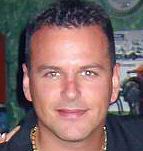
Francis
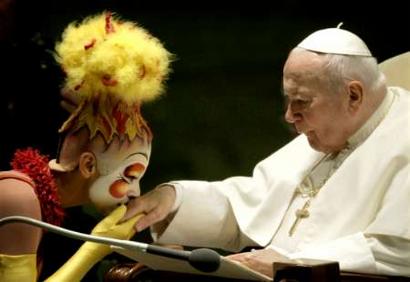
A performer from Cirque Du Soleil kisses the hand of the pope.

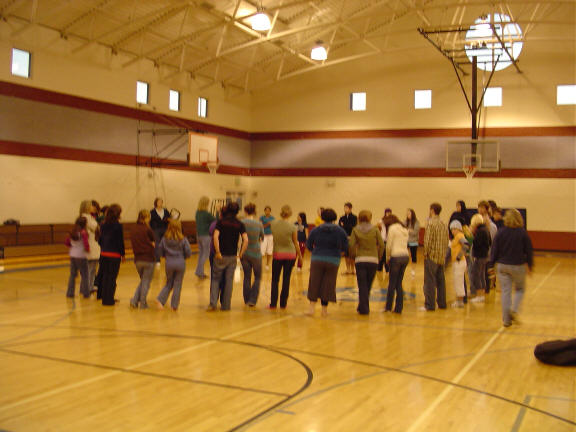
Here are some rehearsal photos from Bye Bye Birdie which I conducted at McIntyre Hall (Mount Vernon, WA) in November 2007.
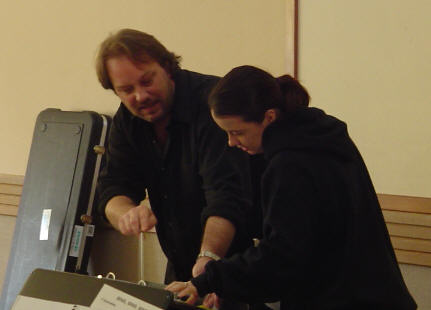
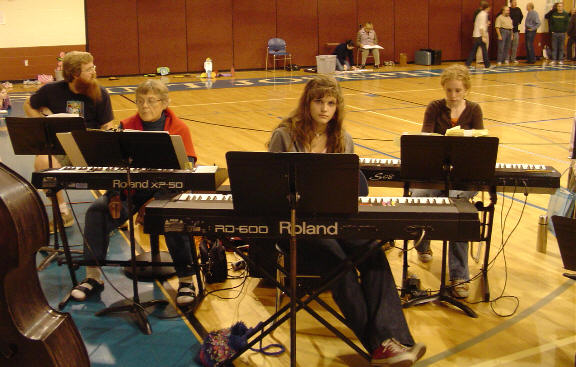
This was what I called the “keyboard army”. We had three keyboardists covering piano, strings and percussion bell parts. I opted use synth strings in favor of having a full sax and horn section. The music for Bye Bye Birdie at the time was supposed to sound rock, but it’s really more of a big band Broadway type sound.

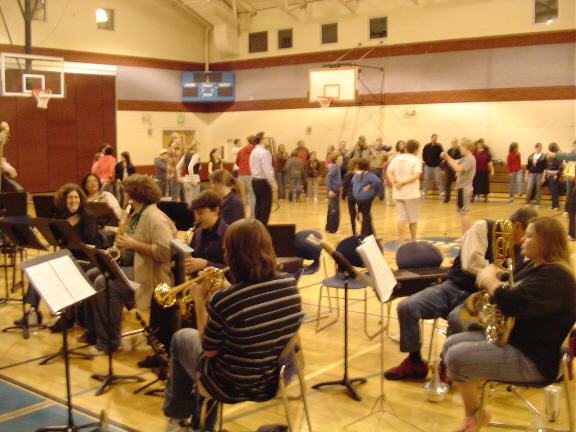
Full cast rehearsal with partial orchestra at a local gymnasium. Note to self, orchestra rehearsals do not work well in gymnasiums…
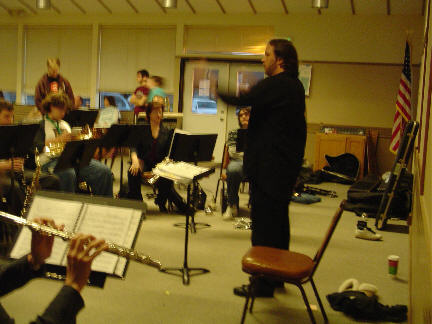
First run-throughs with the pit orchestra.
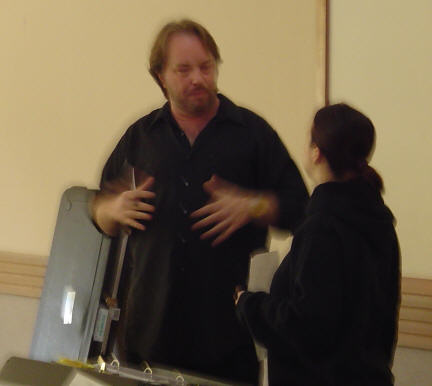
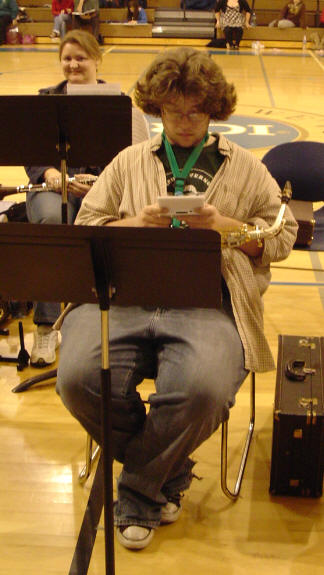
I think this is one of the orchestra members, Kyle, playing video games…
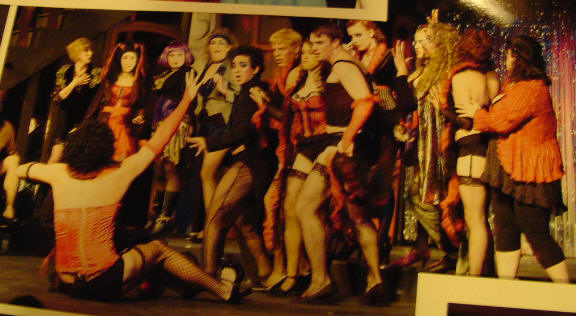
Photos from the Rocky Horror Show at the Lincoln Theater, Mount Vernon, WA. Presented by the Theater Arts Guild in October and November 2007. I was music director and keyboardist.
This was one of the funnest shows and best crews I ever worked with. And everyone in the cast knows it. Long Live the Lips!
Click photos for full size view
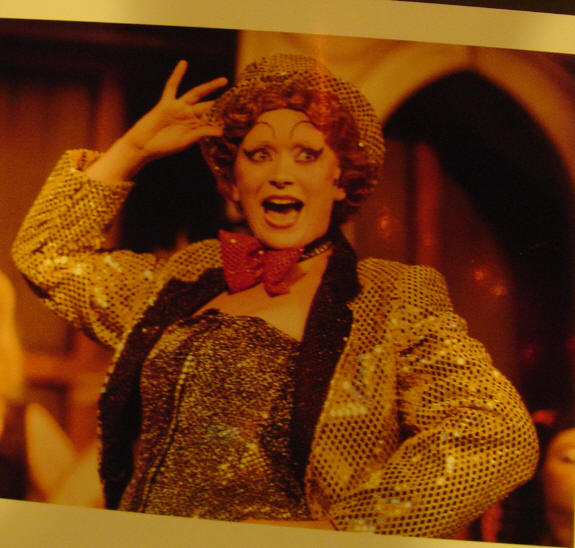
Columbia
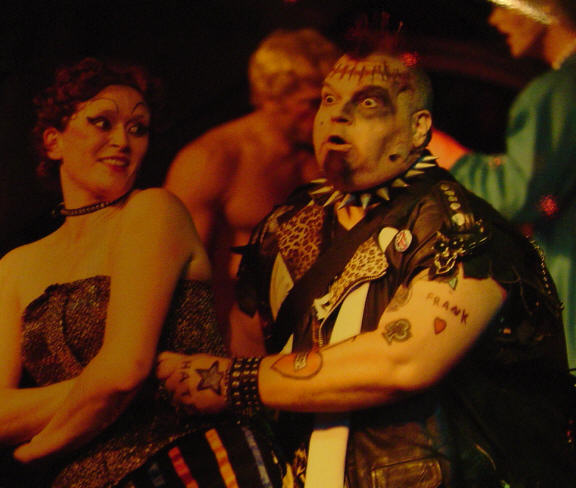
Eddie
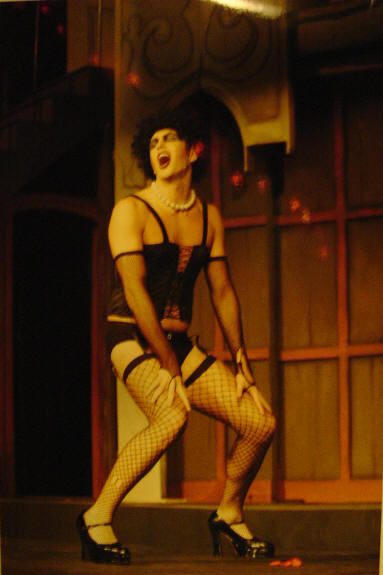
Frank ‘n Furter
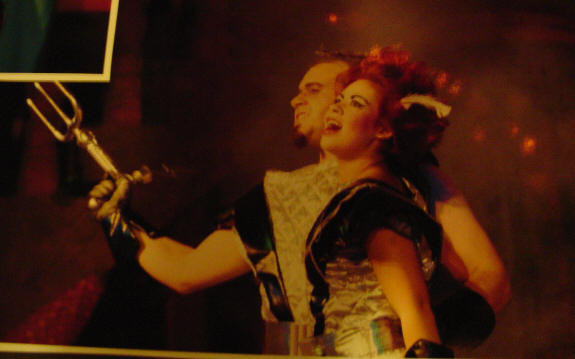
Magenta and Riff Raff

Narrator
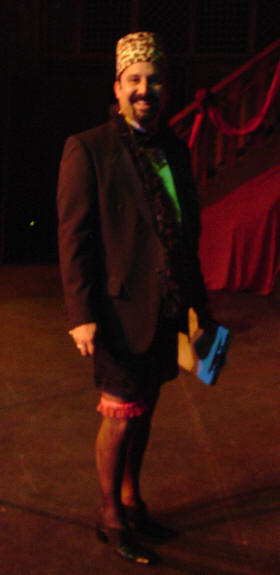
Produer Roger Ragusa ala Morocco Mole

RHS Marquee outside the theater
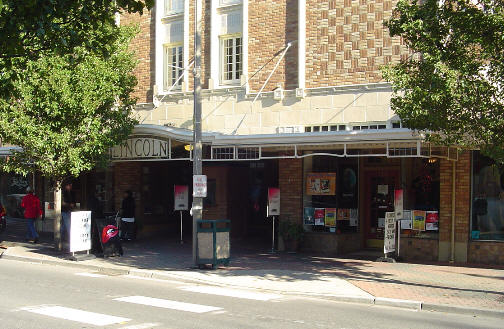
Lincoln Theater front

RHS sets – setting up the balcony
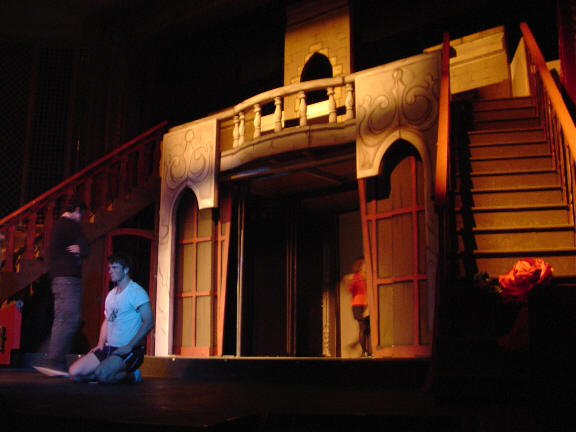
RHS set during construction
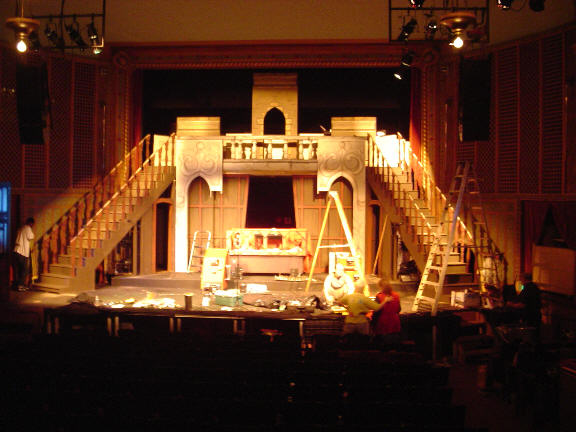
RHS set front view during set-up